Introduction
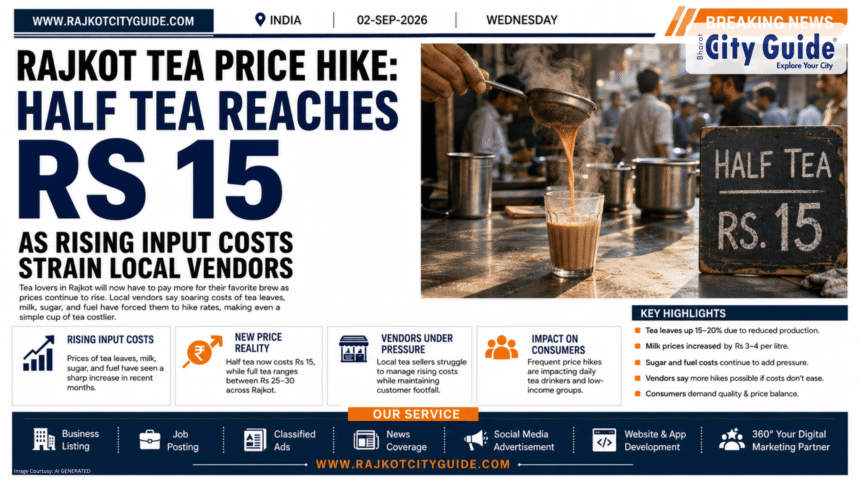
In a major update for daily commuters and morning tea enthusiasts across Saurashtra’s commercial hub, the Rajkot Tea Price Hike has officially taken effect across roadside stalls, hotel tea counters, and city cafes. Local tea vendor associations and hotel groups announced a coordinated upward revision in retail prices to offset escalating operating expenses. Under the revised rate structure, a half cup (cutting chai or aadhi) has increased from Rs 10 to Rs 15, while a full cup of tea has risen to Rs 30.
- Introduction
- What is Rajkot Tea Price Hike?
- Why This News is Important
- Background Information
- Key Highlights
- Detailed Explanation of the Event
- Benefits, Features, and Importance
- How It Impacts People
- Expert Insights / Industry Perspective
- Challenges and Limitations
- Future Outlook
- Frequently Asked Questions (FAQs)
- Conclusion
Despite the price adjustment, public reaction across Rajkot highlights the deep-rooted cultural importance of chai in everyday life. Customers at local stalls have openly voiced that while price increases add to daily living expenses, cutting back on their daily tea routine is simply not an option. For many working professionals, industrial laborers, and shopkeepers, the morning and afternoon tea break is a non-negotiable part of the workday.
This detailed article explores the primary drivers behind the price hike, analyzes the impact of rising raw material costs on small vendors, reviews the economic fallout for daily consumers, and discusses broader inflationary trends across Gujarat’s informal food and beverage sector.
What is Rajkot Tea Price Hike?
The Rajkot Tea Price Hike refers to the official decision by local hotel, restaurant, and tea stall operator associations across Rajkot to adjust retail tea prices. Driven by rising wholesale prices for essential ingredients—including milk, tea leaves (ctc/bhuki), sugar, commercial LPG, and coal fuel—vendors adjusted retail pricing to maintain operational margins.
┌─────────────────────────────────────────────────────────────────────────┐
│                    RAJKOT TEA PRICE REVISION STRUCTURE                  │
├─────────────────────────────────────────────────────────────────────────┤
│  HALF TEA (Cutting / Aadhi)                                             │
│  Previous Rate: Rs 10 – Rs 12  ──►  New Revised Rate: Rs 15             │
├─────────────────────────────────────────────────────────────────────────┤
│  FULL TEA (Aakhi Chai)                                                  │
│  Previous Rate: Rs 20 – Rs 24  ──►  New Revised Rate: Rs 30             │
├─────────────────────────────────────────────────────────────────────────┤
│  KEY COST DRIVERS                                                       │
│  • Fresh Milk Sourcing Rates                                            │
│  • Wholesale Sugar & Tea Dust Prices                                    │
│  • Commercial Gas Cylinders & Coal Fuel Costs                           │
└─────────────────────────────────────────────────────────────────────────┘
Key features of this price revision include:
- Half Tea (Cutting Chai): Increased from the previous Rs 10–12 range up to a standard flat rate of Rs 15.
- Full Tea (Aakhi Chai): Standardized from the previous Rs 20–24 range up to Rs 30 per serving.
- Widespread Coverage: Applies to roadside tea kits, neighborhood tea stalls (gadi-kebins), hotel tea counters, and commercial market zones.
- Association-Led Adjustment: Implemented collectively by vendor trade bodies to ensure uniform pricing across municipal zones.
Why This News is Important
A price increase on a daily staple like tea carries widespread socio-economic significance across an urban commercial hub:
- Daily Cost of Living: Tea stalls serve millions of daily wage earners, office employees, transport operators, and students who drink multiple cups each day.
- Small Vendor Sustainability: Roadside vendors operate on tight margins; absorbing continuous increases in raw material costs without raising prices risks business failure.
- Economic Indicator: Street food and tea pricing serve as clear indicators of grassroots inflation, reflecting broader cost pressures across dairy, energy, and wholesale agricultural sectors.
- Consumer Sentiment: The public’s willingness to accept higher prices demonstrates the strong, inelastic demand for tea as both a cultural tradition and a daily necessity.
Background Information
In Saurashtra—and Rajkot in particular—kitli culture (roadside tea stall gatherings) is an integral part of daily social and commercial life. Business negotiations, informal trade discussions, and daily social interactions frequently happen over hot cups of strong, spiced tea.
Over the past year, small food and beverage vendors have faced rising input costs:
                 [ INPUT COST PRESSURE ON TEA VENDORS ]
                                   │
 ┌─────────────────────────────────┼─────────────────────────────────┐
 ▼                                 ▼                                 ▼
Dairy Procurement Costs     Wholesale Sugar & CTC Tea      Energy & Fuel Supplies
(Rising Fresh Milk Prices)    (Agricultural Market Shifts)   (LPG & Coal Expenditures)
 └─────────────────────────────────┬─────────────────────────────────┘
                                   │
                                   ▼
          Standardized Retail Price Adjustment (Rs 15 Cutting / Rs 30 Full)
- Dairy Price Pressure: Local milk procurement rates have risen due to higher cattle feed costs and seasonal production shifts.
- Wholesale Commodity Inflation: CTC tea dust and sugar prices have seen steady increases in wholesale markets.
- Operational Energy Costs: Commercial LPG cylinders and coal—widely used by traditional tea stalls—have become significantly more expensive.
To avoid reducing cup sizes or compromising on quality, vendor associations decided to revise retail prices uniformly.
Key Highlights
- New Price Benchmark: Half tea (cutting) is now priced at Rs 15, up from Rs 10–12.
- Full Tea Revised: Full cups of tea have increased from Rs 20–24 up to Rs 30.
- Driven by Input Costs: The price adjustment stems directly from higher costs for milk, sugar, tea leaves, commercial gas, and coal.
- Strong Customer Demand: Citizens acknowledge the inflation-driven change, maintaining their daily consumption habits.
- Wide Geographical Reach: The revised pricing applies across major market hubs in Rajkot, including Dharmendra Road, Soni Bazar, Yagnik Road, and surrounding industrial zones.
Detailed Explanation of the Event
1. Vendor Association Decision
Rising wholesale costs over several months forced local hotel and tea stall associations in Rajkot to evaluate their pricing structures. Small vendors were finding it difficult to remain profitable at the Rs 10 mark without reducing serving portions or diluting milk quality. Following association meetings, trade leaders agreed on a standardized price adjustment.
2. Implementation Across Market Hubs
The revised rates took effect across the city’s commercial and industrial corridors. Prominent business areas—including Ganj Bazar, Lati Plot, Bhaktinagar Industrial Estate, and university zones—saw vendors update their price boards to reflect the new Rs 15 cutting and Rs 30 full tea rates.
| Item Category | Previous Price Range | New Revised Price | Percentage Increase |
| Half Tea (Cutting / Aadhi) | Rs 10 – Rs 12 | Rs 15 | ~25% – 50% |
| Full Tea (Aakhi Chai) | Rs 20 – Rs 24 | Rs 30 | ~25% – 50% |
| Special / Masala Tea | Rs 25 – Rs 30 | Rs 35 – Rs 40 | ~20% – 33% |
3. Public Reaction and Consumer Acceptance
While price hikes on daily necessities usually spark consumer pushback, public response in Rajkot has been largely accepting. Regular customers at tea stalls noted that while the extra Rs 5 per cup adds up over a month, the quality and comfort of fresh tea make it a essential daily expense.
Benefits, Features, and Importance
The table below outlines the key structural aspects of the price revision and its economic effects:
| Feature / Aspect | Implementation Details | Sectoral & Public Impact |
| Standardized Pricing | Uniform rates across city vendors | Prevents price undercutting and protects small stall margins. |
| Quality Preservation | Maintains full milk-to-water ratios | Ensures customers receive full quality without portion reduction. |
| Margin Stability | Absorbs wholesale ingredient inflation | Helps small vendors keep up with rising household expenses. |
| Inelastic Demand | High consumer reliance on daily tea breaks | Keeps sales volumes steady despite higher unit prices. |
How It Impacts People
For Daily Working Professionals & Laborers
For industrial workers, daily-wage laborers, and retail staff who typically consume 3 to 4 cups of tea during a workday, the Rs 5 increase per cup adds roughly Rs 15 to Rs 20 to their daily expenditures. Over a month, this represents an additional expense of Rs 400 to Rs 600.
For Tea Stall Owners and Vendors
For micro-entrepreneurs operating small tea stalls, the price increase provides relief against rising wholesale bills. It allows vendors to maintain profits, pay rising shop rents, and cover family living expenses without compromising product quality.
For Students and Young Consumers
Students and young adults who gather at city tea spots will notice higher daily spending. However, given the social nature of these meetings, group visits to neighborhood stalls are expected to continue unchanged.
Expert Insights / Industry Perspective
Retail economists and hospitality analysts note that beverage pricing at the micro-retail level is heavily sensitive to raw material cost surges.
Food industry analysts point out that when core ingredients like milk, sugar, and commercial fuel rise simultaneously, small vendors cannot absorb the costs internally. Standardizing prices through vendor associations prevents price wars and helps protect small, unorganized businesses from closing.
Consumer behavior experts add that products like tea feature exceptionally low price elasticity of demand. Because tea is deeply tied to cultural habits and daily work routines, moderate price increases rarely lead to noticeable declines in consumption.
Challenges and Limitations
Despite the successful rollout of the new pricing, vendors and consumers still face ongoing operational challenges:
- Cumulative Household Inflation: Combined with price increases in vegetables, fuel, and groceries, higher tea prices add to overall household budget pressures.
- Change and Cash Flow Friction: Shifting from a clean Rs 10 coin transaction to a Rs 15 price point requires vendors to keep more small change on hand, though digital UPI payments help reduce this friction.
- Potential Competition from Packaged Alternatives: Rapid price increases at traditional stalls may prompt some budget-conscious consumers to shift toward home-brewed tea or instant premix options.
Future Outlook
Looking ahead, the economic trajectory for Rajkot’s street food and beverage sector will be shaped by key factors:
- Raw Material Price Tracking: If milk and wholesale sugar prices stabilize over the winter months, tea prices are expected to remain steady at the new Rs 15 benchmark.
- Expansion of Digital Payments: The adoption of UPI QR codes at roadside tea stalls is expected to accelerate, resolving minor cash-change issues stemming from the Rs 15 price point.
- Broader Hospitality Re-pricing: Other informal food vendors—such as snack stalls selling farsan, poha, and samosas—may introduce similar minor price revisions to balance their own rising input costs.
Frequently Asked Questions (FAQs)
1. What is the new price of a half tea (cutting) in Rajkot?
Under the revised rate structure, a half cup of tea (cutting) has increased from Rs 10 to Rs 15.
2. How much does a full tea cost in Rajkot following the price hike?
A full cup of tea (aakhi chai) now costs Rs 30, up from the previous Rs 20–24 range.
3. Why did tea stall associations in Rajkot raise prices?
The price increase was driven by rising costs for essential raw materials, including milk, tea leaves, wholesale sugar, commercial LPG cylinders, and coal fuel.
4. When did the new tea prices take effect?
The revised pricing took effect across roadside stalls, hotels, and cafes in Rajkot starting in early September.
5. Have customer numbers dropped because of the price hike?
No. Customer feedback indicates that tea consumption remains steady, with citizens continuing their daily tea routines despite the higher cost.
6. Are all tea stalls in Rajkot implementing these updated rates?
Yes. Local vendor associations and hotel groups have collectively agreed on the price revision to ensure consistent pricing across the city.
Conclusion
The Rajkot Tea Price Hike highlights how broader inflationary pressures directly impact everyday urban life. While moving the price of a cutting tea to Rs 15 adds a small increase to daily budgets, vendor associations needed the adjustment to cover rising milk, sugar, and fuel costs. As public sentiment shows, tea remains a central part of Rajkot’s social and cultural routine—proving that even as prices rise, the city’s love for a hot cup of chai stays strong.