Introduction
India’s technological horizon is expanding rapidly as the nation shifts its focus toward electronic self-reliance. At the center of this transformation is Gujarat, a state that has firmly established itself as the pioneer of India’s silicon revolution. While industrial zones like Dholera and Sanand have previously dominated headlines with massive multi-billion dollar fabrication and packaging plants, a significant new milestone has been achieved. The formal announcement of Rajkot’s entry into Gujarat’s semiconductor hub marks a crucial shift in the regional distribution of high-tech manufacturing. Known historically as an engineering powerhouse and the machine-tool capital of Western India, Rajkot is now steering its immense industrial capacity toward the microchip ecosystem.
- Introduction
- What is Rajkot’s Entry Into Gujarat’s Semiconductor Hub?
- Why This News is Important
- Background Information
- Key Highlights
- Detailed Explanation of the Event
- Benefits, Features, and Economic Importance
- How It Impacts Different Segments of Society
- Expert Insights and Industry Perspective
- Challenges and Structural Limitations
- Future Outlook
- Frequently Asked Questions (FAQs)
- Conclusion
This latest development introduces high-level, domestic fabless semiconductor engineering to the Saurashtra region. Instead of relying solely on heavy hardware manufacturing, this initiative focuses deeply on chip design, indigenous intellectual property, and custom module building. This breakthrough provides immediate momentum to the central government’s “Atmanirbhar Bharat” (Self-Reliant India) and “Make in India” missions. By developing indigenous silicon solutions locally, the country takes a significant step toward solving global supply chain vulnerabilities while simultaneously establishing ironclad domestic data security. For an engineering-centric city like Rajkot, this entry represents a major economic evolution—transforming its traditional industrial identity into a forward-thinking, high-tech digital cluster.
What is Rajkot’s Entry Into Gujarat’s Semiconductor Hub?
To understand the scale of this development, it is vital to break down what Rajkot’s entry into Gujarat’s semiconductor hub actually means. The semiconductor value chain is broadly divided into two major segments: the asset-heavy fabrication foundries (fabs) that physically print circuits on silicon wafers, and the asset-light “fabless” business models that specialize strictly in the architecture, design, logic layout, and software integration of the chips.
Rajkot’s entry focuses directly on pioneering this smart, design-first, fabless technology and custom electronic module assembly. Instead of mimicking the massive physical foundries of Dholera, Rajkot is leveraging its pre-existing ecosystem of over 250,000 Micro, Small, and Medium Enterprises (MSMEs). These enterprises are known for precision engineering, casting, and electronic component manufacturing.
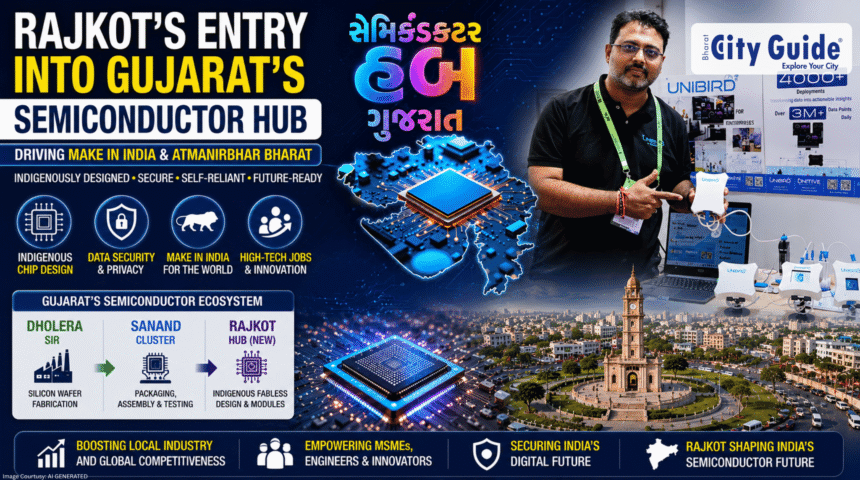
By integrating modern chip design suites and localized fabless module building, Rajkot acts as the critical brain-trust center. It designs specialized application-specific integrated circuits (ASICs) and microcontrollers that can later be physically packaged and assembled in neighboring clusters like Sanand. This creates a fully integrated, state-wide supply loop that covers everything from initial design concept to final physical validation.
Why This News is Important
The entry of Rajkot into this elite technology club is a vital development for several critical reasons:
- Pioneering Indigenously Owned Intellectual Property: For decades, India has imported nearly 100% of its core electronic chips, exposing critical systems to overseas supply chain issues. Rajkot’s design focus ensures that the underlying blueprints (Intellectual Property rights) remain firmly in Indian hands.
- Securing National Critical Infrastructure and Data: Hardware-level malware and hidden backdoors in imported chips pose massive national security risks. Designing and assembling fabless modules domestically guarantees complete data security for local defense, telecom, and power grids.
- Diversifying the Saurashtra Economy: This initiative successfully transitions Rajkot’s industrial base away from a heavy reliance on traditional, carbon-intensive automotive casting and diesel engine manufacturing toward high-margin, clean tech electronics.
Background Information
The state of Gujarat has positioned itself at the absolute forefront of India’s semiconductor ambitions. It became the first state in the nation to announce a dedicated, sector-focused Semiconductor Policy. This proactive stance helped the state secure nearly three out of every four rupees invested across India’s chip ecosystem. This success is anchored by massive anchor projects, including the pioneering silicon fabrication plant in the Dholera Special Investment Region (SIR) and major Outsourced Semiconductor Assembly and Test (OSAT) facilities in Sanand.
Historically, however, the Saurashtra region—and Rajkot specifically—remained separated from this high-tech semiconductor wave, operating instead as a heavy mechanical and automotive hub. Rajkot’s foundries have built components for everything from local tractors to international aerospace platforms. Recognizing that the future of manufacturing lies in smart electronics, industrial planners engineered this expansion. By embedding fabless semiconductor design directly into Rajkot’s existing precision engineering clusters, the state creates a comprehensive manufacturing triangle. Here, design flows seamlessly from Rajkot, fabrication occurs in Dholera, and final packaging is completed in Sanand.
Key Highlights
- Strategic Geographic Expansion: Expands Gujarat’s highly successful semiconductor ecosystem out of the Ahmedabad-Gandhinagar zone directly into the Saurashtra peninsula.
- Core Focus on Fabless Architecture: Prioritizes high-value chip design, custom printed circuit board (PCB) module optimization, and localized firmware engineering.
- National Security and Data Shielding: Creates local, secure chips that drastically reduce reliance on foreign components prone to hardware tampering or unauthorized data extraction.
- Strengthening “Make in India”: Offers domestic automotive and appliance manufacturers localized access to customized, ready-to-integrate electronic chip modules.
- MSME Modernization Catalyst: Connects Rajkot’s massive network of traditional machine tool and components manufacturers directly with high-tech global tech supply chains.
Detailed Explanation of the Event
The entry of Rajkot into the semiconductor domain signals a highly organized approach to tech localization. This movement introduces custom fabless module creation right to the city’s industrial doorstep. In this model, local engineering teams use specialized Electronic Design Automation (EDA) software suites to build, simulate, and verify complex integrated circuits. These designs are customized to solve specific industrial problems, ranging from energy-efficient power controllers for local agriculture pumps to advanced electronic control units (ECUs) for the growing Indian electric vehicle (EV) sector.
Once these fabless chip architectures are designed and virtually tested, the physical manufacturing blueprints are translated into modules. Rajkot’s facilities specialize in combining these core silicon dice with customized passive components, connectors, and protective housings. This process creates ready-to-use electronic modules tailored perfectly for local industrial consumers. This structural setup allows for rapid prototyping and deployment cycles, ensuring that local electronics manufacturers no longer face long multi-month lead times waiting for imported components to clear international customs.
Benefits, Features, and Economic Importance
1. Exponential Leap in Local Data Security
When microchips are imported completely pre-programmed from overseas foundries, verifying that they are free of malicious code or hidden tracking backdoors is nearly impossible. By designing the chip architecture natively within Rajkot’s secure design facilities, India can guarantee full security. This is particularly vital for home appliances, smart meters, and local defense hardware that form the backbone of everyday consumer data networks.
2. High-Value Job Creation for Local Engineering Talent
Traditionally, top-tier electronic engineering graduates from Gujarat’s premier universities had to move to cities like Bengaluru, Hyderabad, or overseas to find meaningful chip-design careers. Rajkot’s entry into this high-tech hub creates a wealth of local opportunities in VLSI (Very Large Scale Integration) design, embedded systems development, and hardware validation engineering, effectively reversing the regional brain drain.
3. Supply Chain Resilience for India’s Automotive Hubs
Rajkot and its surrounding industrial zones form one of the largest automotive component manufacturing bases in Asia. Modern vehicles have evolved into computers on wheels, requiring hundreds of semiconductors to run everything from simple power windows to complex braking systems. Having a local, dedicated fabless module development center right in Rajkot shields local automotive manufacturers from unpredictable global chip shortages.
How It Impacts Different Segments of Society
For Students and Young Aspiring Engineers
This industrial shift fundamentally rewrites the educational landscape for the youth of Saurashtra. Local universities and technical institutes are rapidly modernizing their curricula to introduce specialized courses in semiconductor physics, chip architecture, and digital system design. Students gain access to highly coveted, clean-room design internships right in their backyard, paving the way for lucrative, future-proof tech careers.
For Local MSME Owners and Industrialists
Traditional foundry and factory owners in Rajkot now have an unprecedented opportunity to upgrade their businesses. By partnering with new fabless design entities, local machine tool operations can pivot toward producing specialized high-precision enclosures, testing jigs, and custom heat sinks required to support sophisticated electronic modules, allowing them to capture much higher profit margins.
For Everyday Consumers and Citizens
While the immediate impacts are felt industrially, everyday consumers will benefit from more affordable, reliable, and secure smart consumer electronics. From localized smart-home devices to highly efficient agricultural water pump controllers, products built with Rajkot’s custom domestic modules will be perfectly calibrated to handle local environmental challenges, such as voltage fluctuations and high ambient heat.
Expert Insights and Industry Perspective
Global technology analysts consistently emphasize that while building physical multi-billion dollar fabrication plants is highly important, mastering the fabless design phase is where the true long-term economic value resides. Statistics show that the design and intellectual property stage can command up to 40% to 50% of a chip’s total value chain margin, whereas the physical printing of the silicon is a highly standardized, volume-driven business.
Industry experts view Rajkot’s inclusion as a brilliant move by state planners. By turning Rajkot into an intellectual design center, Gujarat avoids over-allocating massive resources to physical water and power-hungry fabrication plants across every district. Instead, the state utilizes Rajkot’s existing, highly agile MSME business culture to capture the high-margin design and module assembly sector, creating a highly efficient electronic manufacturing model.
Challenges and Structural Limitations
Despite the immense promise of this initiative, several structural hurdles must be managed carefully to ensure sustained success:
- Bridging the Specialized Talent Shortage: While Rajkot has an abundance of talented mechanical and civil engineers, top-tier VLSI chip designers are scarce. Attracting senior technology architects to relocate to Saurashtra will require building premium industrial infrastructure.
- High Initial Costs for Design Software: Accessing advanced Electronic Design Automation (EDA) software suites requires substantial upfront investments, which can be cost-prohibitive for smaller local MSMEs looking to enter the chip sector.
- Ensuring Flawless Regional Supply Integration: The success of Rajkot’s module assembly relies heavily on smooth, high-speed logistical integration with the physical chip fabs in Dholera and packaging plants in Sanand. Any regional transport bottlenecks could slow down production.
Future Outlook
The coming decade looks incredibly bright for the Saurashtra region as Rajkot solidifies its role within India’s high-tech landscape. In the short term, we expect to see a wave of technical joint ventures between Rajkot’s established industrial families and global fabless design firms looking to establish a secure base in India.
Looking further ahead, Rajkot is well-positioned to evolve into a specialized hub for green-energy electronics. As India pushes aggressively toward electric mobility and solar energy storage, the demand for highly customized power management integrated circuits (PMICs) will skyrocket. Rajkot’s design houses can step up to create specialized, domestic chip modules that power the next generation of electric scooters, commercial vehicles, and smart solar grids across the nation, making the city an invaluable asset to India’s digital future.
Frequently Asked Questions (FAQs)
1. What exactly does Rajkot’s entry into Gujarat’s semiconductor hub mean?
It signifies that the city of Rajkot is expanding its traditional engineering and manufacturing base to include high-tech fabless semiconductor design, custom microchip architecture, and localized electronic module assembly.
2. What is “fabless” semiconductor technology?
Fabless refers to a highly efficient business model where a company specializes entirely in the design, layout, and software integration of a microchip, while outsourcing the complex physical printing of the silicon to specialized external foundries.
3. How does this development support the “Make in India” initiative?
By designing and assembling electronic chip modules domestically, it gives Indian manufacturers direct access to custom local components, drastically lowering their reliance on expensive and unpredictable foreign tech imports.
4. Will this expansion help improve national data security?
Yes, absolutely. Designing microchip architecture locally ensures that the code and physical logic are free of hidden foreign tracking backdoors or hardware malware, creating a secure environment for critical domestic infrastructure.
5. What unique advantages does Rajkot bring to Gujarat’s semiconductor ecosystem?
Rajkot brings an incredibly strong foundation of over 250,000 active MSMEs, a highly skilled workforce experienced in precision engineering, and a robust entrepreneurship culture that can rapidly adapt to high-tech tech demands.
6. What kinds of products will utilize the chip modules designed in Rajkot?
These custom modules are ideal for smart home appliances, electric vehicle (EV) automotive control units, industrial automation machinery, and energy-efficient agricultural systems.
7. Does Rajkot have the skilled workforce needed for semiconductor design?
While the city has an excellent foundation of industrial engineers, local universities are actively launching updated electronic engineering and VLSI design programs to train the next generation of specialized chip designers.
Conclusion
The successful realization of Rajkot’s entry into Gujarat’s semiconductor hub marks a historic milestone in Western India’s industrial journey. It proves that with visionary planning, a region known for traditional heavy manufacturing can successfully reinvent itself to lead the global knowledge economy. By focusing its efforts on high-value fabless design and localized module building, Rajkot complements the physical fabrication plants of its neighbors, creating a highly resilient, independent technology ecosystem right within Gujarat.
As this microchip ecosystem continues to mature, its benefits will extend far beyond simple economic growth. It will provide local students with inspiring new tech careers, protect domestic manufacturers from global supply disruptions, and wrap India’s critical digital infrastructure in an unbreachable layer of home-grown security. Driven by the twin engines of Atmanirbhar Bharat and local ingenuity, Rajkot is proudly stepping forward to help shape India’s bright, self-reliant semiconductor future.