Introduction
Environmental conservation and cultural preservation have long been deeply intertwined in India. When sacred water bodies and historical pilgrimage sites face urban pollution, it damages both local ecology and community sentiments. A striking example of this challenge is found in Rajkot, Gujarat, where the Aji River flows past the historic Ramnath Mahadev Temple. For years, the accumulation of urban waste and fast-spreading water hyacinth (locally known as jal kumbhi) degraded the river’s health and affected the holy environment surrounding the temple.
- Introduction
- What is the Ramnath Mahadev Temple Cleaning Project?
- Why This News is Important
- Background Information and Context
- Key Highlights of the Success
- Detailed Explanation of the Trash Barrier Pilot Project
- Benefits and Long-Term Importance
- How It Impacts the Local Community
- Expert Insights and Future Perspective
- Challenges and Ongoing Concerns
- Frequently Asked Questions (FAQs)
- Conclusion
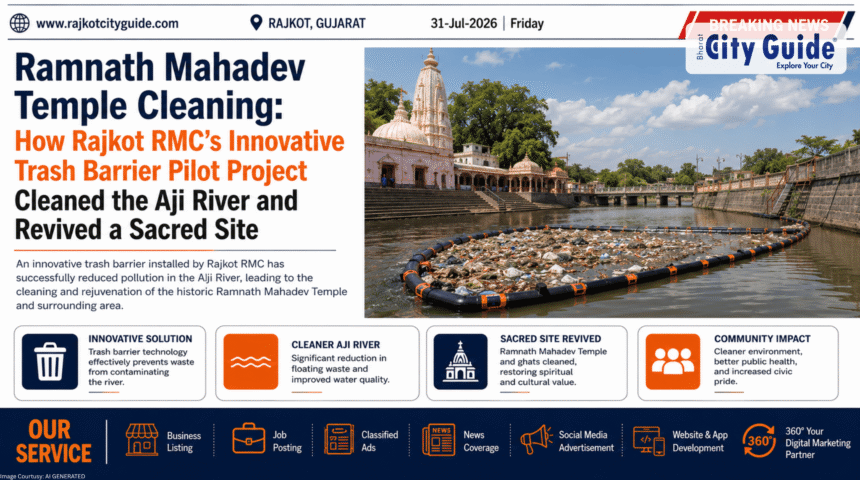
However, a major environmental milestone has been achieved by the Rajkot Municipal Corporation (RMC). The civic body launched a targeted pilot initiative under the broader Ramnath Mahadev Temple Cleaning framework, introducing floating trash barrier technology to the waters of the Aji River. The results of this pilot project have been remarkably successful, showing how modern engineering can effectively solve long-standing ecological problems.
In a short operational period, the RMC extracted over 128 tons of water hyacinth and floating plastic waste from the river channel directly adjacent to the temple. This breakthrough has dramatically improved the visual and ecological state of the riverbank, paving the way for a cleaner, pollution-free experience for thousands of pilgrims who visit the shrine daily. This comprehensive article explores how the project worked, its key technologies, its impact on the local community, and what it means for the future of river rejuvenation across urban India.
What is the Ramnath Mahadev Temple Cleaning Project?
The Ramnath Mahadev Temple Cleaning project is a dedicated environmental and civic restoration initiative spearheaded by the Rajkot Municipal Corporation. The primary focus of this project is to clean, purify, and maintain the stretch of the Aji River that flows immediately alongside the historic Ramnath Mahadev Temple, a site of immense spiritual and historical importance to the people of Saurashtra.
For years, this specific area suffered from heavy waste accumulation. Solid plastic waste, religious offerings, and rapid water hyacinth growth choked the river flow, creating stagnant pools, foul odors, and breeding grounds for mosquitoes. The cleaning initiative uses a combination of floating physical barriers, heavy machinery like marine excavators, and regular manual labor to remove surface pollutants. By addressing the root cause of the floating debris, the project aims to restore the river’s natural flow and elevate the spiritual atmosphere of the temple premises.
Why This News is Important
This development marks a significant shift in how municipalities handle urban river pollution. Traditionally, river cleaning involves reactive, labor-intensive manual clearing or expensive dredging operations that only provide temporary relief. The success of the RMC’s trash barrier pilot project proves that proactive, technology-driven interceptors can capture waste efficiently before it spreads across the water surface.
Furthermore, this project is highly important because it directly connects environmental action with the preservation of cultural heritage. The Ramnath Mahadev Temple is a major landmark in Rajkot, especially during holy months like Shravan, when footfall increases exponentially. Ensuring a clean, odor-free, and hygienic riverfront protects public health, boosts local religious tourism, and sets a practical example that other cities can replicate for their own polluted urban waterways.
Background Information and Context
To fully understand the necessity of this project, it helps to examine the geographical and environmental history of the Aji River in Rajkot. The Aji River serves as a major water lifeline for the city, but rapid urbanization, industrial growth, and domestic sewage discharge have severely impacted its water quality over the past few decades.
One of the biggest issues facing the river is the rapid growth of water hyacinth (Eichhornia crassipes). This invasive weed thrives in water bodies rich in nutrients from agricultural runoff and domestic sewage. The weed spreads quickly, forming thick green mats over the water surface that block sunlight and deplete dissolved oxygen levels. This process harms aquatic life, stops natural water flow, and traps large amounts of urban plastic waste, turning beautiful river stretches into choked dump yards.
The area near the Ramnath Mahadev Temple has been particularly vulnerable to this problem. Because the temple sits right along the river bank, floating waste naturally drifted and collected near the steps (ghats), causing continuous complaints from devotees and local residents. Recognizing the need for a sustainable solution, the RMC decided to move away from temporary cleaning methods and invested in modern floating interceptor technology.
Key Highlights of the Success
- Massive Waste Extraction: The RMC successfully removed more than 128 tons of water hyacinth and solid waste from the designated pilot zone.
- Successful Trash Barrier Technology: The installation of heavy-duty floating trash barriers proved highly effective at catching floating debris without harming the natural movement of the water.
- Strategic Pilot Zone: The project focused on the river stretch near the Ramnath Mahadev Temple, directly improving the environment around the historic shrine.
- Efficient Operations: Using a combination of floating barriers and mechanical shore-based equipment allowed for continuous cleaning with minimal disruption.
- Odor and Pest Reduction: Clearing the heavy weed blankets drastically reduced stagnant water pools, lowering mosquito breeding and foul smells in the area.
Detailed Explanation of the Trash Barrier Pilot Project
The core success of the Ramnath Mahadev Temple Cleaning initiative lies in the deployment of floating trash barriers across the Aji River. These barriers are heavy-duty, modular floating booms designed to span the width of a river channel. They feature a durable, high-density polyethylene (HDPE) floating top section and a submerged mesh or skirt that extends just beneath the surface.
[Upstream Floating Debris & Hyacinth]
                 │
                 ▼
     ▼▼▼▼▼▼▼▼▼▼▼▼▼▼▼▼▼▼▼▼▼▼▼
    [ Floating Trash Barrier ]  ◄── Captures 128+ Tons of Waste
     ▲▲▲▲▲▲▲▲▲▲▲▲▲▲▲▲▲▲▲▲▲▲▲
                 │
                 ▼
[Clean, Free-Flowing River to Temple Ghats]
As the river current moves down the Aji, it carries along loose water hyacinth plants and discarded plastics. The floating trash barrier stands as a secure gate, intercepting this debris on the surface while allowing clean water to pass underneath freely. Over the course of the pilot project, the barrier successfully gathered and held over 128 tons of biomass and plastic waste.
Once the waste was collected along the barrier line, RMC cleaning crews used mechanical excavators and long-reach cranes to lift the heavy, waterlogged material out of the river. The waste was then loaded onto municipal dump trucks and transported to designated recycling and organic processing facilities. This mechanical approach proved far safer and faster than relying solely on manual labor, allowing the city to clear large volumes of weeds in record time.
Benefits and Long-Term Importance
The successful pilot project near the temple offers several key advantages:
1. Restoration of Aquatic Ecology
By clearing out the thick blankets of water hyacinth, the project allows sunlight to reach into the deeper layers of the Aji River. This helps restore natural dissolved oxygen levels, supporting local fish populations and reviving the river’s micro-ecosystem.
2. Enhanced Civic Pride and Religious Tourism
A clean riverfront changes the entire atmosphere around the Ramnath Mahadev Temple. Devotees can now perform their prayers and rituals by the riverside without facing piles of floating garbage or foul odors, restoring a sense of dignity to the historic site.
3. Cost-Effective Waste Management
Deploying passive floating barriers is far more economical than running continuous motorboats or hiring large daily labor forces to skim the river surface. The barriers utilize the river’s natural flow to bring the trash directly to a centralized collection point, saving the city time and taxpayer money.
How It Impacts the Local Community
Devotees and Pilgrims
For the thousands of spiritual visitors who gather at the Ramnath Mahadev Temple, the successful cleaning project brings immediate relief. The elimination of foul odors and messy riverbanks allows pilgrims to focus on their prayers in a peaceful, clean environment.
Local Residents and Public Health
The communities living along the banks of the Aji River benefit from a healthier living space. Removing the stagnant mats of water hyacinth eliminates primary breeding grounds for mosquitoes, helping reduce the seasonal risk of vector-borne diseases like dengue and malaria in the surrounding neighborhoods.
Environmentalists and Students
The success of this pilot project provides a practical case study for engineering students, environmental researchers, and green activists in Gujarat. It shows how simple, effective mechanical interventions can be used to tackle complex pollution issues in urban rivers.
Expert Insights and Future Perspective
Urban development experts and environmental engineers view the Rajkot trash barrier project as a model for scalable river management. Resource management specialists point out that intercepting solid waste at the surface is the first essential step toward comprehensive river restoration.
Experts note that while surface cleaning is highly effective, long-term success requires stopping untreated domestic sewage and industrial effluents from flowing into the river upstream. The future outlook for the Aji River looks bright, as the Rajkot Municipal Corporation (RMC) plans to expand this trash barrier system to other critical points along the urban river channel, creating a multi-stage defense system against plastic pollution and invasive weeds.
Challenges and Ongoing Concerns
While the pilot project achieved excellent results, maintaining a clean river channel comes with ongoing challenges:
- Relentless Weed Growth: Water hyacinth grows incredibly fast, meaning the RMC must maintain continuous clearing schedules to prevent the weeds from returning.
- Upstream Waste Disposal: As long as plastic waste and garbage are thrown into the river upstream, the trash barriers will face constant pressure.
- Monsoon Current Adjustments: During heavy monsoon floods, the barriers must be carefully monitored or temporarily adjusted to handle rapid water flows and heavy structural strain.
Frequently Asked Questions (FAQs)
1. What was the main goal of the Ramnath Mahadev Temple Cleaning pilot project?
The project aimed to clean the Aji River stretch near the historic temple by using modern floating trash barriers to collect and remove heavy accumulations of water hyacinth and urban plastic waste.
2. How much waste was removed during this Rajkot Municipal Corporation initiative?
The Rajkot Municipal Corporation successfully collected and removed over 128 tons of water hyacinth and floating debris during the pilot phase of the project.
3. How does floating trash barrier technology work?
The technology uses a chain of floating booms secured across the river channel. It captures floating plastics and surface weeds carried by the current while allowing water to flow naturally underneath.
4. Does the water hyacinth removal help reduce local mosquito problems?
Yes. The thick mats of water hyacinth create stagnant pools where mosquitoes breed. Removing these weeds allows the water to flow, which significantly cuts down on mosquito populations and foul odors.
5. Will this cleaning project be expanded to other parts of the Aji River?
Following the success of this pilot project near the temple, the RMC plans to explore installing similar trash barriers at various other strategic points along the river.
6. How can visitors help keep the temple area clean?
Visitors can support the project by disposing of religious offerings, plastics, and general waste in designated municipal dustbins rather than throwing them directly into the river water.
Conclusion
The successful pilot project under the Ramnath Mahadev Temple Cleaning framework shows how modern, practical technology can be used to restore urban waterways. By intercepting and removing over 128 tons of water hyacinth and solid waste, the Rajkot Municipal Corporation has revitalized the environment surrounding one of the city’s most cherished historical landmarks.
This achievement serves as a helpful roadmap for other municipal corporations across the country, proving that protecting our environment and honoring our cultural heritage go hand in hand. With continued community support, strict waste management policies, and expanded barrier installations, the Aji River can flow clean and beautiful for generations to come.