Introduction
As monsoon rains cascade across Western India, urban administration bodies face a recurring public health imperative: combating the seasonal surge of vector-borne illnesses. In response to rising health risks, the Rajkot Municipal Corporation (RMC) has initiated a massive, structured public health initiative known as the Rajkot RMC Anti Mosquito Campaign. With humidity levels climbing and localized waterlogging creating ideal conditions for insect breeding, local health authorities have mobilized a widespread door-to-door drive across the city.
- Introduction
- What is Rajkot RMC Anti Mosquito Campaign?
- Why This News is Important
- Background Information
- Key Highlights
- Detailed Explanation of the Event
- Benefits, Features, and Importance
- How It Impacts People
- Expert Insights and Industry Perspective
- Challenges and Limitations
- Future Outlook
- Frequently Asked Questions (FAQs)
- Conclusion
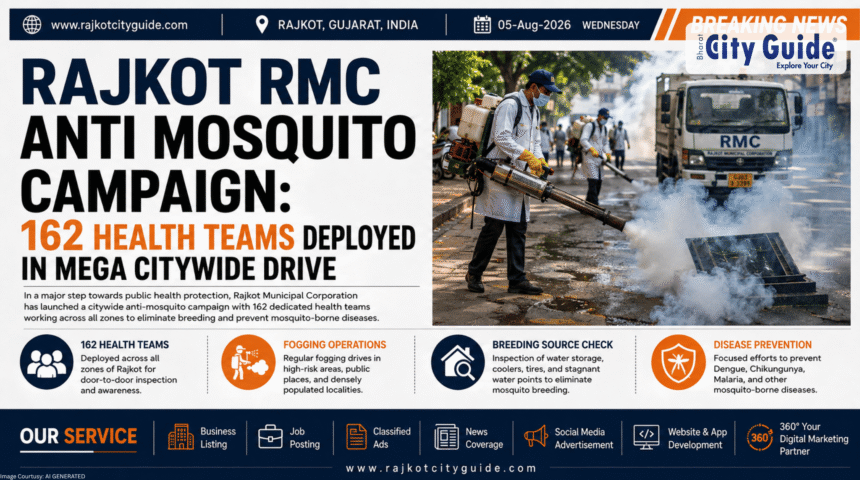
Under this intensive public health drive, 162 dedicated health teams have been deployed across all wards of Rajkot. Operating continuously until August 31, these specialized survey teams are charged with identifying, treating, and eliminating larval breeding grounds inside residential properties, commercial establishments, construction sites, and vacant plots. Monsoon showers frequently lead to stagnant water accumulation in domestic containers, overhead tanks, discarded tires, and decorative garden features—all of which serve as ideal habitats for the Aedes aegypti and Anopheles mosquito species responsible for spreading Dengue, Chikungunya, and Malaria.
This proactive campaign reflects a vital shift toward preventive urban healthcare. Rather than relying solely on reactive hospital management after an outbreak reaches its peak, civic administrators are targeting vector risks at the source. By combining field-level inspections, chemical anti-larval treatments, administrative penalties, and public awareness, the civic administration aims to safeguard citizens throughout the monsoon season.
What is Rajkot RMC Anti Mosquito Campaign?
The Rajkot RMC Anti Mosquito Campaign is a comprehensive, multi-pronged public health operation orchestrated by the Health Department of the Rajkot Municipal Corporation. Designed specifically to curb vector-borne transmission during the rainy season, the drive integrates field surveillance, vector suppression, community education, and strict regulatory enforcement.
At its core, the initiative relies on field-level door-to-door monitoring. A team of 162 healthcare workers, multi-purpose health workers (MPHW), female health workers (FHW), and field inspectors visit individual homes and commercial premises across all administrative zones of Rajkot. These workers conduct systematic inspections of potential water containers, administer anti-larval abate solutions to standing water, apply bio-larvicides, and perform thermal fogging operations in vulnerable neighborhoods.
Beyond biological and chemical vector control, the campaign serves a regulatory purpose. When inspectors discover unchecked mosquito breeding on private or commercial premises—such as active construction projects or commercial rooftops—administrative notices and financial penalties are issued to enforce compliance. The program aims to establish accountability among property owners while fostering civic responsibility regarding vector management.
Why This News is Important
Monsoon-related illnesses pose a persistent threat to public health systems in rapidly developing urban centers like Rajkot. Understanding the significance of this campaign requires examining both its short-term health benefits and its broader urban policy implications:
1. Timely Prevention of Seasonal Outbreaks
Monsoon conditions accelerate the breeding cycle of mosquitoes from weeks to just a few days. By launching a structured drive during peak rainfall months, the RMC interrupts larval development before adult mosquito populations spike, reducing the incidence of life-threatening viral infections like Dengue Hemorrhagic Fever.
2. Reducing Strain on Healthcare Infrastructure
During seasonal health surges, public and private hospitals often face bed shortages, strained ICU capacity, and high demand for blood products such as platelets. By curbing transmission at the neighborhood level, the municipal drive helps protect medical infrastructure from overload.
3. Protection for Vulnerable Populations
Children, the elderly, pregnant women, and immunocompromised individuals face higher risks of severe complications from vector-borne illnesses. Systematic ward-level surveillance ensures that high-density residential areas and informal settlements receive equal protection and health assistance.
4. Direct Financial Impact on Households
Vector-borne illnesses frequently cause economic hardship due to medical bills, hospital stays, and lost working days. Effective preventive operations help reduce the economic burden on working-class families and small business owners.
Background Information
Rajkot, a major industrial and commercial hub in Gujarat’s Saurashtra region, has expanded rapidly over the past two decades. Rapid urban growth, ongoing infrastructure development, construction projects, and high population density present distinct municipal administration challenges—particularly during the southwest monsoon.
Historically, urban areas across Saurashtra experience elevated vector activity between July and October. Stagnant water collects in open construction sites, unpaved drainage ditches, decorative garden pots, and scrap yards, creating breeding sites across the city. Aedes aegypti mosquitoes, which transmit Dengue and Chikungunya, thrive in clean, stagnant water inside domestic settings. Because these mosquitoes bite primarily during the day and breed in small volumes of clear water, conventional outdoor fogging alone is often insufficient.
Recognizing these challenges, the RMC Health Department revised its vector-control strategy. In previous years, civic bodies relied primarily on reactive measures, deploying teams only after hospital admissions began to climb. Recent policy shifts prioritize proactive containment, using real-time data collection, GIS mapping, ward-level team distribution, and early enforcement measures to prevent disease transmission.
Key Highlights
The main components of the ongoing municipal drive in Rajkot include:
- Deployment of 162 Field Teams: Specialized teams are conducting house-to-house inspections across all city wards until August 31.
- Extensive Site Inspections: Over 2,864 premises—including private homes, commercial complexes, industrial units, construction sites, and vacant plots—have been inspected.
- Strict Administrative Action: Over 1,802 statutory notices have been issued to property owners found violating breeding prevention standards.
- Financial Penalties: Spot fines totaling ₹1.61 lakh have been collected from 217 non-compliant commercial, industrial, and residential sites.
- Targeted Anti-Larval Treatment: Temephos (Abate) liquid and biological larvicides are being applied to water-storage structures, coolers, and open tanks.
- Integrated Fogging Drives: Thermal and cold fogging operations are deployed around infected areas and high-risk clusters.
- Public Education Campaigns: Direct awareness drives educate residents on identifying mosquito larvae and maintaining weekly dry days for household water containers.
Detailed Explanation of the Event
The Rajkot RMC Anti Mosquito Campaign operates through a systematic, multi-tier execution strategy designed for maximum coverage across all 18 administrative wards of Rajkot Municipal Corporation.
+------------------------------------------------------------------------+
|                   RMC HEALTH DEPARTMENT ADMINISTRATION                  |
+------------------------------------------------------------------------+
                                    |
                                    v
+------------------------------------------------------------------------+
|             162 FIELD HEALTH TEAMS (31st AUGUST DRIVE)                 |
+------------------------------------------------------------------------+
        |                                   |                    |
        v                                   v                    v
+-----------------------+   +-----------------------+   +-----------------------+
| Residential Surveys   |   | Commercial & Sites    |   | Vector Elimination    |
| - Door-to-Door Checks |   | - Construction Checks |   | - Abate & Biological  |
| - Domestic Tanks      |   | - Commercial Roofs    |   | - Thermal Fogging     |
| - Air Coolers         |   | - Fines & Notices     |   | - Source Reduction    |
+-----------------------+   +-----------------------+   +-----------------------+
Ward-Wise Team Allocation and Field Execution
The health department has divided the city into designated operational sectors, pairing each team with specific residential neighborhoods and commercial zones. Field health workers visit households during morning hours, inspecting water storage drums, overhead tanks, flower pots, air cooler trays, and outdoor storage items where rainwater accumulates.
When standing water is found, field teams check for mosquito larvae (small, wriggling organisms near the water surface). If larvae are present, teams drain the container or treat the water with approved anti-larval chemical compounds like Temephos, which destroys mosquito larvae without rendering water hazardous for general non-potable use.
Monitoring Commercial and Construction Sites
Commercial sites, scrap yards, auto repair shops, and active construction sites represent significant breeding risks due to open water storage and discarded materials. RMC enforcement squads conduct unannounced inspections at these locations. Where standing water and unmanaged breeding sites are discovered, officers issue immediate administrative notices under municipal public health regulations and collect spot fines. During recent inspections across thousands of locations, civic authorities penalised 217 premises and collected ₹1.61 lakh in fines.
Integrated Fogging Operations
Complementing anti-larval treatment, civic workers execute targeted fogging drives in areas where fever cases have been recorded. Vehicle-mounted fogging machines spray pyrethrin-based formulations in open streets and alleyways, while hand-held fogging devices treat narrow lanes, apartment corridors, and dense residential clusters to destroy adult mosquito populations.
Benefits, Features, and Importance
The implementation of the Rajkot RMC Anti Mosquito Campaign provides several administrative, medical, and community-level advantages:
+-----------------------------------------------------------------------+
|                    BENEFITS & ADVANTAGES OF THE DRIVE                 |
+-----------------------------------------------------------------------+
|  1. VECTOR CONTROL      | Eliminates larval habitats at the source   |
|  2. CIVIC ACCOUNTABILITY| Fines and notices enforce compliance      |
|  3. HEALTH PROTECTION   | Lowers seasonal Dengue and Malaria cases    |
|  4. ECONOMIC SURVIVAL   | Prevents medical bills and work disruption  |
|  5. PUBLIC AWARENESS    | Teaches residents preventive household habits|
+-----------------------------------------------------------------------+
Major Features and Benefits
- Source Reduction Focus: By targeting mosquito breeding at the larval stage, the campaign prevents adult mosquito emergence, offering a more effective long-term solution than relying on adulticide spraying alone.
- Standardized Municipal Enforcement: Fines and statutory notices encourage commercial operators, real estate developers, and residents to maintain clean premises.
- Comprehensive Geographic Reach: Deploying 162 dedicated teams ensures balanced coverage across affluent housing societies, commercial corridors, industrial zones, and dense urban settlements.
- Public Education & Engagement: Direct interactions between health workers and residents help households learn practical prevention techniques, such as observing weekly “dry days”.
- Real-Time Data Collection: Field team reporting allows municipal administrators to identify rising infection clusters early and allocate resources dynamically.
How It Impacts People
The civic campaign influences multiple segments of the local community:
Residential Households and Families
For local residents, field visits offer immediate, practical assistance in identifying hidden breeding spots around the home. Families receive guidance on covering storage vessels, cleaning cooler trays, and using larvicidal agents safely. These measures help protect children and elderly family members from vector-borne disease risks.
Business Owners and Commercial Establishments
Shopkeepers, mall managers, hotel operators, and commercial building management must keep their facilities clear of stagnant water. While administrative fines require strict compliance, maintaining clean premises protects workers, customers, and overall business operations during the peak shopping season.
Construction Developers and Contractors
Construction sites are high-risk locations for mosquito breeding due to open curing tanks, unpaved surfaces, and temporary worker housing. Developers must implement active water drainage, treat curing basins with anti-larval chemicals, and provide safe living conditions for workers to avoid project disruptions and civic penalties.
Local Healthcare Providers and Hospitals
Reduced community disease transmission eases seasonal pressure on local outpatient departments, emergency rooms, and diagnostic laboratories. This allows hospital staff to maintain higher quality care for critical patients.
Expert Insights and Industry Perspective
Public health experts and epidemiologists consistently emphasize that vector management requires integrated pest management (IPM) rather than isolated chemical interventions.
Modern urban health research highlights three key pillars for controlling vector-borne disease in growing cities:
                       +-------------------------+
                       |    THREE PILLARS OF     |
                       | SUSTAINABLE VECTOR CARE |
                       +-------------------------+
                                    |
          +-------------------------+-------------------------+
          |                         |                         |
          v                         v                         v
+-------------------+     +-------------------+     +-------------------+
| Source Reduction  |     | Regulatory Pressure|    | Community Mobilization|
| Removing stagnant |     | Inspections, fines,|    | Household dry days,|
| water collections |     | and legal notices |    | personal protection|
+-------------------+     +-------------------+     +-------------------+
- Environmental Source Reduction: Removing standing water remains the single most effective vector control mechanism. Chemical sprays kill adult mosquitoes temporarily, but eliminating breeding water permanently breaks the vector lifecycle.
- Regulatory Enforcement: Public health studies demonstrate that combining voluntary education with clear enforcement mechanisms (such as spot fines) significantly increases compliance among commercial property owners.
- Community Ownership: Municipal action alone cannot reach every domestic container in a major city. Sustainable vector control requires individual households to manage their living spaces actively.
Challenges and Limitations
Despite its clear structure and scope, the Rajkot RMC Anti Mosquito Campaign encounters several operational challenges in the field:
- Access Restrictions: Field workers sometimes face closed doors, locked properties, or reluctance from residents to allow interior home inspections.
- Rapid Re-accumulation of Water: Frequent monsoon rainfall continuously refilling outdoor vessels requires regular re-inspection of high-risk neighborhoods.
- High-Density Urban Layouts: In dense, informal urban settlements, narrow lanes and elevated structures make vector inspection and uniform chemical application difficult.
- Commercial and Vacant Plot Neglect: Absentee property owners and unmonitored vacant plots often accumulate rainwater in overgrown vegetation, creating persistent breeding hazards.
- Chemical Resistance Concerns: Over-relying on single chemical larvicides over time can lead to vector resistance, requiring health authorities to rotate biological and chemical treatments.
Future Outlook
Looking past the current August 31 campaign deadline, vector control strategies in urban Gujarat are evolving toward greater reliance on data and technology. Municipalities are increasingly adopting modern urban health management practices:
- GIS-Based Vector Mapping: Integrating geographic information systems (GIS) to map fever cases and larval sites in real time, enabling predictive resource deployment.
- Drone-Assisted Inspections: Deploying specialized aerial drones to inspect large commercial rooftops, inaccessible industrial sites, and expansive vacant plots for standing water.
- Biological Vector Control Innovations: Expanding the use of biological control agents, such as larvicidal Gambusia fish in large water bodies, and introducing eco-friendly bacterial larvicides like Bacillus thuringiensis israelensis (BTI).
- Year-Round Citizen Reporting Platforms: Incorporating vector tracking features into civic smartphone applications, allowing residents to report stagnant water accumulations directly to municipal authorities.
Frequently Asked Questions (FAQs)
Q1: What is the main objective of the Rajkot RMC Anti Mosquito Campaign?
A: The primary objective of the campaign is to prevent monsoon vector-borne disease outbreaks—such as Dengue, Malaria, and Chikungunya—by eliminating mosquito breeding grounds through door-to-door inspections, larvicidal treatments, and civic enforcement.
Q2: How many teams are involved in the current RMC health drive?
A: The Rajkot Municipal Corporation has deployed 162 specialized field health teams across all administrative wards of the city.
Q3: Until when will the anti-mosquito drive continue in Rajkot?
A: The active intensive campaign is scheduled to run continuously through August 31, covering peak monsoon vulnerability periods.
Q4: Can RMC issue fines for mosquito breeding on private property?
A: Yes. Under municipal public health guidelines, RMC officials can issue statutory notices and levy spot administrative fines on residential, commercial, or construction premises found with unchecked mosquito breeding.
Q5: How can residents identify mosquito larvae in household water containers?
A: Mosquito larvae appear as small, wriggling, worm-like creatures swimming in stagnant water, often hanging just beneath the surface to breathe.
Q6: What simple steps can households take to prevent mosquito breeding?
A: Households should observe a weekly “dry day” by emptying, scrubbing, and drying all water containers, air coolers, overhead tanks, and flower pot trays. Ensure all water storage vessels remain tightly covered.
Q7: What chemicals do RMC teams use for vector control?
A: RMC field teams use larvicides like Temephos (Abate) for standing water, bio-larvicides for open water bodies, and pyrethrin-based formulations for thermal fogging operations.
Q8: How can citizens report stagnant water or mosquito breeding in their neighborhood?
A: Citizens can contact the RMC Health Department directly via municipal helpline numbers, ward health offices, or the official RMC civic mobile portal.
Conclusion
The Rajkot RMC Anti Mosquito Campaign represents a proactive municipal effort to safeguard public health during the monsoon season. By deploying 162 field health teams, inspecting thousands of premises, enforcing compliance through fines, and providing larvicidal treatment, civic authorities are systematically reducing vector risks across the city.
However, sustainable disease prevention requires partnership between municipal authorities and local citizens. While civic teams work to treat open spaces and commercial sites, individual property owners and households must remain vigilant by eliminating standing water in their immediate surroundings. Through combined administrative action and public participation, Rajkot can effectively control seasonal health risks and maintain a safe, resilient urban environment.