Introduction
The governance framework across Gujarat has consistently emphasized direct public delivery, administrative transparency, and targeted social welfare. To mark important administrative milestones and bridge the gap between government policies and citizen access, district collectorates routinely deploy comprehensive outreach drives. These initiatives are designed to reach rural villages, suburban wards, and urban centers simultaneously, ensuring that no eligible citizen is left out of welfare networks.
- Introduction
- What is Social And Planning Program?
- Why This News is Important
- Background Information
- Key Highlights
- Detailed Explanation of the Event
- Benefits and Importance of the Program
- How It Impacts Different Audiences
- Expert Insights and Administrative Perspective
- Challenges and Operational Considerations
- Future Outlook
- Frequently Asked Questions (FAQs)
- Conclusion
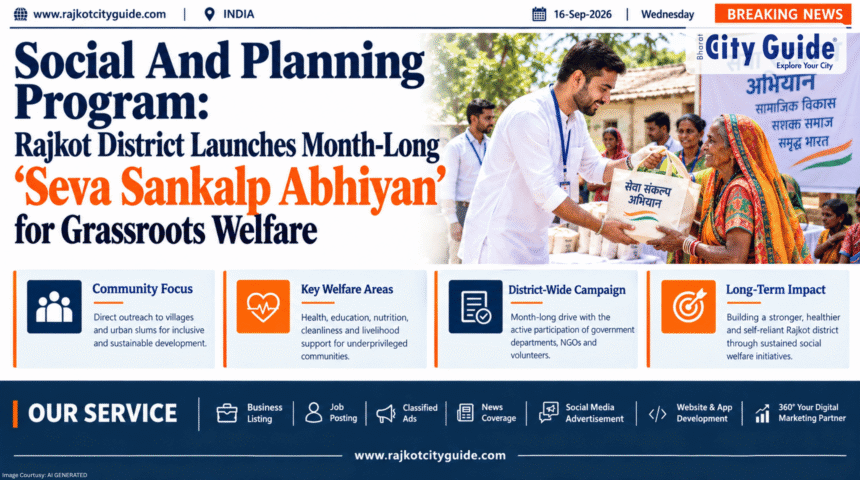
In a major administrative initiative in Western Gujarat, the Rajkot District Administration has announced the launch of a month-long campaign titled ‘Seva Sankalp Abhiyan’. This initiative serves as an extensive Social And Planning Program, integrating administrative camps, public health drives, digital scheme registrations, and civic improvement initiatives across all 11 talukas of Rajkot district. Beginning September 17, 2026, and running through mid-October, the drive brings government services directly to citizens’ doorsteps.
This news is particularly important for residents of Rajkot because complex welfare applications, health screenings, revenue updates, and civic registrations often require multiple visits to district offices. By consolidating multiple government departments under a single, well-organized Social And Planning Program, Rajkot District is streamlining administrative access, reducing bureaucratic delays, and ensuring that welfare benefits reach grass-root levels effectively.
What is Social And Planning Program?
A Social And Planning Program represents a coordinated administrative strategy where social welfare objectives are mapped alongside structured government planning, resource allocation, and departmental execution. Rather than operating in isolated silos, departments such as health, social justice, rural development, revenue, women and child welfare, and urban planning come together to deliver integrated public services.
+--------------------------------------------------------------------------+
|            INTEGRATED SOCIAL AND PLANNING PROGRAM FRAMEWORK              |
+--------------------------------------------------------------------------+
                                     |
    +--------------------------------+--------------------------------+
    |                                |                                |
    v                                v                                v
[ STRATEGIC PLANNING ]       [ SERVICE DELIVERY ]         [ COMMUNITY OUTPUT ]
- Multi-Department Sync      - On-Site Mobile Camps       - Immediate Registrations
- Taluka-Wise Timelines      - Direct Benefit Transfer    - Free Health Screening
- Targeted Beneficiaries     - Grievance Redressal        - Direct Civic Outreach
Key Pillars of Integrated Social and Planning Initiatives
- Grassroots Administrative Access: Bringing department officers directly into village panchayats and municipal wards to process beneficiary applications on the spot.
- Data-Driven Welfare Mapping: Using digital verification platforms to identify eligible families who have not yet accessed government welfare programs.
- Multi-Sectoral Coordination: Combining healthcare, education, nutrition, social security pensions, and infrastructure maintenance under a single campaign timeline.
- Public Participation (Jan Bhagidari): Encouraging youth, non-governmental organizations, and local community leaders to help register eligible citizens and support civic drives.
Why This News is Important
The launch of the month-long Seva Sankalp Abhiyan as a primary Social And Planning Program in Rajkot district is significant for several key reasons:
1. Direct Elimination of Bureaucratic Delays
Citizens in rural talukas often face challenges traveling to the central district collectorate or taluka offices to resolve minor documentation issues. Dedicated local camps eliminate travel costs and long wait times by resolving applications on-site.
2. Comprehensive Outreach for Major Welfare Schemes
The month-long campaign accelerates enrollment for major central and state initiatives, including Ayushman Bharat health cards, PM Kisan Samman Nidhi, Ma Amrutam card renewals, widow pensions, and senior citizen assistance schemes.
3. Immediate Public Health and Preventive Care
Concurrently hosting mega health check-up camps, blood donation drives, and diagnostic screenings ensures early identification of chronic health conditions among rural and low-income populations.
Background Information
Gujarat has a strong history of implementing targeted administrative outreach programs. Initiatives like Seva Setu, Krishi Mahotsav, and Garib Kalyan Mela have established precedents for bringing governance directly to local communities. Historically, administrative campaigns were held over short, 2-to-3-day windows. However, experience showed that short timelines often left behind eligible citizens who missed the initial window due to daily work commitments or lack of documentation.
[ Traditional Model: Citizens Visit Multiple Isolated District Offices ]
                                    |
                                    v
[ Pilot Outreach: Short-Term Local Camps (Seva Setu / Garib Kalyan Melas) ]
                                    |
                                    v
[ Modern Framework: Month-Long Integrated Social And Planning Program ]
                                    |
                                    v
[ Rajkot District Drive: Seva Sankalp Abhiyan (Sept 17 - Oct 17, 2026) ]
To build a more effective delivery model, the State Administration introduced month-long integrated campaigns. Under this extended format, district collectors, sub-divisional magistrates, and taluka development officers create detailed calendar plans covering every ward and village. The month-long ‘Seva Sankalp Abhiyan’ in Rajkot represents this refined governance strategy, ensuring adequate time for public awareness, document collection, verification, and final certificate issuance.
Key Highlights
- Month-Long Duration: The Seva Sankalp Abhiyan operates across Rajkot district for an entire month, running from September 17 to October 17, 2026.
- District-Wide Coverage: Special camps and planning programs will be conducted across all 11 talukas and urban municipal zones in Rajkot.
- Multi-Department Integration: Includes health, revenue, social justice and empowerment, agriculture, civic infrastructure, and child welfare departments under one roof.
- On-the-Spot Processing: Issuance of income certificates, caste certificates, senior citizen ID cards, and welfare scheme enrollments during local camps.
- Public Health Focus: Organizes mega blood donation camps, free diagnostic health screenings, and Anganwadi nutrition drives.
- Youth Engagement: Connects young volunteers through platforms like MY Bharat (Mera Yuva Bharat) to assist in civic drives and digital literacy outreach.
Detailed Explanation of the Event
The ‘Seva Sankalp Abhiyan’ launched across Rajkot district is structured as a phased, highly coordinated Social And Planning Program. The District Collectorate, in coordination with the Rajkot Municipal Corporation (RMC) and District Panchayat authorities, has mapped out a day-by-day schedule to cover both rural villages and urban municipal wards.
+--------------------------------------------------------------------------+
|              PROGRAM DEPLOYMENT STRUCTURE & ACTIVITIES                   |
+--------------------------------------------------------------------------+
| Sector Domain        | Administrative & On-Site Camp Deliverables       |
+----------------------+---------------------------------------------------+
| Revenue & Civil      | Income certificates, ration card updates, IDs     |
| Health & Wellness    | Ayushman card generation, health check-up camps   |
| Social Empowerment   | Pension processing, disability kit allocations   |
| Agriculture & Rural  | PM-Kisan verification, soil card distribution     |
| Youth & Civic        | Cleanliness drives, blood donation, volunteer registration|
+----------------------+---------------------------------------------------+
Throughout the month-long drive, mobile administrative teams visit designated cluster villages and urban community centers. Officers from various government branches sit together at these service camps. Citizens can bring their base identification documents to apply for welfare schemes, resolve pending ration card updates, request land record corrections, or receive free medical health evaluations.
In addition to administrative processing, the campaign features active public health and environmental initiatives. Cleanliness drives (Swachhata Abhiyan) are scheduled across public places, schools, and government premises. Meanwhile, local Anganwadi and ASHA workers are recognized for their frontline contributions to maternal and child healthcare through dedicated felicitation assemblies.
Benefits and Importance of the Program
Implementing a comprehensive Social And Planning Program at the district level yields multi-faceted advantages for public administration and community welfare:
1. Accelerated Direct Benefit Transfers (DBT)
By verifying accounts and updating digital documentation on-site, eligible beneficiaries are seamlessly integrated into Direct Benefit Transfer systems, eliminating middleman delays and ensuring funds reach recipients directly.
2. Enhanced Public Trust and Accessibility
When administrative machinery visits local communities rather than requiring citizens to navigate distant offices, public trust in government institutions grows significantly.
3. Integrated Preventive Healthcare
Routine health screenings conducted at local camps allow health workers to detect conditions like hypertension, diabetes, and anemia early, connecting patients with follow-up care at government health centers.
How It Impacts Different Audiences
| Audience Category | Direct Impact & Event Engagement |
| Rural Citizens & Farmers | Immediate access to revenue documents, pension schemes, and agricultural assistance programs on-site. |
| Women & Children | Enhanced nutritional tracking via Anganwadi drives and streamlined access to maternal health benefits. |
| Youth & Students | Volunteer opportunities through MY Bharat platform, leadership participation, and skill awareness seminars. |
| Senior Citizens & Differently Abled | Dedicated priority queues for pension enrollment, disability certifications, and free health checks. |
Expert Insights and Administrative Perspective
Public administration specialists view the month-long district drive in Rajkot as a model example of proactive civic governance.
“A well-structured Social And Planning Program shifts the administrative focus from passive office-bound processing to active outreach. By dedicating an entire month to door-step camps, district authorities ensure that marginalized families who lack digital literacy or transit options are fully integrated into state welfare systems.”
District officers also emphasize that combining administrative approvals with health drives and civic cleanliness initiatives maximizes the social impact of every camp.
Challenges and Operational Considerations
Executing a month-long, district-wide campaign requires careful management of operational complexities:
- Managing Heavy Camp Attendance: High public turnout at village camps requires organized queue management, shaded seating, and adequate documentation desks.
- Ensuring Stable Digital Connectivity: Processing live digital applications, biometric verifications, and Ayushman card approvals requires reliable internet connectivity in remote rural pockets.
- Sustaining Inter-Departmental Coordination: Synchronizing schedules across revenue, health, rural development, and municipal officers requires constant monitoring by taluka leaders.
Future Outlook
Following the launch of this Social And Planning Program in Rajkot, several long-term outcomes are anticipated:
- Near-Universal Welfare Scheme Coverage: Significant reduction in pending welfare applications across both rural and urban areas in Rajkot district.
- Updated Digital Citizen Records: Refined, verified district databases that simplify future automated benefit deliveries.
- Replicable District Blueprint: A successful month-long execution model that can serve as a template for other districts across Gujarat for future public outreach campaigns.
Frequently Asked Questions (FAQs)
1. What is the Social And Planning Program being conducted in Rajkot?
The Social And Planning Program refers to the ‘Seva Sankalp Abhiyan’, a month-long administrative and community outreach campaign running across Rajkot district to deliver government services, health screenings, and welfare enrollments directly to citizens.
2. What are the start and end dates of the campaign in Rajkot?
The campaign runs for one full month, starting on September 17, 2026, and continuing through October 17, 2026.
3. Which government services can citizens access at these local camps?
Citizens can access services such as income and caste certificate processing, Ayushman card enrollment, pension registrations, ration card updates, land record corrections, and free health check-ups.
4. Who can attend the health and welfare camps?
All residents of Rajkot district—including rural villagers, urban residents, senior citizens, farmers, women, and youth—are eligible to participate and access camp services.
5. Where will the Seva Sankalp Abhiyan camps be held?
Camps are scheduled across all 11 talukas of Rajkot district, holding sessions at village panchayat offices, community halls, primary health centers, and municipal ward offices.
6. How can youth participate in this month-long drive?
Young volunteers can register through the MY Bharat (Mera Yuva Bharat) digital platform to assist in organizing health drives, digital assistance desks, and cleanliness campaigns.
7. Do citizens need to pay any fees to register for schemes at these camps?
No, the administrative services, health check-ups, and scheme application verifications provided during these official government camps are completely free of charge.
Conclusion
The launch of the ‘Seva Sankalp Abhiyan’ in Rajkot district demonstrates the impact of a well-executed Social And Planning Program. By dedicating a full month to localized service camps, health check-ups, and digital welfare enrollments, the district administration is bringing essential government services directly to local communities.
This comprehensive drive not only addresses pending documentation needs and health evaluations but also strengthens public trust in civic governance. As the campaign unfolds across all 11 talukas, Rajkot serves as a practical model for how integrated planning and administrative dedication can transform public service delivery.