Introduction
India’s food culture has always been deeply rooted in carbohydrates—rice, wheat, and other grain-based staples form the foundation of most traditional meals. For decades, these foods have been affordable, accessible, and culturally central to Indian households.
- Introduction
- What Does Carbohydrate-Heavy Mean?
- Why India Traditionally Consumed High Carbs
- 1. Affordability
- 2. Agriculture-Based Economy
- 3. Cultural Food Practices
- 4. Energy Needs
- 1. Diabetes Epidemic in India
- 2. Obesity in Urban India
- 3. Heart Disease Risks
- 4. Lifestyle Changes
- Definition
- 1. Increased Health Awareness
- 2. Rise of Fitness Culture
- 3. Urban Lifestyle Changes
- 4. Influence of Social Media
- 5. Growing Middle-Class Income
- 1. Animal-Based Protein
- 2. Plant-Based Protein
- 3. Emerging Protein Foods
- 1. Misconception That Indian Diet Is Already Balanced
- 2. Vegetarian Diet Limitations
- 3. Cost of Protein Foods
- 4. Lack of Awareness
- General Guidelines:
- 1. Muscle Strength
- 2. Weight Management
- 3. Better Metabolism
- 4. Blood Sugar Control
- 5. Improved Immunity
- Urban India:
- Rural India:
- 1. High-Protein Products
- 2. Restaurant Menus
- 3. E-commerce Growth
- Myth 1: Protein is only for bodybuilders
- Myth 2: Vegetarian diets lack protein
- Myth 3: High protein is harmful
- Expected Trends:
- 1. Why are Indian diets shifting toward protein?
- 2. Is protein more important than carbohydrates?
- 3. Can vegetarians get enough protein?
- 4. What is the main protein source in India?
- 5. Do Indians consume enough protein?
- 6. Are protein supplements necessary?
- 7. What is a balanced diet?
However, in recent years, a noticeable transformation is taking place. The Indian middle class is gradually shifting from carbohydrate-heavy diets toward more protein-balanced nutrition. This change is driven by rising health awareness, urban lifestyle pressures, increasing lifestyle diseases, and greater exposure to global dietary trends.
The shift is not just about food preferences—it reflects a broader transformation in how India views health, fitness, and long-term well-being.
In this detailed article, we explore how India’s dietary habits are changing, why protein is becoming more important, what challenges exist, and how this transition is shaping the future of nutrition in India.
Understanding India’s Traditional Carbohydrate-Heavy Diet
What Does Carbohydrate-Heavy Mean?
A carbohydrate-heavy diet is one where most daily calories come from:
- Rice
- Wheat (roti, chapati)
- Sugar
- Starchy foods
Why India Traditionally Consumed High Carbs
1. Affordability
Grains were the cheapest source of energy.
2. Agriculture-Based Economy
Rice and wheat dominated farming systems.
3. Cultural Food Practices
Meals were built around rotis and rice.
4. Energy Needs
Physically demanding lifestyles required high energy intake.
Rising Health Concerns Driving Dietary Change
1. Diabetes Epidemic in India
India is often referred to as the “diabetes capital of the world.” Excess carbohydrate consumption contributes to:
- Blood sugar spikes
- Insulin resistance
- Type 2 diabetes
2. Obesity in Urban India
Sedentary lifestyles combined with high-carb diets have led to:
- Weight gain
- Fat accumulation
- Metabolic disorders
3. Heart Disease Risks
High refined carbohydrate intake is linked to:
- Increased cholesterol
- Cardiovascular stress
4. Lifestyle Changes
Modern jobs involve:
- Less physical activity
- Longer sitting hours
- Reduced calorie burning
What Is a Protein-Balanced Diet?
A protein-balanced diet ensures that protein is a significant part of daily nutrition along with carbohydrates and fats.
Definition
It is a dietary approach that includes adequate protein intake to support muscle health, metabolism, and overall body function.
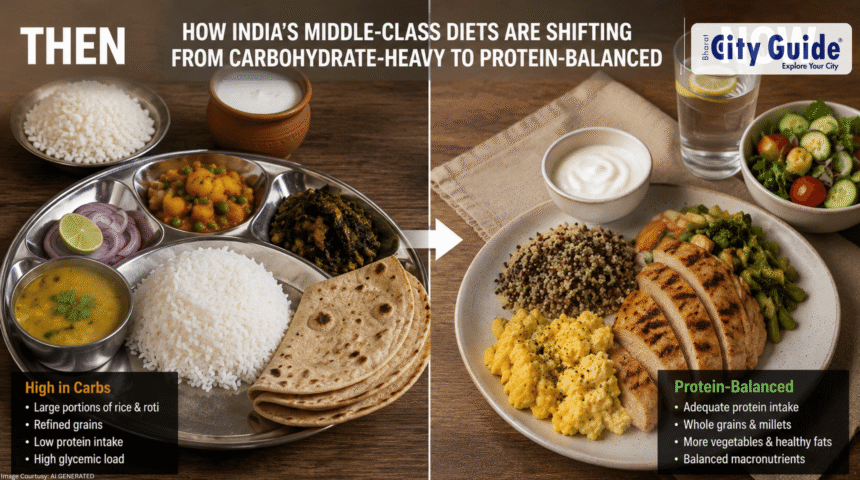
How India’s Middle-Class Diets Are Shifting From Carbohydrate-Heavy to Protein-Balanced
This shift is one of the most important nutrition transitions in modern India.
1. Increased Health Awareness
More people are:
- Reading nutrition labels
- Following fitness influencers
- Consulting dietitians
2. Rise of Fitness Culture
Gyms, yoga, and home workouts have increased demand for:
- Protein supplements
- High-protein foods
3. Urban Lifestyle Changes
Busy schedules encourage:
- Quick protein-rich meals
- Ready-to-eat healthy foods
4. Influence of Social Media
Platforms promote:
- High-protein diets
- Weight loss transformations
- Fitness challenges
5. Growing Middle-Class Income
Higher income allows:
- Better food choices
- Protein supplements
- Healthier groceries
Sources of Protein in Indian Diets
1. Animal-Based Protein
- Eggs
- Chicken
- Fish
- Dairy products
2. Plant-Based Protein
- Lentils (dal)
- Chickpeas
- Soy products
- Nuts and seeds
3. Emerging Protein Foods
- Protein bars
- Fortified foods
- Plant protein powders
Role of Dairy in Protein Intake
India has a strong dairy culture:
- Milk
- Curd
- Paneer
These are important protein sources for vegetarians.
Challenges in Increasing Protein Intake
1. Misconception That Indian Diet Is Already Balanced
Many believe dal alone is sufficient protein.
2. Vegetarian Diet Limitations
Plant proteins may lack complete amino acids.
3. Cost of Protein Foods
Meat and supplements can be expensive.
4. Lack of Awareness
Many people do not track protein intake.
Role of Government Nutrition Awareness
Public health campaigns are promoting:
- Balanced diets
- Protein awareness
- Millets and pulses consumption
Protein Requirements for Indians
General Guidelines:
- Adults: Moderate daily intake based on weight
- Active individuals: Higher protein needs
- Elderly: Increased protein for muscle maintenance
Benefits of Protein-Balanced Diets
1. Muscle Strength
Supports body structure and repair.
2. Weight Management
Helps control hunger and reduces overeating.
3. Better Metabolism
4. Blood Sugar Control
Slows carbohydrate absorption.
5. Improved Immunity
Supports immune system function.
Urban vs Rural Dietary Patterns
Urban India:
- Rapid protein adoption
- Fitness-driven diets
- Supplement use
Rural India:
- Traditional carbohydrate-heavy meals
- Gradual awareness increase
Role of Food Industry in Dietary Shift
1. High-Protein Products
- Protein milk
- Protein snacks
- Fortified foods
2. Restaurant Menus
Health-focused meals are increasing.
3. E-commerce Growth
Protein supplements widely available online.
Cultural Shift in Eating Habits
Traditional meals are evolving:
- From rice-heavy plates to balanced thalis
- From fried snacks to protein snacks
- From sugar drinks to protein shakes
Influence of Fitness and Wellness Industry
The rise of:
- Gym culture
- Yoga studios
- Online fitness coaching
has directly influenced dietary behavior.
Protein Myths in India
Myth 1: Protein is only for bodybuilders
Fact: Everyone needs protein.
Myth 2: Vegetarian diets lack protein
Fact: Proper planning provides sufficient protein.
Myth 3: High protein is harmful
Fact: Balanced intake is safe for most people.
Future of Indian Dietary Patterns
Expected Trends:
- Higher protein consumption
- Growth of plant protein market
- Personalized nutrition plans
- AI-based diet tracking
Impact on Public Health
A protein-balanced diet may help reduce:
- Diabetes rates
- Obesity
- Malnutrition
- Lifestyle diseases
Frequently Asked Questions (FAQs)
1. Why are Indian diets shifting toward protein?
Due to rising health awareness and lifestyle diseases.
2. Is protein more important than carbohydrates?
Both are important, but balance is key.
3. Can vegetarians get enough protein?
Yes, through pulses, dairy, and plant sources.
4. What is the main protein source in India?
Dal, dairy, eggs, chicken, and fish.
5. Do Indians consume enough protein?
Many still fall short of recommended intake.
6. Are protein supplements necessary?
Not always, but useful in some cases.
7. What is a balanced diet?
A mix of carbohydrates, proteins, fats, vitamins, and minerals.
Conclusion
India’s nutrition landscape is undergoing a significant transformation. The traditional carbohydrate-heavy diet that sustained generations is gradually evolving into a more balanced approach that emphasizes protein intake and overall nutritional diversity.
The shift highlighted in How India’s Middle-Class Diets Are Shifting From Carbohydrate-Heavy to Protein-Balanced reflects not just changing food habits but a deeper awareness of health, fitness, and preventive care.
As awareness continues to grow and access to diverse protein sources increases, India’s middle class is likely to move toward more balanced, health-conscious, and sustainable dietary patterns in the years ahead.