Understanding Stress Eating, Cravings, and a Healthier Relationship with Food
- Emotional Hunger
- Physical Hunger
- 1) Stress After Work
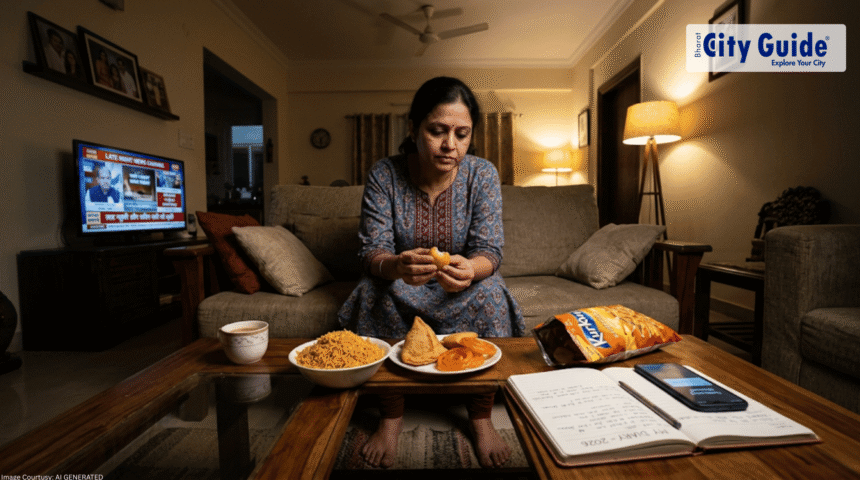
- 2) Night-Time Screen Snacking
- 3) Celebratory Overeating
- 4) Boredom Eating
- 5) Family Pressure
- Better Comfort Options
- ❌ Full Restriction
- ❌ Labeling Foods “Bad”
- ❌ Ignoring Emotions
- ❌ Extreme Dieting
- ✔ Don’t use food as a reward
- ✔ Normalize emotions
- ✔ Serve balanced meals regularly
- ✔ Keep nourishing snacks visible
- 1) Is emotional eating an eating disorder?
- 2) Can emotional eating cause weight gain?
- 3) Should I completely stop comfort foods?
- 4) Why do I crave sweets when stressed?
- 5) How do I stop night emotional eating?
- 6) Can emotional eating affect mental health?
You’ve had a long day.
Deadlines, traffic, family responsibilities, or emotional stress pile up.
By night, you’re standing in the kitchen reaching for:
• Maggi
• Mithai
• Namkeen
• Leftover sweets from a function
• Biscuits with chai
You’re not exactly hungry — but you still eat.
This is emotional eating, and it’s extremely common in Indian homes.
It’s not a lack of willpower.
It’s a human response to stress, emotion, and environment.
In 2026, research is clearer than ever:
Emotional eating is more about feelings than food — and diet quality affects mood, not just weight.
This guide explains emotional eating in a practical Indian context — without guilt, extremes, or fad advice.
What is Emotional Eating?
Emotional eating is eating in response to:
• Stress
• Boredom
• Loneliness
• Anxiety
• Fatigue
• Celebration or reward
• Sadness
Instead of physical hunger.
Food becomes a coping tool.
This doesn’t make someone “weak” — it makes them human.
But repeated patterns can affect both physical and mental health.
Why Emotional Eating is So Common in Indian Homes
Indian culture connects food with:
✔ Comfort
✔ Care
✔ Love
✔ Celebration
✔ Stress relief
Examples:
• “Kuch meetha ho jaye” after a bad day
• Frying pakoras during rain or stress
• Offering sweets to “feel better”
• Late-night snacking during TV time
• Stress chai with biscuits multiple times daily
Food is emotional currency in many families.
This is beautiful culturally — but can become problematic when food is the primary coping tool.
What Research Says (2026 Understanding)
Modern nutrition psychology shows:
✔ Emotional eating is strongly linked to energy-dense, low-nutrient foods
✔ Ultra-processed foods activate reward pathways in the brain
✔ High sugar + fat combinations temporarily improve mood
✔ But repeated use can worsen mood stability long-term
Important:
Diet quality influences:
• Mood
• Stress resilience
• Energy
• Sleep
• Emotional regulation
So food affects how you feel — not just how you look.
The Brain Science (Simple Version)
Stress increases cortisol.
Cortisol can:
• Increase cravings
• Prefer quick-energy foods
• Drive desire for sugar, salt, fat
Sugary or fatty foods temporarily increase dopamine (feel-good chemical).
But:
👉 The effect is short-lived
👉 Crashes follow
👉 Guilt may appear
👉 Cycle repeats
This becomes a loop:
Stress → Comfort food → Temporary relief → Crash/guilt → More stress → More eating
Emotional Hunger vs Physical Hunger
Learning this difference is powerful.
Emotional Hunger
✔ Sudden
✔ Specific craving (mithai, chips)
✔ Linked to mood
✔ Not satisfied by normal food
✔ Often mindless
✔ Guilt after eating
Physical Hunger
✔ Gradual
✔ Any food sounds okay
✔ Stomach signals
✔ Stops when full
✔ No guilt
Asking one question helps:
“Would I eat dal-chawal or fruit right now?”
If no — it’s likely emotional.
Common Emotional Eating Situations in India
1) Stress After Work
Late return → Maggi or takeout.
Quick comfort, minimal effort.
2) Night-Time Screen Snacking
OTT + namkeen + sweets.
Mindless eating while distracted.
3) Celebratory Overeating
Good news → sweets.
Bad news → also sweets.
Food becomes default response.
4) Boredom Eating
Working from home → frequent kitchen visits.
5) Family Pressure
“Thoda aur lo.”
“Finish your plate.”
“Don’t waste food.”
Emotional layers build around eating.
What Actually Works (Realistic Solutions)
No extreme dieting.
No guilt-based rules.
Just awareness and balance.
Step 1: Spot Your Triggers
Keep a simple note for a week:
👉 What did I eat?
👉 Was I hungry or emotional?
👉 What was I feeling?
Patterns appear quickly.
Common triggers:
• Work stress
• Lack of sleep
• Conflict
• Loneliness
• Boredom
Awareness reduces autopilot behavior.
Step 2: Build “Comfort but Healthier” Options
Comfort food is okay.
Upgrade it — don’t ban it.
Better Comfort Options
Instead of → Try
Maggi → Veg upma or poha
Mithai binge → Fruit + 2 dates
Namkeen → Roasted chana or makhana
Fried snacks → Peanut chaat
Ice cream → Curd + fruit + nuts
Heavy dinner → Khichdi
Still comforting.
More nourishing.
Step 3: The 10-Minute Pause
When craving hits:
👉 Drink water
👉 Walk a bit
👉 Breathe
👉 Delay 10 minutes
Often the urge reduces.
If still hungry — eat mindfully.
Step 4: Eat Regular Balanced Meals
Skipping meals increases emotional eating risk.
Balanced meals stabilize:
• Blood sugar
• Energy
• Mood
• Cravings
Include:
✔ Protein
✔ Fiber
✔ Healthy fats
✔ Steady carbs
Step 5: Emotional Coping Toolbox
Food should be ONE tool, not the only tool.
Other coping ideas:
• Talking to someone
• Music
• Prayer/meditation
• Journaling
• Walking
• Deep breathing
• Short breaks
Even 5 minutes helps.
Biggest Mistakes to Avoid
❌ Full Restriction
“I’ll never eat sweets again.”
Leads to:
Restriction → Craving → Binge → Guilt → Repeat
❌ Labeling Foods “Bad”
This adds shame and stress.
❌ Ignoring Emotions
Food isn’t the root issue — emotions are.
❌ Extreme Dieting
Makes emotional eating worse.
Building a Stable Relationship with Food
Healthy eating is not perfection.
It’s:
✔ Flexible
✔ Enjoyable
✔ Nourishing
✔ Emotionally aware
You can enjoy mithai occasionally without it becoming emotional dependence.
Impact of Reducing Emotional Eating
People often notice:
✔ More stable weight
✔ Better mood regulation
✔ Fewer cravings
✔ Improved digestion
✔ Better sleep
✔ Less guilt around food
✔ More confidence in eating habits
It’s about freedom, not restriction.
For Families: Creating a Better Food Environment
✔ Don’t use food as a reward
Example: “Finish homework = chocolate.”
✔ Normalize emotions
Teach kids feelings are okay without food.
✔ Serve balanced meals regularly
Reduces snack dependency.
✔ Keep nourishing snacks visible
Fruit, nuts, roasted snacks.
Cultural Wisdom That Helps
Traditional Indian eating supports balance:
• Home-cooked meals
• Structured meal times
• Seasonal foods
• Mindful cooking and serving
Modern stress and packaged foods changed patterns.
Returning to simple habits helps.
When to Seek Professional Help
If emotional eating feels:
• Frequent
• Out of control
• Linked with strong guilt or shame
• Affecting health or life
A psychologist or dietitian can help.
There is no shame in support.
Gentle 7-Day Reset Plan
Try for one week:
👉 3 balanced meals daily
👉 1–2 fruit servings
👉 Nuts or seeds daily
👉 Limit packaged snacks
👉 Pause before emotional eating
Observe:
• Mood
• Cravings
• Energy
• Sleep
Small changes add up.
Conclusion
Emotional eating is not a flaw.
It’s a signal.
A signal that something emotional needs care.
Food can comfort — and that’s okay.
But it shouldn’t carry the whole emotional load.
A balanced Indian diet with:
✔ Dal
✔ Roti/rice
✔ Sabzi
✔ Fruits
✔ Nuts
✔ Curd
— supports both body and mind.
The goal is not control.
The goal is awareness and kindness toward yourself.
When you improve your relationship with food,
you improve your relationship with your emotions too.
FAQs
1) Is emotional eating an eating disorder?
Not always. It’s common behavior.
But if severe or frequent, professional help helps.
2) Can emotional eating cause weight gain?
Yes, if it happens often with high-calorie foods.
3) Should I completely stop comfort foods?
No. Balance works better than restriction.
4) Why do I crave sweets when stressed?
Stress hormones increase desire for quick energy foods.
5) How do I stop night emotional eating?
Regular meals, better sleep, and mindful pauses help.
6) Can emotional eating affect mental health?
Yes. Diet quality and mood influence each other.