Have you ever noticed this?
- 1) The Junk-Food Week
- 2) Sugar + Caffeine Cycle
- 3) Skipping Meals
- The Mood Plate Formula
- Example Mood-Supportive Thali
- Indian Omega-3 Sources
- Iron
- B12
- Vitamin D
- ❌ Skipping meals
- ❌ Living on snacks
- ❌ Too much sugar
- ❌ Overdoing caffeine
- ❌ Ultra-processed diets
- ✔ Eat regularly
- ✔ Add fruit daily
- ✔ Include dal or protein each meal
- ✔ Eat nuts/seeds
- ✔ Limit ultra-processed foods
- ✔ Stay hydrated
- 1) Can food cure depression?
- 2) Do sweets worsen mood?
- 3) Is caffeine bad for mental health?
- 4) Best foods for stress?
- 5) Are supplements needed?
- 6) How fast can diet affect mood?
A few days of biscuits, takeout, sugary chai, and late-night snacks… and suddenly:
• Your mood feels low
• Your mind feels foggy
• You’re more irritable
• Motivation drops
• Sleep feels disturbed
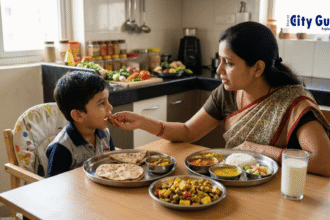
Then you eat a few balanced, home-cooked meals with dal, sabzi, roti, fruit, and curd — and things feel more stable again.
This is not “just in your head.”
It’s increasingly supported by nutrition and mental health research.
In 2026, one of the strongest shifts in health science is recognizing that food doesn’t only affect your body weight and sugar levels — it affects your brain, mood, and emotional resilience too.
This article explains how food influences mental health in a practical Indian context — without hype, fear, or miracle claims.
The Food–Mood Connection: Why It’s Real
Your brain is metabolically active.
It uses:
• Glucose for energy
• Amino acids to make neurotransmitters
• Fats to build brain cells
• Vitamins and minerals for regulation
Neurotransmitters like serotonin, dopamine, and GABA influence:
• Mood
• Calmness
• Focus
• Motivation
• Emotional stability
Many of these chemicals depend on nutrients from food.
So when your diet is poor, your brain chemistry can be affected.
Not overnight — but gradually and meaningfully.
What Modern Research Shows
Large international studies through the 2020s and into 2026 consistently show:
Diet patterns rich in:
✔ Vegetables
✔ Fruits
✔ Whole grains
✔ Legumes
✔ Nuts and seeds
✔ Healthy fats
— are associated with a lower risk of depression and anxiety.
These patterns are similar to:
• EAT-Lancet style diets
• Mediterranean-style eating
• Traditional high-plant diets
On the other hand, diets high in:
❌ Ultra-processed foods
❌ Refined sugar
❌ Excess fried foods
❌ Sugary drinks
❌ Refined flour snacks
— are linked with higher rates of low mood and mental distress.
This does NOT mean food replaces therapy or medication.
But it does mean food is a powerful background factor.
The Gut–Brain Axis: Your Second Brain
Your gut and brain constantly communicate.
The gut microbiome (trillions of bacteria in your intestine):
• Produces neurotransmitters
• Influences inflammation
• Affects stress response
• Impacts mood regulation
A fiber-rich Indian diet with:
• Dal
• Vegetables
• Fruits
• Fermented foods
• Whole grains
— supports healthier gut bacteria.
Ultra-processed foods and low-fiber diets reduce microbial diversity, which may negatively affect mood.
So when elders say, “Pet theek toh mann theek,”
there’s science behind it.
Everyday Indian Situations That Affect Mood
1) The Junk-Food Week
Busy week → takeout, biscuits, instant foods.
Result:
• Sluggishness
• Low mood
• Irritability
• Poor sleep
Often blamed on stress alone, but diet plays a role.
2) Sugar + Caffeine Cycle
Morning:
Tea with sugar → energy spike
Later → crash
Then more chai or sweets
This rollercoaster affects:
• Blood sugar
• Energy
• Mood stability
• Focus
3) Skipping Meals
Long gaps without food can cause:
• Irritability
• Headaches
• Anxiety-like feelings
• Brain fog
Your brain needs steady fuel.
What Actually Works: Building “Mood Plates”
You don’t need exotic foods.
You need balanced Indian meals.
The Mood Plate Formula
1️⃣ Protein
Dal, chana, rajma, paneer, eggs, tofu.
Helps neurotransmitter production and satiety.
2️⃣ Steady Carbs
Whole grains, millets, roti, brown/parboiled rice.
Provide stable glucose for brain energy.
3️⃣ Vegetables
Fiber + micronutrients for gut and brain health.
4️⃣ Healthy Fats
Nuts, seeds, cold-pressed oils.
Support brain cell structure.
5️⃣ Fermented Foods
Curd, chaas, idli/dosa batter.
Support gut–brain axis.
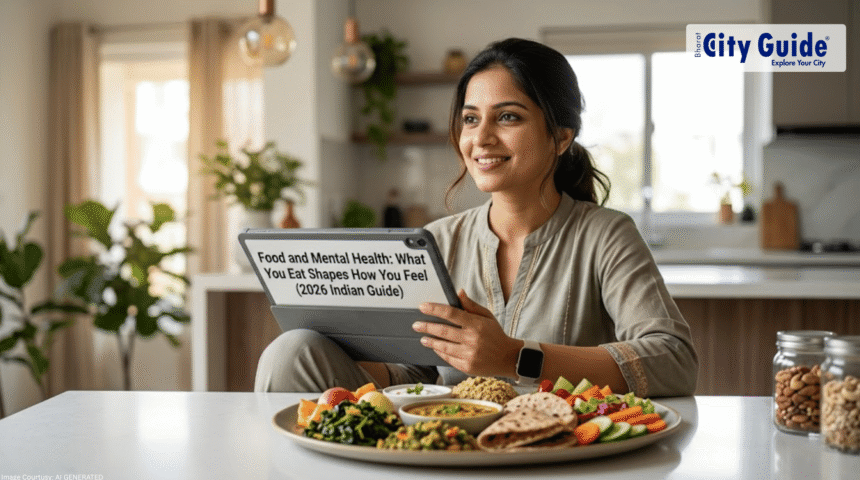
Example Mood-Supportive Thali
✔ Dal
✔ Roti or millet
✔ Sabzi
✔ Curd
✔ Small handful nuts
✔ Fruit later
Simple. Familiar. Effective.
Omega-3 and Mental Health
Omega-3 fats support brain function.
Research links adequate omega-3 intake with better mood regulation.
Indian Omega-3 Sources
Vegetarian:
• Walnuts
• Flaxseeds (alsi)
• Chia seeds
Non-veg:
• Fatty fish like rohu, mackerel, sardines
Even small regular intake helps.
Example:
1–2 walnuts daily
or
1 tsp flaxseed powder
Micronutrients That Matter for Mood
Iron
Low iron → fatigue, low mood, poor focus.
Sources:
• Green leafy veg
• Lentils
• Jaggery
• Beans
• Pair with vitamin C foods
B12
Important for nerve health and mood.
Sources:
• Dairy
• Eggs
• Animal foods
• Fortified foods
Vegetarians may need monitoring.
Vitamin D
Linked with mood regulation.
Sources:
• Sun exposure
• Fortified foods
• Supplements if prescribed
Common Mistakes That Hurt Mental Health
❌ Skipping meals
Leads to unstable energy and mood dips.
❌ Living on snacks
Biscuits and namkeen lack nutrients.
❌ Too much sugar
Spikes and crashes affect emotions.
❌ Overdoing caffeine
Can worsen anxiety and sleep.
❌ Ultra-processed diets
Low in fiber and micronutrients.
What Food CANNOT Do
Food cannot:
• Cure clinical depression alone
• Replace therapy
• Replace medication when needed
Mental health is multi-factorial:
✔ Sleep
✔ Stress
✔ Relationships
✔ Physical activity
✔ Genetics
✔ Professional care
Food is one important pillar.
Practical Daily Habits for Better Mood
✔ Eat regularly
Avoid long gaps.
✔ Add fruit daily
Natural nutrients and fiber.
✔ Include dal or protein each meal
Supports neurotransmitters.
✔ Eat nuts/seeds
Small amounts daily.
✔ Limit ultra-processed foods
Not zero — just less frequent.
✔ Stay hydrated
Dehydration affects mood too.
One Simple 7-Day Experiment
For one week:
👉 Eat at least 2 home-style balanced meals daily
👉 Include fruit once daily
👉 Add nuts or seeds
👉 Reduce packaged snacks
Notice:
• Energy
• Focus
• Mood stability
• Sleep quality
Many people feel a difference.
Long-Term Impact of Mood-Supportive Eating
Over time, balanced diets are associated with:
✔ Better emotional resilience
✔ Lower risk of depression and anxiety
✔ More stable energy
✔ Better sleep
✔ Improved stress tolerance
Not magic — but meaningful.
Cultural Wisdom Meets Science
Traditional Indian eating already supports mental health:
• Dal + rice combinations
• Seasonal vegetables
• Fermented foods
• Spice use
• Balanced thalis
Modern life moved us toward processed foods.
The solution is not foreign diets —
it’s smarter traditional eating.
Conclusion
Your food doesn’t just fuel your body — it feeds your brain.
A balanced Indian diet with:
✔ Dal
✔ Whole grains
✔ Vegetables
✔ Fruits
✔ Nuts
✔ Curd
✔ Healthy oils
— supports both physical and mental well-being.
You don’t need perfection.
You need consistency.
Think of food as daily support for your mind, not just your waistline.
Small shifts in eating patterns can gently support a more stable, resilient mood over time.
FAQs
1) Can food cure depression?
No. But it can support mental health alongside proper care.
2) Do sweets worsen mood?
Too much sugar can cause energy and mood crashes.
3) Is caffeine bad for mental health?
Moderate intake is fine. Excess can worsen anxiety.
4) Best foods for stress?
Balanced meals with protein, fiber, and healthy fats.
5) Are supplements needed?
Only if deficiencies exist. Test and consult a professional.
6) How fast can diet affect mood?
Some people feel changes in weeks, but long-term patterns matter most.