Introduction
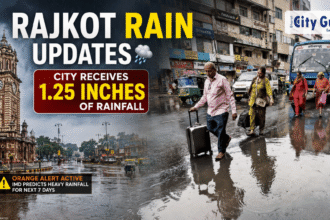
The arrival of the Hindu calendar month of Ashadh is traditionally viewed as a period of relief and renewal across the state of Gujarat. As the oppressive heat of the summer months gives way to monsoonal wind patterns, citizens anxiously look to the skies for structural relief. However, as the latest updates reveal, the onset of the season can also bring severe localized disruptions. In the early morning hours, a sudden and dramatic shift in regional weather conditions brought intense wind gusts alongside localized rain showers to the city of Rajkot. While the moisture brought a temporary drop in local temperatures, the accompanying micro-burst of severe wind speeds left behind a trail of physical structural damage in multiple key civic areas.
- Introduction
- What is Rajkot Rain Update?
- Why This News is Important
- Background Information
- Key Highlights
- Detailed Explanation of the Event
- Importance of Regular Weather Monitoring
- How It Impacts People
- Industry Perspective on Urban Weather Hazards
- Challenges and Limitations
- Future Outlook
- Frequently Asked Questions (FAQs)
- Conclusion
Understanding the latest developments surrounding this weather pattern requires an evaluation of the broader regional infrastructure and modern urban climate vulnerabilities. Monitoring every specific Rajkot Rain Update becomes critical not just for immediate commuters navigating waterlogged urban arteries, but also for administrative officials managing disaster response systems. The primary impact of this early morning disturbance was felt across local transit networks, where wind velocities were strong enough to uproot substantial trees, creating severe logistical blockages and inflicting financial liabilities on vehicle owners. This comprehensive analytical article delves into the structural components of the storm event, its direct operational consequences on the city, the wider historical context of the monsoon season in Saurashtra, and actionable guidelines for public safety amid volatile shifting seasons.
What is Rajkot Rain Update?
A Rajkot Rain Update represents the consolidated and verified tracking of meteorological shifts, rainfall metrics, convective wind hazards, and infrastructural updates within the primary urban boundaries of Rajkot, Gujarat. Positioned centrally within the semi-arid geographic landscape of the Saurashtra peninsula, the city experiences distinctive weather phenomena during its monsoon cycle. High baseline temperatures coupled with incoming low-pressure troughs from the Arabian Sea frequently create rapid localized unstable air columns.
When meteorologists and local administrative channels issue a weather alert, it covers multiple distinct data streams:
- Precipitation volume measured via regional rain gauges.
- Localized wind tracking data monitoring shifts that could pose hazards to public structures.
- Inundation mapping of lower-lying transport channels and intersections across the municipal zones.
- Emergency updates from the Rajkot Municipal Corporation (RMC) fire and rescue departments regarding downfalls or clearing operations.
Remaining informed on these data streams allows local commercial operations, academic entities, and individual citizens to dynamically adjust their daily parameters, mitigating the inherent risks that sudden, high-intensity monsoonal systems present to life and physical assets.
Why This News is Important
This specific weather update carries immense weight because it marks the operational transition into the active monsoonal phase for the region, showing how even brief, low-precipitation events can stress urban infrastructures if accompanied by dynamic wind shifts. The incident demonstrates that total rainfall volume is not the sole metric determining municipal safety; kinetic atmospheric factors like wind shear play an equally disruptive role.
For civic planners and the public alike, this news serves as an early structural warning system. It highlights vulnerable points in urban forestry management, public parking zone allocations, and stormwater drainage capacities right at the beginning of the seasonal cycle. Furthermore, it details real economic losses sustained directly by individual consumers due to falling structural elements, underscoring the urgent need for comprehensive risk management strategies during severe monsoon transitions.
Background Information
The Saurashtra region historically presents a volatile climate pattern. The area is highly reliant on the southwest monsoon for its agricultural viability and water security, yet it remains prone to acute macro and micro-meteorological disruptions. The arrival of the Ashadh month traditionally serves as the spiritual and physical baseline for heavy agricultural preparation, as farmers wait for consistent downpours to saturate the soil matrix.
Over the past decade, urban centers like Rajkot have seen significant physical changes. Rapid concrete development, road expansion, and the reduction of natural permeable ground surfaces have altered how the local environment handles sudden heavy downpours. Urban microclimates often trap heat, creating localized low-pressure zones that draw in rapid wind bursts from surrounding open rural topographies. When these bursts meet established older tree lines alongside highly congested streets, the structural resistance of older roots can fail under the sudden mechanical force. This results in the uprooting incidents that are becoming increasingly common during early seasonal transitions.
Key Highlights
- Seasonal Transition: The weather event directly coincided with the official commencement of the traditional Hindu calendar month of Ashadh.
- Atmospheric Disruptions: Sudden, powerful wind gusts swept through key municipal sectors of Rajkot prior to the arrival of rain clouds.
- Precipitation Character: The rainfall was characterized as a brief but intense shower (vrasadi zhapatu) rather than prolonged monsoonal downpours.
- Structural Damage: High velocity wind currents caused a mature tree to collapse violently in a prominent urban zone.
- Property Impact: A minimum of three parked consumer vehicles suffered substantial body and mechanical damage from the fallen tree debris.
- Transit Delays: Water logging and fallen debris caused temporary accumulation on major urban roads, slowing early morning transit.
- Emergency Response: Municipal teams were deployed to clear roads and manage localized traffic blockages.
Detailed Explanation of the Event
On the morning of the event, the atmosphere over Rajkot shifted rapidly. While residents anticipated the typical humid cloud cover characteristic of early Ashadh, they were instead met with strong, high-velocity winds sweeping across the cityscape. Within a brief timeframe, these convective winds picked up dust and created challenging visibility conditions for early morning commuters before transitioning into localized, intense rain showers.
As the short downpour saturated the topsoil, the mechanical force of the winds proved too heavy for a large tree located along a busy municipal stretch. The root system failed, causing the tree to crash down across a public parking area. Three vehicles parked directly underneath bore the brunt of the impact. The heavy branches crushed vehicle roofs, shattered windshields, and dented structural frames.
Concurrently, the sudden volume of water overwhelmed localized surface drains, causing temporary pooling across major roadways. While the actual volume of water dropped wasn’t catastrophic, the combination of wind damage, debris, and surface flooding created immediate challenges for local traffic management teams.
Importance of Regular Weather Monitoring
Maintaining access to a consistent Rajkot Rain Update is vital for multiple layers of urban society:
1. Public Safety Preservation
The most direct value lies in avoiding physical harm. When citizens receive proactive tracking regarding high-wind threats, they can make conscious decisions to avoid parking near older tree structures, large commercial billboards, or fragile overhead installations.
2. Supply Chain and Business Continuity
Local commercial delivery networks, logistics providers, and retail establishments rely heavily on real-time weather information to plan transit paths, secure exterior warehouse inventory, and protect workers operating out in the field.
3. Municipal Asset Protection
For civic maintenance crews, constant tracking determines the positioning of vacuum trucks, debris clearing tools, and emergency personnel at known flood points, reducing response times from hours to minutes.
How It Impacts People
| Affected Demographic | Immediate Direct Impact | Long-Term Strategic Impact |
|---|---|---|
| Daily Urban Commuters | Sudden transit delays, route diversions due to debris, and increased risk of accidents on wet surfaces. | Increased reliance on micro-transit alerts and defensive driving adaptations. |
| Property & Vehicle Owners | Out-of-pocket financial liability for structural damage caused by falling public trees. | Shifts in insurance policy selections, favoring comprehensive monsoon/natural disaster coverage extensions. |
| Civic Administration (RMC) | Immediate deployment of cleanup crews, traffic diversions, and emergency hotline management. | Re-evaluation of urban forestry health, pruning schedules, and drain clearing priorities. |
| Local Commercial Vendors | Short-term disruption of foot traffic and minor damage to unsecured outdoor displays. | Transition toward weather-resilient exterior infrastructure and indoor storage options. |
Industry Perspective on Urban Weather Hazards
Meteorological experts and urban planning researchers highlight that the combination of sudden high winds and brief rainfall spikes points to a broader trend of microclimate volatility. As regional temperatures rise, the thermodynamic energy stored in the lower atmosphere increases. When a moisture-laden system arrives, this energy releases as sudden wind bursts rather than steady, predictable rainfall.
Civil structural engineers point out that urban trees often face root restriction due to surrounding asphalt and concrete paving. This restriction limits their lateral stability, making them more vulnerable to high wind speeds. Experts suggest cities implement proactive root health evaluations and regular canopy thinning ahead of the monsoon season to mitigate these risks.
Challenges and Limitations
Managing these sudden weather shifts presents distinct operational challenges:
- Predictive Latency: Micro-bursts and high-velocity wind gusts are notoriously difficult to pinpoint via standard regional radar systems until they are actively forming over the city.
- Aging Urban Canopy: Balancing the preservation of mature green canopies for temperature reduction against the public safety risks of falling limbs requires intense municipal oversight.
- Drainage Bottlenecks: Older masonry and concrete drainage networks in long-standing urban sectors struggle to manage sudden, high-intensity water drops, leading to immediate surface pooling.
- Financial Red Tape: Vehicle owners often encounter prolonged insurance claim cycles when proving damage from public property trees, creating financial stress.
Future Outlook
Looking ahead, the city of Rajkot must adopt a multi-layered strategy to address these monsoonal challenges. The Rajkot Municipal Corporation is expected to step up its pre-monsoon pruning initiatives, focusing heavily on commercial zones and high-traffic corridors. Additionally, upgrades to regional weather sensing installations will help provide more accurate, localized alerts before severe wind fronts hit the urban perimeter.
For individual citizens, adapting to this shifting climate reality means building a habit of check-ins with daily updates. Integrating these safety checks into daily routines, securing private properties against wind hazards, and adopting smart parking practices will play a vital role in keeping the community resilient through upcoming monsoon seasons.
Frequently Asked Questions (FAQs)
1. What caused the vehicle damage during the recent rain event in Rajkot?
The vehicle damage was caused by a mature tree that collapsed due to a combination of high-velocity winds and sudden rain showers, which destabilized the root system and sent branches crashing onto three parked cars.
2. Why do early monsoon showers in Rajkot often feature high winds?
Early monsoon shifts involve intense thermal interactions where hot air masses over the Saurashtra peninsula meet cooler, moist oceanic air currents, generating high-velocity convective winds and localized squalls.
3. Where can I find a reliable, real-time Rajkot Rain Update?
Reliable updates are distributed through official channels like the India Meteorological Department (IMD), announcements from the Rajkot Municipal Corporation (RMC), and reputable local news portals.
4. Who is responsible for clearing fallen trees from roads during Rajkot rains?
The emergency response wing and fire department of the Rajkot Municipal Corporation (RMC) hold primary operational responsibility for cutting down, clearing, and removing fallen trees blocking public roads.
5. Does standard auto insurance cover damage caused by a fallen tree during a storm?
Damage from a fallen tree is typically covered under the “Own Damage” component of a comprehensive vehicle insurance policy, though it is usually excluded from basic third-party liability plans.
6. What steps should I take if my vehicle is caught under a falling tree?
Prioritize personal safety by remaining inside the vehicle if the structural frame is intact, turning off the engine, checking for downed power lines, and contacting municipal emergency services immediately.
7. How can Rajkot residents prepare their properties for high-wind monsoon events?
Residents can prepare by trimming unstable tree limbs on their property, securing loose roof elements, clearing terrace drainage pipes, and avoiding parking vehicles near large signs or older trees.
Conclusion
The recent dynamic weather event accompanying the start of Ashadh serves as a powerful reminder of nature’s unpredictability. While the sudden downpour brought a welcome break from summer heat, the high-velocity winds exposed vulnerabilities in the urban landscape, leading to fallen trees and damaged vehicles. This highlights the reality that monsoons demand careful preparation, structural foresight, and heightened awareness from everyone in the community.
Staying updated with a reliable Rajkot Rain Update is an effective way to navigate these seasonal transitions safely. By combining proactive civic management—like clearing drains and maintaining urban trees—with sensible safety choices from the public, Rajkot can continue to grow, thrive, and remain resilient against whatever weather the monsoon season brings.