Introduction
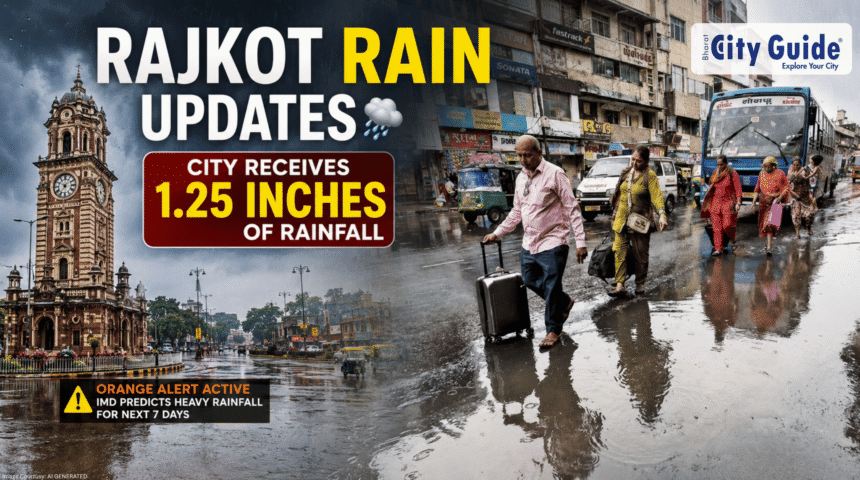
The monsoon season has officially intensified across Gujarat, bringing both respite and logistical challenges to various regions. Most recently, the cultural and economic hub of Saurashtra experienced a sudden shift in weather patterns. Under an active weather warning issued by the meteorological department, the latest Rajkot rain spell recorded a substantial one and a quarter inches (1.25 inches) of precipitation across the city. This sudden and heavy downpour has successfully broken a prolonged spell of stifling humidity and soaring pre-monsoon temperatures that had been troubling local residents for weeks.
- Introduction
- What is Rajkot Rain?
- Why This News is Important
- Background Information
- Key Highlights
- Detailed Explanation of the Event
- Importance and Benefits of the Rainfall
- How It Impacts People
- Expert Insights and Industry Perspective
- Challenges and Limitations
- Future Outlook
- Frequently Asked Questions (FAQs)
- Conclusion
While the brief spell of rainfall provided a much-needed cooling effect, it also serves as a precursor to a much larger meteorological event. The India Meteorological Department (IMD) has issued a strict orange alert for several parts of Saurashtra, including Rajkot, warning citizens and the local administration of heavy to very heavy rainfall over the next seven days. This extensive wet spell is expected to cover a major portion of the state, signaling the robust activation of monsoon troughs and offshore moisture systems. Understanding the trajectory of this system is absolutely critical for urban management, agricultural planning, and daily commuting in the region.
What is Rajkot Rain?
When discussing Rajkot rain, we look at the seasonal precipitation patterns of the fourth-largest city in Gujarat, located in the heart of the semi-arid Saurashtra peninsula. Historically, Rajkot relies heavily on the Southwest Monsoon, which typically spans from June to September. Because the region features an arid-to-semi-arid microclimate, rainfall here is often episodic, characterized by sudden, intense cloudbursts or heavy localized thunderstorms rather than continuous, light drizzles.
The latest phase of Rajkot rain refers specifically to the monsoon systems forming over the Arabian Sea and the low-pressure areas migrating across central India. When these systems stall or intensify over Saurashtra, they bring heavy downpours accompanied by strong gusty winds and lightning. Because the city features an undulating terrain with several low-lying pockets, even an inch or two of rapid rainfall can significantly impact the local hydrological cycle, filling up local reservoirs like the Aji, Nyari, and Lalpari dams while testing the municipal stormwater drainage capacities.
Why This News is Important
This recent weather development holds immense significance for several socio-economic reasons:
- Breaking the Heatwave and Humidity: Prior to this rain event, Rajkot was reeling under severe heat and oppressive humidity, driving up power consumption and causing physical discomfort to citizens. The 1.25 inches of rain acted as an immediate climate reset.
- Activation of Emergency Protocols: The presence of an active orange alert means the state and local administration must immediately deploy disaster response teams, clear stormwater drains, and monitor vulnerable residential structures.
- Preparedness for a Week-long Deluge: With the IMD predicting heavy rainfall continuously for the next 7 days, citizens must alter their travel plans, secure their properties, and brace for typical monsoon challenges like waterlogging and traffic congestion.
Background Information
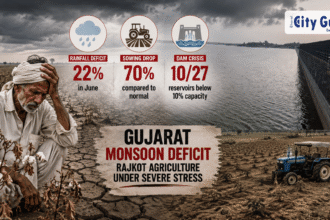
To understand the current surge in monsoon activity, it is vital to examine the broader regional weather context. Earlier in the monsoon season, Gujarat recorded a noticeable rainfall deficit, with total precipitation lingering far below the long-term averages for June. The sudden development of a strong cyclonic circulation over the northeast Arabian Sea, combined with an active offshore trough running along the western coast of India, completely reversed this dry trend.
The India Meteorological Department uses a color-coded warning system to signal weather severity:
- Green Alert: No advisory or action required.
- Yellow Alert: Be aware; weather conditions could deteriorate.
- Orange Alert: Be prepared; heavy to very heavy rainfall is likely, with potential disruption to transport, power, and daily life.
- Red Alert: Take action; extremely heavy rainfall expected, creating life-threatening situations and severe flooding.
With the IMD upgrading Saurashtra’s status to an orange alert, Rajkot found itself directly in the path of heavy moisture-laden winds, resulting in the sudden 1.25-inch downpour and setting the stage for a highly active week ahead.
Key Highlights
- Rainfall Volume: Rajkot recorded a fresh spell of 1.25 inches (sava inch) of rainfall within a brief window, providing instant relief from weather distress.
- Weather Alert Status: The region is currently placed under an official ‘Orange Alert’ by the IMD, indicating a high probability of severe downpours.
- 7-Day Forecast: The meteorological department has predicted heavy to very heavy rainfall across Rajkot and surrounding Saurashtra districts for the next 7 consecutive days.
- Climate Relief: The rainfall brought a significant drop in ambient temperatures, providing partial relief from intense, suffocating humidity (bafaro).
- Administrative Vigilance: Local civic bodies, including the Rajkot Municipal Corporation (RMC), have been put on high alert to tackle potential waterlogging in low-lying urban areas.
Detailed Explanation of the Event
On the day of the event, the skies over Rajkot turned dark by the afternoon as thick cumulonimbus clouds blanketed the city. What began as a light breeze quickly escalated into a severe thunderstorm accompanied by frequent lightning and strong surface winds. Within a matter of hours, the city’s rain gauges registered a solid 1.25 inches of water.
The spatial distribution of the rainfall was felt across all major zones of the city, including the East, West, and Central zones. Prominent areas such as Kalawad Road, Yagnik Road, Gondal Road, and Madhapar witnessed rapid water accumulation on the streets. While the volume of water was not enough to cause severe urban flooding, it did lead to temporary slow-moving traffic and water accumulation in standard low-lying choke points, such as underpasses and narrow residential lanes.
The immediate positive effect was the drastic transformation of the local atmosphere. The maximum temperature fell by several degrees, bringing an end to the extreme humidity that had made outdoor activities unbearable for the population. However, because this rain occurred under an active orange alert, local authorities treated it as a testing phase for the infrastructure ahead of the predicted 7-day heavy rainfall window.
Importance and Benefits of the Rainfall
While intense heavy weather poses logistical hurdles, the return of robust monsoon rains brings a multitude of critical benefits to the semi-arid zone of Saurashtra:
1. Replenishment of Local Water Reservoirs
Rajkot has historically faced acute water security issues during dry summers. Heavy rains directly feed the primary reservoirs supplying drinking water to the city—specifically the Aji-1, Nyari-1, and Bhadar dams. A consistent 7-day rain cycle could raise water levels to comfortable thresholds, ensuring an uninterrupted supply of drinking water for the coming months.
2. Lifeline for Kharif Agriculture
The agricultural belt surrounding Rajkot thrives on seasonal rains. Groundnut, cotton, and sesame seeds are the dominant Kharif crops in this region. This spell of rain provides the necessary soil moisture required for crop health, accelerating sowing activities and ensuring that young seedlings do not wither under heat stress.
3. Recharge of Groundwater Tables
Decades of intensive farming and deep borewell extraction have depleted the underground aquifers of Saurashtra. Prolonged monsoon spells allow rainwater to slowly percolate into the ground, recharging shallow wells and improving the overall water table quality across rural and suburban Rajkot.
How It Impacts People
Local Citizens and Commuters
For the common resident, the sudden downpour brought psychological relief from the summer-like heat. However, commuting became instantly challenging. Two-wheelers and auto-rickshaws faced difficulties navigating water-logged streets, and pedestrian movement was restricted near local market areas. If the rains continue heavily over the next 7 days, daily laborers and street vendors may face a temporary loss of income due to restricted outdoor activity.
Travelers and Logistics Operators
With an orange alert active, intercity travel between Rajkot, Ahmedabad, Jamnagar, and Junagadh requires extra caution. Heavy downpours can reduce highway visibility significantly and cause minor roadblocks due to fallen branches or accumulated mud. Logistics companies moving commercial goods out of Rajkot’s industrial areas must plan for minor delivery delays.
Farmers and Rural Communities
For the rural population, the weather warning is a double-edged sword. While they welcome the water for their fields, extremely heavy, continuous downpours over a week carry the risk of soil erosion and crop washing. Rural areas must also watch out for potential lightning strikes, which pose a direct safety threat to farmers working in open environments.
Expert Insights and Industry Perspective
Meteorologists analyzing western India’s weather patterns point out that the monsoon dynamics in Gujarat have become increasingly volatile over the past few years. Sudden bursts of intense rainfall over short periods are becoming more frequent than evenly distributed seasonal showers.
According to weather experts, the alignment of an upper-air cyclonic circulation over the coast along with strong westerly winds from the Arabian Sea is pumping vast amounts of moisture directly into Saurashtra. Disasters and municipal management experts suggest that cities like Rajkot need to continuously upgrade their micro-drainage networks. Because modern urban surfaces are largely concretized, rainwater has nowhere to go but onto the roads, making even a standard 1.25-inch rainfall look like an intense flash event. Experts urge citizens to stay indoors during active lightning storms and rely strictly on official bulletins issued by the IMD.
Challenges and Limitations
Despite the joyful relief from humidity, an extended heavy rain forecast brings multiple structural challenges:
- Urban Waterlogging: Rajkot’s rapid urban expansion means several new neighborhoods lack deeply integrated storm drainage lines, leading to prolonged water stagnation.
- Traffic Interruptions: Water accumulation near major railway underpasses and traffic circles quickly paralyzes the city’s core transit routes.
- Public Health Risks: Stagnant rainwater mixed with urban waste creates a breeding ground for vector-borne diseases like dengue and malaria, as well as water-borne infections, putting pressure on local healthcare systems.
- Risk to Weak Structures: Prolonged dampness over a 7-day rainy period can compromise old, unmaintained buildings and temporary slum settlements, requiring timely evacuation by civic bodies.
Future Outlook
The immediate future for Rajkot remains undeniably wet. As the IMD keeps its orange alert active, the city must brace for progressive infrastructure stress over the upcoming week. The Rajkot Municipal Corporation (RMC) has already set up 24/7 control rooms and deployed heavy-duty dewatering pumps in low-lying zones to handle sudden surges.
Over the coming months, if these rains translate into a healthy, well-distributed monsoon season, Rajkot will likely see overflowing dams, thriving agricultural outputs, and stable water pricing. However, the immediate priority for the next seven days remains safety, accident prevention, and effective civic management to ensure that the heavy rains remain a blessing rather than a disaster.
Frequently Asked Questions (FAQs)
1. How much total rainfall did Rajkot receive in the latest spell?
Rajkot recorded approximately 1.25 inches (sava inch) of rainfall during the latest thunderstorm spell, which brought significant relief from heat and humidity.
2. Why did the IMD issue an orange alert for Rajkot rain?
The IMD issued an orange alert because an active cyclonic circulation and moisture-laden winds from the Arabian Sea are creating atmospheric conditions favorable for heavy to very heavy rainfall across the Saurashtra region.
3. What does an orange alert mean for local citizens?
An orange alert means citizens should be prepared for severe weather conditions. It implies a high likelihood of localized flooding, traffic disruptions, waterlogging in low-lying areas, and potential power outages.
4. How long is the heavy Rajkot rain expected to last?
According to the latest weather bulletin from the India Meteorological Department, heavy rainfall conditions are predicted to persist for the next 7 days across Rajkot and surrounding districts.
5. Will the latest Rajkot rain help resolve the city’s water scarcity?
Yes, consistent rainfall in Rajkot directly feeds key local reservoirs such as the Aji and Nyari dams. If the heavy rains continue over the predicted 7-day period, it will substantially increase water levels, securing the city’s drinking water supply.
6. What precautions should be taken during the active Rajkot rain alert?
Residents are advised to avoid traveling to heavily waterlogged zones, keep clear of open electrical poles, stay indoors during active lightning and thunderstorms, and closely monitor official emergency updates from the municipal corporation.
Conclusion
The recent spell of 1.25 inches of Rajkot rain has successfully delivered the twin benefits of lowering temperatures and breaking a suffocating cycle of local humidity. However, with the India Meteorological Department placing the city under an active orange alert, this initial downpour is merely a precursor to an extended weather event. The forecast of heavy rains over the next 7 days underscores the need for high civic preparedness and personal caution. While the rural sectors and regional reservoirs stand to gain immensely from this heavy inflow of water, urban centers must navigate the challenges of waterlogging and traffic management. By staying informed through reliable channels and adhering to safety protocols, the people of Rajkot can safely navigate the peak of this monsoon season.