Introduction
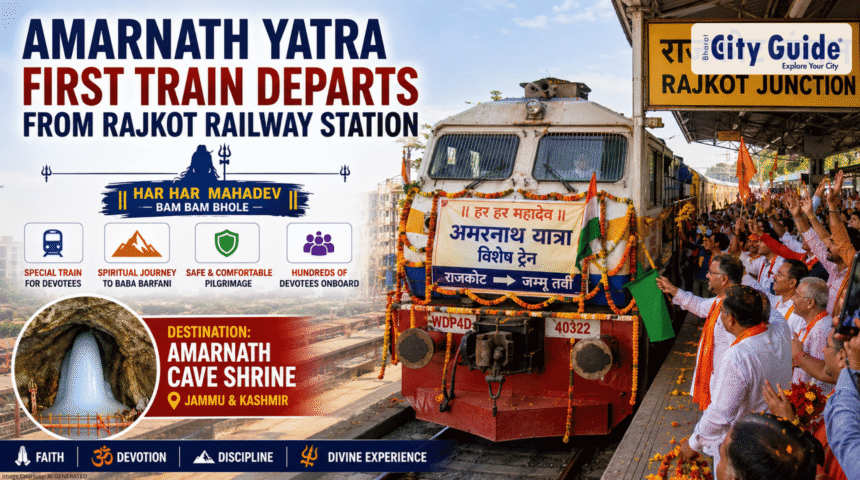
The air at the Rajkot Railway Station turned profoundly spiritual as hundreds of ecstatic devotees gathered for a monumental journey. Amidst the thunderous, rhythmic echoes of “Har Har Mahadev” and “Bam Bam Bhole,” the very first special train carrying pilgrims for the annual Amarnath Yatra from Rajkot Railway Station officially pulled out of the platform. The departure marked the beginning of a sacred pilgrimage for hundreds of travelers from Saurashtra, all bound for the high-altitude Himalayan cave shrine in Jammu and Kashmir to catch a glimpse of the naturally formed ice Shiva Lingam, affectionately known as ‘Baba Barfani’.
- Introduction
- What is the Amarnath Yatra from Rajkot Railway Station?
- Why This News is Important
- Background Information: The Sacred Himalayan Pilgrimage
- Key Highlights
- Detailed Explanation of the Event
- Benefits and Features of the Special Pilgrim Train
- How It Impacts the Devotees and Society
- Expert Insights and Travel Perspectives
- Challenges and Weather Dependencies
- Future Outlook
- Frequently Asked Questions (FAQs)
- Conclusion
This annual event is far more than a standard transit operation; it is a deeply rooted cultural milestone for the region. For the local community and the Indian Railways, organizing a dedicated train from Saurashtra directly to the north ensures that the complex logistics of this arduous pilgrimage are made safe, cohesive, and remarkably comfortable. Veteran travelers who have undertaken this journey for decades noted that witnessing the ice Lingam brings a divine, indescribable peace that completely erases the physical exhaustion of the long trek.
As the train slowly accelerated away from the platform, family members, local citizens, and railway officials showered the passengers with flowers and well-wishes. This first train sets a joyful, orderly tone for the rest of the pilgrimage season, showcasing how modern transportation networks seamlessly support ancient spiritual traditions.
What is the Amarnath Yatra from Rajkot Railway Station?
The Amarnath Yatra from Rajkot Railway Station refers to the coordinated, annual railway service and package tours designed specifically to transport pilgrims from Rajkot and the surrounding Saurashtra region to Jammu and Kashmir for the holy Amarnath pilgrimage. Given the vast geographical distance between western Gujarat and the northernmost union territory of India, these direct special trains act as a vital lifeline for devotees.
The journey typically routes passengers toward key termination points like Jammu Tawi or Udhampur railway stations. From there, travelers shift to state-monitored road convoys moving toward the two primary base camps: Baltal or Pahalgam. The initiative integrates specialized security protocols, medical checklists, and luggage management, making it an all-inclusive travel solution tailored for senior citizens, families, and group travelers who prefer the community environment of train travel over independent flights.
Why This News is Important
The departure of this first train carries immense logistical and cultural weight. Firstly, it signifies that the rigorous security, administrative, and medical screening mechanisms set by the Shri Amarnathji Shrine Board (SASB) and the Gujarat local authorities have successfully kicked into high gear. Every passenger on this train has cleared mandatory health certifications, which are strictly required due to the extreme atmospheric changes at the 3,880-meter altitude of the holy cave.
Secondly, it provides an affordable, highly accessible travel alternative for the middle-class demographic of Saurashtra. Organizing a specialized train bypasses the volatile surge pricing of commercial airlines and the unpredictability of multi-state road transfers. Furthermore, it demonstrates the Indian Railways’ continuous focus on promoting religious tourism through customized regional train options, ensuring that long-distance spiritual journeys are well-organized and deeply respectful of the passengers’ needs.
Background Information: The Sacred Himalayan Pilgrimage
The Amarnath cave, situated in a narrow gorge at the end of the Lidder Valley in Jammu and Kashmir, is considered one of the holiest shrines in Hinduism. The main attraction is the stalagmite structure formed by the freezing of water droplets that drip from the roof of the cave onto the floor, rising vertically to mirror a Shiva Lingam. The size of the lingam waxes and wanes with the phases of the moon and the seasonal snow patterns outside.
For people living in Gujarat, traveling to Amarnath has historically been a challenging endeavor involving weeks of planning, multiple train transfers, and complex ground handling. Over the years, demand from Rajkot grew so consistently that dedicated pilgrim groups and the Western Railway division formalized special departures. This institutionalized structure ensures that modern safety parameters, real-time tracking, and automated registrations protect the travelers as they transition from the plains of Gujarat to the snowy, unpredictable terrains of the Himalayas.
Key Highlights
- Enthusiastic Departure: The first train rolled out of Rajkot amid powerful religious chants, celebratory music, and emotional farewells from families.
- Direct Regional Connectivity: Provides a seamless, stress-free route from the heart of Saurashtra directly toward the transit points of Jammu and Kashmir.
- Divine Experiences Shared: Veteran passengers highlighted that the intense spiritual atmosphere and “divine vibrations” inside the cave override all physical hardships faced during the journey.
- Stringent Safety Checks: Every single boarded pilgrim has been equipped with verified registrations and Compulsory Health Certificates (CHC) to handle high-altitude atmospheric shifts.
- Comprehensive Tour Models: The train functions alongside integrated packages that include food, accommodation, and ground coordination at the base camps.
Detailed Explanation of the Event
The atmosphere at the Rajkot Railway Station on the day of the departure was nothing short of a grand spiritual festival. Long before the train arrived at the platform, pilgrims dressed in traditional attire, carrying flags and small tokens of devotion, began filling the terminal. Local bhajan groups played traditional music, transforming the commercial transit space into an open-air congregation of shared faith.
When the boarding signals were called, passengers exchanged hugs and well-wishes with onlookers. Many passengers interviewed on the spot expressed profound gratitude for the arrangement. Several regular yatris explained that no matter how difficult the economic times or the physical walk up the mountains might be, the mental clarity and spiritual awakening experienced when facing the ice Lingam keeps bringing them back year after year.
The train itself is managed with special provisions. Kitchen staffs and pantry facilities are calibrated to provide pure vegetarian meals suitable for fasting and pilgrim dietary restrictions. Additionally, coordination teams are stationed within the compartments to guide the passengers through the upcoming steps of their journey, which include collecting mandatory RFID tracking tags from designated centers in Jammu before they are permitted to enter the mountain highway convoys.
Benefits and Features of the Special Pilgrim Train
1. Enhanced Safety and Security
Traveling in a massive, dedicated group from a single regional station drastically increases personal safety. The government has put in place multi-layered security architectures along the entire yatra route, and a dedicated train allows security agencies to monitor the movement of specific batches easily from their point of origin to their destination.
2. Elimination of Logistical Stress
Planning an independent trip to Amarnath requires sync-matching train tickets, booking local Kashmiri transport, obtaining permits, and finding verified base camp stays. The special train ecosystem integrates these variables into a unified flow, giving senior citizens and solo travelers total peace of mind.
3. Economic Accessibility
By grouping hundreds of travelers together, the per-head cost of transit, food, and basic overnight stays drops significantly. This makes the Amarnath Yatra from Rajkot Railway Station highly cost-effective compared to private car rentals or flight tickets, which often skyrocket during the peak summer pilgrimage months.
4. Cultural Familiarity and Community Building
Passengers travel alongside neighbors and fellow citizens from their own cultural background. Having Gujarati-speaking co-passengers and familiar food options throughout the multi-day rail journey reduces travel anxiety, especially for older generations who may find unfamiliar environments stressful.
How It Impacts the Devotees and Society
The socioeconomic footprint of these special train departures is incredibly positive:
| Impacted Segment | Type of Impact | Long-Term Benefit |
| Senior Citizens | Accessible travel infrastructure | Enables spiritual fulfillment without physical or logistical strain |
| Local Economy | Boost for travel operators | Generates seasonal employment for local tour managers, guides, and caterers |
| Railways Sector | Optimal utilization of assets | Establishes the railway network as a key partner in preserving cultural tourism |
| Families | Unified booking platforms | Simplifies multi-generational family vacations focused on shared traditions |
Expert Insights and Travel Perspectives
Tourism and safety experts emphasize that the success of modern pilgrimages depends entirely on technological tracking and medical discipline. Officials from the Shrine Board have pointed out that the mandatory rollout of RFID cards and advanced health screenings have drastically reduced casualties related to sudden altitude sickness along the trekking pathways.
Experienced tour operators from Gujarat note that the demand for direct trains from tier-2 cities like Rajkot has surged because travelers now look for structured comfort. They advise that while the train provides an excellent starting cushion, pilgrims must treat the physical trek with respect by maintaining simple cardiovascular exercises weeks before their departure date to ensure a smooth, medical-emergency-free experience.
Challenges and Weather Dependencies
Despite excellent planning by the railways, the Amarnath Yatra remains subject to the volatile nature of Himalayan weather:
- Sudden Landslides: Flash rains can stall highway traffic between Jammu and the base camps, forcing train-loaded batches to wait at transit camps for extended durations.
- Acclimatization Issues: The transition from the warm, sea-level climate of Rajkot to the cold, oxygen-thin mountain altitudes can challenge individuals with underlying conditions if proper rest breaks are ignored.
- Strict Convoy Cut-offs: Security forces maintain rigid departure timing windows for vehicles crossing critical mountain tunnels. Missing a window by even a few minutes can delay a group’s progress by an entire day.
Future Outlook
The operational success of the first special train paves the way for more frequent, highly organized departures from Rajkot in the coming years. As Indian Railways continues to expand its fleet of specialized tourist trains, we will likely see more advanced bookings, customizable compartment choices, and direct tie-ups with helicopter service providers integrated right at the ticket booking stage. This ensures that the age-old tradition of pilgrimage continues to thrive alongside modern technological advancements.
Frequently Asked Questions (FAQs)
1. How can I book a ticket for the Amarnath Yatra from Rajkot Railway Station?
Tickets and integrated packages can be booked through official IRCTC tourism portals, verified regional railway counters, or authorized local tour operators who manage group blocks on special trains.
2. What is the significance of the “Har Har Mahadev” chants during departure?
The chant is a traditional salutation dedicated to Lord Shiva. It unites the pilgrims, builds collective energy, and helps travelers overcome the psychological anxieties of embarking on a notoriously difficult mountain journey.
3. Is a medical certificate required to board the Amarnath special train?
Yes, a Compulsory Health Certificate (CHC) issued by an authorized doctor on or after the state-specified date is mandatory for all pilgrims before they can obtain their final yatra permits.
4. Which routes are available for pilgrims once they reach the base camps?
Pilgrims can choose between the traditional, longer Nunwan-Pahalgam route (approx. 48 km, takes 3-4 days) or the shorter, steeper Baltal route (approx. 14 km, can be done in a single day).
5. What items should pilgrims from Rajkot carry for the journey?
Passengers should pack sufficient heavy woolens, windcheaters, waterproof trekking shoes, umbrellas, personal medications, and original identification documents along with photocopy sets for security checkpoints.
6. Are there age restrictions for traveling on the Amarnath Yatra?
Yes, according to the regulations of the Shri Amarnathji Shrine Board, children under the age of 13 and senior citizens above the age of 70 are generally not permitted to register for the trek due to safety reasons.
Conclusion
The flag-off of the initial train carrying devotees for the Amarnath Yatra from Rajkot Railway Station marks a beautiful convergence of deep-seated faith and efficient modern logistics. By providing a structured, affordable, and safe transportation environment, the initiative allows hundreds of Saurashtra’s citizens to fulfill their lifelong spiritual dreams without being overwhelmed by travel complexities. As the echoes of “Har Har Mahadev” linger at the station platforms, this organized departure stands as a shining testament to India’s unique ability to support its rich cultural heritage through robust, citizen-centric public infrastructure.