Introduction
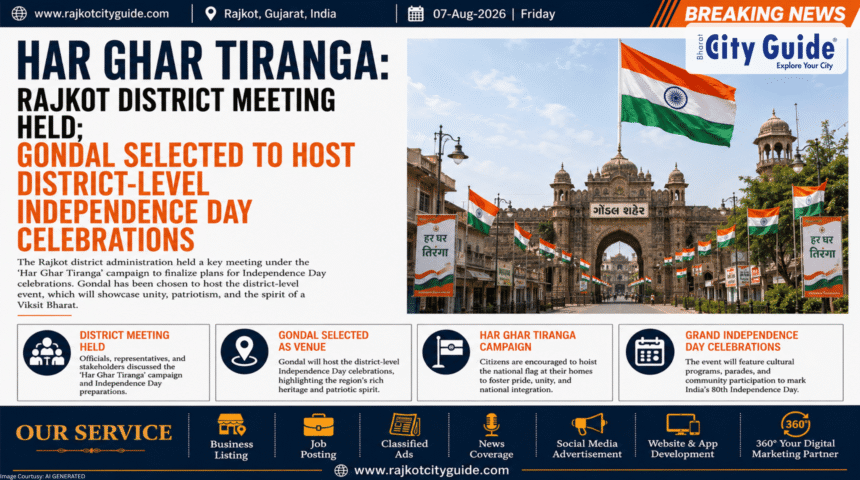
As India prepares to celebrate another milestone of its national independence, administrative machinery across Gujarat is gearing up to instill a deep sense of patriotism among citizens. In a significant administrative development, a high-level review and planning meeting was convened by the Rajkot District Collectorate to review preparations for the nation’s popular patriotic campaign, Har Ghar Tiranga. During this meeting, officials outlined a multi-pronged strategy to ensure active civic engagement, seamless logistical execution, and widespread participation across urban and rural parts of the district.
- Introduction
- What is Har Ghar Tiranga?
- Why This News is Important
- Background Information
- Key Highlights
- Detailed Explanation of the Event
- Benefits, Features, and Importance
- How It Impacts People
- Expert Insights and Administrative Perspective
- Challenges and Limitations
- Future Outlook
- Frequently Asked Questions (FAQs)
- Conclusion
A central highlight of the proceedings was the official announcement regarding the venue for the upcoming district-level Independence Day function. This year, the administrative headquarters has chosen the historic town of Gondal to host the primary district-level Independence Day celebrations. The selection of Gondal underscores the government’s tradition of decentralizing major patriotic events, ensuring that regional hubs outside the main city center receive equal civic prominence and infrastructural focus during national festivals.
This meeting served as an operational springboard for line departments, including local municipal bodies, police authorities, rural development agencies, educational institutions, and public health departments. By uniting local governance with community-led initiatives, the administration aims to turn the Har Ghar Tiranga initiative into a grass-roots celebration where every household, commercial establishment, and public building proudly displays the National Tricolor. In this article, we delve deep into the administrative plan, the background of the campaign, key event highlights, its socio-civic impact, and what residents across Rajkot district can expect as preparations gather momentum.
What is Har Ghar Tiranga?
The Har Ghar Tiranga initiative is a nation-wide public participation campaign launched under the aegis of Azadi Ka Amrit Mahotsav by the Government of India. The primary objective of the movement is to encourage citizens across every state and union territory to fly the Indian National Flag (Tiranga) at their homes, workplaces, educational institutions, and community spaces during the Independence Day celebration period.
Historically, the display of the National Flag in personal spaces was governed by strict legal boundaries outlined in the Flag Code of India, 2002. However, key amendments made in recent years permitted citizens to hoist the Tricolor in open spaces and atop private residences both day and night, provided the flag is displayed with dignity and adheres to established protocols.
The campaign seeks to shift the relationship with the National Flag from a formal, purely institutional practice to a deeply personal and emotional connection for every Indian family. Rather than viewing flag hoisting as an activity restricted to government buildings or schools on the morning of August 15, the movement encourages citizens to actively bring the flag into their daily living environments. Key components of the campaign include:
- Physical Hoisting: Flying standard, high-quality polyester, cotton, silk, or wool flags at homes and private premises.
- Digital Certificates & Pins: Allowing citizens to pin a virtual flag on an interactive map and upload selfies with their flags on official portals like the Har Ghar Tiranga Portal.
- Mass Awareness Rallies: Conducting Tiranga Yatras, human chains, and cultural performances led by local administrative and youth groups.
Why This News is Important
- Administrative Preparedness: Coordinating flag distribution, public safety, traffic management, and official protocol across a major district like Rajkot requires early planning. The meeting marks the official start of inter-departmental synergy.
- Focus on Gondal: Hosting the district-level Independence Day event in Gondal brings public infrastructure upgrades, increased security arrangements, and heightened local enthusiasm to the historic city, elevating its civic profile.
- Civic Mobilization: Rajkot has consistently demonstrated massive public participation in national drives. Establishing clear operational targets ensures that rural panchayats, schools, and urban wards receive adequate flag inventories and publicity material well before August 15.
Background Information
To fully understand the context of the Rajkot Collectorate’s meeting, it is helpful to look at how national flag campaigns and state-level celebration traditions have evolved over recent years in Gujarat.
Evolution of Flag Regulations in India
For decades, average citizens were limited in how and when they could display the National Flag. A pivotal legal turning point occurred in 2004 following a major legal campaign that affirmed every citizen’s fundamental right to fly the National Flag with dignity under Article 19(1)(a) of the Indian Constitution. In December 2021, the Ministry of Home Affairs amended the Flag Code of India, allowing machine-made and polyester flags alongside hand-spun Khadi, and permitting flags to fly continuously day and night at private homes during national celebrations.
Gujarat’s Decentralized Independence Day Tradition
Gujarat has long followed a tradition of rotating district-level and state-level Independence Day and Republic Day celebrations across various towns rather than restricting main state ceremonies strictly to Gandhinagar or major district headquarters like Rajkot city. By selecting Gondal for the official district-level Independence Day program, the administration ensures that cultural pageantry, march pasts, award distributions, and development announcements reach citizens in sub-district hubs.
Key Highlights
Here are the primary highlights from the administrative review meeting chaired by the Rajkot District Collector:
- Host Venue Selection: Gondal has been officially designated as the host town for Rajkot’s main district-level Independence Day function.
- District-Wide Coverage: Comprehensive planning was laid out to execute the Har Ghar Tiranga campaign across all talukas, municipalities, and gram panchayats in Rajkot district.
- Inter-Departmental Tasking: Responsibilities were assigned to key authorities including the District Development Officer (DDO), District Police Chief, Chief Executive Officers of local municipalities, and educational officers.
- Flag Availability & Distribution: Distribution networks are being organized through Fair Price Shops, Post Offices, self-help groups (SHGs), and municipal centers to ensure citizens can easily acquire National Flags.
- Public Engagement Drives: Plans were finalized for conducting youth rallies, student competitions, Tiranga Yatras, and illumination of key government heritage buildings in tricolor themes.
Detailed Explanation of the Event
The review meeting convened by the District Collector brought together senior officials from various branches of civil administration, public health, law enforcement, and local self-government. The discussions centered around two operational pillars: formal ceremonial planning for Independence Day at Gondal and district-wide civic mobilization under Har Ghar Tiranga.
                       +-----------------------------------+
                       |      Rajkot Collectorate          |
                       |       Planning Meeting            |
                       +-----------------+-----------------+
                                         |
                +------------------------+------------------------+
                |                                                 |
                v                                                 v
+-------------------------------+                 +-------------------------------+
|   Gondal District-Level Event |                 |    Har Ghar Tiranga Campaign  |
|  - Ceremonial Parade          |                 |  - Flag Distribution Outlets  |
|  - Flag Hoisting & Speech     |                 |  - Tiranga Yatras & Rallies   |
|  - Cultural Performances      |                 |  - Heritage Illumination      |
|  - Public Felicitation        |                 |  - Panchayat & School Drives  |
+-------------------------------+                 +-------------------------------+
1. Preparation for the Gondal District Event
The district-level Independence Day function in Gondal will feature an official parade, flag hoisting by designated dignitaries, inspections of police contingents, cultural presentations by local students, and honor ceremonies recognizing distinguished citizens and government workers. The local administration in Gondal has been instructed to prepare grounds, manage seating capacity, ensure medical emergency readiness, and coordinate security protocols.
2. Streamlining Flag Supply Chains
To prevent shortages or substandard flag distribution, the Collectorate established guidelines for flag procurement and retail distribution. Local Self-Help Groups (SHGs) under rural livelihood missions are being engaged to hand-stitch flags, creating short-term economic opportunities while meeting regional demand. Additionally, flags will be available through urban ward offices and village panchayat headquarters.
3. Awareness Activities in Educational Institutions
Primary, secondary, and higher education departments were directed to conduct competitions such as essay writing, painting, poster making, and patriotic song recitals focused on the Indian freedom movement and national flag flag etiquette.
Benefits, Features, and Importance
The combined execution of a centralized district celebration in Gondal alongside the widespread Har Ghar Tiranga drive provides multifaceted social and civic benefits:
| Category | Primary Features | Key Benefits |
| Civic Pride & Patriotism | Household flag displays, public rallies, community illumination | Fosters a unified sense of national identity across diverse social groups. |
| Economic & Rural Support | Flag stitching assigned to women’s Self-Help Groups (SHGs) | Generates local employment and empowers rural women artisans. |
| Regional Development | Hosting main functions in sub-district locations like Gondal | Promotes local infrastructure cleanup, road repairs, and civic pride. |
| Student Engagement | Patriotic competitions, rallies, and historical exhibitions | Educates youth on the sacrifices made during the Indian freedom struggle. |
How It Impacts People
The news and upcoming festivities directly touch several sections of society across Rajkot district:
Citizens and Households
For everyday residents, the Har Ghar Tiranga initiative provides a direct opportunity to participate actively in national celebrations. Families can proudly display the Tricolor on their terraces or windows, instilling national pride in younger generations.
Students and Youth
Schools and colleges across Gondal and Rajkot will see heightened activity. Youth groups will participate in Tiranga Yatras, parade formations, and cultural programs, providing platforms to showcase creative and athletic talents.
Local Business and Micro-Enterprises
Demand for patriotic merchandise, flags, banners, lighting hardware, and sound systems surges during this period. Micro-entrepreneurs, textile workers, and local vendors benefit directly from the commercial activity surrounding the festivities.
Local Administration and Police
For regional officials and law enforcement personnel, the event serves as a exercise in crowd management, emergency readiness, public logistics, and seamless inter-agency communication.
Expert Insights and Administrative Perspective
Administrative experts and public governance analysts point out that nationwide thematic campaigns like Har Ghar Tiranga serve as effective tools for community mobilization.
When civic campaigns are combined with physical, decentralized district celebrations—such as holding Rajkot’s main ceremony in Gondal—it creates a double-impact model. Governance experts note that moving major functions out of primary metropolitan centers brings administrative attention directly to tier-2 and tier-3 towns. It allows citizens outside urban cores to experience national grand ceremonial events firsthand without having to travel long distances. Furthermore, involving local panchayats in flag distribution establishes a direct line of civic communication between the district collectorate and rural citizens.
Challenges and Limitations
While enthusiasm for the Har Ghar Tiranga drive is high, administrative bodies face several practical challenges during execution:
- Maintaining Flag Protocol Dignity: Ensuring that citizens follow correct handling, display, and post-celebration storage protocols as mandated by the Flag Code of India remains a key challenge. Discarded or damaged flags require proper respectful disposal according to official guidelines.
- Monsoon Weather Conditions: August in Gujarat falls directly within the monsoon season. High winds and rainfall can damage flags hoisted outdoors or disrupt open-air parade practice and public meetings in Gondal.
- Supply Chain Management: Ensuring an uninterrupted supply of standard-compliant flags across hundreds of remote villages in Rajkot district requires efficient transport and distribution channels.
Future Outlook
In the coming days leading up to August 15, residents of Rajkot district and Gondal town can expect a flurry of preparatory activities:
- Final Dress Rehearsals: Police and student contingents in Gondal will conduct parade rehearsals at the designated event grounds.
- Public Rallies (Yatras): Bike rallies, school marches, and awareness drives featuring the Tricolor will take place across all talukas of Rajkot district.
- Night-time Illumination: Major public monuments, government offices, and historic structures in Gondal and Rajkot will be illuminated in saffron, white, and green lighting.
- Digital Participation: Thousands of citizens are expected to upload selfies with their flags on the official national portal to download personalized participation certificates.
Frequently Asked Questions (FAQs)
1. What is the main objective of the Har Ghar Tiranga campaign?
The main objective of Har Ghar Tiranga is to encourage citizens to hoist the Indian National Flag at their homes and workplaces, transforming national flag display from a purely formal tradition into a personal connection for every citizen.
2. Where will the Rajkot district-level Independence Day function be held this year?
As per the recent meeting chaired by the Rajkot District Collector, the official district-level Independence Day celebrations will be held in the historic town of Gondal.
3. Can I keep the National Flag hoisted at night at my home?
Yes. Under the amended Flag Code of India, citizens are permitted to fly the National Flag on their private residential property continuously day and night, provided it is displayed with full dignity and respect.
4. Where can citizens buy flags for the campaign in Rajkot district?
Flags are typically made available through local Post Offices, Fair Price Shops, municipal ward offices, designated village panchayat centers, and local market vendors.
5. What are the rules for disposing of a damaged or soiled flag?
According to the Flag Code of India, a damaged or soiled flag should not be casually discarded. It must be destroyed in private as a whole, preferably by respectful burning or another method consistent with the dignity of the flag.
6. Who led the review meeting for the Har Ghar Tiranga preparations in Rajkot?
The planning and review meeting was convened by the Rajkot District Collectorate and attended by senior district officials, municipal leaders, and departmental heads.
7. How can I participate digitally in the campaign?
Citizens can participate digitally by visiting the official Har Ghar Tiranga portal, pinning a virtual flag on their location map, and uploading a selfie holding or hoisting the National Flag to receive an official digital certificate.
Conclusion
The high-level planning meeting convened by the Rajkot District Collectorate marks the beginning of an exciting patriotic period for the entire district. By selecting Gondal as the venue for the main district-level Independence Day event, the administration has ensured that regional pride and community participation remain at the heart of this year’s celebrations.
As the Har Ghar Tiranga campaign gains momentum across cities, towns, and rural villages, the combined efforts of administrative bodies, educational institutions, self-help groups, and everyday citizens will once again color the region in vibrant shades of saffron, white, and green. By upholding the dignity of the National Flag while celebrating the spirit of freedom, Rajkot district is set to demonstrate a memorable display of unity, national pride, and civic harmony.