Introduction
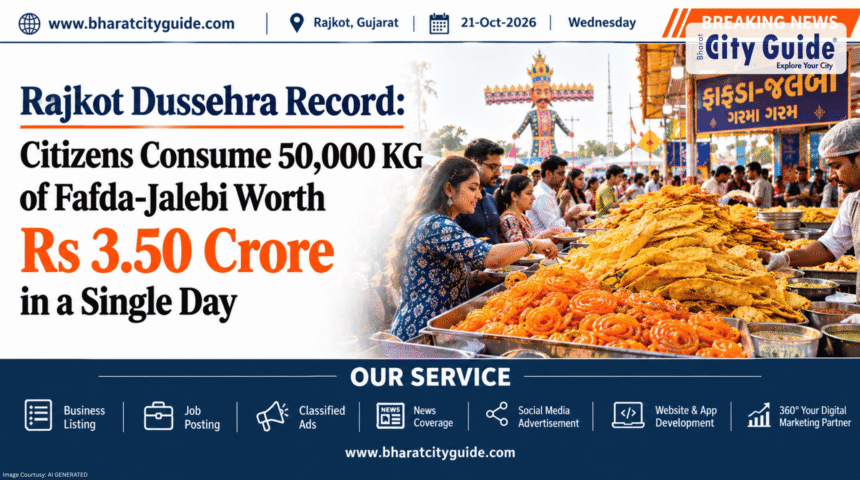
The festive spirit of Vijayadashami reached an extraordinary culinary milestone this year as Rajkot Dussehra celebrations recorded a staggering consumption of over 50,000 kilograms of Fafda and Jalebi in just 24 hours. The vibrant city in Saurashtra, famous for its deep-rooted love for traditional food and celebratory gatherings, saw an estimated commercial turnover of Rs 3.50 crore solely driven by the morning feast of crisp chickpea flour snacks and hot saffron-infused sweets.
- Introduction
- What is Rajkot Dussehra?
- Why This News is Important
- Background Information
- Key Highlights
- Detailed Explanation of the Event
- Benefits and Importance of the Festive Economy
- How It Impacts People
- Expert Insights and Industry Perspective
- Challenges and Market Factors
- Frequently Asked Questions (FAQs)
- Conclusion
From midnight preceding the festival, sweet shop owners, local farsan vendors, and pop-up food stalls across Rajkot began heating large oil vats to feed the overwhelming tide of hungry buyers. Long queues formed outside major food outlets across Dharmendra Road, Yagnik Road, Kalawad Road, and Kotecha Chowk as early as 4:00 AM. Citizens stood patiently to secure their family boxes of piping-hot Fafda, raw papaya chutney (sambharo), spicy green chillies, and golden Jalebis.
This unprecedented commercial rush reflects the unique social fabric and economic vitality of the region. Combining deep-rooted religious reverence with an unmatched passion for traditional gastronomy, the single-day feast during Rajkot Dussehra highlights how cultural customs continue to drive local business growth, support small scale artisans, and unite neighborhoods in shared joy and celebration.
What is Rajkot Dussehra?
Rajkot Dussehra refers to the unique cultural and communal celebration of Vijayadashami in Rajkot, the commercial hub of Gujarat’s Saurashtra region. While the festival inherently marks the victory of Lord Rama over Ravana and Goddess Durga’s triumph over Mahishasura, in Rajkot it carries a distinct socio-culinary dimension where food, community bonding, and vehicle worship take center stage.
The defining hallmark of this festive day is the early morning consumption of Fafda—a crunchy, savory snack made from seasoned gram flour (besan)—paired with Jalebi, a deep-fried spiral sweet soaked in cardamom-saffron sugar syrup. Across thousands of households in the city, breakfast on Vijayadashami revolves exclusively around this legendary sweet-and-savory combination.
In addition to the culinary feast, the day encompasses Shastra Puja (weapon worship) at police stations and private residences, Vahan Puja (worshipping automobiles and machinery with marigold garlands and vermilion), and evening Ravan Dahan events at major public venues like the Racecourse Ground.
Why This News is Important
The record-breaking consumption of 50,000 kilograms of Fafda and Jalebi worth Rs 3.50 crore carries significant economic, social, and cultural weight. First, it demonstrates the economic strength of the informal and micro-retail food sectors in Tier-2 Indian cities. Generating Rs 3.50 crore in cash and digital transactions within a single day injects substantial liquidity into local supply chains, benefiting dairy farmers, oil refiners, flour mills, and seasonal culinary workers.
Second, the event showcases public safety, crowd discipline, and efficient municipal food management. Managing thousands of crowded street-side counters while ensuring food safety standards requires active coordination among vendor associations, municipal health inspectors, and local traffic control authorities.
Finally, the sheer scale of participation demonstrates the resilience of regional cultural heritage. Despite changing lifestyle habits, modern fast-food choices, and health consciousness, citizens across all age groups continue to enthusiastically embrace centuries-old traditional culinary rituals on festive days.
Background Information
The tradition of consuming Fafda and Jalebi on Vijayadashami is deeply embedded in Gujarati culture. According to traditional belief and regional folk wisdom, consuming chickpea flour items paired with sugar syrup on the day following Navratri helps balance body energy and restore glucose levels after nine consecutive nights of energetic Garba dancing and fasting.
Historically, sweet shop owners (halwais) in Rajkot operated on a modest scale, serving localized neighborhoods. However, as the urban population grew and consumer spending power expanded, the scale of festive food production multiplied dramatically.
+-----------------------------------------------------------------------+
|                RAJKOT DUSSEHRA CULINARY STATS AT A GLANCE             |
+--------------------------+--------------------------------------------+
| Event Occasion           | Vijayadashami / Dussehra Celebrations      |
| Total Quantity Sold      | 50,000+ Kilograms (Fafda & Jalebi combined)|
| Total Commercial Value   | Estimated Rs 3.50 Crore ($420,000 approx.) |
| Key Food Items           | Besan Fafda, Desi Ghee Jalebi, Sambharo    |
| Peak Business Hours      | 4:00 AM to 12:00 PM (Single-Day Surge)     |
| Major Supply Hubs        | Dharmendra Rd, Kalawad Rd, Yagnik Rd       |
+--------------------------+--------------------------------------------+
Weeks before the festival, merchants secure metric tons of high-grade besan, pure desi ghee, cooking oil, saffron, and papaya. On the eve of the festival, hundreds of extra halwais and packaging assistants are hired to meet the intense demand that peaks before noon on Dussehra morning.
Key Highlights
- Record Sales Milestone: Citizens in Rajkot bought and consumed over 50,000 kg of Fafda and Jalebi in a single day.
- Rs 3.50 Crore Turnover: Total market transactions for the morning snack drive reached an estimated Rs 3.50 crore.
- Early Morning Queues: Thousands of buyers formed long queues outside sweet shops starting as early as 4:00 AM.
- Desi Ghee vs. Standard Jalebi Demand: Premium sweet shops reported massive demand for authentic pure desi ghee Jalebis alongside traditional Fafda.
- Essential Accompaniments: Millions of portions of fresh raw papaya chutney (sambharo), fried green chillies, and warm kadhi were distributed alongside orders.
- Massive Seasonal Employment: Hundreds of seasonal workers, packaging helpers, and halwais earned peak daily wages during the marathon cooking sessions.
Detailed Explanation of the Event
The commercial activity for the festival began in the late hours of the preceding night across major food markets in Rajkot. Large-scale frying stations were erected outside permanent sweet shops, equipped with commercial gas burners, massive iron vats, and automated dough mixers.
By 4:00 AM, as the aroma of frying besan and hot sugar syrup filled the morning air, citizens began arriving at sales counters. Outlets established organized token systems, separate cash desks, and pre-packed 500g and 1kg boxes to accelerate service and handle the massive crowds.
+-----------------------------------------------------------------------+
|                    FEAST SUPPLY & EXECUTION PHASES                    |
+--------------------------+--------------------------------------------+
| Phase                    | Operational Activity                       |
+--------------------------+--------------------------------------------+
| Phase 1: Night Prep      | Sourcing tons of besan, ghee & papaya      |
| Phase 2: Midnight Frying | Continuous frying of Fafda & Jalebi vats   |
| Phase 3: Token Counter   | Early morning crowd management & ticketing |
| Phase 4: Express Pack    | Distribution of standardized 500g/1kg boxes|
| Phase 5: Home Feast      | Family gatherings across Rajkot households |
+--------------------------+--------------------------------------------+
Throughout the morning, food lovers carried home fresh packages to enjoy with family members, extended relatives, and neighbors. Premium shops offering pure ghee Jalebi priced higher per kilogram saw equal demand as standard outlets, proving that consumers prioritized taste and festive tradition over cost.
Benefits and Importance of the Festive Economy
The massive economic and social engagement observed during the holiday yields widespread benefits for the regional community:
1. Significant Economic Boost for Local Small Businesses
Injecting Rs 3.50 crore directly into local farsan shops, dairy vendors, and ingredient suppliers provides crucial revenue that supports small business growth across the city.
2. Income Generation for Seasonal Workers
The demand creates immediate short-term employment opportunities for hundreds of temporary cooks, packaging staff, and delivery personnel who earn enhanced holiday wages.
3. Preserving Culinary Arts and Regional Identity
Celebrating local food traditions reinforces cultural identity and keeps ancient halwai cooking techniques alive among younger generations.
4. Supporting Upstream Agricultural Chains
Consuming 50,000 kg of processed snacks directly benefits regional farmers, chickpea growers, sugar mills, and dairy cooperatives supplying raw materials across Gujarat.
How It Impacts People
This extraordinary single-day event directly touches the lives of diverse groups across the region:
- For Families and Citizens: Creates a joyful atmosphere of togetherness, providing a cherished opportunity to gather over a festive breakfast.
- For Farsan Vendors and Merchants: Delivers the highest single-day sales volume of the entire calendar year, driving annual profitability.
- For Seasonal Workers: Offers lucrative short-term earning potential during the busy festive season.
- For Regional Agricultural Suppliers: Drives bulk demand for dairy products, edible oils, spices, and agricultural produce.
Expert Insights and Industry Perspective
Retail market analysts and food industry observers view the single-day sales surge in Rajkot as a clear indicator of strong consumer sentiment. According to local commercial experts, regional festive spending in Tier-2 cities like Rajkot remains exceptionally resilient because food traditions are deeply woven into the social structure.
Food safety officials from the Rajkot Municipal Corporation (RMC) also highlight the importance of proactive quality monitoring during high-volume events. Conducting pre-festival inspections of cooking oil quality, food color standards, and raw ingredient hygiene ensures that commercial surges do not compromise public health.
Furthermore, sociologists point out that food-centric festivals like Vijayadashami serve as crucial social equalizers. Standing in the same early-morning queues to purchase the same traditional food fosters a strong sense of community unity and shared civic pride.
Challenges and Market Factors
Managing a high-volume, single-day food surge presents several operational challenges for vendors and civic authorities:
- Quality Control Under Peak Pressure: Maintaining consistent hygiene, oil freshness, and taste standards when producing thousands of kilograms of food within a tight 12-hour window.
- Traffic and Crowd Management: Preventing severe road congestion outside popular sweet shops situated along busy narrow thoroughfares like Dharmendra Road.
- Fluctuating Raw Material Costs: Managing volatile wholesale prices for raw ingredients such as chickpea flour, edible oil, pure ghee, and papaya ahead of the festival.
- Waste Management and Cleanliness: Collecting and processing large volumes of packaging waste, disposable plates, and paper bags generated during the morning rush.
Frequently Asked Questions (FAQs)
How much Fafda and Jalebi was consumed during Rajkot Dussehra?
Over 50,000 kilograms of Fafda and Jalebi were sold and consumed across Rajkot in a single day.
What was the total estimated market value of the food sold?
The total sales turnover for Fafda and Jalebi during the day was estimated at Rs 3.50 crore.
Why do people in Rajkot eat Fafda and Jalebi on Vijayadashami?
It is a traditional cultural practice believed to restore energy and balance glucose levels following nine nights of Navratri Garba dancing and fasting.
What time do sweet shops open in Rajkot on Dussehra morning?
Most major sweet and farsan shops begin sales as early as 4:00 AM, with cooking operations running continuously from the previous midnight.
What accompaniments are served with Fafda and Jalebi?
Fafda is traditionally served with fresh raw papaya chutney (sambharo), fried green chillies, and warm spiced chickpea flour sauce (kadhi).
Which areas in Rajkot saw the highest demand?
Major commercial food hubs including Dharmendra Road, Yagnik Road, Kalawad Road, Kotecha Chowk, and Kuwadva Road recorded massive crowds.
How do local authorities ensure food safety during the festival?
Health inspectors from the Rajkot Municipal Corporation conduct pre-festival sampling raids to test cooking oils, ghee purity, and raw materials for safety and quality compliance.
Conclusion
The record-breaking consumption of 50,000 kilograms of Fafda and Jalebi worth Rs 3.50 crore during Rajkot Dussehra stands as a glowing testament to the city’s vibrant cultural spirit, culinary passion, and strong sense of community.
This annual single-day feast demonstrates how deeply cherished traditions continue to energize local retail markets, generate seasonal livelihoods, and bring thousands of families together in shared celebration.
As the festive season continues toward Sharad Purnima and Diwali, the joy and warmth shared across Rajkot on Vijayadashami set a bright tone for the region. The grand success of this culinary celebration reassures us that Rajkot’s rich heritage and love for togetherness will keep shining brightly for generations to come.