Introduction
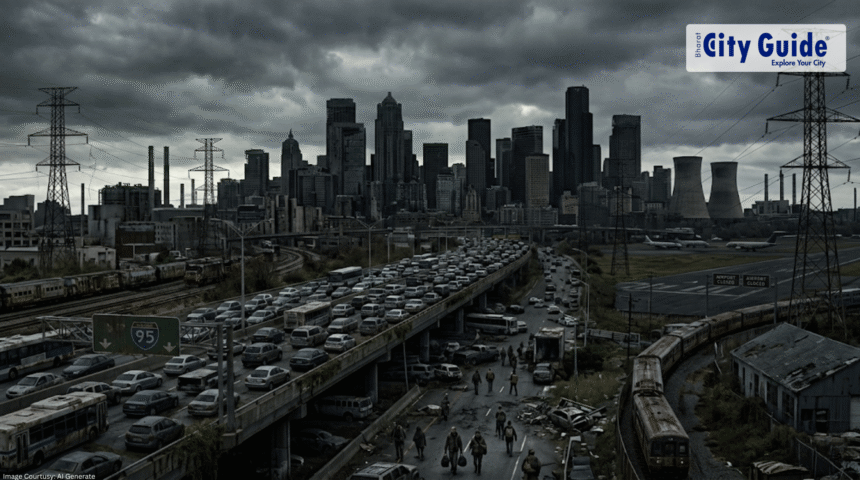
Imagining a world without technology is more than a thought experiment. It is a powerful way to understand how deeply modern life depends on tools, systems, and knowledge built over thousands of years. Strip away technology beyond even basic tools, and human existence would resemble prehistoric conditions, where survival was fragile and daily life revolved around avoiding hunger, disease, and violence.
- Introduction
- Prehistoric Perils: Life Before Modern Technology
- Health Without Technology: Medicine, Sanitation, and Mortality
- Food Without Technology: Hunger as the Norm
- Trade and Transport: The End of Large Civilizations
- Sanitation and Clean Water: An Invisible Shield
- Isolation and the End of Global Communication
- Education and Knowledge Loss
- Violence, Vulnerability, and Social Strain
- Why Technology Matters: Preventing Systemic Collapse
- Conclusion
Modern societies are buffered from these dangers by layers of technology: medicine, sanitation, agriculture, transportation, and communication networks. Remove them, and much of what we consider normal life would unravel rapidly. Exploring this scenario reveals not only how far humanity has come, but also why technology is essential to preventing large-scale social and biological collapse.
Prehistoric Perils: Life Before Modern Technology
Before industrialization and modern science, life expectancy was low and uncertainty was constant. In pre-industrial societies, early death was common. If children survived the dangerous first years of life, reaching one’s 40s or 50s was possible, but many never made it that far. Infections, injuries, malnutrition, and exposure regularly proved fatal.
Food security was local and seasonal. Communities depended on nearby land, weather patterns, and ecological conditions. A drought, flood, or pest outbreak could mean starvation. There were no global trade networks to bring grain from surplus regions or fruit from warmer climates. Survival hinged on local success or failure.
Daily life was dominated by physical labor. Gathering water, fuel, and food consumed most waking hours. There was little margin for illness, disability, or conflict. One injury could remove a person’s ability to contribute, threatening both individual and group survival.
Even basic Stone Age technologies such as stone tools, fire control, and simple shelters dramatically improved survival odds. Remove all tools entirely, and human survival would become nearly impossible outside the mildest environments. In this sense, a true world without technology would be harsher than even most prehistoric eras.
Health Without Technology: Medicine, Sanitation, and Mortality
The most dramatic consequences of a world without technology would appear in health and medicine. Before modern public health, infant and child mortality rates were extraordinarily high by today’s standards.
In the early 20th century United States, before antibiotics and advanced neonatal care, infant mortality was around 100 deaths per 1,000 live births. Over the course of the century, that figure dropped by more than 90 percent. This transformation did not occur naturally; it was driven by technology.
Vaccines, antiseptic surgical techniques, safe blood transfusions, antibiotics, clean water systems, and improved maternal care collectively reshaped survival. Minor injuries stopped becoming death sentences. Childbirth became safer. Childhood diseases that once killed millions became preventable or manageable.
Without these technologies, infections from contaminated water, small cuts, or routine childbirth would again become major killers. Diseases such as measles, pneumonia, and diarrheal infections would reclaim their historic role as leading causes of death.
In a world stripped of medical and sanitation technology, societies would drift back toward historically high mortality rates, especially among infants and mothers. Epidemics would be frequent, life expectancy far lower, and population stability fragile.
Food Without Technology: Hunger as the Norm
Modern food security rests on a dense technological web. Mechanized agriculture, fertilizers, irrigation, refrigeration, storage, and global logistics work together to feed billions of people.
Without technology, food production would revert to small-scale, labor-intensive methods. Yields would plummet. Crop failures would again mean famine rather than inconvenience. Preservation would be limited to drying or smoking, making food scarcity seasonal and unpredictable.
Transportation plays a critical role. Today, ships, trucks, and rail systems move food across continents. Without them, cities could not sustain themselves. Urban populations, which rely heavily on imported food, would face rapid shortages.
Cold climates would be especially vulnerable. Without transport and storage technologies, winter survival would require strict local preparation, and many regions would simply be unable to support dense populations year-round.
A world without technology would therefore be a world where hunger is not a crisis event but a constant threat.
Trade and Transport: The End of Large Civilizations
Large civilizations depend on movement. Raw materials, food, medicine, and energy flow continuously between regions. Transportation technology makes specialization possible, allowing societies to produce efficiently rather than locally everything they need.
Without ships, trucks, trains, and aircraft, trade collapses. Communities become isolated, limited to what their immediate environment can provide. This dramatically reduces resilience. If local conditions fail, there is no external support.
The same systems that move food also move medical supplies, fuel, and emergency aid. Without them, modern health systems would disintegrate. Vaccines, pharmaceuticals, and specialized equipment could not reach those who need them.
In effect, without transport technology, large urban civilizations in their current form could not exist. Population densities would shrink, and human societies would fragment into smaller, largely self-sufficient groups.
Sanitation and Clean Water: An Invisible Shield
One of the most overlooked technologies in modern life is sanitation. Sewage systems, water treatment plants, and waste management prevent disease on a massive scale.
Before these systems, contaminated water spread cholera, typhoid, and dysentery. Urban life was often synonymous with filth and disease. The introduction of clean water infrastructure did more to extend life expectancy than almost any other single innovation.
In a world without technology, safe drinking water would be scarce. Waste would accumulate near living areas. Disease would spread rapidly, especially in dense populations.
Sanitation technology quietly underpins modern health. Remove it, and public health collapses even if other technologies remain.
Isolation and the End of Global Communication
Early humans lived in small groups with limited contact beyond their region. In contrast, today’s world is tightly interconnected through communication technologies.
Phone networks, the internet, satellites, and data centers depend on powered infrastructure. Without technology, communication would revert to physical travel or word of mouth. Information would move slowly and locally.
Complex systems such as finance, emergency response, scientific research, and global governance rely on rapid communication. Without it, coordination at national or global scales would be nearly impossible.
The collapse would not only be physical but intellectual. Knowledge-sharing that drives innovation, medicine, and crisis response would fragment. Humanity would lose its collective awareness.
Education and Knowledge Loss
Modern education depends on printed materials, digital storage, and global collaboration. Without technology, knowledge transmission would return to oral tradition and limited apprenticeship.
Complex scientific and technical knowledge would be extremely difficult to preserve. Fields such as medicine, engineering, and chemistry rely on precise documentation and cumulative learning.
Over generations, much of today’s knowledge would be lost, not because it is unimportant, but because it cannot survive without the tools that record and distribute it.
Violence, Vulnerability, and Social Strain
Technology also acts as a stabilizing force. Law enforcement, emergency services, and governance rely on communication, transport, and data systems. Without them, maintaining order becomes far more difficult.
Scarcity of food, medicine, and resources increases conflict. Small disputes escalate quickly when survival is at stake. In a world without technology, violence becomes a more common survival strategy, as it was in many prehistoric contexts.
Communities would be more vulnerable to environmental shocks, natural disasters, and internal conflict, with few tools to recover or adapt.
Why Technology Matters: Preventing Systemic Collapse
Thinking about a world without technology highlights three core roles technology plays in preventing collapse:
Food Security
Agricultural machinery, fertilizers, preservation, and transport keep billions fed and buffer against local crop failures.
Health and Survival
Vaccines, antibiotics, diagnostics, sterile techniques, and public health systems hold infectious disease and infant mortality at a fraction of historic levels.
Transport and Trade
Ships, trucks, rail, and aviation connect global supply chains for food, medicine, energy, and essential materials.
Remove these layers, and humanity returns toward small, vulnerable, largely self-sufficient communities, where famine, disease, and isolation are normal risks rather than rare emergencies.
Conclusion
A world without technology would not simply be less convenient. It would be fundamentally more dangerous, shorter-lived, and fragmented. The systems that quietly support modern life—food production, medicine, sanitation, transport, and communication—are the difference between constant survival struggle and relative security.
Technology does not eliminate risk, but it buffers humanity against prehistoric perils. By imagining its absence, we gain clarity on how much would collapse if our tools vanished, and why maintaining, improving, and responsibly managing technology is essential to the future of civilization.