An Indian Kitchen Reality Check (2026 Edition)
- Introduction: Are Sugar, Salt, and Fat Really the Enemy?
- The Everyday Indian Scenario (You’ll Relate)
- What the Science Actually Says (2026 Update)
- Where Indians Go Wrong (Without Realising)
- What Actually Works (Without Extremes)
- Easy Indian Meal Tweaks (Real Life, Not Instagram)
- What Most People Misunderstand
- One Small Change That Works
- Indian Kitchen Swap (Easy Win)
- Long-Term Health Impact
- Conclusion: Not Villains—Just Misused
- Frequently Asked Questions (FAQ)
Introduction: Are Sugar, Salt, and Fat Really the Enemy?
“Quit sugar.”
“Salt is poison.”
“No oil if you want to be healthy.”
If you’ve grown up in an Indian household, you’ve heard all three—often while someone else happily eats ghee wali roti, achar, and a piece of mithai. Confusing? Absolutely.
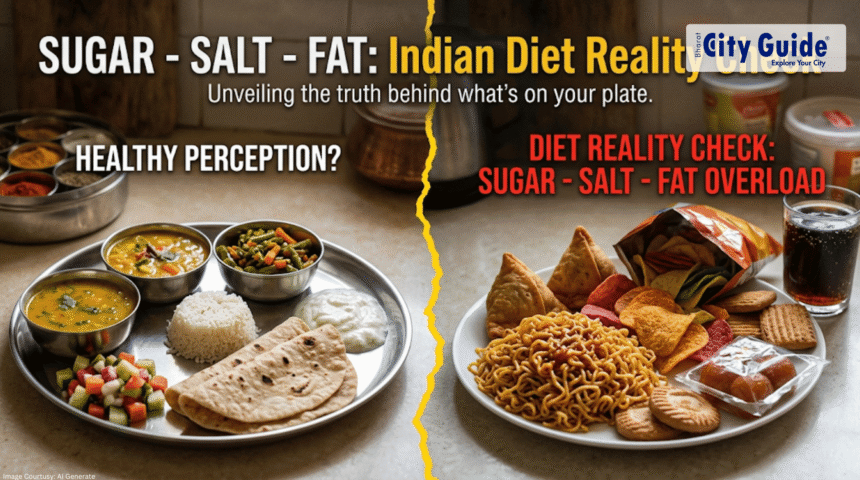
The truth is far less dramatic: sugar, salt, and fat are not villains. They are essential nutrients that have been misused, overused, and industrialised, especially in modern Indian diets shaped by sedentary work, packaged foods, and constant snacking.
In 2026, nutrition science—including ICMR, NIN, and WHO guidelines—is clear:
👉 Quantity, quality, and frequency matter far more than elimination.
Let’s decode the reality—Indian kitchen style.
The Everyday Indian Scenario (You’ll Relate)
You’re working late—editing content, managing a business, or scrolling between meetings.
- 2–3 cups of chai with sugar
- A handful of namkeen while working
- “Thoda sa achar” with lunch
- Fried snacks on busy evenings
You’re not eating burgers or pizzas daily, so it feels fine.
Yet over weeks:
- Energy crashes
- Puffy face
- Brain fog
- Gradual weight gain
This isn’t about one bad meal. It’s cumulative overload of sugar, salt, and poor-quality fats—without enough movement to offset them.
What the Science Actually Says (2026 Update)
1. Sugar: Energy, Not Poison—Until Excess
Sugar provides quick energy. Your brain and muscles use glucose. But excess added sugar is where trouble begins.
Indian research insights:
- Adults consuming 40–60 g added sugar daily (from tea, sweets, biscuits, packaged foods) show 14–26% higher risk of:
- Type 2 diabetes
- Prediabetes
- Obesity
- Type 2 diabetes
ICMR & NIN (updated guidance):
- Added sugars from packaged foods: <5% of total daily energy
- Total sugars (including sweets): <10% of daily energy
For most adults, this equals roughly:
👉 4–6 teaspoons of added sugar per day
That includes chai, sweets, biscuits, sauces, and drinks combined.
2. Salt: Essential, But Quietly Excessive
Salt (sodium) is critical for:
- Nerve signals
- Muscle contraction
- Fluid balance
But Indian intake is nearly double recommended levels.
WHO & Indian data show:
- Recommended sodium: <5 g salt/day (~1 tsp)
- Average Indian intake: 8–10 g/day
The problem isn’t just home cooking—it’s:
- Packaged snacks
- Instant noodles
- Sauces & ketchup
- Restaurant food
High salt → high blood pressure → heart attack & stroke risk, India’s top killers.
3. Fat: Type Matters More Than Total
Fat is essential for:
- Hormones
- Brain health
- Vitamin absorption (A, D, E, K)
But not all fats behave the same.
2026 Global & Indian consensus:
- Saturated fat (ghee, butter, cream, palm oil):
👉 Keep <10% of daily energy - Trans fats (vanaspati, bakery items, reused oil):
👉 As close to zero as possible (<1%) - Unsaturated fats (mustard, groundnut, sesame oils):
👉 Preferred for heart health
A 2026 guideline review confirms:
Replacing saturated fat and refined carbs with plant-based unsaturated fats improves heart and metabolic health in Indians.
Where Indians Go Wrong (Without Realising)
Sugar Traps
- 3 cups of chai × 2 tsp sugar = 6 tsp already
- “Just one” biscuit that becomes four
- Flavoured yogurt, packaged juices, “health” drinks
Salt Traps
- Papad + achar at every meal
- Namkeen during work hours
- Instant soups and noodles for convenience
Fat Traps
- Reusing frying oil multiple times
- Bakery snacks made with vanaspati
- Restaurant gravies loaded with hidden oil and cream
Individually small. Together dangerous.
What Actually Works (Without Extremes)
1. Smart Sugar Habits (Indian-Friendly)
- Set a personal limit: 4–6 tsp/day added sugar
- Reduce sugar in chai gradually:
- Week 1: 2 → 1.5 tsp
- Week 2: 1 tsp
- Week 1: 2 → 1.5 tsp
- Prefer whole sweets occasionally:
- Dates + nuts
- Homemade kheer with less sugar
- Dates + nuts
- Avoid daily sugary drinks—save them for rare occasions
👉 Brown sugar, jaggery, honey = still sugar
2. Salt Without the BP Spike
- Taste food before adding salt
- Use flavour boosters:
- Lemon, vinegar
- Ginger, garlic
- Jeera, dhania, ajwain
- Lemon, vinegar
- Limit papad, pickle, sauces to sometimes, not daily
- Choose roasted snacks over salty mixtures
3. Fat That Helps, Not Harms
- Visible oil: ~4–5 tsp/person/day (unless medically advised otherwise)
- Rotate oils:
- Mustard
- Groundnut
- Sesame
- Mustard
- Use ghee intentionally:
- 1 tsp on dal or roti is fine
- Avoid multiple spoonfuls everywhere
- 1 tsp on dal or roti is fine
- Never reuse frying oil
- Avoid vanaspati-based foods whenever possible
Easy Indian Meal Tweaks (Real Life, Not Instagram)
Breakfast
Instead of:
Sugary chai + biscuits
Try:
Lightly sweetened chai + poha/upma with veggies
Lunch
Instead of:
3 rotis, oily sabzi, achar, sweet lassi
Try:
2 rotis, less-oil sabzi, dal, plain chaas, achar occasionally
Evening Snack
Instead of:
Chips + cold drink
Try:
Roasted chana, sprouts chaat, makhana
Dinner
Instead of:
Butter paneer + naan + dessert
Try:
Moderate-oil paneer/chole + phulka/millet roti + salad
What Most People Misunderstand
❌ “Healthy sugar means unlimited.”
✔️ Sugar is sugar—source doesn’t cancel quantity.
❌ “Cold-pressed oil means more oil.”
✔️ Quality helps, quantity still matters.
❌ “I don’t eat sweets daily.”
✔️ Chai, biscuits, sauces often add more sugar than mithai.
One Small Change That Works
Choose one this week:
- Cut ½–1 tsp sugar from daily beverages
- Skip sugary drinks on weekdays
- Make papad & achar occasional
- Replace vanaspati snacks with homemade options
Consistency beats perfection.
Indian Kitchen Swap (Easy Win)
Swap:
Flavoured sweet yogurt
With:
Plain dahi + fruit + nuts
✔ Less sugar
✔ More protein
✔ Better gut health
Long-Term Health Impact
Managing sugar, salt, and fat properly can:
- Reduce diabetes risk (India’s fastest-growing disease)
- Lower blood pressure and heart disease
- Improve energy, focus, and mood
- Support sustainable weight control
- Help you stay productive, creative, and active long-term
You don’t need fear.
You need awareness and balance.
Conclusion: Not Villains—Just Misused
Sugar, salt, and fat are tools, not toxins.
Used mindfully, they make Indian food nourishing, satisfying, and sustainable.
The goal isn’t elimination.
The goal is intentional use—so your chai, paratha, and dal support your life instead of quietly draining it.
Frequently Asked Questions (FAQ)
1. Is sugar completely bad for Indians?
No. Small amounts are fine. Excess added sugar increases diabetes and fatty liver risk.
2. How much salt should an Indian adult consume daily?
Ideally <5 g salt/day (1 tsp) including all sources.
3. Is ghee healthy or unhealthy?
Healthy in small amounts. Excess contributes to saturated fat overload.
4. Are jaggery and honey better than sugar?
Slightly better nutritionally, but metabolically still sugar—moderation matters.
5. How much oil is safe daily?
Around 4–5 tsp per person per day, depending on activity and health status.
Disclaimer:
This content is for educational purposes only and not a substitute for professional medical advice.
Today’s Food Habit Tip:
Reduce sugar in all daily beverages by ½–1 teaspoon and avoid sugary drinks on weekdays.
Reflection Question:
Which daily habit quietly adds the most sugar, salt, or unhealthy fat—and what’s one tweak you’ll try this week?