Introduction
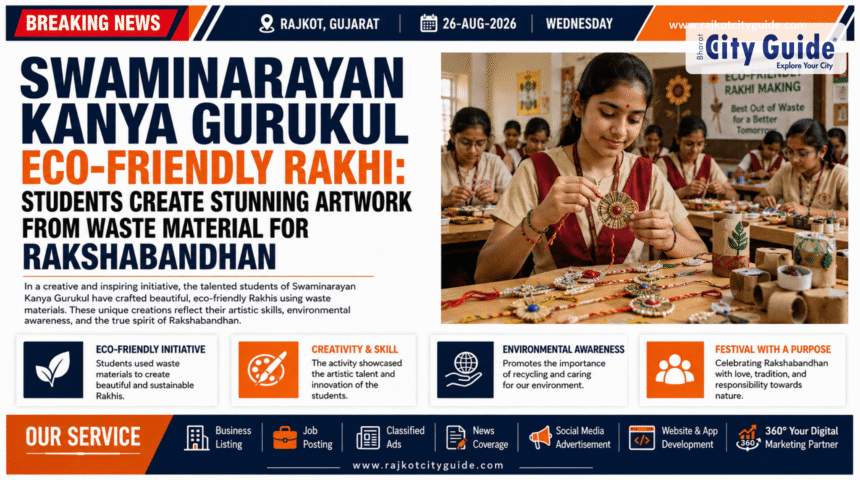
As the sacred festival of Rakshabandhan approaches, stories of devotion, creativity, and community service light up towns and cities across Gujarat. In Rajkot, a inspiring initiative has emerged from the classrooms of the Shree Swaminarayan Kanya Gurukul. The young female students of the institution have blended creative artistry with environmental sustainability by crafting a majestic, eco-friendly rakhi entirely from discarded waste materials. This unique creation serves not only as a celebration of the traditional brother-sister bond, but also as a heart-felt expression of gratitude toward the institution’s spiritual leadership and philanthropic supporters.
- Introduction
- What is Swaminarayan Kanya Gurukul Eco-Friendly Rakhi?
- Why This News is Important
- Background Information
- Key Highlights
- Detailed Explanation of the Event
- Benefits, Features, and Importance
- How It Impacts People
- Expert Insights and Industry Perspective
- Challenges and Limitations
- Future Outlook
- Frequently Asked Questions (FAQs)
- Conclusion
The artistic endeavor carries deep spiritual and educational significance for the Gurukul community. The students created the special Swaminarayan Kanya Gurukul Eco-Friendly Rakhi to express reverence to Guruvarya Devkrushnadasji Swami, the head of the Swaminarayan Gurukul institution. Furthermore, the gesture recognizes the generosity of donor Vasantbhai Limbasiya, who donated valuable land to support the establishment and growth of educational facilities for young women in the region.
Beyond its artistic beauty, the project highlights the value of integrating value-based education (Sanskara) with environmental awareness in modern schooling. By transforming everyday waste items into a decorative symbol of reverence and protection, the girls of Swaminarayan Kanya Gurukul demonstrate how traditional Indian festivals can inspire sustainable habits, artistic expression, and civic gratitude.
                  ┌──────────────────────────────────────────────┐
                  │    KANYA GUKUKUL ECO-RAKHI CREATIVE INITIATIVE│
                  │       Waste-to-Best Craftsmanship & Gratitude  │
                  └──────────────────────┬───────────────────────┘
                                         │
        ┌────────────────────────────────┼────────────────────────────────┐
        ▼                                ▼                                ▼
┌────────────────────────┐      ┌────────────────────────┐      ┌────────────────────────┐
│  SUSTAINABLE MATERIALS │      │   SPIRITUAL GRATITUDE  │      │   COMMUNITY PHILANTHROPY│
│ • Reused Waste Items   │      │ • Honor to Guruvarya   │      │ • Recognition of Land  │
│ • Zero-Plastic Craft   │──────►   Devkrushnadasji Swami│──────►   Donation by Vasant   │
│ • Creative Upcycling   │      │ • Devotional Artistry  │      │   Limbasiya            │
└────────────────────────┘      └────────────────────────┘      └────────────────────────┘
What is Swaminarayan Kanya Gurukul Eco-Friendly Rakhi?
The Swaminarayan Kanya Gurukul Eco-Friendly Rakhi is a creative cultural project executed by the female students of the Rajkot-based institution ahead of Rakshabandhan. Built on the principle of “Waste to Best,” the project involves collecting discarded household items, fabric scraps, paper pulp, organic fibers, and decorative offcuts to craft an elaborate sacred thread.
Key elements of this creative initiative include:
- Upcycled Craftsmanship: Rather than purchasing factory-made plastic beads or synthetic ribbons, students collect and repurpose discarded materials, turning environmental waste into sacred art.
- Symbol of Institutional Gratitude: The grand rakhi is designed as an offering of respect (Guru Bhakti) to Guruvarya Devkrushnadasji Swami for his spiritual mentorship.
- Honoring Philanthropic Generosity: The initiative pays tribute to philanthropist Vasantbhai Limbasiya, whose land donation made expanded educational infrastructure possible for the girls’ Gurukul.
- Practical Environmental Education: The project turns theoretical concepts of waste management, recycling, and eco-friendly living into a hands-on creative experience.
Why This News is Important
The story of the Swaminarayan Kanya Gurukul Eco-Friendly Rakhi stands out during the holiday season for several compelling reasons:
- Promoting Eco-Friendly Celebrations: Millions of plastic and non-biodegradable synthetic rakhis end up in municipal landfills every year after Rakshabandhan. Highlighting handcrafted, eco-friendly alternatives encourages sustainable holiday habits.
- Reviving Values-Based Education: The Gurukul system emphasizes Vidya (knowledge), Sadvidya (moral education), and Brahmavidya (spiritual awareness). This project weaves respect for teachers and donors directly into the educational curriculum.
- Empowering Young Women Through Creative Arts: Engaging female students in large-scale design projects builds confidence, artistic skills, and collaborative teamwork.
- Celebrating Local Philanthropy: Publicly honoring land donors like Vasantbhai Limbasiya inspires a culture of charity (Daan) and civic support for educational institutions across Gujarat.
Background Information
The Swaminarayan Gurukul movement, founded under the spiritual legacy of Lord Swaminarayan and expanded by visionary saints, has provided holistic education across Gujarat for decades. Traditionally focused on academic excellence alongside moral values, Gurukul institutions operate schools, colleges, and residential campuses for boys and girls across the state.
                [ GURUKUL VALUES & EDUCATIONAL MODEL ]
                                   │
  ┌────────────────────────────────┴────────────────────────────────┐
  ▼                                                                 ▼
[Academic Excellence - Vidya]                      [Moral & Eco Values - Sadvidya]
 • Modern STEM & Arts Curriculum                     • Value-based character building
 • Practical vocational skills                      • Environmental responsibility
 • Creative art & design workshops                  • Respect for Gurus, Donors & Nature
In Rajkot, the Shree Swaminarayan Kanya Gurukul offers young women a supportive environment where academic studies are complemented by cultural traditions, yoga, self-defense, and creative arts. Establishing dedicated campuses for girls requires substantial physical infrastructure and land resources. Philanthropic leaders like Vasantbhai Limbasiya played a crucial role in donating land for the campus. To express their collective gratitude, the students created a special, large-scale eco-friendly rakhi as a symbol of protection, respect, and thanksgiving.
Key Highlights
- Waste to Best Innovation: Students assembled a stunning, intricate rakhi using upcycled waste items, discarded fabrics, and eco-friendly materials.
- Dedicated to Guruvarya Devkrushnadasji Swami: The primary offering honors the spiritual leader of the Swaminarayan Gurukul institution.
- Tribute to Land Donor Vasantbhai Limbasiya: Recognizes the philanthropist who donated land to expand the girls’ Gurukul campus in Rajkot.
- Eco-Conscious Festival Campaign: Encourages citizens across Rajkot to adopt eco-friendly, biodegradable materials during cultural celebrations.
- Holistic Skill Development: Demonstrates practical craftsmanship, teamwork, and artistic design among female students.
- Value-Driven Culture: Highlights the Gurukul philosophy of combining academic learning with deep respect for teachers, mentors, and community patrons.
Detailed Explanation of the Event
The creation of the Swaminarayan Kanya Gurukul Eco-Friendly Rakhi was a collaborative, multi-step process led by the students and supported by school faculty.
                    [ RAKHI CREATION & PRESENTATION FLOW ]
                                       │
  Waste Collection & Upcycling ──► Intricate Design Assembly
                                             │
  Sacred Presentation Ceremony ◄── Gratitude Tribute to Guru & Land Donor ──────┘
1. Material Gathering and Upcycling Design
Guided by art and craft instructors, the students began by collecting reusable waste items from around their homes and campus. Materials included discarded thread spools, paper board offcuts, fabric remnants, natural jute fibers, dried seeds, and eco-friendly colors. Over several days of painstaking work, the girls cleaned, sorted, shaped, and assembled these raw materials into a large decorative medallion with flowing wrist bands.
2. Spiritual Significance and Presentation Ceremony
The completed rakhi was presented in a dedicated devotional ceremony. As part of the Rakshabandhan observances, the students offered the handcrafted rakhi to Guruvarya Devkrushnadasji Swami, seeking his blessings for their educational journey and future endeavors. The ceremony featured traditional Vedic chants, devotional songs (kirtans), and expressions of gratitude.
3. Acknowledging Philanthropy
A central focus of the event was honoring donor Vasantbhai Limbasiya. The students expressed how his land donation provided them with a peaceful, spacious campus equipped with modern classrooms, sports facilities, and creative study halls. By presenting the eco-friendly rakhi to honor this generous gift, the students demonstrated the timeless Indian tradition of recognizing community benefactors.
Benefits, Features, and Importance
The table below outlines the core features of the student-led eco-friendly initiative compared to standard commercial festival practices:
| Feature / Aspect | Commercial Market Rakhis | Kanya Gurukul Eco-Friendly Rakhi | Educational & Environmental Benefit |
|---|---|---|---|
| Primary Material | Plastic beads, nylon, foam | Upcycled waste, paper, jute, seeds | Zero plastic waste & 100% biodegradable. |
| Production Source | Mass factory manufacturing | Handcrafted by student groups | Fosters creativity & artistic teamwork. |
| Purpose & Intent | Commercial retail sale | Devotional offering & donor gratitude | Teaches value-based gratitude & Guru Bhakti. |
| Environmental Footprint | High plastic landfill waste | Positive recycling & upcycling | Promotes environmental stewardship. |
| Cultural Connection | Standard market designs | Personalized symbolic artwork | Deepens appreciation for traditional heritage. |
How It Impacts People
+-----------------------------------------------------------------------+
|                    COMMUNITY & EDUCATIONAL IMPACT                     |
+-----------------------------------+-----------------------------------+
|               STUDENT CREATORS    |         FELLOW CITIZENS           |
|  - Practical art & design skills  |  - Inspiration for eco-celebrations|
|  - Teamwork & creative pride      |  - Awareness of waste reduction   |
|  - Values of gratitude & respect  |  - Support for youth initiatives  |
+-----------------------------------+-----------------------------------+
|               PHILANTHROPISTS     |         EDUCATIONAL SYSTEM        |
|  - Public recognition of gifts    |  - Model for value-based learning |
|  - Encouragement to support schools| - Practical hands-on art projects|
|  - Stronger community-school bond |  - Integration of eco-ethics      |
+-----------------------------------+-----------------------------------+
For Students and Young Learners
For the female students at Swaminarayan Kanya Gurukul, designing and building the eco-friendly rakhi provided a practical application of problem-solving and artistic expression. Turning discarded materials into a celebrated piece of art instills resourcefulness, environmental consciousness, and creative confidence that extends far beyond the classroom.
For Society and Environment
From an environmental standpoint, initiatives like this serve as a powerful public reminder. When thousands of plastic rakhis are bought and discarded every year, they contribute to persistent urban litter. Demonstrating that beautiful, meaningful sacred threads can be crafted from recycled materials encourages families across Rajkot to adopt eco-friendly alternatives during festive seasons.
For Donors and Community Patrons
Seeing young students use their talents to express sincere gratitude reassures philanthropists like Vasantbhai Limbasiya that their contributions are making a meaningful difference. Recognizing donors publicly creates a positive feedback loop that encourages other business leaders and philanthropic families to support educational infrastructure for young women.
Expert Insights and Industry Perspective
Educators and environmental policy analysts praise school projects that connect sustainability with traditional cultural practices.
                  [ HOLISTIC EDUCATION & ECO-VALUES ]
                                     │
  ┌──────────────────────────────────┴──────────────────────────────────┐
  ▼                                                                     ▼
[Experiential Green Learning]                      [Cultural Character Building]
 • Hands-on recycling & upcycling                   • Gratitude for teachers & patrons
 • Waste reduction awareness                        • Pride in sustainable traditions
 • Creative problem-solving skills                  • Community-oriented mindset
Educational experts note that students retain environmental concepts much better when learning occurs through creative hands-on projects rather than textbook reading alone. Combining craft workshops with traditional festivals like Rakshabandhan makes sustainability engaging, memorable, and culturally meaningful for young learners.
Challenges and Limitations
Executing large-scale handcrafted eco-projects presents a few practical challenges:
- Time-Intensive Assembly: Handcrafting detailed art from recycled materials requires significant time, careful preparation, and manual precision compared to buying pre-made store items.
- Material Selection: Finding suitable, non-toxic, and durable waste materials requires careful sorting and supervision by art instructors.
- Scalability: While custom eco-friendly rakhis are ideal for special institutional offerings, scaling up handcrafting to meet broad commercial demand requires wider community workshops and vocational training.
Future Outlook
The success of the eco-friendly rakhi project at Swaminarayan Kanya Gurukul paves the way for expanded green initiatives in upcoming festival seasons. The institution plans to host regular “Waste to Best” workshops ahead of major celebrations like Ganesh Chaturthi, Navratri, and Diwali, teaching students to create eco-friendly idols, decorative torans, and natural diyas.
Furthermore, educational leaders in Rajkot hope to inspire other schools across Gujarat to adopt similar eco-conscious art projects. By blending environmental awareness with traditional Indian heritage, schools can nurture a generation of environmentally responsible, culturally grounded citizens.
Frequently Asked Questions (FAQs)
1. What materials were used to create the Swaminarayan Kanya Gurukul Eco-Friendly Rakhi?
The students used upcycled waste materials, including fabric offcuts, paper pulp, natural jute fibers, cardboard scraps, and eco-friendly colors, avoiding single-use plastics.
2. Who was honored with the presentation of this special eco-friendly rakhi?
The rakhi was created as a devotional offering to Guruvarya Devkrushnadasji Swami, the head of Swaminarayan Gurukul, and to honor land donor Vasantbhai Limbasiya.
3. Why was land donor Vasantbhai Limbasiya honored during the event?
Vasantbhai Limbasiya generously donated land to help establish and expand campus facilities for the Swaminarayan Kanya Gurukul in Rajkot.
4. Where is the Swaminarayan Kanya Gurukul located?
The institution is located in Rajkot, Gujarat, where it offers holistic academic, moral, and cultural education for young women.
5. What is the core message behind using waste materials for Rakshabandhan?
The initiative promotes the “Waste to Best” philosophy, encouraging eco-friendly celebrations, waste reduction, and environmental protection during traditional Indian festivals.
6. How does the Gurukul educational model integrate environmental awareness?
The Gurukul system combines modern academic subjects with Sadvidya (moral education), encouraging hands-on environmental projects, recycling, and respect for nature alongside spiritual values.
7. Can students from other schools adopt similar eco-friendly festival projects?
Yes, educators encourage schools to organize hands-on upcycling workshops ahead of cultural festivals to foster creativity, teamwork, and environmental responsibility among students.
Conclusion
The crafting of the Swaminarayan Kanya Gurukul Eco-Friendly Rakhi by the female students of Rajkot is a inspiring blend of artistic innovation, environmental responsibility, and cultural values. By turning discarded waste into a beautiful symbol of sacred protection and offering it to Guruvarya Devkrushnadasji Swami while honoring philanthropist Vasantbhai Limbasiya, the students demonstrated the true spirit of Gurukul education. This project serves as a shining example for the entire community, proving that traditional celebrations can be both deeply meaningful and environmentally sustainable.