Introduction: The Great Indian Grain Debate
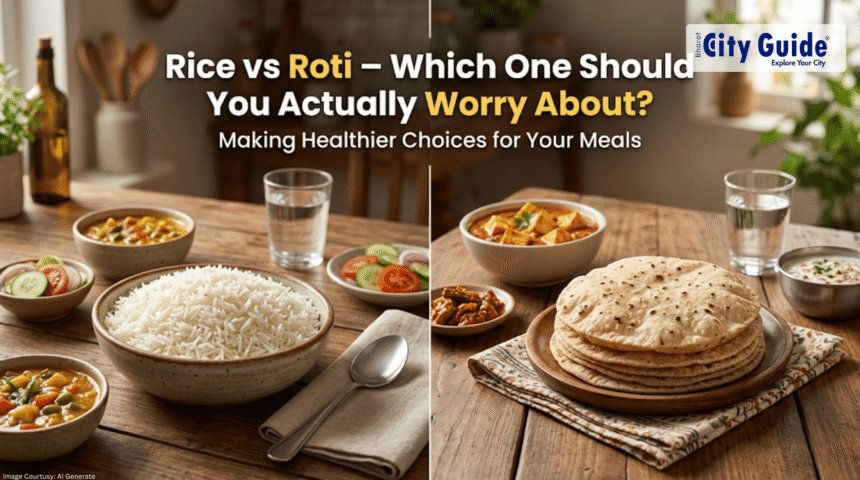
Few food debates in India are as emotional as rice vs roti.
- Introduction: The Great Indian Grain Debate
- 1) Glycemic Index & Blood Sugar
- 2) Nutrient Density of Modern Grains
- 3) Overall Dietary Pattern Matters Most
- ❌ Mistake 1: Rice Mountains
- ❌ Mistake 2: Roti Overload
- ❌ Mistake 3: Cutting Rice but Keeping Junk
- ❌ Mistake 4: Ignoring Grain Quality
- 1) Control Quantity First
- 2) Improve Grain Quality
- 3) Pair Smartly
- 1) Is rice bad for weight loss?
- 2) Is roti better for diabetes?
- 3) Can I eat rice at night?
- 4) Is brown rice always better?
- 5) How often should I eat millets?
At almost every family meal, someone says:
👉 “Don’t eat rice at night.”
👉 “Roti is better for weight loss.”
👉 “Rice makes you fat.”
Over time, many people begin to believe:
- Rice = tasty but unhealthy
- Roti = dry but safe and “diet food”
But here’s the truth backed by modern nutrition science in 2026:
👉 Neither rice nor roti is the villain.
👉 Neither is automatically healthy either.
What actually matters is:
- Quantity
- Quality
- What you eat them with
- Your lifestyle and activity level
In fact, worrying about rice vs roti alone often distracts people from the real problems in modern Indian diets—like low protein, low fiber, and too many ultra-processed foods.
Let’s break this down with clarity, science, and practical Indian context.
The Everyday Confusion at the Indian Thali
Picture a normal Indian lunch:
- Dal
- Sabzi
- Salad
- Achar
- Rice
- Rotis
You reach for a second serving and hesitate.
Someone advises:
👉 “Take roti, not rice.”
This idea is so common that many “roti people” feel proud, while “rice lovers” feel guilty.
But nutritionally, both rice and roti are cereals—mainly sources of carbohydrates. Neither magically causes weight gain on its own.
What decides their impact is:
- Portion size
- Refinement level
- Meal balance
- Overall diet pattern
What Research Says About Rice vs Roti
1) Glycemic Index & Blood Sugar
The glycemic index (GI) measures how quickly a food raises blood sugar.
Plain Staples:
- White rice → often higher GI
- Whole wheat roti → moderate GI
- Brown or hand-pounded rice → lower GI than white rice
So yes, plain white rice can raise blood sugar faster, especially when eaten alone in large portions.
BUT—and this is important—Indians rarely eat rice or roti alone.
In Mixed Meals:
When rice or roti is eaten with:
- Dal
- Sabzi
- Fat (ghee/oil)
- Curd
the glycemic impact drops significantly.
Several Indian meal studies show that when carbohydrate amounts are matched and meals include pulses and vegetables, the difference between rice and chapati becomes much smaller.
👉 Translation:
Your dal and sabzi matter as much as your grain.
2) Nutrient Density of Modern Grains
Modern agriculture has changed both rice and wheat.
High-yield varieties were bred for:
- Productivity
- Disease resistance
- Shelf life
Not necessarily nutrition.
Recent Indian agricultural analyses indicate:
- Some modern rice and wheat varieties have lower zinc and iron than traditional types
- Certain rice grown in specific regions may accumulate more arsenic from soil and water
This does not mean rice or wheat are unsafe.
It simply means:
👉 Relying heavily on one polished grain daily is not ideal.
👉 Grain diversity improves nutrient intake.
3) Overall Dietary Pattern Matters Most
Large Indian dietary surveys consistently show:
People eating:
- Very high refined cereals
- Low pulses
- Low vegetables
- Low fruit
have higher risk of:
- Type 2 diabetes
- Obesity
- Metabolic syndrome
But when cereals are balanced with:
- Pulses
- Vegetables
- Millets
- Dairy
metabolic health improves.
👉 The issue isn’t rice or roti.
👉 The issue is cereal-heavy, low-protein plates.
Common Mistakes Indians Make
❌ Mistake 1: Rice Mountains
Huge piles of white rice with:
- Thin dal
- Little sabzi
This creates a high-carb, low-protein meal.
❌ Mistake 2: Roti Overload
Believing roti is “safe” and eating:
- 4–5 rotis
- Minimal dal
- Minimal vegetables
Still cereal-dominant. Still low protein.
❌ Mistake 3: Cutting Rice but Keeping Junk
Some people quit rice but:
- Eat biscuits
- Drink sugary tea
- Snack on namkeen
Calories and refined carbs remain high.
❌ Mistake 4: Ignoring Grain Quality
Using:
- Highly polished rice
- Super-refined atta
Fiber and nutrients drop significantly.
What Actually Works in Real Indian Life
Instead of “rice vs roti,” think:
👉 Balance and upgrade your grains.
1) Control Quantity First
A realistic guideline for most adults:
At one meal:
- 1–2 medium rotis OR
- 1 katori cooked rice (about a fist)
Plus:
- 1 katori dal/legumes
- Half to one plate sabzi/salad
This keeps cereals in check without removing them.
2) Improve Grain Quality
For Rice:
- Try hand-pounded or semi-polished rice
- Use brown rice occasionally
- Wash and cook properly
- Rotate with millets
For Roti:
- Choose coarser atta
- Mix flours:
- Bajra
- Jowar
- Chana flour
- Soya flour
- Bajra
More fiber → better satiety → steadier sugar response.
3) Pair Smartly
Your plate companions matter most.
Always combine grains with:
- Dal, chole, rajma, or sambar
- Plenty of sabzi
- Curd or chaas
- Small healthy fats
Examples:
✔ Rice + rajma + salad + little ghee
✔ 2 rotis + thick dal + veg sabzi + chaas
Both are balanced.
Rice vs Roti – Practical Comparison
| Aspect | Rice | Roti |
| Glycemic impact | Higher if white & large portions | Moderate with whole wheat |
| Fiber | Low in polished rice | Higher in whole atta |
| Portion control | Easy to overeat | Self-limiting |
| Comfort factor | Light, easy to digest | More chewing, slower eating |
| Main concerns | Polishing, possible toxins in some areas | Over-refined atta, excess quantity |
👉 Both can fit into a healthy diet.
What Most People Misunderstand
“Roti is healthy, rice is unhealthy.”
Not true.
Both are starch sources. Health impact depends on:
- Portion size
- Refinement
- Meal balance
- Activity level
- Metabolic health
A rice eater can be healthier than a roti eater—and vice versa.
The Psychology of Rice vs Roti
Interestingly, guilt plays a big role.
People often:
- Fear rice
- Overtrust roti
- Ignore overall diet quality
But sustainable nutrition in 2026 focuses on:
👉 Patterns, not single foods
👉 Long-term habits, not fear
One Small Change That Helps
For one week:
👉 Let only ¼ of your plate be rice or roti
👉 Fill the rest with dal, sabzi, and curd
No removal. Just rebalance.
Indian Kitchen Swap Suggestion
If dinner is rice-heavy:
👉 Replace plain rice 2–3 nights/week with
vegetable-rich moong dal khichdi + ghee
More:
- Protein
- Fiber
- Satiety
- Comfort
Long-Term Health Impact
Balancing grains instead of fighting them can:
✅ Lower diabetes risk
✅ Improve gut health
✅ Support weight management
✅ Improve mineral intake
✅ Reduce food guilt
✅ Make healthy eating sustainable
Conclusion: Stop Fighting Grains, Start Fixing Plates
Rice and roti have fed millions for centuries.
They aren’t the problem.
The modern plate is.
When cereals dominate and protein + vegetables shrink, health suffers.
When grains share space with dal, sabzi, and curd, meals become balanced again.
👉 You don’t need to break up with rice or roti.
👉 You just need better boundaries.
Smart portions. Better quality. Balanced plates.
That’s the real solution in 2026.
FAQs
1) Is rice bad for weight loss?
No. Portion size and meal balance matter more. Rice eaten with protein and fiber can fit into weight-loss diets.
2) Is roti better for diabetes?
Whole-grain roti may have a lower GI than white rice, but total meal composition matters more than the grain alone.
3) Can I eat rice at night?
Yes. Night weight gain is driven by total calories and inactivity—not rice timing.
4) Is brown rice always better?
Brown rice has more fiber, but some people find it harder to digest. Semi-polished rice can be a practical middle ground.
5) How often should I eat millets?
2–4 times a week is a good start for diversity and fiber.