Introduction
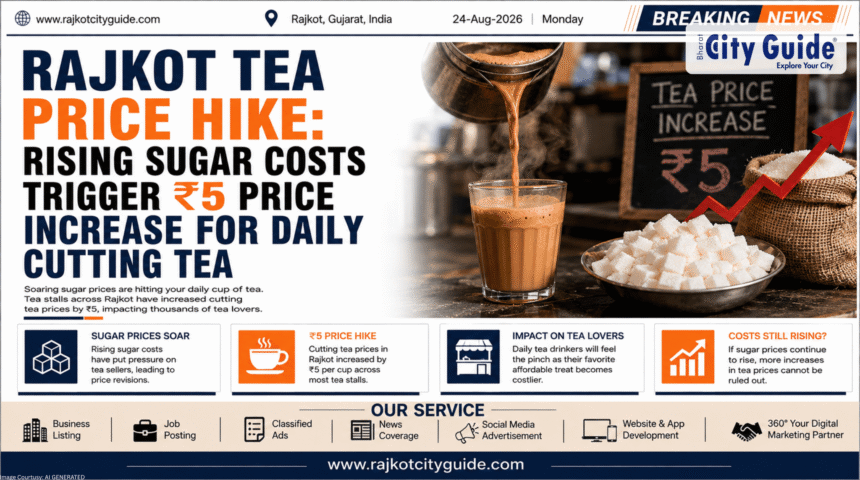
In Gujarat’s cultural landscape, a steaming cup of tea (cha) is far more than a simple hot beverage—it is an integral morning ritual, a social catalyst at roadside kitlis (tea stalls), and a vital fuel for daily wage earners, office workers, and students alike. However, tea lovers across Rajkot are facing unwelcome news as roadside stalls, local hotels, and tea parlors prepare for an upcoming price revision. Driven by an aggressive spike in wholesale sugar costs over the past month, local tea vendors are finalizing plans to implement a Rajkot Tea Price Hike, increasing the price of a standard cutting tea by ₹5 per cup starting September 1st.
- Introduction
- What is Rajkot Tea Price Hike?
- Why This News is Important
- Background Information
- Key Highlights
- Detailed Explanation of the Event
- Benefits, Features, and Importance
- How It Impacts People
- Expert Insights and Industry Perspective
- Challenges and Limitations
- Future Outlook
- Frequently Asked Questions (FAQs)
- Conclusion
Over the past four weeks, wholesale sugar prices have registered a steep increase of approximately ₹20 to ₹25 per kilogram across Saurashtra’s primary commodity markets. When combined with earlier inflationary pressures on milk, commercial LPG cylinders, tea leaves, and spices, tea stall operators report that their profit margins have completely eroded. As a result, local tea vendor associations and hotel owners have decided to revise retail prices to keep their small businesses viable.
This price adjustment directly impacts everyday household and personal budgets in Rajkot. From street-side stalls near the Central Bus Station to high-footfall hubs along Yagnik Road, Kalawad Road, and the GIDC industrial belts, millions of daily cups consumed in the city will soon come with a higher price tag.
                    ┌──────────────────────────────────────────────┐
                    │          RAJKOT TEA PRICE REVISION           │
                    │      Cost Impact of Commodity Inflation      │
                    └──────────────────────┬───────────────────────┘
                                           │
        ┌──────────────────────────────────┼──────────────────────────────────┐
        ▼                                  ▼                                  ▼
┌────────────────────────┐      ┌────────────────────────┐      ┌────────────────────────┐
│   RAW MATERIAL SURGE   │      │   REVISED RETAIL RATES │      │    AFFECTED SEGMENTS   │
│ • Sugar: +₹25/kg Hike  │      │ • Cutting Tea: ₹10➔₹15 │      │ • Office Commuters     │
│ • Milk & Gas Overhead  │──────► • Full Tea: ₹20➔₹30    │──────► • Industrial Workers   │
│ • Commercial Fuel Cost │      │ • Half Coffee: ₹15➔₹20 │      │ • Daily Stall Regulars │
└────────────────────────┘      └────────────────────────┘      └────────────────────────┘
What is Rajkot Tea Price Hike?
The Rajkot Tea Price Hike refers to the scheduled retail price increase for prepared tea and coffee across tea stalls, roadside kiosks, and local hotels in Rajkot. Under the revised pricing model put forward by local tea associations:
- The price of a cutting (half) tea, which previously sold for ₹10 to ₹12, is set to increase to ₹15 per cup.
- The price of a full tea, previously priced between ₹20 and ₹24, is rising to ₹30 per cup.
- Half cups of coffee are similarly rising from ₹15 to ₹20 per serving, while minimum parcel charges for takeaway tea bags are being adjusted upward accordingly.
This retail adjustment is a direct response to rising input costs, specifically the sudden price jump in sugar caused by reduced sugarcane yields in key producing states like Maharashtra and Karnataka.
Why This News is Important
While price adjustments in luxury goods rarely affect everyday routines, a price increase on a staple beverage like tea touches almost every demographic in the city:
- High Daily Touchpoint: Tea is consumed multiple times a day by millions of citizens across income brackets.
- Impact on Low-Income Workers: Industrial laborers, auto-rickshaw drivers, and daily wage workers rely on affordable cutting tea for energy throughout long working shifts.
- Indicator of Broad Food Inflation: The jump in sugar prices highlights broader agricultural supply chain pressures, erratic monsoon patterns, and rising commodity transport costs across Western India.
- Margin Pressure on Small Vendors: Micro-entrepreneurs running roadside kitlis operate on thin profit margins; absorbing a ₹25/kg hike in sugar without raising prices would force many out of business.
Background Information
In Gujarat, roadside tea stalls operate as small, high-volume businesses. A typical medium-sized tea stall in Rajkot uses between 15 to 30 kilograms of sugar daily, along with dozens of liters of milk and multiple commercial gas cylinders.
                  [ INPUT COST PRESSURES ON TEA VENDORS ]
                                       │
  ┌────────────────────────────────────┼────────────────────────────────────┐
  ▼                                    ▼                                    ▼
[Sugar Commodity Spike]           [Dairy & Fuel Overhead]               [Eroding Vendor Margins]
 • Wholesale sugar up ₹25/kg      • Gradual milk price increases        • Vendor absorbs initial surge
 • Sugarcane shortfall in MH/KA   • Commercial LPG rate changes         • Small margin turns to loss
 • Distribution cost increases    • Spices/tea leaf inflation           • Retail price hike required
Over the past year, tea vendors have absorbed gradual cost increases in milk, tea leaves, and commercial LPG. However, the sudden sharp increase in sugar prices—jumping from around ₹45 per kg to over ₹70 per kg in wholesale and retail markets within a single month—served as the tipping point. Vendor associations across major Gujarat cities, including Ahmedabad and Rajkot, determined that maintaining old retail prices was no longer financially sustainable.
Key Highlights
- ₹5 Price Increase per Cutting Cup: Half (cutting) tea prices increase from ₹10–₹12 up to ₹15.
- Full Tea Reaches ₹30: Full cups of tea at hotels and prominent stalls increase from ₹20–₹24 to ₹30.
- ₹25 Sugar Price Surge in 30 Days: Wholesale sugar costs spiked by ₹20 to ₹25 per kilogram over the past month.
- Coffee and Parcels Adjusted: Half coffee increases to ₹20, while minimum parcel prices increase to cover disposable packaging and sugar costs.
- Effective September 1st: Revised rate cards take effect across Rajkot’s hotels, tea parlors, and roadside stalls starting September 1st.
- Driven by Agricultural Shortfalls: Reduced sugarcane production in major sugar-producing belts triggered the statewide commodity price spike.
Detailed Explanation of the Event
The mechanism behind the Rajkot Tea Price Hike involves supply chain factors that stretch from sugarcane fields to local neighborhood tea stalls.
                     [ COMMODITY TO KITCHEN PRICE FLOW ]
                                       │
  Sugarcane Crop Shortfalls in Maharashtra ──► Wholesale Sugar Price Spikes (+₹25/kg)
                                                                    │
  Retail Tea Hike (Cutting: ₹15, Full: ₹30) ◄── Vendor Profit Margin Breakdown ──────┘
1. The Sugar Price Trigger
Sugar is the primary sweetening ingredient in traditional Gujarati tea, which is brewed rich, sweet, and spiced. Over the past month, wholesale sugar prices rose from ₹45/kg to over ₹70/kg. Agricultural market reports attribute this sharp jump to irregular rainfall in major sugarcane-producing regions of Maharashtra and Karnataka, which lowered crop yields and tightened supply across wholesale commodity exchanges.
2. Cumulative Cost Burden on Vendors
Sugar is not the only input cost that has risen. Tea stall operators face a combination of higher expenses:
- Milk Prices: Steady price adjustments by regional dairy cooperatives over recent quarters.
- Commercial Gas Cylinders: Fluctuating rates for 19kg commercial LPG cylinders used by tea stalls.
- Tea Leaves and Spices: Increased wholesale prices for premium Assam/Cachar tea leaves, cardamom, and ginger.
For a stall using 20 kg of sugar daily, a ₹25/kg price hike adds ₹500 in daily direct expenses—or ₹15,000 per month—wiping out the vendor’s net profit if retail prices remain unchanged.
3. Association Decision and Implementation
Recognizing these operational pressures, the Rajkot Tea Association and local hotel owner groups met to standardize prices. To prevent price wars or confusion among customers, vendors agreed to implement the unified new rate structure starting September 1st.
Benefits, Features, and Importance
Understanding the cost dynamics helps clarify why this price adjustment is occurring across the city:
| Parameter / Metric | Previous Pricing Model | Revised Pricing Model | Financial Driver / Cause |
| Half (Cutting) Tea | ₹10 – ₹12 per cup | ₹15 per cup | Offsets sugar and milk cost increases. |
| Full Tea | ₹20 – ₹24 per cup | ₹30 per cup | Restores vendor operational margins. |
| Half Coffee | ₹15 per cup | ₹20 per cup | Covers rising coffee powder and dairy costs. |
| Wholesale Sugar Cost | ~₹45 per kg | ₹65 – ₹70+ per kg | Supply shortfall in sugar-producing states. |
| Minimum Parcel Rate | ₹10 parcel option | ₹15 – ₹20 minimum | Covers container and input overhead. |
How It Impacts People
+-----------------------------------------------------------------------+
|                 IMPACT OF RAJKOT TEA PRICE REVISION                   |
+-----------------------------------+-----------------------------------+
|            DAILY COMMUTERS        |         INDUSTRIAL WORKERS        |
|  - Higher monthly tea expenses    |  - Increased daily living cost    |
|  - Small budget reallocation      |  - Shifts toward shared cups      |
|  - Daily habit becomes pricier    |  - Impact on lower-wage budgets   |
+-----------------------------------+-----------------------------------+
|            TEA STALL VENDORS      |         LOCAL ECONOMY             |
|  - Protected business viability   |  - Reflects food supply pressures |
|  - Sustained livelihood margins   |  - Normalizes seasonal inflation  |
+-----------------------------------+-----------------------------------+
For Daily Commuters and Office Workers
For individuals who drink 3 to 4 cups of tea during their workday at nearby stalls, a ₹5 increase per cup adds ₹15 to ₹20 to their daily routine. Over a month, this amounts to an extra ₹450 to ₹600 in out-of-pocket expenses for a daily habit.
For Industrial and Construction Laborers
In Rajkot’s industrial belts—such as Aji GIDC, Metoda, and Shapar-Veraval—workers often rely on sweet tea for quick energy during heavy manual shifts. A 33% to 50% increase in the price of cutting tea puts extra strain on tight daily wage budgets.
For Small Business Vendors
For tea stall owners, the price increase is essential for survival. It allows small vendors to cover their rising material costs, pay stall rents, cover electricity and gas bills, and maintain a sustainable income for their families.
Expert Insights and Industry Perspective
Economic analysts and commodity market experts view the price revision as an inevitable adjustment to broader agricultural supply realities.
                      [ AGRICULTURAL COMMODITY FEEDBACK LOOP ]
                                     │
  ┌──────────────────────────────────┴──────────────────────────────────┐
  ▼                                                                     ▼
[Monsoon & Crop Yield Shift]                       [Micro-Retail Price Adjustments]
 • Irregular rainfall in sugarcane zones            • Wholesale costs pass to vendors
 • Lower crushing output in mills                   • Small businesses adjust retail rates
 • Higher national wholesale sugar prices           • Consumer retail prices normalize
Market analysts point out that sugar production is highly sensitive to monsoon distribution in Maharashtra and Uttar Pradesh. When wholesale sugar prices surge by over 40% in a short window, small food and beverage businesses must pass those costs on to consumers to remain solvent. Economists note that while small price increases on low-cost items seem minor individually, collectively they reflect broader food inflation across the consumer price index.
Challenges and Limitations
The implementation of the price hike presents several operational challenges for local vendors:
- Customer Pushback: Vendors often face initial complaints or reduced sales volume when prices jump by ₹5 per cup.
- Change Management: Shifting from standard ₹10 coin payments to ₹15 requires vendors to keep significantly more loose change on hand for cash transactions.
- Risk of Reduced Consumption: Some budget-conscious customers may reduce their daily cups or switch to making tea at home to save money.
Future Outlook
Looking ahead, tea prices in Rajkot are unlikely to drop back to previous levels even if sugar prices stabilize later in the year, as retail food price revisions rarely reverse.
If sugar supply conditions improve following the next sugarcane harvest season, wholesale prices may cool down, providing needed margin relief to vendors. However, if milk or commercial fuel prices experience further increases in late 2026, food service businesses across Saurashtra may face continued cost pressures.
Frequently Asked Questions (FAQs)
1. How much is the tea price increasing in Rajkot?
The price of a cutting (half) tea is increasing by ₹5 (from ₹10–₹12 to ₹15), while a full tea is increasing from ₹20–₹24 to ₹30.
2. When does the Rajkot Tea Price Hike take effect?
The revised tea and coffee rates take effect across hotels, tea parlors, and roadside stalls starting September 1st.
3. Why are tea prices increasing in Rajkot?
The price hike is primarily driven by a sharp ₹20 to ₹25 per kg surge in wholesale sugar prices over the past month, alongside higher costs for milk, tea leaves, and commercial LPG.
4. Why did sugar prices surge so rapidly?
Sugar prices spiked due to reduced sugarcane production and lower crushing yields in major growing states like Maharashtra, caused by irregular monsoon patterns.
5. Are coffee and takeaway parcel prices also increasing?
Yes. Half cups of coffee are rising to ₹20, and minimum parcel charges for takeaway tea are increasing to cover container and ingredient costs.
6. Has this tea price hike happened in other cities in Gujarat?
Yes. Major urban centers like Ahmedabad have seen similar ₹5 price increases on prepared tea and coffee due to statewide sugar commodity inflation.
7. Will tea prices go back down if sugar prices drop?
Historically, retail prices for prepared beverages at stalls and hotels remain at updated levels to absorb future inflation in milk, fuel, and labor costs.
Conclusion
The Rajkot Tea Price Hike highlights how global and national commodity trends directly affect everyday life. With wholesale sugar prices surging by ₹25 per kg within a single month, local tea vendors have been forced to increase the price of cutting tea to ₹15 and full tea to ₹30 to keep their small businesses running. While the extra ₹5 per cup adds to daily routine expenses for residents, office workers, and industrial laborers, it ensures that Rajkot’s beloved tea stalls can continue serving the city’s favorite beverage.