Introduction
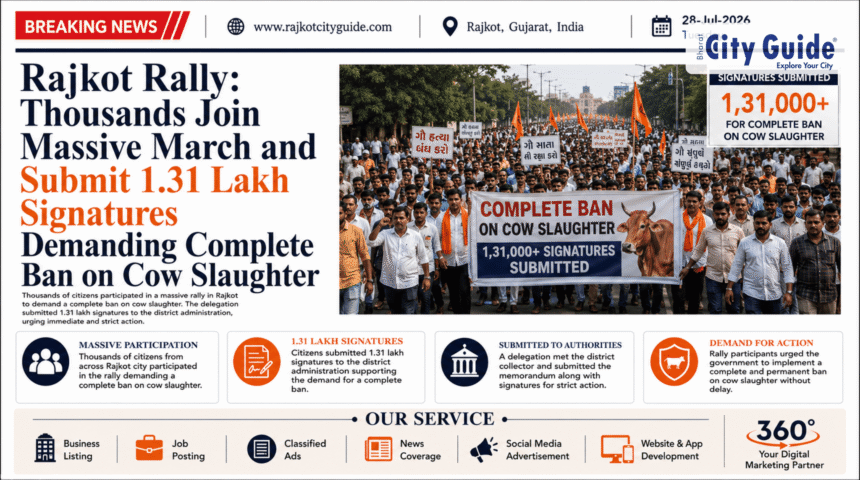
Public demonstrations in India have historically served as powerful instruments for social, cultural, and political transformation. When communities unite around a deeply shared value, the resulting mobilization can capture the attention of entire regional administrations. The city of Rajkot, recognized as the cultural heart of Gujarat’s Saurashtra region, recently became the focal point for one such massive public movement. A large-scale, highly organized Rajkot rally swept through the city’s major thoroughfares, drawing thousands of dedicated citizens, spiritual leaders, and social activists together in a unified demonstration.
- Introduction
- What is the Rajkot Rally?
- Why This News is Important
- Background Information
- Key Highlights
- Detailed Explanation of the Event
- Socio-Economic Importance of Cow Protection
- How It Impacts People
- Professional Perspectives on Civic Mobilization
- Challenges and Governance Limitations
- Future Outlook
- Frequently Asked Questions (FAQs)
- Conclusion
The primary objective of this collective action was to demand strict legal measures and an absolute, loophole-free nationwide ban on cow slaughter. What set this particular event apart from standard political protests was its deeply peaceful, spiritual character. Instead of conventional high-decibel political chanting, the participants filled the air with the rhythmic singing of ‘Ram Dhun’ (devotional chants). This spiritual undercurrent lent a serene yet determined atmosphere to the massive procession.
The movement reached its peak when rally organizers presented a comprehensive memorandum to the Rajkot District Collector. This document carried the verified weight of 1.31 lakh individual citizen signatures, collected through a meticulous grassroots campaign. This development highlights the deep-rooted cultural importance of cattle protection in Western India and underscores the growing power of organized civic movements. In this detailed blog post, we analyze the logistics of the event, its cultural and legal context, its immediate impact on regional governance, and the broader social conversation it has renewed across the country.
What is the Rajkot Rally?
In the context of current regional events, the Rajkot rally refers to a large-scale, peaceful public march organized by a coalition of cow protection groups (Gau Rakshaks), religious trusts, and local citizens. The event was designed to publicly demonstrate widespread community support for the complete eradication of illegal cattle slaughter and the strengthening of existing animal welfare laws.
Public rallies are structured forms of civil expression protected under constitutional frameworks. They allow communities to demonstrate the scale of public sentiment regarding a specific issue directly to state authorities. In this instance, the Rajkot rally functioned as both a visible public march and a formal administrative petition. By bringing thousands of citizens onto the streets in an orderly fashion, the organizers successfully created a compelling visual statement of unity that could not be easily overlooked by local policy makers.
Why This News is Important
This monumental event carries significant weight across multiple social and administrative levels:
- Massive Grassroots Mobilization: Gathering 1.31 lakh signatures is a significant logistical achievement. It indicates a highly structured, neighborhood-level outreach campaign that engaged thousands of households across the Rajkot district prior to the event.
- A Model for Peaceful Protest: By prioritizing the chanting of Ram Dhun over aggressive slogans, the rally established a template for how large-scale social and religious demonstrations can be conducted without disrupting public order or causing communal friction.
- Direct Administrative Engagement: The presentation of a massive signature petition directly to the District Collector bridges the gap between public sentiment and formal state authority, compelling government representatives to formally document and forward the citizens’ demands to higher legislative bodies.
Background Information
The issue of cow protection holds a deeply significant position within the cultural, economic, and spiritual fabric of Gujarat. For centuries, the agrarian economy of the Saurashtra region has relied heavily on cattle for dairy farming, organic agriculture, and sustainable rural livelihoods. In Indian cultural traditions, the cow is revered as a symbol of life, earth, and maternal care.
Over the years, both state and federal governments in India have enacted various laws regarding cattle preservation. Gujarat already enforces some of the strictest animal preservation laws in the country under the Gujarat Animal Preservation (Amendment) Act. However, activist groups and spiritual organizations argue that illicit transport networks and clandestine slaughterhouses continue to operate through legal loopholes and cross-border smuggling.
The organizers of the recent march sought to close these gaps entirely by pushing for an absolute, uniform federal ban, alongside severe penalties for violators. Rajkot, with its rich history of civic engagement and active community organizations, was selected as the ideal launchpad to reintroduce this conversation into the mainstream public discourse.
Key Highlights
- Protest Method: Rhythmic chanting of ‘Ram Dhun’ throughout the entire duration of the public march to maintain peace and order.
- Public Participation: Thousands of citizens, including dairy farmers, trade union members, women’s groups, and spiritual ascetics, marched together.
- The Petition: A formal memorandum containing 1.31 lakh unique citizen signatures delivered to the District Collector.
- Core Demand: The immediate implementation of an absolute, loophole-free ban on cow slaughter across all jurisdictions.
- Security Management: Flawless coordination with local police forces, ensuring zero traffic gridlocks or public safety incidents during the massive walk.
Detailed Explanation of the Event
The Assembly and the Path of the Procession
The day of the event began with thousands of participants assembling at a designated central location in Rajkot. As the morning progressed, the crowd grew into a vast sea of citizens carrying banners, saffron flags, and placards detailed with messages on animal welfare and cow protection. The march proceeded along a carefully mapped route through the city’s commercial and administrative districts.
Throughout the multi-kilometer walk, the atmosphere remained orderly. The continuous, collective singing of Ram Dhun served a dual purpose: it kept the large crowd unified in their shared purpose and prevented the escalation of tension often associated with large public gatherings. Observers along the route noted that shopkeepers and local residents frequently stepped out to offer drinking water and support to the passing participants.
Rally Progress Checklist
-------------------------------------------------------
[✓] Mass assembly at the central urban staging point
[✓] Continuous chanting of Ram Dhun to ensure order
[✓] Peaceful transit through major commercial roads
[✓] Arrival at the District Collectorate headquarters
[✓] Formal handover of the 1.31 lakh signature memo
-------------------------------------------------------
The Handover at the Collectorate
As the front of the procession arrived at the District Collector’s headquarters, a select delegation representing the spiritual leaders and core organizers was guided into the administrative office. The sheer volume of the collected signatures required heavy bundles of documents to be brought in, serving as a direct physical representation of the 1.31 lakh citizens who lent their names to the cause.
The delegation formally presented the memorandum to the District Collector. The document outlines specific demands, including:
- Increased financial allocations for regional cow shelters (Gaushalas).
- Stricter policing along state borders to halt the illegal transportation of cattle.
- Fast-track court trials for individuals caught violating animal preservation laws.
The Collector received the extensive document, assured the delegation that their sentiments would be accurately recorded, and committed to forwarding the detailed petition to the higher state and central ministries responsible for legislative amendments.
Socio-Economic Importance of Cow Protection
The arguments driving the movement extend beyond religious sentiment into vital ecological and economic realities:
1. Supporting Sustainable Rural Economies
Cattle form the backbone of smallholder farming systems across Gujarat. By protecting indigenous cattle breeds, rural communities secure long-term access to dairy products, organic manure, and draft power, reducing their reliance on costly chemical fertilizers and corporate agricultural inputs.
2. Preserving Ecological Balance and Bio-Diversity
Healthy, well-maintained cow shelters contribute significantly to organic farming initiatives. The utilization of cow dung and urine in traditional bio-pesticides plays a major role in restoring topsoil health, preventing land degradation, and fostering resilient local ecosystems.
How It Impacts People
Impact on Local Citizens and Society
For the average citizen of Rajkot, the event demonstrated how large-scale advocacy can be carried out peacefully. The orderly nature of the march allowed residents to witness a massive civic demonstration without experiencing the fear of property damage or extended public lockdowns.
Impact on the Agricultural Sector
For dairy farmers and rural cattle herders in the Saurashtra region, the success of the rally brings renewed hope for stronger institutional support. If the government responds with increased funding for rural shelters, it could ease the financial burden on farmers who struggle to care for non-milking cattle during periods of drought.
Professional Perspectives on Civic Mobilization
Sociologists and political analysts view the signature drive as an excellent case study in effective civic mobilization. In an era dominated by digital campaigns and online petitions, taking the time to gather 1.31 lakh physical signatures shows a deep level of community trust and commitment.
Experts note that physical signature campaigns require direct human interaction, requiring volunteers to visit neighborhoods, explain their cause, and verify identities. This process builds a stronger sense of shared purpose within the community than digital clicks can achieve. When backed by a peaceful, orderly march, such petitions carry substantial moral and democratic weight when presented to state administrators.
Challenges and Governance Limitations
Despite the impressive turnout and high volume of signatures, transforming public demands into enforceable national policy involves complex legal and practical challenges. India is a diverse nation with varied state-level laws regarding animal slaughter, shaped by regional historical contexts and dietary habits.
Implementing a uniform, nationwide ban requires navigating intricate constitutional balances between central directives and state legislative rights. Furthermore, running large, non-profit cow shelters presents ongoing financial challenges. As shelters take in more rescued or abandoned cattle, they require consistent funding, clean water supplies, and reliable veterinary care—demands that can severely strain both state budgets and private charitable resources.
Future Outlook
In the wake of the successful march, organizers intend to maintain their momentum by launching similar signature drives in other major districts across Gujarat, including Ahmedabad, Surat, and Vadodara. The ultimate goal is to present a comprehensive, state-wide petition to the Chief Minister’s office during the upcoming legislative assembly session.
Concurrently, local animal welfare groups plan to work closely with municipal corporations to improve the tracking of stray cattle using modern RFID tagging systems. This technology will help identify owners who abandon their livestock, addressing the root cause of stray cattle hazards on urban roads while ensuring rescued animals receive proper care in recognized shelters.
Frequently Asked Questions (FAQs)
What was the main purpose of the recent Rajkot rally?
The main purpose of the rally was to publicly demand a complete, comprehensive nationwide ban on cow slaughter and to advocate for stricter enforcement of animal welfare laws.
How many citizen signatures were submitted to the District Collector?
The organizing committee collected and submitted a total of 1.31 lakh unique, verified physical signatures from local citizens alongside their official memorandum.
What unique protest method was used during the procession?
Participants engaged in the collective, peaceful chanting of ‘Ram Dhun’ (devotional songs) throughout the march, avoiding aggressive political slogans to maintain public order.
Who organized the massive public march in Rajkot?
The event was organized by a collaborative alliance of local cow protection groups, spiritual leaders, regional dairy cooperatives, and concerned citizens from the Saurashtra region.
How does cow protection benefit the rural economy of Gujarat?
Protecting cattle supports sustainable dairy farming, provides organic fertilizers through manure, preserves indigenous livestock breeds, and strengthens the financial resilience of smallholder rural families.
What happens to the memorandum after it is received by the Collector?
The District Collector formally registers the petition, documents the scale of public sentiment, and forwards the detailed memorandum to the relevant state and central ministries for legislative consideration.
Conclusion
The massive Rajkot rally stands as a powerful demonstration of peaceful civic advocacy and deep cultural unity. By organizing a massive signature campaign and mobilizing thousands of citizens through the calming practice of chanting Ram Dhun, the people of Rajkot successfully delivered a clear message to the regional administration. The submission of 1.31 lakh signatures to the District Collector ensures that the community’s demand for a complete ban on cow slaughter is formally recognized at the highest levels of government. As this movement expands into other districts, it highlights the importance of balancing traditional cultural values with modern governance, setting a benchmark for peaceful social advocacy across the country.