Introduction
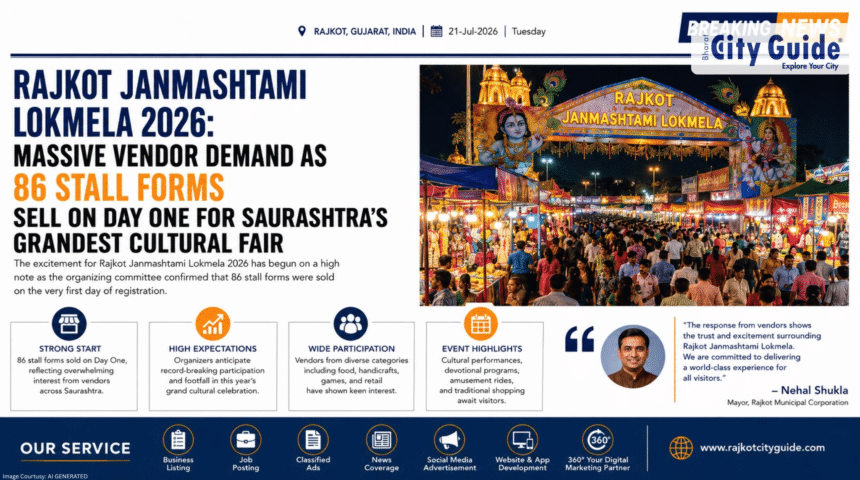
The cultural heart of Saurashtra is beating faster as preparations for the iconic Rajkot Janmashtami Lokmela 2026 officially move into high gear. Known across Gujarat as the grandest celebration of Lord Krishna’s birth, this year’s regional extravaganza is officially scheduled to transform the historic Racecourse Ground from September 2 to September 6, 2026. The regional administration has initiated the formal administrative layout, triggering an immediate wave of enthusiasm from corporate sponsors, local artisans, amusement ride operators, and culinary entrepreneurs looking to secure premium commercial spots inside the fairgrounds.
- Introduction
- What is the Rajkot Janmashtami Lokmela 2026?
- Why This News is Important
- Background Information and Context
- Key Highlights of the 2026 Fair Preparations
- Detailed Explanation of the Stall Allocation Process
- Benefits and Economic Importance of the Lokmela
- How the Event Impacts the Public
- Industry Perspective and Safety Insights
- Challenges and Logistical Limitations
- Future Outlook
- Frequently Asked Questions (FAQs)
- Conclusion
Indicating high retail interest, the first day of stall application distribution witnessed a massive rush. According to initial records released by the District Collector’s designated Mela Committee, an impressive 86 formal application forms were purchased within the opening hours alone. This quick initial turnout underscores the immense commercial and cultural value associated with the event. The five-day festival is set to host 100 dedicated toy stalls and 48 targeted food and beverage zones.
For the people of Rajkot and the millions of visitors traveling from nearby rural districts, the Lokmela represents more than just a typical market fair. It serves as a generational custom where urban commerce seamlessly blends with regional folk traditions. As the local government updates security standards and implements structural changes, this comprehensive guide covers the operational details, vendor timelines, layout allocations, and consumer experiences shaping the upcoming festival.
What is the Rajkot Janmashtami Lokmela 2026?
The Rajkot Janmashtami Lokmela 2026 is the upcoming edition of Saurashtra’s largest annual public folk festival, organized under the direct supervision of the Rajkot District Administration and the state cultural department. Celebrated annually during the traditional Satam-Aatham festive window, this massive gathering has evolved over more than 50 years from a simple community market into a sprawling cultural ecosystem. The event typically draws over one million visitors across its five-day run, transforming Sector-1’s Racecourse Ground into a colorful maze of amusement rides, live folk art arenas, and expansive commercial galleries.
Administratively managed by a specialized Mela Committee led by the District Collector, the fairgrounds are carefully divided into structured commercial plots. These sections are allocated through a combination of fixed-rate applications, public draws, and high-value competitive auctions. The festival serves as a vital economic platform for hundreds of small-scale toy manufacturers, traditional handicraft artisans, mechanical ride operators, and regional food brands, making it a cornerstone event for the local trade economy.
Why This News is Important
The rapid sale of 86 commercial application forms on the very first day of distribution carries significant weight for the regional economy:
- Economic Health Indicator: The strong initial turnout from merchants reflects high retail confidence and high commercial expectations for the post-monsoon festive consumer cycle.
- Early Operational Benchmarks: The immediate demand allows the Mela Committee to streamline plot distribution, manage structural zoning, and finalize spatial safety arrangements ahead of schedule.
- Tourism Acceleration: Announcing exact dates (September 2–6) and confirming the layout early enables travel agencies, hospitality operators, and state transport authorities to plan logistics for the influx of visitors.
- Prioritizing Safety Infrastructure: Given the growing scale of the event, starting registration early gives the administration ample time to deploy new security measures, including advanced AI drone monitoring and updated fire prevention protocols.
Background Information and Context
Historically, the Janmashtami Lokmela was run as a decentralized community gathering managed by local merchant guilds. However, as the crowds grew exponentially over the decades, the Gujarat state government handed structural control over to the Rajkot District Collectorate to ensure safety, fair price regulation, and proper civic infrastructure. Today, the fair relies on collaboration between 19 specialized administrative committees managing law and order, health compliance, traffic flow, and electric safety.
| Key Feature / Operational Metric | Specific Details for the 2026 Event |
| Official Event Dates | September 2 to September 6, 2026 |
| Primary Venue Location | Racecourse Ground, Rajkot, Gujarat |
| Opening Day Form Distribution | 86 Application Forms Sold Instantly |
| Toy & Handicraft Stalls | 100 Regulated Spaces Allocated |
| Food & Beverage Plots | 48 High-Capacity Commercial Zones |
| Expected Attendance | 1 to 1.5 Million Visitors across Saurashtra |
| Core Oversight Body | Rajkot District Collectorate & Mela Committee |
In recent months, discussions occurred regarding potentially moving the fair to the newly developed Atal Sarovar region to accommodate larger crowds. However, the Mela Committee opted to retain the historic Racecourse Ground for 2026, introducing stricter layout planning, wider pedestrian walkways, and clear zone boundaries to ensure visitor comfort and safety.
Key Highlights of the 2026 Fair Preparations
- Rapid Registration Start: Merchants crowded the Mela Committee offices and bank counters on day one, purchasing 86 registration forms immediately.
- Balanced Commercial Layout: The fairground design features a dedicated layout hosting 100 toy stalls and 48 distinct food plots to prevent overcrowding.
- Comprehensive Ride Zones: Large plots are reserved for mechanical amusement rides, giant wheels, and family-friendly entertainment structures.
- Strict Price Controls: The administration is enforcing price caps on basic snacks, water, and ride tickets to prevent price-gouging.
- Enhanced Safety Checks: All commercial plots, especially food zones and heavy machinery rides, must pass rigorous structural and fire safety evaluations before opening.
Detailed Explanation of the Stall Allocation Process
The registration process for the fair follows a structured administrative system managed by the Rajkot collectorate. Merchants must purchase formal application forms from designated government counters and partnered banking branches. These applications require vendors to specify their business type, mechanical power needs, and fire safety setups.
Once the application window closes, the Mela Committee categorizes the submissions. Standard toy and handicraft stalls are generally allocated via a transparent public draw to give small-scale traders an equal opportunity. Conversely, premium spaces, including high-capacity food plots and large mechanical ride zones, are distributed through a competitive public auction. This dual system ensures fair access for local artisans while generating public revenue to cover the fair’s extensive infrastructure and security costs.
Benefits and Economic Importance of the Lokmela
The festival provides substantial economic and cultural benefits across the region:
1. Economic Engine for Small Businesses
For hundreds of micro-entrepreneurs, the fair is their largest revenue event of the fiscal year. Toy makers, local artisans, and clothing vendors can generate a significant portion of their annual income during these five days alone.
2. Preserving Regional Folk Traditions
The fair functions as a living cultural archive. The state department sets up dedicated stages for live folk music, Dayro performances, Bhavai theater, and traditional Gujarati dance, providing vital income and exposure for rural performing artists.
3. Boosting Tourism and Hospitality
The fair drives significant regional tourism. Hotels, local transport services, restaurants, and retail markets across Rajkot experience a major surge in demand as families travel from all over Gujarat to attend.
How the Event Impacts the Public
The scale of the festival creates distinct impacts across different groups within the community:
- For General Citizens and Families: The fair offers an accessible, affordable holiday experience featuring diverse food options, shopping, and entertainment. The structured layout helps ensure families can navigate the grounds safely.
- For Local Merchants and Traders: The structured allotment system provides a fair environment to showcase products to massive crowds. Price regulations on rents help protect smaller vendors from being priced out by larger commercial entities.
- For Public Infrastructure and Traffic Management: Managing traffic around the Racecourse Ground is a major task for local authorities. The traffic police department sets up dedicated outer parking rings and shuttle services to keep the city’s central roads moving smoothly.
Industry Perspective and Safety Insights
Experienced event planners and public safety analysts emphasize that running a mega-fair like the Rajkot Lokmela requires balancing commercial space with emergency access. Following past safety challenges at regional public venues, the 2026 administrative committee is enforcing strict safety protocols.
Industry experts point out that integrating AI drone monitoring allows security teams to track crowd density in real-time, helping prevent bottlenecks near popular rides. Furthermore, food safety officers plan to run daily inspections across the 48 food stalls to ensure clean water usage and compliance with public health standards during the monsoon season.
Challenges and Logistical Limitations
Organizing an event of this magnitude involves navigating several key challenges:
- Monsoon Weather Factors: Since the fair takes place in early September, sudden heavy rains can impact open-ground conditions. The engineering wing must install effective drainage and stable flooring platforms across the Racecourse Ground.
- Crowd Density Management: Handling over a million visitors requires highly coordinated security. The police department plans to set up clear entry and exit channels, multiple emergency medical outposts, and a lost-and-found center.
- Stall Cost Balances: Adjusting plot fees to cover modern security infrastructure while keeping spaces affordable for traditional, small-scale toy vendors remains a delicate administrative task.
Future Outlook
Looking forward, the Rajkot Janmashtami Lokmela is positioned to evolve into a highly digitized smart festival. Future iterations will likely feature cashless digital payment systems across all stalls, online registration for ride tickets to reduce queues, and virtual reality previews of cultural stages.
As the city grows, the Mela Committee will continue evaluating infrastructure expansions. However, the immediate focus for 2026 remains delivering a safe, well-organized, and culturally rich experience that honors Saurashtra’s traditions.
Frequently Asked Questions (FAQs)
1. What are the official dates for the Rajkot Janmashtami Lokmela 2026?
The fair will be held over five days, starting on September 2 and running through September 6, 2026.
2. Where is the fair located?
The fair takes place at the historic Racecourse Ground in the center of Rajkot, Gujarat.
3. How many commercial stalls are planned for the 2026 fair?
The current layout allocates 100 slots for toys and traditional handicrafts, alongside 48 dedicated food and beverage plots.
4. How are the stalls distributed to interested vendors?
Stalls are allocated through a structured system managed by the Mela Committee. Standard toy plots are distributed via a public draw, while large food and amusement ride zones are allocated through an open public auction.
5. What security measures are being introduced this year?
The administration is deploying advanced AI drone monitoring, setting up comprehensive CCTV coverage, placing dedicated fire safety stations in each sector, and conducting mandatory structural checks on all mechanical rides.
6. Is there an entry fee for the general public?
No, entry to the main fairgrounds at the Racecourse Ground is completely free for all visitors. Charges apply individually for food items, shopping stalls, and mechanical rides.
Conclusion
The impressive first-day sale of 86 application forms highlights the enduring appeal and economic vitality of the Rajkot Janmashtami Lokmela 2026. By bringing together local artisans, food vendors, and millions of visitors, the fair remains a premier celebration of regional culture and community spirit. As the Rajkot District Administration finalizes layout plans and safety protocols, the city is ready to host a memorable, secure, and vibrant festival that showcases the very best of Saurashtra’s cultural traditions.