Introduction
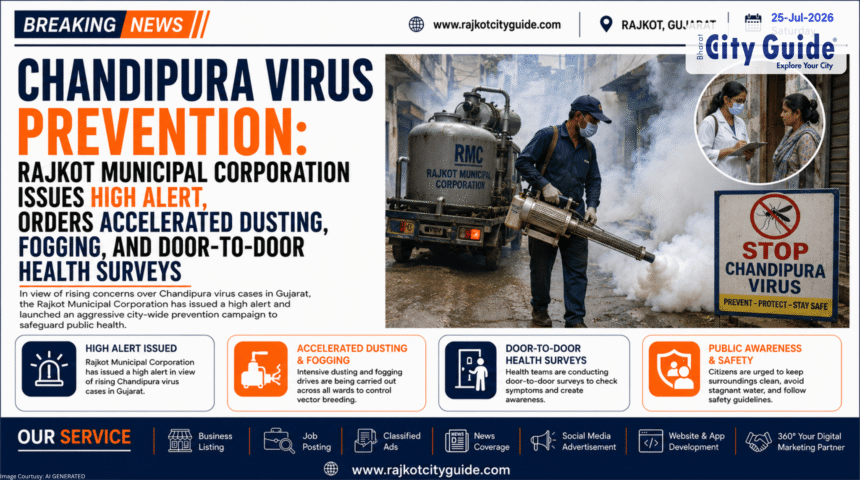
Public health infrastructure across Gujarat has shifted into high gear following a sudden rise in seasonal vector-borne threats. In a decisive administrative move, the Rajkot Municipal Corporation (RMC) has declared an immediate state of alert against the potential spread of the dangerous Chandipura Virus within the city and its surrounding urban fringes. Recognizing the high fatality rates historically linked to this pathogen, the Municipal Commissioner held an emergency high-level strategy meeting with senior officers of the municipal health department. The primary objective was clear: to map out an aggressive preventative containment blueprint before any local clusters can establish a foothold.
- Introduction
- What is the Chandipura Virus?
- Why This News is Important
- Background Information and Context
- Key Highlights of RMC Action Plan
- Detailed Explanation of the Event
- Importance and Features of Vector Management Operations
- How It Impacts People
- Expert Insights / Medical Perspective
- Challenges and Limitations in Containment
- Future Outlook
- Frequently Asked Questions (FAQs)
- Conclusion
With the southwest monsoon leaving behind damp soil, increased humidity, and stagnant pools of water, the breeding conditions for vector insects have reached peak levels. To counter this environmental challenge, the RMC administrative directive has ordered health teams to accelerate multi-layered preventative measures. These include intense pesticide dusting, comprehensive automated fogging operations, and structured door-to-door medical screening surveys across all municipal wards. Because the Chandipura Virus predominantly targets children under the age of fifteen—often triggering rapid neurological complications—this news represents a critical milestone in regional public health management. Active municipal intervention serves as the frontline defense against an escalation of Acute Encephalitis Syndrome (AES) cases, protecting vulnerable communities from severe health risks.
What is the Chandipura Virus?
The Chandipura Virus (CHPV) is a significant human pathogen belonging to the Vesiculovirus genus within the Rhabdoviridae family. First isolated by medical researchers in 1965 from the blood samples of febrile patients in the Chandipura village of Maharashtra, this enveloped ribonucleic acid (RNA) virus has been identified as a primary trigger for acute encephalitis in parts of India. Unlike common monsoon illnesses like dengue or malaria, which are carried by mosquitoes, the primary transmission vector for this pathogen is the tiny female Phlebotomine sandfly (specifically Phlebotomus papatasi). Additionally, certain species of ticks and ticks’ eggs have shown the ability to harbor the virus, making environmental sanitation a complex challenge.
Once an infected sandfly bites a human host, the pathogen features a remarkably short incubation period, frequently ranging between 24 to 48 hours. The virus is strongly neurotropic, meaning it actively targets and invades the central nervous system. In vulnerable patients, this causes intense brain inflammation, high fever, altered mental states, and convulsions. Because the disease progresses rapidly and carries a case fatality rate that can exceed 50 percent, understanding its transmission dynamics is critical for executing timely vector control operations.
Why This News is Important
The RMC’s swift deployment of emergency vector control protocols highlights the serious nature of this public health challenge:
- High Risk to Children: The pathogen exhibits an aggressive clinical course in children under 15, making early identification and preventative community sanitation the most effective ways to save lives.
- No Specific Anti-Viral Cure: In the absence of an approved vaccine or targeted antiviral medication, municipal prevention drives are the only viable path to break the transmission chain.
- Mitigating Healthcare Strain: A sudden spike in acute encephalitis cases can quickly overwhelm local pediatric intensive care units (PICUs), making proactive containment essential for the wider healthcare system.
- Proactive Public Safety: Executing high-visibility operations like community fogging helps prevent public anxiety while educating neighborhoods on key sanitation practices.
Background Information and Context
Historically, the Indian subcontinent has seen sporadic outbreaks of the Chandipura Virus, typically aligning with the high-humidity windows of the monsoon and post-monsoon months. Following its discovery in 1965, the most severe recorded epidemic occurred between June and August of 2003 across Andhra Pradesh and Maharashtra, resulting in over 300 suspected cases and significant pediatric fatalities. Gujarat has also experienced localized outbreaks over the past two decades, particularly across rural and semi-urban pockets of northern and central districts.
Sandflies thrive in warm, humid conditions, laying their eggs in dark, damp spaces rich in organic matter. Common breeding grounds include micro-cracks in earthen walls, cattle sheds, stacked firewood, and unmanaged household refuse. Because the sandfly is a weak flier that stays close to the ground, it tends to feed at night, targeting individuals sleeping outdoors or in poorly ventilated ground-floor rooms. As Rajkot expands its semi-urban perimeters, tracking these sandfly micro-habitats has become a core priority for modern municipal health monitoring.
Key Highlights of RMC Action Plan
- Emergency Leadership Directive: The Rajkot Municipal Commissioner held an immediate strategy review with health department officials to launch an active defense plan.
- Accelerated Insecticide Dusting: Health workers are deploying synthetic pyrethroid and malathion powders across high-risk zones to destroy adult sandfly resting places.
- Intensive Urban Fogging: Specialized thermal and cold fogging machinery has been mobilized to treat community spaces, alleys, and vegetation zones.
- Door-to-Door Health Screening: Field health teams are conducting active home visits to screen for early febrile illnesses in children, ensuring rapid hospital referrals if needed.
- Targeting High-Risk Spots: Vector management teams are prioritizing cattle sheds, wall crevices, and damp storage zones where sandflies regularly breed.
- Public Education Drive: The city is expanding awareness campaigns to teach residents about insect repellents, bed nets, and basic household dry-day practices.
Detailed Explanation of the Event
The Municipal Commissioner’s Directive
During the emergency review meeting, the Municipal Commissioner emphasized that passive monitoring is not enough to counter the Chandipura Virus. The health department was instructed to transition immediately into an active containment phase. Rather than waiting for confirmed hospital admissions, the corporation has deployed field teams directly into residential areas. The primary strategy focuses on eliminating the vector population at its source while setting up a sensitive early-warning system through community health screenings.
Ground Level Execution Matrix
The RMC has organized its field teams into specialized intervention units to ensure systematic coverage across all municipal zones:
1.Door-to-Door Active Surveillance:Daily Morning Shifts.
Paramedical staff visit individual homes to record the health status of children under 15. Any child showing a sudden fever, vomiting, or unusual lethargy is flagged for immediate medical review.
2.Targeted Residual Dusting:Post-Survey Operations.
Sanitation workers apply specialized insecticide powders directly to wall cracks, cattle stalls, and damp ground areas to eliminate sandfly resting spots.
3.Area-Wide Thermal Fogging:Evening Operational Window.
Using truck-mounted and handheld fogging machines, teams apply aerosolized insecticides during peak sandfly activity hours to reduce the flying vector population.
4.Community Source Reduction:Continuous Schedule.
Health inspectors work with residents to clear accumulated organic waste, fill structural wall gaps, and remove stagnant water sources near homes.
Importance and Features of Vector Management Operations
The combination of dusting, door-to-door tracking, and fogging creates a multi-layered defense system. Insecticide dusting targets the sandfly’s unique breeding habits; because these insects do not fly high, treating wall crevices up to a height of three feet effectively reduces their population.
Simultaneously, the door-to-door surveys help overcome a major challenge: the rapid progression of the illness. Catching a high fever early allows health workers to transport patients to tertiary care facilities well before severe neurological symptoms appear, significantly improving patient outcomes.
How It Impacts People
1. Parents and Guardians
For families with young children, the RMC alert emphasizes the need for extra daily precautions. Parents are encouraged to dress children in long-sleeved clothing, use insect-repellent creams, and ensure children sleep under fine-mesh bed nets, especially in ground-floor rooms.
2. General Urban and Semi-Urban Residents
Citizens are seeing an increase in sanitation workers operating in their neighborhoods. Cooperation with these teams—such as allowing access for outdoor dusting and keeping windows open during evening fogging—is crucial for achieving comprehensive coverage across the city.
3. Frontline Healthcare Workers
Asha workers, multi-purpose health workers, and local pediatricians are on high alert. They are trained to maintain a high index of suspicion for any rapid-onset fever accompanied by neurological signs, bypassing standard outpatient delays to prioritize immediate inpatient care.
Expert Insights / Medical Perspective
Public health experts and pediatric neurologists point out that the dangerous nature of the Chandipura Virus lies in how quickly it triggers encephalitis. Medical studies show that once the virus passes the blood-brain barrier, it can cause severe brain tissue inflammation within hours, leading to seizures or altered consciousness.
Because there are no specific antiviral treatments available, clinicians emphasize that high-quality supportive care—including maintaining fluid balance, managing fever, and controlling seizures in an intensive care setting—is the most effective way to help patients recover.
Challenges and Limitations in Containment
- Hard-to-Reach Vector Breeding Sites: Sandflies lay eggs in microscopic wall cracks and organic soil layers that can be difficult for standard surface sprays to reach.
- Differentiating Early Symptoms: In its earliest hours, the infection looks very similar to common seasonal flu, dengue, or malaria, which can sometimes delay critical initial diagnosis.
- Weather-Dependent Operations: Continuous heavy rain can wash away freshly applied insecticide powders, requiring teams to repeat dusting operations frequently.
Future Outlook
Moving forward, managing seasonal threats like the Chandipura Virus will likely rely on data-driven public health tools. Municipal bodies are working to integrate Geographic Information System (GIS) mapping to track vector dense zones and catchments in real time.
By combining satellite weather updates with field reports from door-to-door surveys, health departments can deploy vector control teams to high-risk neighborhoods before outbreaks occur. Over the longer term, improving rural and semi-urban housing conditions—such as plastering cracked mud walls and separating livestock quarters from living areas—will help permanently reduce sandfly habitats.
Frequently Asked Questions (FAQs)
Q1: What is the primary cause of Chandipura Virus transmission to humans?
A: The virus is primarily spread through the bite of an infected female Phlebotomine sandfly. These tiny insects thrive in warm, humid environments and bite hosts to support their egg development.
Q2: Which age group is most vulnerable to this infection?
A: Children under the age of 15 years are the most vulnerable group. Outbreaks historically show a higher rate of severe complications and fatalities within this pediatric demographic.
Q3: What are the key initial symptoms parents should watch out for?
A: The illness usually begins with a sudden high fever, severe headache, and vomiting. It can rapidly progress to severe lethargy, convulsions, fainting spells, and altered mental status.
Q4: How does the Rajkot Municipal Corporation’s door-to-door survey help?
A: The surveys allow health workers to screen neighborhoods systematically, identify children with early febrile symptoms, and refer them to hospitals immediately, avoiding dangerous delays.
Q5: Is there an approved vaccine available for the Chandipura Virus?
A: No, there is currently no approved vaccine or specific antiviral drug available for this virus. Medical management relies on early diagnosis and high-quality supportive care in a hospital setting.
Q6: What is the difference between mosquito control and sandfly control?
A: While mosquitoes lay eggs in standing water, sandflies breed in dark, damp organic soil and structural wall cracks. This requires targeted wall dusting with specialized insecticides alongside standard open-air fogging.
Q7: What simple steps can families take at home to protect against sandfly bites?
A: Families can protect themselves by using fine-mesh bed nets, applying insect repellent, wearing protective clothing, and sealing cracks in walls to eliminate indoor resting places.
Conclusion
The proactive steps taken by the Rajkot Municipal Corporation emphasize that early, aggressive intervention is key to managing vector-borne threats. By accelerating pesticide dusting, expanding city fogging, and launching systematic door-to-door health screenings, the RMC is building a strong defense against the Chandipura Virus and protecting its youth.
While these municipal containment measures provide a vital safety net, public cooperation remains essential. Families can support these efforts by keeping living areas clean, using protective bed nets, and seeking medical attention at the first sign of a sudden fever. Through coordinated efforts between alert citizens and dedicated public health teams, the city is well-prepared to manage seasonal health challenges and maintain a safe urban environment.