Introduction
The Head Teacher Aptitude Test (HTAT) is one of the most vital competitive examinations in Gujarat’s primary educational sector. Designed to recruit qualified candidates for the administrative and pedagogical post of Head Teacher (Principal) in primary schools across the state, the examination attracts thousands of aspiring educators every cycle. Recently, the exam center in Rajkot witnessed significant candidate turnout from across the entire Saurashtra region, with a total of 9,868 registered applicants preparing to take this high-stakes examination.
- Introduction
- What is Rajkot HTAT Exam Update?
- Why This News is Important
- Background Information
- Key Highlights
- Detailed Explanation of the Event
- Analysis of Syllabus Changes and Exam Structure
- How It Impacts Candidates and the Education Sector
- Expert Insights and Industry Perspective
- Challenges and Limitations
- Future Outlook
- Frequently Asked Questions (FAQs)
- Conclusion
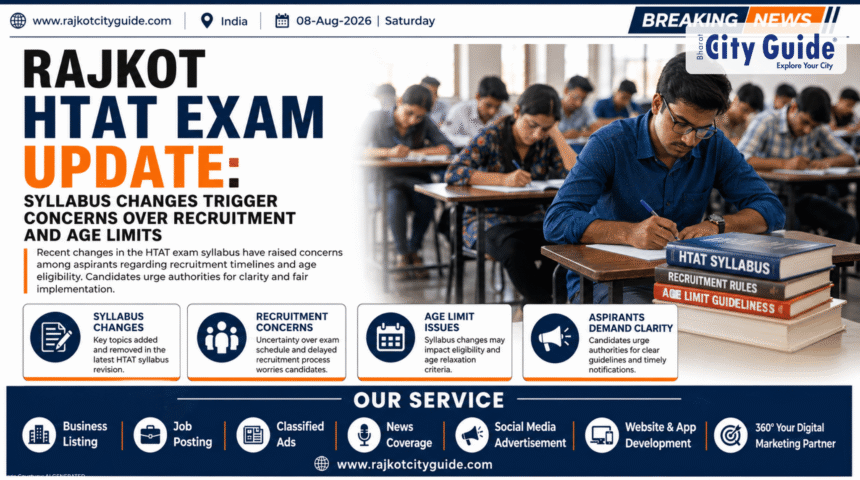
However, alongside the enthusiasm of thousands of teaching professionals attempting to advance their careers, a wave of confusion, anxiety, and frustration has surfaced among applicants. The primary drivers behind this candidate distress are recent changes to the HTAT examination syllabus and pattern, coupled with prolonged delays in formal recruitment announcements following the exam. With the examination pattern undergoing structural shifts without sufficient preparation time or clear transitional guidelines, many long-standing aspirants feel caught in a high-pressure environment.
Furthermore, the persistent delay in converting qualifying exam results into actual job recruitments poses a critical threat to candidates nearing the maximum age eligibility limit. If official recruitment drives are postponed or bogged down by bureaucratic delays, hundreds of qualified candidates risk becoming age-barred, rendering their hard work and qualifying scores ineffective. This Rajkot HTAT Exam Update delivers a comprehensive analysis of the latest developments surrounding the HTAT exam, examining the core reasons behind syllabus modifications, candidate grievances, administrative challenges, and the long-term career implications for primary school educators in Gujarat.
What is Rajkot HTAT Exam Update?
To understand the core issue, it is essential to comprehend what the HTAT examination entails and why the recent news from Rajkot has captured widespread attention across Gujarat. The Head Teacher Aptitude Test (HTAT) is a state-level eligibility and recruitment screening examination conducted under the supervision of the Gujarat State Examination Board (SEB). It is specifically tailored for primary school teachers aiming for promotion or direct appointment as Head Master or Head Teacher in government and grant-in-aid primary schools (Standards 1 to 8).
The recent news centered around Rajkot highlights two major pain points:
- Syllabus and Pattern Alterations: The state examination body introduced revised topics and altered weightage across various sections of the paper, including pedagogy, educational management, general knowledge, administrative rules, and subject-specific aptitude. Candidates who prepared using traditional formats and older study materials found themselves struggling to adapt to the unexpected structural updates.
- Age Bar and Recruitment Timelines: Passing HTAT grants candidates eligibility, but it does not automatically guarantee immediate appointment. Direct recruitment depends on vacancy notifications released by the Education Department. Candidates who have invested years preparing for this exam are alarmed that if official hiring notifications are delayed after the examination, they will cross the upper age limit permitted for government school appointments.
Consequently, this update reflects the collective demand of nearly 10,000 Saurashtra candidates seeking fair evaluation, clear administrative communication, and prompt post-exam recruitment processes.
Why This News is Important
The recent developments regarding the HTAT examination in Rajkot carry significant weight for multiple stakeholders within the state’s education ecosystem:
- Impact on thousands of educators: Over 9,868 candidates from Rajkot and surrounding Saurashtra districts (including Jamnagar, Junagadh, Amreli, Morbi, Porbandar, and Devbhumi Dwarka) are directly impacted by any changes in test policies and hiring schedules.
- Quality of school administration: Head teachers serve as the operational backbone of primary schools. Delays or systemic hurdles in HTAT selection directly affect leadership quality, school governance, academic standards, and administrative efficiency in state-run schools.
- Mental and financial strain on aspirants: Many candidates balancing full-time teaching duties with rigorous exam preparation face immense stress due to unpredictable syllabus shifts and uncertain career timelines.
- Administrative credibility: The situation brings state examination boards and the Education Department under scrutiny, emphasizing the need for candidate-centric policies, timely syllabus notifications, and synchronized recruitment calendars.
Background Information
The Head Teacher cadre was formally created by the Government of Gujarat to strengthen administrative and academic management at the primary school level. Previously, senior primary teachers were promoted based on seniority alone, often without standardized testing of leadership, financial management, or modern pedagogical skills. To professionalize school management, the government mandated the HTAT as a qualifying criterion for both direct recruitment candidates and in-service teachers seeking headship.
Over the years, the HTAT syllabus has covered:
- Child Development and Pedagogy: Understanding student psychology, inclusive education, learning theories, and classroom management.
- Educational Administration and Governance: Knowledge of the Right to Education (RTE) Act, Gujarat Primary Education Rules, school grant management, and administrative protocols.
- Language Proficiency & General Studies: Gujarati, English, Current Affairs, Educational Technology, and Reasoning capabilities.
While syllabus updates are periodically necessary to align with modern educational standards—such as the National Education Policy (NEP) 2020—the core problem arises when changes are announced abruptly or without sufficient reference material and model papers. In the case of the Rajkot examination centers, candidates reported that newly introduced syllabus components were significantly different from previous exam frameworks, catching many off guard.
Key Highlights
Here are the essential key highlights summarizing the latest situation:
- Large Candidate Volume: A massive total of 9,868 candidates from across the Saurashtra region appeared at various examination centers in Rajkot.
- Sudden Syllabus Shift: Candidates expressed severe dissatisfaction regarding unexpected alterations in the exam syllabus, topic weightage, and question formats.
- Lack of Preparation Time: Aspirants highlighted that insufficient time was provided between the syllabus alteration announcement and the actual exam date, hindering effective preparation.
- Age Bar Threat: The biggest concern among senior candidates is the upper age limit. Without immediate recruitment post-exam, many risk aging out of government job eligibility criteria.
- Demand for Swift Hiring: Candidates and teacher associations strongly urge the Gujarat Education Department to release recruitment notifications immediately after test results are declared.
- Need for Standardized Study Material: Candidates have called upon the State Examination Board to publish official guidelines and sample question sets whenever syllabus modifications are introduced in the future.
Detailed Explanation of the Event
The HTAT examination organized across multiple centers in Rajkot represented a crucial juncture for candidate teachers from across Saurashtra. From early morning, candidates gathered at designated exam venues, navigating tight security protocols and seating arrangements managed by local administrative officials.
However, as candidates exited the exam halls, the prevailing reaction was one of concern rather than relief. A significant portion of the question paper featured restructured sections with a heavier emphasis on updated educational policies, complex analytical pedagogy, and modified governance frameworks, diverging noticeably from historical question patterns.
Candidates pointed out that while syllabus revision is an acceptable administrative process, executing it without adequate lead time or official reference textbooks places candidates at a severe disadvantage. Many spent months preparing according to traditional syllabus structures, only to confront questions that required entirely different preparation strategies.
In addition to the immediate challenge of the test itself, candidate discussions outside the exam halls heavily focused on the post-exam hiring timeline. Passing a competitive examination is only half the battle; obtaining an official appointment order is the ultimate goal. In Gujarat, the gap between HTAT result declaration and official vacancy filling has historically varied, sometimes extending into prolonged delays. For candidates nearing 38 to 42 years of age (depending on category relaxations), every passing month without a recruitment drive brings them closer to exceeding the eligible age threshold.
Analysis of Syllabus Changes and Exam Structure
To understand why the updated syllabus created such widespread difficulty, it is worth analyzing how competitive exam structures evolve and why candidates struggle during transitional phases.
| Syllabus Section | Traditional HTAT Pattern | Revised / Updated Pattern | Impact on Candidates |
|---|---|---|---|
| Pedagogy & Psychology | Basic memory-based theoretical questions | Case-study and application-based questions | Requires deeper analytical thinking and practical problem-solving. |
| School Governance & RTE | Direct factual questions on rules and sections | Complex scenario-based management questions | Harder to answer without official administrative manuals or training. |
| NEP 2020 Integration | Minimal or introductory coverage | Deep integration of foundational literacy, numeracy, and structural frameworks | Demands new study material not readily available in standard guidebooks. |
| General Knowledge & Tech | Static GK and standard computer basics | Modern Educational Technology, digital initiatives, and current policy trends | Required candidates to update study sources beyond traditional textbooks. |
When examination boards shift from rote-learning, fact-based questions toward application-oriented assessment, candidate scores often fluctuate sharply during the first few cycles. Without official sample papers provided by the board well in advance, candidates rely on private coaching publications that may not accurately predict the actual exam level.
How It Impacts Candidates and the Education Sector
The implications of the current HTAT exam scenario extend beyond individual exam scores:
1. Direct Impact on Aspirants
- Career Stagnation: In-service teachers seeking career advancement into administrative leadership roles face halted progress if exam patterns are unpredictable or recruitments are stalled.
- Psychological Stress: The anxiety associated with strict age limits creates emotional strain, especially for candidates who have dedicated years to public education service.
- Financial Investment: Many candidates invest substantial personal savings in preparation books, coaching classes, and travel to examination centers like Rajkot.
2. Impact on School Administration & Students
- Vacancies in Leadership Roles: Primary schools across Gujarat, particularly in rural and semi-urban Saurashtra, desperately require dedicated Head Teachers to manage daily operations, implement government schemes, and oversee teaching quality.
- Delayed Implementation of NEP 2020: Head Teachers are central to implementing National Education Policy reforms at the school level. Prolonged delays in appointing leadership personnel directly slow down educational progress at the grass-roots level.
Expert Insights and Industry Perspective
Educational experts, retired school inspectors, and teacher union representatives have voiced clear perspectives on the situation regarding competitive teacher examinations in Gujarat:
- Need for Transparent Exam Calendars: Educational policy experts advocate for an annual, fixed examination and recruitment calendar—similar to UPSC or GPSC—so candidates know precise dates for notifications, exams, results, and recruitment drives.
- Phased Implementation of Syllabus Updates: Experts emphasize that when syllabus changes are made to align with modern educational frameworks like NEP 2020, examination boards should provide at least six months’ advance notice along with official model question papers.
- Age Relaxation Considerations: Given that major administrative examinations are not always conducted annually, expert bodies frequently suggest that the state government consider temporary age-limit relaxations or grace periods for candidates whose age eligibility lapsed during years when no exams or recruitment drives were held.
Challenges and Limitations
Addressing the HTAT recruitment framework involves navigating several administrative, legal, and operational challenges:
- Synchronizing Exam Conduct with Vacancy Creation: The State Examination Board (SEB) conducts the exam, while the Directorate of Primary Education manages vacancy allocations and school allotments. Misalignment between these two bodies often leads to post-exam delays.
- Legal Complications: Teacher recruitment processes frequently face litigation regarding roster points, category reservations, experience criteria, and qualification equivalencies, leading to stay orders that freeze hiring for months.
- Balancing In-Service and Direct Recruitment: Striking an equitable balance between promoting existing primary teachers and recruiting fresh candidates directly through competitive testing remains a complex policy challenge.
- Quality Standard Maintenance: The state administration faces the dual task of ensuring high qualifying standards for school principals while keeping the examination fair and accessible to candidates from diverse backgrounds.
Future Outlook
Looking ahead, the response of the Gujarat Education Department will be crucial in resolving candidate concerns raised during the Rajkot HTAT exam. Key steps and expected developments include:
- Prompt Result Declaration: The State Examination Board is expected to release official answer keys, invite candidate objections, and publish final merit lists in a transparent manner.
- Recruitment Notification Demand: Pressure from candidate unions and educational associations is mounting on the government to issue official recruitment advertisements immediately following result declarations, ensuring that successful candidates are placed without losing age eligibility.
- Policy Standardizations: Future iterations of the HTAT exam are likely to see better-standardized guidelines, digital study portals, and clearer syllabus blueprints to prevent similar confusion among candidates.
Frequently Asked Questions (FAQs)
Q1: What is the HTAT exam in Gujarat?
A: HTAT stands for Head Teacher Aptitude Test. It is a competitive eligibility examination conducted by the Gujarat State Examination Board (SEB) to select qualified candidates for the position of Head Teacher (Principal) in primary schools across Gujarat.
Q2: Why are candidates in Rajkot concerned about the recent HTAT exam?
A: Candidates faced difficulties due to sudden syllabus modifications, altered question patterns, and a lack of preparation time. Additionally, candidates are worried that delays in recruitment following the exam will cause them to exceed the age eligibility limit.
Q3: How many candidates appeared for the HTAT exam in Rajkot?
A: A total of 9,868 candidates from Rajkot and across the Saurashtra region appeared for the examination across designated test centers in Rajkot.
Q4: What happens if HTAT recruitment is delayed?
A: Delay in official hiring notifications puts older candidates at risk of becoming age-barred, meaning they will no longer meet the age criteria for government teacher recruitment, even if they score well in the exam.
Q5: Who conducts the HTAT examination in Gujarat?
A: The State Examination Board (SEB), Gujarat, is responsible for conducting the examination, issuing answer keys, handling candidate grievances, and declaring results.
Q6: What changes were introduced in the updated HTAT syllabus?
A: The revised syllabus placed greater emphasis on modern educational policies like NEP 2020, analytical pedagogy, case-study scenarios, updated school governance rules, and application-based educational technology questions.
Q7: What are the main demands of HTAT candidates following this exam?
A: Candidates are demanding swift result processing, immediate release of school vacancy recruitment notifications, transparent evaluation, and considerations regarding upper age limits to safeguard candidate careers.
Conclusion
The recent HTAT examination conducted in Rajkot highlights the critical intersection between educational administrative reforms and candidate welfare. While updating examination syllabi to match modern pedagogical standards like NEP 2020 is a necessary step toward improving education quality in Gujarat, the implementation process must remain transparent, predictable, and supportive of candidates.
For the 9,868 aspirants from Saurashtra who appeared in Rajkot, the primary focus now shifts from the exam room to the administrative halls of the Education Department. Resolving syllabus confusion through clear evaluation practices and, most importantly, launching a swift, structured recruitment drive will ensure that qualified educators are placed into primary school leadership roles before age eligibility restrictions extinguish their career aspirations. Timely administrative action will not only address the grievances raised in this Rajkot HTAT Exam Update but will also strengthen the governance and quality of primary education across Gujarat.