Introduction
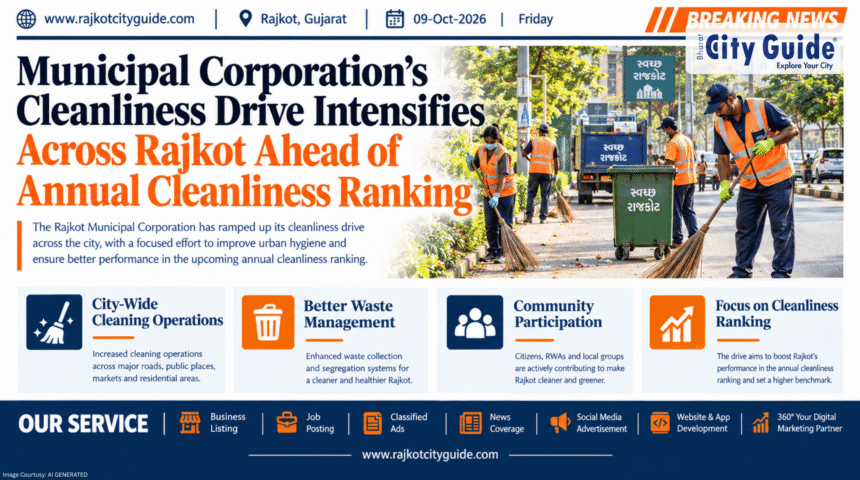
As part of the nationwide ‘Swachhata Hi Seva 2026’ campaign, the Municipal Corporation’s Cleanliness Drive in Rajkot has entered an intensive, high-gear phase. With the upcoming national Swachh Survekshan cleanliness rankings approaching, civic authorities are leaving no stone unturned to ensure the urban environment meets the highest standards of hygiene, waste management, and public sanitation. The municipal administration has initiated daily field monitoring and cross-zonal inspection routines across all 18 administrative wards of the city.
- Introduction
- What is Municipal Corporation’s Cleanliness Drive?
- Why This News is Important
- Background Information
- Key Highlights
- Detailed Explanation of the Event
- Benefits and Importance of the Drive
- How It Impacts People
- Expert Insights and Environmental Perspective
- Challenges and Key Considerations
- Frequently Asked Questions (FAQs)
- Conclusion
This intensified sanitation push is particularly critical because national rankings directly reflect an urban local body’s operational efficiency, civic infrastructure health, and public health commitment. Senior officials, including sanitation inspectors, ward officers, and municipal executive teams, are actively conducting early-morning and late-night surprise field visits to eliminate chronic garbage vulnerable points (GVPs), streamline door-to-door waste collection, and inspect public toilet facilities.
Beyond routine sweeping, the current campaign focuses heavily on community participation (‘Jan Bhagidari’), commercial zone waste segregation, and green urban beautification. By deploying specialized mechanical sweepers, night sanitation squads, and real-time monitoring mechanisms, the Municipal Corporation’s Cleanliness Drive aims to transform Rajkot into a top-performing green and clean urban center in Gujarat and across India.
What is Municipal Corporation’s Cleanliness Drive?
The Municipal Corporation’s Cleanliness Drive is a comprehensive urban sanitation and solid waste management operational framework executed by municipal authorities to maintain hygiene standards across public spaces, residential neighborhoods, commercial markets, and industrial zones. Under the umbrella of Swachh Bharat Mission Urban and the annual ‘Swachhata Hi Seva’ initiative, the campaign mobilizes civic resources to systematically clean, sanitize, and beautify the city.
The operational scope of the drive encompasses daily door-to-door segregated garbage collection, mechanical road sweeping along major arterial ring roads, clearing construction and demolition (C&D) waste, and desilting storm water drains. Additionally, it integrates public awareness programs that educate citizens on mandatory 4-way waste segregation—separating wet, dry, plastic, and hazardous domestic waste at the household level.
In Rajkot, the Municipal Corporation coordinates thousands of sanitation workers (‘Safai Mitras’), specialized compaction trucks, and automated monitoring systems to ensure that waste generated across residential wards and commercial hubs is promptly collected, transported, and processed at processing facilities.
Why This News is Important
The escalation of the sanitation drive into a daily monitored operation carries significant civic, environmental, and public health importance. First, as national evaluation teams for Swachh Survekshan prepare to assess cities across various parameters—including legacy waste remediation, public toilet cleanliness, citizen feedback, and spot-sanitation—establishing robust daily operational routines ensures that the city secures a strong national ranking.
Second, the initiative directly impacts public health. Post-monsoon months frequently bring heightened risks of vector-borne and water-borne diseases such as dengue, malaria, and gastroenteritis. Intensive cleaning of open drainage lines, elimination of stagnant water pools, and prompt removal of decaying organic waste significantly reduce disease transmission vectors across urban neighborhoods.
Finally, the daily monitoring framework establishes strict administrative accountability. By requiring ward-level sanitary inspectors to submit field photos, geotagged reports, and daily route completion logs, the civic body ensures that municipal workers maintain peak operational efficiency across peripheral wards as well as central commercial corridors.
Background Information
Rajkot, the commercial hub of the Saurashtra region, has consistently strived to improve its standing in the annual national cleanliness survey (Swachh Survekshan) conducted by the Ministry of Housing and Urban Affairs (MoHUA). Over recent years, the Rajkot Municipal Corporation (RMC) has implemented innovative waste management solutions, including night-time road sweeping along busy commercial corridors like Kalawad Road, Yagnik Road, and Dhebar Road.
Under the 2026 national mandate of ‘Swachhata Hi Seva’, municipal corporations across Gujarat launched 100-day intensive sanitation roadmaps. These roadmaps aim to transform identified Cleanliness Target Units (CTUs)—neglected urban areas, railway line margins, open plots, and vacant spots under flyovers—into clean, visually appealing public spaces.
+-----------------------------------------------------------------------+
|                    CLEANLINESS DRIVE OPERATIONAL SUMMARY              |
+--------------------------+--------------------------------------------+
| Parameter                | Operational Framework                      |
+--------------------------+--------------------------------------------+
| Campaign Theme           | Swachhata Hi Seva 2026 / SHS-2026          |
| Enforcing Authority      | Rajkot Municipal Corporation (RMC)         |
| Primary Monitoring       | Daily morning & night field inspections    |
| Core Coverage            | All 18 Municipal Wards & Key Arterial Roads|
| Waste Segregation Policy | 4-Way Segregation (Wet, Dry, Plastic, Haz) |
| Key Targets              | Elimination of GVPs & CTU Transformation   |
| Public Participation     | 'Jan Bhagidari' & Swachhata Pledges        |
+--------------------------+--------------------------------------------+
With the formal evaluation window for national rankings drawing near, the civic body transitioned from periodic cleanliness drives to an enforced daily monitoring system. This transition ensures that clean standards are sustained continuously rather than treated as a temporary exercise.
Key Highlights
- Daily Field Monitoring: Senior municipal officials and deputy commissioners conduct daily early-morning and night-time field checks to supervise sanitation work.
- Focus on Cleanliness Target Units (CTUs): Systematic identification and transformation of chronic garbage spots into clean public spaces and vibrant street art walls.
- 4-Way Waste Segregation Drive: Intensified public awareness enforcing separate disposal of wet organic waste, dry recyclable materials, plastic, and domestic hazardous waste.
- Night Sanitation Squads: Dedicated cleaning crews operating between 10:00 PM and 5:00 AM to sweep commercial markets, vegetable yards, and high-footfall public circles.
- Safai Mitra Health and Safety: Conducting health checkup camps, medical insurance enrollment, and distributing personal protective equipment (PPE) kits to sanitation workers.
- Active Citizen Engagement: Involving school students, youth groups, library visitors, and commercial associations through ‘Swachhata Pledges’ and ‘Shramdaan’ (voluntary labor).
Detailed Explanation of the Event
The escalated campaign operates through a multi-tiered administrative structure designed to cover Rajkot’s vast urban landscape. Every morning at 6:00 AM, sanitation teams assemble across all 18 wards under the supervision of ward sanitary inspectors. Equipped with mechanical sweepers, refuse compactors, and hydraulic lifting vehicles, the workforce systematically cleans major public roads, residential lanes, and public parks.
A core operational component of the current drive is the elimination of Garbage Vulnerable Points (GVPs)—locations where residents historically dumped household waste illegally. Once a GVP is cleared, municipal teams sanitize the area, install decorative flower planters, or paint colorful mural art featuring environmental messages, effectively preventing future dumping.
+-----------------------------------------------------------------------+
|                  STRATEGIC PILLARS OF THE RMC DRIVE                   |
+--------------------------+--------------------------------------------+
| Operational Pillar       | Execution Action Plan                      |
+--------------------------+--------------------------------------------+
| Door-to-Door Collection  | 100% segregated waste pick-up via tippers  |
| Night Market Cleaning    | Post-business sweeping in commercial zones |
| Wall Art & Beautification| Converting cleared GVPs into street art    |
| Public Facility Audits   | Daily washing & disinfection of toilets    |
| Citizen Feedback         | Digital grievance redressal via mobile app |
+--------------------------+--------------------------------------------+
To monitor these operations, the Municipal Commissioner and senior administrative teams execute unannounced field visits. During these inspections, officers evaluate door-to-door garbage tipper punctuality, inspect public and community toilet hygiene, verify commercial shopkeeper dustbin usage, and review real-time GPS tracking data from waste transport vehicles.
Benefits and Importance of the Drive
The implementation of an intensified, daily-monitored cleanliness campaign brings extensive benefits to the city’s infrastructure and population:
1. Significant Health and Environmental Improvements
Continuous removal of unmanaged waste prevents pest breeding, reduces airborne dust pollution, and protects groundwater resources from toxic leachate contamination. Clean public spaces directly correlate with reduced seasonal infection rates across urban neighborhoods.
2. Enhanced Urban Aesthetics and Civic Pride
Transforming neglected urban corners and garbage-strewn walls into clean, vibrant spaces adorned with traditional and ecological street art elevates the city’s visual appeal, instilling civic pride among residents.
3. Preparation for Sustainable Waste Processing
Enforcing waste segregation at the household level ensures that organic waste reaches composting and bio-methanation plants cleanly, while dry recyclables are processed efficiently without clogging landfills.
4. High Performance in National Rankings
Sustaining high sanitation benchmarks positions Rajkot favorably in national Swachh Survekshan rankings, attracting central infrastructure development grants and boosting the city’s reputation as a clean, investment-friendly destination.
How It Impacts People
The daily-monitored sanitation drive creates a direct positive impact on various urban stakeholder groups:
- For Local Residents: Delivers cleaner residential lanes, timely door-to-door garbage collection, reduced mosquito breeding, and pleasant public parks for morning and evening recreation.
- For Commercial Shopkeepers and Vendors: Encourages cleaner market environments, attracting higher customer footfall while establishing clear guidelines for commercial waste disposal.
- For Sanitation Workers (Safai Mitras): Ensures better working conditions, provision of protective gear, access to free health checkup camps, and societal recognition for their frontline service.
- For School and College Students: Provides opportunities to participate in civic leadership, environmental campaigns, wall painting initiatives, and community ‘Shramdaan’ events.
Expert Insights and Environmental Perspective
Urban planning specialists and environmental engineers consistently emphasize that long-term municipal cleanliness cannot rely solely on periodic drives; it requires institutionalizing daily operational discipline and behavioral change. According to public health experts, transition strategies that combine daily administrative monitoring with active citizen participation (‘Jan Bhagidari’) yield the most resilient urban sanitation models.
Environmentalists also praise the focus on waste segregation at source. When municipal bodies successfully separate biodegradable waste from plastics and hazardous materials, landfill volume drops by up to 60%, drastically extending the lifespan of municipal waste processing facilities and reducing greenhouse gas emissions.
Furthermore, civic governance analysts highlight the importance of night-time sanitation operations in commercial zones. Cleaning dense market areas after business hours allows municipal teams to deploy heavy mechanical sweepers efficiently without causing daytime traffic congestion or disrupting commercial activities.
Challenges and Key Considerations
Sustaining a high-intensity urban cleanliness drive involves addressing several ongoing operational hurdles:
- Behavioral Change and Littering Habits: Overcoming habitual public littering in busy commercial zones and encouraging 100% compliance with household waste segregation requires persistent public education and firm enforcement.
- Commercial Vendor Compliance: Ensuring that street food vendors, vegetable markets, and tea stalls consistently maintain dual dustbins and refrain from dumping waste into roadside gutters.
- Managing Peripheral Ward Growth: Extending high-frequency sanitation services and waste transport routes to rapidly expanding urban peripheral areas and newly merged residential societies.
- Resource and Equipment Maintenance: Maintaining a large fleet of garbage tippers, mechanical sweepers, and processing machinery in optimal working condition to prevent service disruptions.
Frequently Asked Questions (FAQs)
What is the main objective of the Municipal Corporation’s Cleanliness Drive in Rajkot?
The drive aims to elevate urban hygiene standards, eliminate garbage vulnerable points, enforce waste segregation, and prepare the city for top rankings in the national Swachh Survekshan evaluation.
What is ‘Swachhata Hi Seva 2026’?
It is a nationwide cleanliness campaign organized under the Swachh Bharat Mission that mobilizes municipal bodies, community organizations, and citizens to undertake intensive sanitation and beautification drives.
How is the Municipal Corporation monitoring daily cleanliness work?
Senior municipal officials conduct unannounced early-morning and night field inspections, track garbage vehicles via GPS, and review ward-level photo logs submitted by sanitary inspectors.
What is 4-way waste segregation being promoted during the campaign?
It refers to separating domestic waste into four distinct categories at the source: wet organic waste, dry recyclable waste, plastic waste, and domestic hazardous waste.
How are Cleanliness Target Units (CTUs) being transformed?
Neglected public spaces, open plots, and chronic garbage dumping spots are thoroughly cleared, sanitized, and transformed into clean zones featuring flower planters, benches, or vibrant mural art.
What measures are being taken for the safety of sanitation workers (Safai Mitras)?
The corporation organizes dedicated health checkup camps, provides PPE safety kits, registers workers for government insurance schemes, and conducts safety awareness workshops.
How can individual citizens contribute to the cleanliness drive?
Citizens can contribute by segregating household waste before handing it to collection vehicles, avoiding littering in public spaces, maintaining dual dustbins at commercial shops, and participating in local volunteer drives.
Conclusion
The intensified Municipal Corporation’s Cleanliness Drive across Rajkot underscores the city administration’s firm commitment to building a clean, healthy, and environmentally sustainable urban center. By implementing daily field monitoring, night sanitation squads, and targeted GVP transformations under the ‘Swachhata Hi Seva 2026’ framework, the civic body is setting strong benchmarks for municipal governance in Gujarat.
The success of this comprehensive campaign relies on the strong partnership between dedicated municipal workers, proactive administrators, and conscious citizens. When household waste segregation and responsible public disposal habits become everyday community practices, maintaining high civic hygiene becomes second nature.
As national evaluation teams prepare to assess cities for upcoming cleanliness rankings, Rajkot’s proactive daily monitoring framework positions it strongly. Continued citizen participation and administrative discipline will ensure that the city not only achieves top honors in cleanliness rankings but also provides a healthier, happier living environment for all its residents.