Introduction
The annual monsoon season in India brings vital water resources to the subcontinent, but it also presents immense challenges for municipal infrastructure and regional transport networks. Recently, the onset of Mumbai heavy rain has triggered massive disruptions that extend far beyond the borders of Maharashtra. The Western Railway network, which serves as a critical economic and transit artery connecting Maharashtra and Gujarat, has experienced significant operational challenges due to severe waterlogging on tracks and urban flooding in Mumbai’s low-lying areas.
- Introduction
- What is the Impact of Mumbai Heavy Rain?
- Why This News is Important
- Background Information
- Key Highlights
- Detailed Explanation of the Event
- Importance of Monsoon Preparedness
- How It Impacts People
- Expert Insights and Industry Perspective
- Challenges and Limitations
- Future Outlook
- Frequently Asked Questions (FAQs)
- Conclusion
Among the hardest hit by these weather-induced disruptions is the Rajkot Division of the Western Railway. Because Mumbai serves as a central hub for long-distance trains traveling across Western and Northwestern India, a standstill in the metropolis creates a cascading effect across the entire railway division. Travelers heading to and from Rajkot, Ahmedabad, and other major cities in Gujarat have found themselves stranded or forced to rearrange their plans as multiple trains face cancellations or short-terminations.
This article explores the direct impacts of the Mumbai heavy rain on regional transport networks, local infrastructure inspections in Rajkot, and incredible emergency response stories that highlight human resilience amidst severe seasonal weather.
What is the Impact of Mumbai Heavy Rain?
When meteorologists report on Mumbai heavy rain, they are describing a weather phenomenon that can drop hundreds of millimeters of water over a massive metropolitan area within a few hours. The geographic location of Mumbai, combined with its high-density urban environment and aging drainage systems, makes it highly susceptible to flash floods and severe waterlogging during peak monsoon periods.
The impact of this severe weather is felt deeply by the Indian Railways. Tracks become submerged, signaling systems malfunction due to water ingress, and safety protocols require trains to either reduce speeds drastically or halt entirely. For the Rajkot Division, this means that scheduled daily commutes, commercial trade transport, and interstate travel are instantly thrown into disarray. The interconnected nature of the railway timetable means a delay at Mumbai Central or Bandra Terminus immediately disrupts the return journeys and subsequent schedules of trains deep within Gujarat.
Why This News is Important
Understanding the disruptions caused by the monsoon is critical for several reasons. First and foremost, it highlights the vulnerability of our public transportation systems to extreme weather events. Thousands of passengers rely on the affordable and timely services of the Indian Railways for business, medical emergencies, family commitments, and daily employment.
Furthermore, this news underscores the multi-faceted challenges local administrations face during the monsoon season. While the railway division handles track safety and schedule adjustments, local municipal corporations—such as the Rajkot Municipal Corporation (RMC)—must simultaneously inspect urban infrastructure to prevent localized structural failures. Additionally, emergency services like the 108 ambulance teams face high-stress scenarios where timely intervention determines life or death under challenging weather conditions.
Background Information
The Western Railway zone is one of the busiest parts of the Indian Railways network, with the Mumbai-Ahmedabad-Rajkot corridor being highly essential for passenger and freight traffic. Historically, the monsoon months of June through September bring heavy downpours that test the limits of infrastructure along the western coast.
In recent years, the Indian Railways has invested in raising track heights, installing high-capacity water pumps at chronic flooding spots, and introducing real-time monitoring systems. Despite these technological interventions, the sheer volume of water delivered by a severe spell of Mumbai heavy rain can overwhelm systems, leading to necessary schedule alterations to ensure passenger safety. Concurrently, regional cities like Rajkot utilize this period to assess their own urban development projects, ensuring that public sports complexes, roads, and residential areas remain resilient against the heavy rains of the season.
Key Highlights
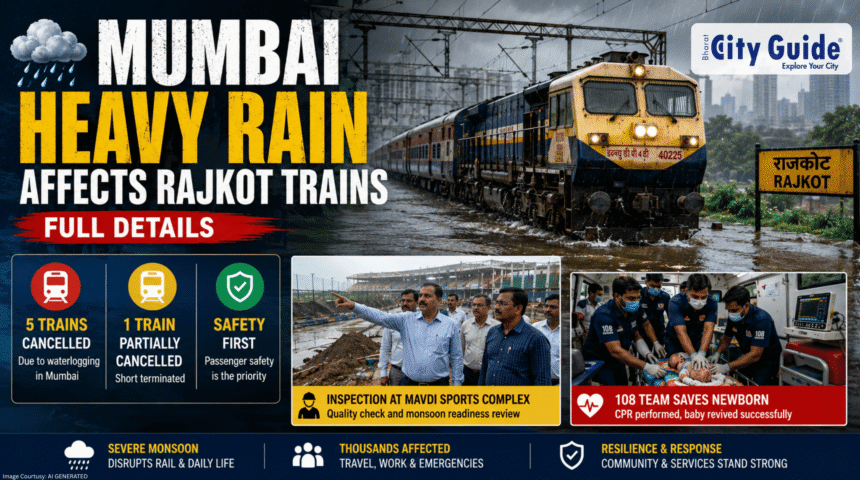
- Train Cancellations: Five major trains operating under or passing through the Rajkot Division have been completely cancelled due to waterlogging and severe weather conditions in Mumbai.
- Partial Cancellations: One prominent train has been partially cancelled or short-terminated, meaning it will not complete its full scheduled journey.
- Infrastructure Monitoring: The Standing Committee Chairman of Rajkot conducted an official site visit to the Mavdi Sports Complex to evaluate construction quality and monsoon readiness.
- Emergency Lifesaving Event: Amidst the local seasonal challenges, a dedicated 108 ambulance emergency response team successfully revived a newborn baby using cardiopulmonary resuscitation (CPR) in Rajkot.
Detailed Explanation of the Event
Railway Disruptions across Rajkot Division
The relentless downpour in Mumbai has compromised the safety of track operations, leading railway authorities to make tough operational decisions. To prevent trains from getting stranded in flooded zones, the Western Railway administration announced the complete cancellation of five trains connected to the Rajkot Division. Additionally, one train has been restricted to a partial route to avoid entering the worst-affected areas of the Mumbai suburban and metropolitan network. This has left hundreds of passengers scrambling for alternative transportation or seeking refunds at regional stations.
Municipal Scrutiny of Mavdi Sports Complex
While the transportation sector faced external challenges from the Mumbai weather, the local administration in Rajkot focused on internal infrastructure integrity. The Standing Committee Chairman paid a sudden visit to the ongoing construction site of the Mavdi Sports Complex. The objective of this visit was to ensure that the heavy rainfall does not compromise the structural integrity of the project and that safety standards are strictly adhered to by the contractors. Local officials emphasized that public projects must be built to withstand severe weather anomalies without showing signs of degradation.
A Miraculous Rescue by the 108 Emergency Team
In an unrelated but highly impactful event that coincided with these seasonal challenges, the 108 emergency management services in Rajkot proved their invaluable worth to the community. A newborn infant, who was facing severe respiratory distress and had effectively stopped breathing, was given a second lease on life. The quick-thinking and highly trained paramedics of the 108 ambulance crew administered specialized neonatal CPR. Their persistent efforts paid off as the baby’s vital signs returned to normal before arrival at the hospital, winning widespread praise from citizens and health officials alike.
Importance of Monsoon Preparedness
Events like these bring the absolute necessity of monsoon preparedness into sharp focus. For large-scale transport networks, early warning systems and adaptive scheduling are essential to prevent catastrophic accidents. When railway authorities proactively cancel services during a severe spell of Mumbai heavy rain, they prioritize human lives over operational convenience.
For municipal bodies, unexpected site visits ensure that public funds are utilized correctly and that infrastructure can withstand heavy rains. For healthcare and emergency services, constant training allows medical technicians to perform flawless lifesaving procedures under stressful, rain-delayed transit conditions.
How It Impacts People
Travelers and Commuters
Passengers holding tickets for the cancelled routes face immediate inconvenience. Many are forced to opt for long-distance road travel via buses or private taxis, which can be both expensive and dangerous during heavy downpours. Business travelers experience delays, while families face disrupted vacation plans.
Sports Enthusiasts and Local Citizens
The inspection of the Mavdi Sports Complex ensures that future athletes and local citizens will have access to a safe, state-of-the-art facility. Had the infrastructure been poorly constructed, the heavy monsoon rains could have caused structural defects, delaying the project opening and risking public safety.
Families Relying on Emergency Healthcare
The success of the 108 ambulance team reinforces public trust in government-sponsored emergency services. During monsoon seasons, when road conditions deteriorate, knowing that highly competent emergency medical technicians are available provides immense peace of mind to rural and urban families alike.
Expert Insights and Industry Perspective
Logistics and urban planning experts suggest that as climate patterns shift, extreme precipitation events like the recent Mumbai heavy rain will become more frequent. Transportation analysts emphasize that the Indian Railways must continue to evolve its disaster management protocols. This includes creating automated text alert systems for passengers, expanding digital refund processing, and creating robust alternative routing options.
Urban development experts also praise proactive site visits by municipal chairs, noting that real-time auditing during monsoon conditions reveals structural flaws that might remain hidden during dry seasons.
Challenges and Limitations
The primary challenge in managing disruptions caused by Mumbai heavy rain is the unpredictability of the weather. While meteorological departments provide advance warnings, the exact localization of extreme downpours remains difficult to pinpoint.
For the railways, managing thousands of stranded passengers, deploying refund capital, and re-routing rolling stock requires massive administrative effort. For local municipal corporations, monitoring every active construction site across a rapidly expanding city like Rajkot during heavy downpours stretches available manpower and resources thin.
Future Outlook
Looking ahead, the Western Railway plans to continue upgrading its coastal track infrastructure with better cross-drainage systems and higher embankments to mitigate the effects of seasonal flooding. As urban areas grow, the integration of smart drainage technology will be crucial to prevent metropolitan weather from paralyzing regional transport links.
In Rajkot, the completion of robust public venues like the Mavdi Sports Complex will mark a step forward in urban living standards, provided they pass strict seasonal quality checks. The continuous upskilling of emergency services ensures that the regional healthcare safety net remains strong, no matter what challenges the weather brings.
Frequently Asked Questions (FAQs)
1. Why do heavy rains in Mumbai affect train schedules in Rajkot?
Mumbai acts as a primary terminal and transit hub for the Western Railway network. When a severe spell of Mumbai heavy rain floods the tracks in Maharashtra, trains cannot depart or arrive, causing a chain reaction of delays and cancellations for connected divisions like Rajkot.
2. How can I check if my train from Rajkot is cancelled or delayed?
Passengers can check real-time train statuses through the Indian Railways’ National Train Enquiry System (NTES) app, the IRCTC website, or by contacting official railway helpline numbers before heading to the station.
3. What compensation do passengers get if a train is cancelled due to weather?
When trains are officially cancelled by the railways due to natural causes like heavy rain, passengers are entitled to a full refund of their ticket fare. For e-tickets, this is usually processed automatically online.
4. What was the purpose of the inspection at the Mavdi Sports Complex?
The Standing Committee Chairman visited the Mavdi Sports Complex to evaluate the quality of construction during the rainy season and ensure that contractors are maintaining safety standards despite monsoon challenges.
5. How did the 108 ambulance team save the newborn in Rajkot?
The 108 emergency medical team utilized timely and professional cardiopulmonary resuscitation (CPR) tailored for neonates to restore the breathing and heartbeat of a newborn baby in critical distress.
6. Are alternative transport options available when trains are cancelled?
Yes, state transport buses (GSRTC) and private travel operators often run additional services, though road travel can also experience delays depending on local waterlogging conditions.
Conclusion
The recent disruptions caused by the Mumbai heavy rain serve as a powerful reminder of how interconnected our regional infrastructure truly is. A weather crisis in the metropolitan heart of Maharashtra instantly reshapes the daily realities of commuters, railway staff, and families throughout the Rajkot Division. However, through proactive administrative steps—such as the rigorous structural inspections of the Mavdi Sports Complex and the heroic lifesaving interventions of the local 108 emergency team—the community continues to demonstrate its ability to endure and overcome seasonal adversity. Moving forward, continued investment in weather-resilient transport and localized emergency services will be vital to keeping our regions moving safely, even in the face of nature’s most severe monsoonal challenges.