Introduction
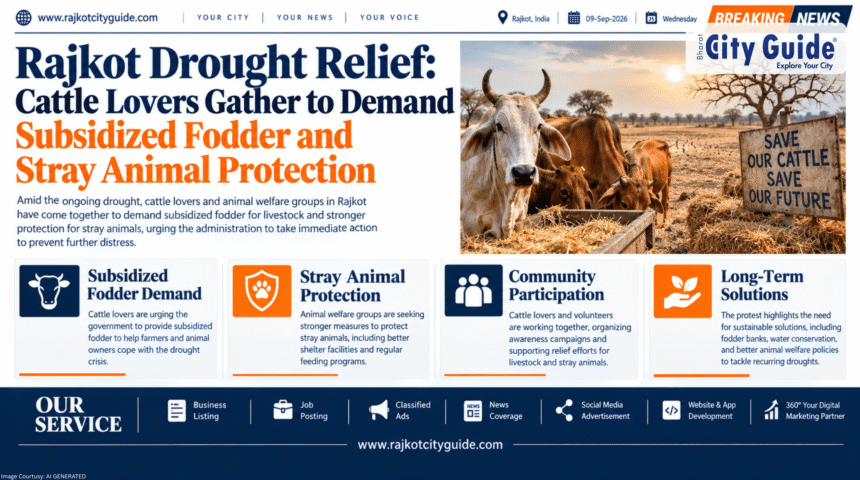
Agricultural stability and livestock survival are closely intertwined in the arid and semi-arid regions of Gujarat. When monsoon rains fall short, the immediate ripple effect hits rural and semi-urban communities hard, leading to severe fodder shortages, depleted groundwater tables, and rising feed costs. In the heart of Saurashtra, Rajkot often becomes the focal point for regional agricultural and livestock welfare discussions. As drought-like conditions strain local resources, cattle rearers, gaushala (cow shelter) trustees, and animal lovers (Gau Premis) have come together to voice urgent demands to state and municipal authorities.
- Introduction
- What is Rajkot Drought Relief?
- Why This News is Important
- Background Information
- Key Highlights of the Demands
- Detailed Explanation of the Event
- Benefits and Importance of Proactive Relief Measures
- How Drought Relief Impacts Various Stakeholders
- Expert Insights and Environmental Perspective
- Challenges and Implementation Limitations
- Future Outlook
- Frequently Asked Questions (FAQs)
- Conclusion
The gathering in Rajkot underscores a growing humanitarian and ecological crisis. High fodder prices make it nearly impossible for non-profit shelters and individual cattle rearers to feed their animals adequately. In response, animal welfare organizations are demanding immediate administrative action under comprehensive Rajkot Drought Relief initiatives. Their demands are clear: state-subsidized fodder distribution, the setup of municipal cattle enclosures (Dhor Dabba), and a strict policy guaranteeing that no abandoned or stray animal is pushed toward slaughterhouses.
Protecting livestock during environmental stress is not just a cultural duty; it is an economic necessity for thousands of families reliant on animal husbandry. This detailed report examines the core issues surrounding the Rajkot Drought Relief campaign, analyzing the economic background, administrative challenges, and broader impacts on local communities.
What is Rajkot Drought Relief?
Rajkot Drought Relief refers to a collection of emergency measures, policy interventions, and administrative welfare programs designed to mitigate the impacts of water scarcity, agricultural distress, and cattle feed shortages in Rajkot district and surrounding Saurashtra regions.
When rainfall deficits threaten crop yields and pasture lands, municipal and state authorities step in with structured relief frameworks. Traditionally, these efforts focus on supplying drinking water via tankers, declaring scarcity-affected zones, and establishing subsidized grass depots for registered livestock keepers.
In the context of livestock management, an effective drought relief system encompasses:
- Subsidized Fodder Depots: Government-run centers delivering dry and green fodder at token rates (e.g., heavily discounted per-kilogram pricing) to cattle rearers holding official identification or grass cards.
- Financial Assistance for Gaushalas: Direct monetary aid or feed subsidies allocated to charitable cow shelters caring for old, non-lactating, or stray animals.
- Cattle Enclosures (Dhor Dabba): Municipal shelters established to impound, feed, and protect stray cattle from traffic hazards, malnutrition, or illegal trade during periods of severe feed scarcity.
- Veterinary Medical Support: Emergency medical care to prevent disease outbreaks among weakened animals concentrated in shelter facilities.
+--------------------------------------------------------------------------+
|                  CORE PILLARS OF RAJKOT DROUGHT RELIEF                   |
+--------------------------------------------------------------------------+
                                     |
    +--------------------------------+--------------------------------+
    |                                |                                |
    v                                v                                v
[ SUBSIDIZED FODDER ]       [ MUNICIPAL SHELTERS ]      [ ANIMAL PROTECTION ]
- Grass depots & transport  - Dhor Dabba setup          - Anti-slaughter enforcement
- Token rate pricing        - Rescue & feeding          - Gaushala financial grants
Why This News is Important
The recent mobilization of animal lovers and gaushala trustees in Rajkot marks a pivotal moment for regional civic engagement and environmental policy. This news holds immense significance for several reasons:
1. High Financial Strain on Non-Profit Shelters
Charitable gaushalas operate primarily on community donations. During economic slowdowns or drought years, local donations decrease just as fodder prices surge due to supply shortages. Without government intervention, hundreds of shelters face financial collapse.
2. Prevention of Animal Cruelty and Abandonment
When small-scale dairy farmers can no longer afford fodder, many are forced to abandon non-lactating cattle on urban streets. This creates safety hazards for motorists and leaves animals vulnerable to starvation or illegal slaughter networks.
3. Protection of the Rural Economy
Animal husbandry forms the backbone of the rural economy across Saurashtra. Sustaining livestock during dry spells ensures that farming households retain their primary assets once agricultural conditions normalize.
Background Information
Saurashtra’s geography renders it naturally prone to uneven monsoon distributions. While coastal districts occasionally receive heavy rainfall, inland hubs like Rajkot regularly face dry spells that shrink grazing lands and deplete fodder reserves.
The Fodder Supply Chain Mechanics
The livestock sector relies heavily on agricultural byproducts such as groundnut straw (Goti), wheat straw (Bhus), and jowar stalk. When monsoon rains fail or arrive late, crop yields drop dramatically. The resulting supply shortage causes open-market fodder prices to spike by 50% to 100%, turning basic cattle feed into a costly commodity.
[ Monsoon Deficit / Drought ] ---> [ Low Agricultural Residue Yield ]
                                                |
                                                v
[ Open-Market Fodder Shortage ] <--- [ Rapid Rise in Feed Prices ]
              |
              v
[ Financial Distress for Farmers & Gaushalas ]
              |
              v
[ Urgent Demand for Government Subsidized Fodder Depots ]
The Role of Gaushalas and Panjrapols
Gujarat has a long-standing tradition of community-funded animal welfare. Thousands of gaushalas and panjrapols house millions of cattle across the state. However, during severe drought cycles, private philanthropy alone is insufficient. Over the years, organizations have consistently advocated for systemic state support, such as the Mukhyamantri Gaumata Poshan Yojana, demanding timely disbursement of allocated funds and expanded fodder quotas during crisis periods.
Key Highlights of the Demands
During the assembly in Rajkot, community leaders and animal welfare activists presented a clear list of demands to public administrators:
- Affordable Fodder Access: Immediate setup of government-subsidized grass depots in Rajkot city and rural talukas to distribute fodder at nominal rates.
- Creation of Municipal Cattle Enclosures: Urgent establishment and expansion of secure municipal cattle shelters (Dhor Dabba) to house, feed, and care for abandoned street animals.
- Protection Against Illegal Trade: Strict administrative oversight to guarantee that no stray or abandoned animal is sold or diverted to illegal slaughter facilities.
- Financial Grants for Shelters: Prompt disbursement of pending drought-relief subsidies directly to registered gaushalas and panjrapols.
- Free Water Supply for Shelters: Deployment of municipal water tankers to fill troughs at animal shelters facing depleted borewells.
Detailed Explanation of the Event
Faced with escalating feed costs and drying pastures, cattle lovers, community elders, and gaushala representatives gathered in Rajkot to organize a unified demonstration. The participants expressed growing concern over the fate of thousands of cattle across the district.
Speakers at the assembly pointed out that open-market fodder prices had reached unsustainable levels, making daily feeding routines impossible for small budget shelters. The lack of green grass in rural hinterlands has forced cattle to migrate toward urban roadways, where they ingest plastic waste and risk road accidents.
The delegation submitted formal representations to district collectors and municipal officials. They urged the state government to officially initiate comprehensive Rajkot Drought Relief protocols. Their primary appeal centered on treating animal hunger with the same urgency as human water shortages during drought declarations. The activists declared that community monitoring teams would assist local authorities in identifying stray cattle and transporting them to safe enclosures, provided the government supplies sufficient feed and water infrastructure.
Benefits and Importance of Proactive Relief Measures
Implementing a robust Rajkot Drought Relief program offers multi-layered social, economic, and environmental benefits:
1. Economic Resilience for Farmers
Subsidized fodder prevents distress sales of livestock, allowing marginal farmers to maintain their herds through difficult dry seasons.
2. Urban Traffic and Public Safety
Establishing fully functional municipal cattle enclosures reduces the number of stray animals on city streets, lowering traffic accidents and keeping roadways clear.
3. Animal Welfare and Ethics
Providing adequate feed and medical attention upholds animal protection standards and prevents starvation-related deaths across shelters.
4. Preservation of Indigenous Cattle Breeds
Saurashtra is home to renowned indigenous cattle breeds such as the Gir cow and Jaffrabadi buffalo. Sustaining these populations during droughts safeguards genetic biodiversity essential for Indian dairy farming.
How Drought Relief Impacts Various Stakeholders
| Stakeholder Group | Direct Impact & Relief Benefits |
| Cattle Rearers & Farmers | Protects household assets by keeping daily fodder costs affordable through state depots. |
| Gaushala Trustees | Reduces operational overheads, preventing financial bankruptcy of charitable shelters. |
| Urban Residents & Drivers | Improves road safety by clearing stray cattle from main traffic corridors in Rajkot. |
| Municipal Administration | Enhances public order, reduces civic complaints, and streamlines urban animal management. |
Expert Insights and Environmental Perspective
Agricultural economists and veterinary experts emphasize that drought management policies must integrate livestock welfare as a core priority rather than an afterthought.
“Drought management cannot stop at human drinking water transportation. In pastoral economies like Saurashtra, livestock represents working capital. When fodder prices spiral out of control, the entire micro-economy destabilizes. Establishing subsidized fodder corridors and municipal protection shelters during rainfall deficits is crucial for preventing long-term agrarian distress.”
Veterinary professionals also highlight the health risks associated with inadequate drought feeding. Malnourished cattle suffer from compromised immune systems, making them susceptible to infectious diseases. Timely supply of balanced dry roughage and green fodder through public distribution depots protects herd health and prevents widespread livestock mortality.
Challenges and Implementation Limitations
While the demand for relief is urgent, authorities face operational hurdles when executing large-scale drought mitigation:
- Sourcing and Transporting Fodder: Procuring thousands of metric tons of dry grass from surplus districts or states involves complex logistics, high freight costs, and supply chain delays.
- Distinguishing Genuine Beneficiaries: Preventing black-market reselling of subsidized fodder requires strict verification through grass cards and cattle biometric tracking.
- Capacity Limits of Enclosures: Municipal cattle pounds (Dhor Dabba) often suffer from overcrowding, requiring continuous infrastructure expansion and dedicated sanitation management.
- Budgetary Allocations: Balancing emergency livestock relief funds with other critical civic needs—such as human water distribution and infrastructure repair—requires careful fiscal management.
Future Outlook
As climate variability increases the frequency of dry spells, drought management in Saurashtra is shifting toward sustainable, long-term strategies:
- Digital Fodder Management Systems: State agriculture departments are deploying online tracking systems to monitor real-time grass stocks, depot locations, and cardholder disbursements.
- Community Fodder Banks: Encouraging villages and talukas to construct permanent fodder storage reserves during surplus harvest years to prepare for future dry spells.
- Public-Private Partnership (PPP) Gaushala Models: Strengthening collaborations between municipal bodies and private charitable trusts to operate well-funded, modern animal sanctuaries.
Frequently Asked Questions (FAQs)
1. What is the main demand of gaushala owners under Rajkot Drought Relief?
Gaushala owners and cattle lovers are requesting government-subsidized fodder distribution, the establishment of municipal cattle enclosures (Dhor Dabba), and strict measures to prevent stray cattle from being sent to slaughterhouses.
2. How does fodder subsidy work during a drought in Gujarat?
The state government establishes designated grass depots where registered cattle rearers can purchase a set quantity of fodder per animal per day at heavily discounted rates.
3. What is a Dhor Dabba?
A Dhor Dabba is a municipal cattle enclosure or impound facility designed to shelter, feed, and care for stray or abandoned cattle found on public roads.
4. Why do fodder prices rise during drought periods in Rajkot?
Drought conditions reduce crop production, leading to a shortage of agricultural byproducts like groundnut and wheat straw. The reduced supply causes open-market feed prices to rise rapidly.
5. Who is eligible to receive subsidized fodder at government depots?
Registered cattle keepers, livestock farmers possessing official grass cards, and recognized gaushalas or panjrapols are eligible to buy feed at subsidized rates.
6. How does cattle protection impact road safety in Rajkot city?
By relocating abandoned street cattle to municipal shelters (Dhor Dabba) and providing them with food, the city reduces traffic congestion and prevents road accidents caused by stray animals.
7. What steps can citizens take to support drought-affected cattle?
Citizens can contribute by donating directly to verified charitable gaushalas, avoiding feed wastage, reporting stray cattle in distress to municipal helpline numbers, and supporting community fodder collection drives.
Conclusion
The gathering of cattle lovers and gaushala representatives in Rajkot highlights the critical need for proactive environmental planning and animal protection during dry spells. By advocating for subsidized fodder distribution, expanded municipal shelters, and strict safety guarantees for stray animals, these community groups are calling for essential support for Saurashtra’s livestock ecosystem.
Ensuring swift execution of Rajkot Drought Relief measures protects vulnerable animals, safeguards the financial stability of rural families, and maintains public safety across urban centers. As weather challenges persist, strong collaboration between municipal authorities, state agencies, and compassionate civic groups remains essential to protect both citizens and livestock throughout Rajkot.