Introduction
The arrival of Ganesh Chaturthi transforms the cultural landscape of Gujarat into a vibrant tapestry of devotion, music, and community celebration. While public Ganeshotsav pandals across the state bring immense energy, the urban enthusiasm in Rajkot remains distinct. Known as the colorful heart of Saurashtra, Rajkot embraces festivals with unmatched grandeur, combining deeply rooted spiritual traditions with modern visual spectacle. Every year, major intersections, residential avenues, and commercial hubs across the city prepare elaborate pandals (tents) to welcome Lord Ganesha.
- Introduction
- What is Rajkot Ganesh Utsav? Events & Festivals in India | A Ministry of Tourism Initiative
- Why This News is Important
- Background Information
- Key Highlights
- Detailed Explanation of the Event
- Importance and Features of Public Celebrations
- How It Impacts Different Audiences
- Expert Insights and Cultural Perspective
- Challenges and Civic Considerations
- Future Outlook
- Frequently Asked Questions (FAQs)
- Conclusion
Events & Festivals in India | A Ministry of Tourism Initiative
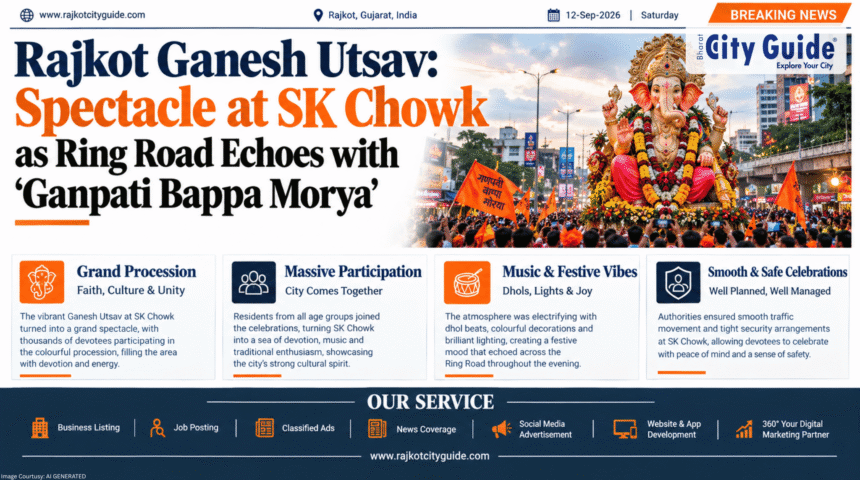
Marking a high-octane beginning to this year’s festivities, the Rajkot Ganesh Utsav witnessed a grand arrival procession at SK Chowk, located along the bustling Ring Road area in Gandhigram. Devotees gathered in massive numbers as the idol of Lord Ganesha was brought to the pandal amidst thunderous dhol-nagada beats, synchronized LED light shows, and a breathtaking fireworks display. The air resonated with high-pitched chants of “Ganpati Bappa Morya,” turning the entire Ring Road stretch into an ocean of festive joy.
This grand welcome at SK Chowk highlights how the Rajkot Ganesh Utsav continues to grow in scale, creativity, and community involvement year after year. Beyond the devotional rituals, such public celebrations act as social unifying events that bring together citizens of all age groups to celebrate regional culture, faith, and shared harmony.
What is Rajkot Ganesh Utsav? Events & Festivals in India | A Ministry of Tourism Initiative
The Rajkot Ganesh Utsav refers to the annual ten-day public festival celebrated across Rajkot city to commemorate the birth of Lord Ganesha. Inspired historically by Lokmanya Tilak’s movement to transform private Ganesh worship into a public social gathering (Sarvajanik Ganeshotsav), Rajkot has developed its own rich tradition of public pandals.
Events & Festivals in India | A Ministry of Tourism Initiative
+--------------------------------------------------------------------------+
|                  RAJKOT GANESH UTSAV PANDAL ECOSYSTEM                     |
+--------------------------------------------------------------------------+
                                     |
    +--------------------------------+--------------------------------+
    |                                |                                |
    v                                v                                v
[ FAMOUS CITY PANDALS ]     [ CULTURAL PROGRAMMING ]     [ CIVIC & SAFETY RULES ]
- Trikonbaug Ka Raja         - Daily Evening Maha Aarti   - Eco-Friendly Idols
- SK Chowk Ka Raja           - Cultural Raas-Garba        - Traffic Management
- Serveshwar Chowk Ka Raja   - Community Bhajans          - Fire Safety Standards
Iconic Features of the Festival in Rajkot
- Sarvajanik Pandals: Neighborhood associations (Yuvak Mandals) build elaborate themed shrines replicating famous Indian temples or national monuments.
- Grand Aagman Processions: The arrival (Aagman) of Ganesha idols is celebrated with musical troupes, traditional nasik dhol, confetti cannons, and firework shows.
- Daily Cultural Evenings: Pandals host daily Maha Aartis, devotional music nights (Bhajan Sandhyas), traditional Raas-Garba preview nights, and blood donation drives.
- Grand Visarjan Rallies: On Anant Chaturdashi, massive immersion rallies head toward designated eco-friendly water bodies or municipal immersion tanks across the city.
Why This News is Important
The grand Aagman celebration at SK Chowk carries significant cultural, social, and civic relevance for Rajkot:
1. Highlighting the Scale of Neighborhood Pandals
While central hubs like Trikonbaug have historically drawn major crowds, residential and arterial hubs like SK Chowk on Ring Road have emerged as major cultural centers, showcasing how festive energy is distributed throughout the city.
2. Fusion of Tradition with Modern Production
The use of professional DJ setups, intelligent moving-head light shows, and structured pyrotechnics alongside traditional dhol-nagada players reflects how contemporary youth mandals are modernizing festival celebrations.
3. Economic Stimulus for Regional Vendors
Grand welcome ceremonies generate immediate economic activity for local decorators, sound engineers, light technicians, traditional folk musicians, flower vendors, and sweet makers (mithai shops).
Background Information
Ganesh Utsav celebrations in Rajkot have evolved steadily over the last three decades. Originally confined to small neighborhood streets and traditional Marathi community centers like Maharashtra Mandal, the festival expanded into large public intersections as the city expanded along major arterial routes like Yagnik Road, Kalawad Road, University Road, and 150 Feet Ring Road.
[ Traditional Home & Small Street Idols ]
                   |
                   v
[ Emergence of Central City Pandals (e.g., Trikonbaug) ]
                   |
                   v
[ Expansion to Ring Road & Outer Suburbs (SK Chowk, Pushkardham) ]
                   |
                   v
[ Modern Era: Themed Shrines, Fireworks & Digital Live-Streaming ]
SK Chowk, located in the Gandhigram area along the Ring Road, hosts the famous Sankalp Siddh Dham Ganesh Utsav. Over the years, the SK Chowk Ganesh Mandal has built a strong reputation for hosting elaborate arrival processions and creative pandal themes that draw thousands of visitors nightly from Gandhigram, 150 Feet Ring Road, Raiya Road, and neighboring suburbs.
Key Highlights
- Vibrant Arrival Ceremony: Lord Ganesha’s idol was brought to the SK Chowk pandal with high enthusiasm and spiritual fervor.
- Fireworks and Light Show: The welcome event featured an extensive pyrotechnic cracker display and specialized high-beam color lighting.
- Traditional Beats: High-energy dhol-nagada teams performed traditional rhythms, keeping hundreds of dancing devotees energized along Ring Road.
- Resounding Devotional Chants: The entire Ring Road corridor echoed with chants of “Ganpati Bappa Morya, Mangal Murti Morya.”
- Massive Community Gathering: Hundreds of local residents, families, and youth groups gathered at SK Chowk to participate in the opening Aagman procession. YouTube
Detailed Explanation of the Event
The welcome procession at SK Chowk started during the evening hours as the beautifully sculpted idol of Lord Ganesha approached the Ring Road intersection. Youth volunteers from the local Ganesh Mandal coordinated the movement, managing both crowd flow and traffic alignment alongside local police personnel.
+--------------------------------------------------------------------------+
|                       SK CHOWK AAGMAN EVENT TIMELINE                     |
+--------------------------------------------------------------------------+
| Phase                 | Event Activity                                   |
+-----------------------+--------------------------------------------------+
| Pre-Procession        | Gathering of devotees & dhol-nagada setup        |
| Ring Road Procession  | Idol arrival with DJ beats & traditional drums   |
| Grand Welcome         | Synchronization of pyrotechnics & light show     |
| Pandal Sthapana       | Sacred enthronement of the idol at SK Chowk      |
| Inaugural Aarti       | First formal evening prayer & Prasad distribution|
+-----------------------+--------------------------------------------------+
As the procession reached the main SK Chowk junction, the venue transformed into a visual spectacle. Intelligent moving lights illuminated the surrounding structures, while professional cracker displays lit up the night sky. Devotees of all ages joined in traditional folk dancing to the rhythmic pounding of dhol-nagada drums.
Upon reaching the decorated pandal, ritualistic chanting and prayers accompanied the formal installation (Sthapana) of the idol. The event concluded with the first formal evening Aarti and the distribution of Prasad to the gathered crowd, marking the official opening of ten days of continuous devotional programming at SK Chowk.
Importance and Features of Public Celebrations
The public celebration of the Rajkot Ganesh Utsav serves multiple social, cultural, and spiritual purposes:
1. Strengthening Neighborhood Unity
Public pandals rely entirely on volunteer effort. Young people work together for weeks beforehand to plan logistics, build stages, organize decorations, and manage security, building strong neighborhood ties.
2. Platform for Local Performing Arts
Pandal stages regularly host local folk artists, children’s drama groups, devotional singers, and traditional Raas-Garba performers, giving local talent a platform ahead of the upcoming Navratri festival.
3. Promoting Social Awareness Campaigns
Many modern mandals in Rajkot use their decorative displays to highlight relevant social topics, such as environmental protection, water conservation, traffic rules, and organ donation awareness.
How It Impacts Different Audiences
| Stakeholder Group | Direct Impact & Event Relevance |
|---|---|
| Devotees & Families | Provides accessible spiritual venues for evening prayers, cultural recreation, and family outings. |
| Local Youth & Volunteers | Offers valuable experience in event management, leadership, crowd coordination, and community service. |
| Small Businesses & Retailers | Increases evening footfall for nearby snack vendors, cold drink stalls, flower shops, and local transportation. |
| City Traffic & Police Dept. | Requires active traffic diversion plans, night patrolling, and crowd management along busy Ring Road arteries. |
Expert Insights and Cultural Perspective
Cultural commentators and community leaders in Saurashtra note that Ganesh Utsav acts as a festive bridge connecting the holy month of Shravan with the mega-celebrations of Navratri and Diwali.
“The public celebration of Ganeshotsav in cities like Rajkot has seamlessly integrated Gujarati folk enthusiasm with traditional devotional practices. The sight of youth dancing to dhol beats while upholding sacred rituals shows how cultural heritage adapts dynamically across generations.”
Event managers also point out that Rajkot’s pandal organizers have increasingly adopted eco-friendly clay (Shaddu Mati) idols and energy-efficient LED lighting systems, balancing grandeur with environmental responsibility.
Challenges and Civic Considerations
While grand processions bring immense joy, large-scale public celebrations also present civic challenges that require careful management:
- Traffic Congestion on Arterial Roads: Ring Road is a major transit corridor. Balancing slow-moving festive processions with regular vehicle traffic demands continuous police coordination.
- Noise Level Regulations: Managing sound output from high-decibel speaker systems and fireworks late at night requires strict adherence to permissible decibel limits.
- Post-Event Waste Management: Cleaning up paper confetti, cracker debris, and food packaging immediately after processions is necessary to keep public roads clean.
Future Outlook
With the idol successfully installed at SK Chowk, the Rajkot Ganesh Utsav enters its peak ten-day festive cycle:
- Daily Nightly Evening Programs: The SK Chowk pandal will host regular Maha Aartis, devotional music nights, and cultural performances.
- Weekend Crowds: Pandal visits across Rajkot are expected to peak over the weekend as families go on citywide Pandal Darshan tours.
- Eco-Friendly Visarjan Arrangements: The Rajkot Municipal Corporation (RMC) will set up artificial immersion ponds across various zones to ensure safe and environmentally responsible idol immersions on Visarjan day.
Frequently Asked Questions (FAQs)
1. Where took place the grand Ganesh Utsav welcome mentioned in the news?
The grand welcome procession featuring fireworks, lights, and dhol-nagada took place at SK Chowk along the Ring Road area in Rajkot.
2. What is the focus keyword of this celebration?
The main focus keyword is Rajkot Ganesh Utsav.
3. What were the main attraction elements during the SK Chowk Ganesha Aagman?
The procession featured traditional dhol-nagada drum performances, intelligent LED lighting, professional pyrotechnic fireworks, and high-energy devotional dancing by local youth.
4. What is the famous pandal name located at SK Chowk?
SK Chowk in Gandhigram, Rajkot, is widely known for hosting the Sankalp Siddh Dham Ganesh Utsav (SK Chowk Ka Raja).
5. How long does the Ganesh Utsav festival last in Rajkot?
The public festival lasts for ten days, starting on Ganesh Chaturthi and concluding with idol immersion (Visarjan) on Anant Chaturdashi.
6. What safety and civic measures are implemented during public Ganesh Utsavs in Rajkot?
Local authorities enforce traffic diversions, set decibel guidelines for sound systems, deploy police security at major pandals, and encourage eco-friendly clay idols.
7. What other major Ganesh pandals are famous in Rajkot? Events & Festivals in India | A Ministry of Tourism Initiative
Other major public pandals include Trikonbaug Ka Raja, Sarveshwar Chowk Ka Raja (Yagnik Road), Pushkardham Ka Raja, and Maharashtra Mandal.
Events & Festivals in India | A Ministry of Tourism Initiative
Conclusion
The spectacular arrival of Lord Ganesha at SK Chowk highlights the spirit of the Rajkot Ganesh Utsav. By combining traditional dhol-nagada music, devotional chants, dynamic light shows, and joyful fireworks displays, the celebration along Ring Road set an energetic tone for the ten-day festival.
As thousands of devotees prepare to visit pandals across the city, events like the one at SK Chowk remind us of the power of community festivals in fostering unity, joy, and cultural identity across Rajkot.