Introduction
As urban areas expand across India, traffic congestion and localized gridlocks have become part of daily commutes. Major tier-2 and tier-3 cities are dealing with skyrocketing vehicle ownership that far outpaces current public infrastructure. In Gujarat, a state known for rapid economic growth and urban migration, cities like Ahmedabad, Surat, and Vadodara frequently experience heavy road blockages. Amidst these growing pains, Rajkot has taken a pioneering step. The city administration has introduced an innovative blueprint aimed at transforming the local urban environment. This plan will establish the Rajkot free parking facility network, making Rajkot the first major city in Gujarat to offer free organized parking to its citizens.
- Introduction
- What is the Rajkot Free Parking Facility?
- Why This News is Important
- Background Information
- Key Highlights
- Detailed Explanation of the Event
- Benefits, Features, and Importance
- How It Impacts People
- Expert Insights and Industry Perspective
- Challenges and Limitations
- Future Outlook
- Frequently Asked Questions (FAQs)
- Conclusion
This policy change comes at an important time. Managing traffic flow is no longer just about widening roads or installing automated signals; it is deeply tied to how and where vehicles are stored when not in use. Recent urban planning studies reveal that cruising for parking spots accounts for a significant portion of peak-hour traffic jams. By offering a designated Rajkot free parking facility across major commercial zones, the local municipal corporation aims to eliminate illegal roadside parking, clear key arterial roads, and provide a stress-free experience for commuters. This article examines the details of this initiative, its background, its expected impacts on residents, and the broader challenges and future outlook for urban transport planning.
What is the Rajkot Free Parking Facility?
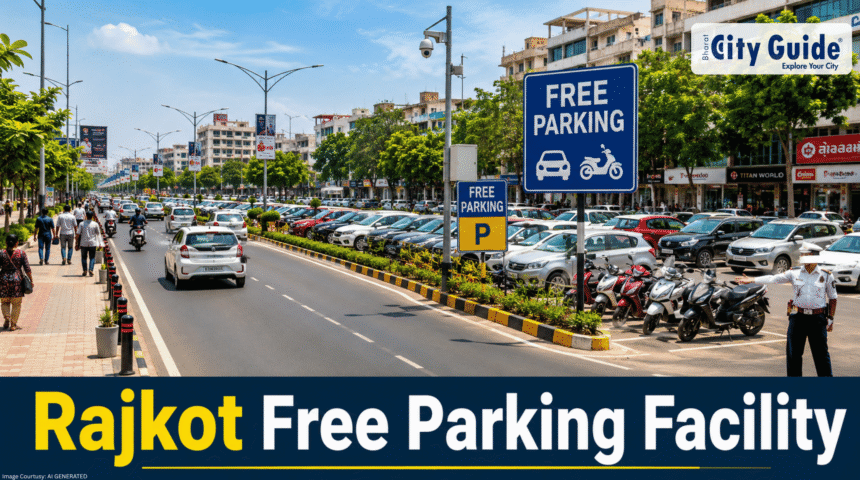
The Rajkot free parking facility is an urban infrastructure initiative designed to provide designated spaces for two-wheelers and four-wheelers without charging any parking fees. Traditionally, municipal corporations across Gujarat rely on a “pay-and-park” model to manage parking demand, generate municipal revenue, and discourage excessive private vehicle use in crowded market districts. Rajkot is reversing this approach.
Under this new policy, the Rajkot Municipal Corporation (RMC), in coordination with state urban planning bodies and local traffic police, is designating multiple public plots, multi-level parking structures, and reserved roadside zones as free parking zones. The primary goal is to shift vehicles off active driving lanes and into structured parking spaces. By removing the financial barrier and transaction times of paid parking tokens, the city hopes to encourage immediate compliance from drivers, resulting in clearer roads and smoother traffic flow.
Why This News is Important
This development represents a major shift in how municipal bodies look at public space and traffic management. For years, conventional urban development models have suggested that the only way to limit vehicle usage and clear crowded city centers is by increasing the financial cost of driving, such as through high parking fees or congestion pricing. Rajkot’s decision to offer a free parking network challenges this standard practice.
This initiative matters for several reasons:
- A New Model for Gujarat: It sets an unconventional precedent for urban governance across Gujarat. If successful, it could offer a new blueprint for other fast-growing cities facing similar traffic problems.
- Economic Boost for Local Businesses: High parking fees or a lack of accessible parking often drive shoppers away from traditional downtown markets toward modern suburban malls with private garages. Free, structured municipal parking can help restore foot traffic to local high-street vendors and businesses.
- Direct Financial Relief for Citizens: Amid rising fuel prices and general inflation, eliminating daily or hourly parking fees offers direct, practical savings for regular commuters, delivery agents, and commercial drivers.
Background Information
To understand why the Rajkot free parking facility is such a notable development, it helps to examine the city’s historical growth and its changing relationship with vehicle management. Rajkot is the fourth-largest city in Gujarat and serves as the economic hub of the Saurashtra region. Known for its small-scale casting, forging, and automobile component industries, the city has experienced rapid industrial and population growth over the past few decades.
This economic growth brought an explosion in private vehicle ownership. Because public transit systems historically lagged behind industrial expansion, scooters, motorcycles, and compact cars became the preferred modes of transport for most residents. The city’s older core features narrow, winding streets that were never built for large volumes of modern automobile traffic.
Over the past two decades, various municipal reports and external studies, including research funded by international bodies like the Asian Development Bank (ADB), consistently pointed out that open, unregulated roadside parking was shrinking effective road capacity by 20% to 30%. In response, the city tried several approaches over the years, including contracting out private “pay-and-park” sites and imposing strict fines for parking violations. However, these systems faced challenges: uneven enforcement, public resistance to parking fees, and a lack of clear signage often led drivers to risk parking illegally on the roadside rather than using authorized lots. The transition to an organized, completely free parking model aims to address these long-standing behavioral and logistical hurdles directly.
Key Highlights
The implementation framework for this new traffic initiative features several key details:
- Pioneering Move: Rajkot is set to become the first city in the state of Gujarat to implement a widespread free parking system across key urban zones.
- Targeted Traffic Reduction: The primary objective is to clear cluttered arterial roads, boosting overall traffic speeds and cutting down travel times.
- Multi-Zone Coverage: The policy covers major commercial high streets, transit terminals, and high-density markets prone to daily gridlock.
- Integrated Safety & Surveillance: Free parking lots will feature active monitoring from local authorities and traffic police to ensure vehicle safety and prevent abandonment.
- Coordinated Infrastructure Support: The initiative runs alongside ongoing road-widening projects, smart signaling upgrades, and the removal of unauthorized roadside encroachments.
Detailed Explanation of the Event
The launch of the free parking framework comes after careful planning by local administrative bodies looking to address Rajkot’s growing traffic concerns. Daily commuting on key corridors like the 150 Feet Ring Road, Yagnik Road, and the busy market sectors near the old city has become increasingly difficult. Double-parking and irregular roadside stops often turn three-lane roads into single-lane bottlenecks, causing delays, higher fuel consumption, and localized air pollution.
Recognizing these issues, the city administration chose to rethink its approach. Instead of treating public parking purely as a source of revenue, officials are treating parking space as an extension of the public road infrastructure. Under this program, the municipal corporation identifies underutilized government lands, open public spaces, and existing multi-level parking structures to convert them into free parking zones.
To ensure the new system functions smoothly, the initiative relies heavily on coordination with the local traffic police. Clear signage, painted road markings, and physical barriers will guide drivers toward the newly designated free lots. At the same time, enforcement in nearby “No Parking” zones will be tightened. Drivers will no longer have the excuse of high fees or a lack of spaces; anyone continuing to park illegally on main thoroughfares will face quick fines and vehicle towing. By combining clear, free alternatives with strict enforcement, the city aims to clean up its main streets.
Benefits, Features, and Importance
The widespread roll-out of free parking facilities offers several clear benefits for the city’s infrastructure and community life:
1. Improved Road Capacity and Traffic Flow
When cars and two-wheelers move into dedicated off-street parking facilities, the full width of public roads opens up for moving traffic. Removing parked vehicles eliminates the bottlenecks caused by drivers slowing down to find spots or pulling out of roadside spaces, resulting in smoother traffic speeds across major corridors.
2. Lower Emissions and Fuel Savings
A significant amount of urban fuel consumption comes from drivers circling blocks looking for open parking spaces. By providing well-marked, easily accessible free parking areas, the city helps drivers park quickly, reducing unnecessary driving, saving fuel, and lowering localized exhaust emissions.
3. Better Pedestrian Safety
In crowded shopping districts, a lack of parking often leads drivers to park on sidewalks, forcing pedestrians to walk out into active traffic lanes. Clear, organized parking lots keep sidewalks open and safe for foot traffic, reducing the risk of pedestrian accidents.
4. Positive Economic Impact on Main Street Markets
By making trips to traditional markets more convenient and affordable, the free parking policy helps local brick-and-mortar shops compete more effectively with suburban shopping centers, preserving the vibrant commercial character of the city center.
How It Impacts People
The shift to an organized free parking model affects various groups across the community in distinct ways:
- Daily Commuters and Professionals: For residents who drive to work every day, the initiative provides dependable parking options without the burden of accumulating daily fees, making commuting more predictable and affordable.
- Local Business Owners and Shopkeepers: Merchants stand to gain from clearer shop fronts and more organized customer parking. It makes shopping districts more accessible and welcoming to visitors.
- Delivery Personnel and Logistics Providers: Gig-economy workers, courier drivers, and local delivery agents can make quick stops in designated zones without the risk of getting parking tickets, speeding up deliveries.
- Pedestrians and Senior Citizens: Clearer sidewalks and orderly streets make walking through downtown areas a much safer, more comfortable experience for more vulnerable residents.
Expert Insights and Industry Perspective
Urban transport planners and civil engineers often highlight that managing parking effectively is key to solving city traffic problems. Across many developing economies, cities face challenges when they look at road capacity without considering parking demand. Industry experts generally point out that clear, easily accessible off-street parking options are essential for keeping urban roads functional.
At the same time, transport specialists emphasize that for a free parking policy to remain sustainable over the long term, it must be paired with smart technology and strong management. Without clear time limits or active monitoring, free parking spaces can easily end up occupied by long-term vehicle storage or abandoned cars, reducing availability for short-term visitors. Experts suggest using real-time occupancy tracking, digital signage, and clear time-use rules to keep these public assets turning over efficiently.
Challenges and Limitations
While the policy offers clear advantages, implementing it successfully comes with several real-world challenges:
- Preventing Long-Term Vehicle Hoarding: Without regular checks, free spaces risk being misused by commercial operators or private owners looking for free long-term vehicle storage, which reduces availability for regular shoppers and commuters.
- Maintenance and Operational Costs: Operating large parking lots—including lighting, cleaning, security, and CCTV monitoring—requires continuous funding. The municipal corporation must cover these expenses from its general budget without the benefit of direct parking revenues.
- Shifting Public Behavior: Getting drivers to change long-standing habits and park in an organized lot a short walk away, rather than stopping directly in front of a shop door, requires persistent public education and consistent traffic enforcement.
- The Risk of Encouraging More Driving: Some transport experts warn that making parking completely free and easy can make driving private vehicles more attractive, potentially leading to higher overall traffic volumes over time.
Future Outlook
The coming months will serve as a valuable testing period for Rajkot’s free parking strategy. Urban planners, neighboring municipal leaders, and state policy makers will likely watch the results closely to see how it affects traffic congestion and public compliance.
If the initiative succeeds in clearing key corridors and winning public support, it could prompt a broader rethink of parking management across Western India. The city may look to integrate smart parking apps that show available spaces in real-time, helping drivers find spots even faster. For Rajkot, this initiative represents a critical step toward creating a cleaner, more organized, and modern urban environment.
Frequently Asked Questions (FAQs)
1. What exactly is the Rajkot free parking facility initiative?
It is a comprehensive city traffic management policy implemented by local authorities where designated public plots and multi-level structures are opened for free vehicle parking to clear main roads.
2. Is this free parking facility applicable across the entire city?
The policy targets major commercial areas, busy corridors, and markets prone to regular traffic jams, with plans to expand across additional high-density zones.
3. How will free parking help solve Rajkot’s traffic issues?
By providing clear, cost-free parking spaces, the city aims to remove cars and two-wheelers from active driving lanes, eliminating roadside bottlenecks and widening the space available for moving traffic.
4. Will there be security measures at these free parking zones?
Yes, the city plans to include lighting, clear markings, and coordination with local traffic police and security monitoring to ensure a safe environment for parked vehicles.
5. Can vehicles be parked indefinitely in these free zones?
No, the spaces are designed for daily commuters, shoppers, and visitors. The city will monitor lots to prevent long-term vehicle vehicle hoarding or abandonment.
6. How will the city handle drivers who still park illegally on the roadside?
The introduction of the free parking lots will be backed by stricter enforcement. Since drivers have access to free authorized parking, vehicles left illegally in “No Parking” zones will face swift fines and towing.
Conclusion
The introduction of the Rajkot free parking facility marks an important and innovative step forward for urban transport planning in Gujarat. By addressing the root causes of roadside congestion and offering a free, accessible alternative, the Rajkot Municipal Corporation is taking a practical, citizen-first approach to updating its infrastructure.
While managing operational costs and ensuring proper space turnover will require ongoing effort, the potential benefits—clearer roads, safer pedestrian paths, lower emissions, and supported local businesses—make this a model worth watching. If successful, Rajkot’s bold policy could serve as an inspiring example for growing cities across India, proving that smart public space management is a powerful tool for building more livable communities.