Introduction
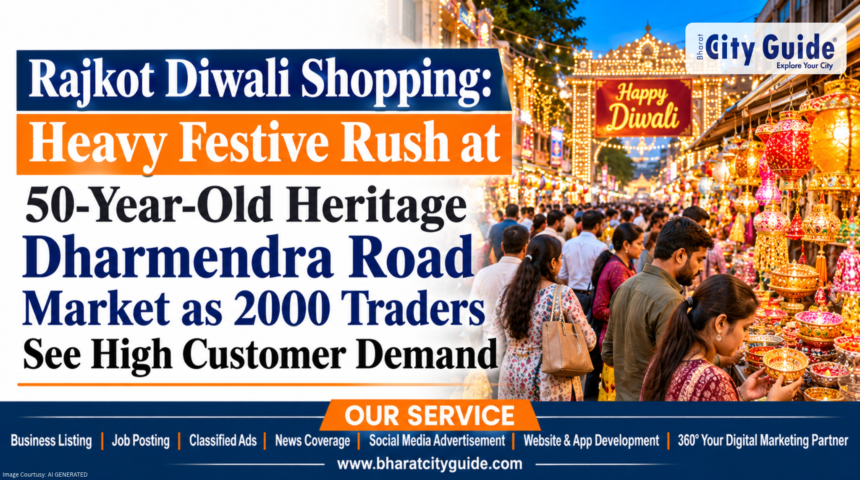
As the festive atmosphere of Deepavali reaches its peak across Saurashtra, Rajkot Diwali Shopping witnessed an incredible surge in consumer activity on the final Sunday preceding the festival of lights. The heart of the city’s traditional commercial hub—the historic 50-year-old Dharmendra Road heritage market—was packed with thousands of eager shoppers from early morning until late into the night. Operating across more than 2,000 retail shops, traditional textile houses, bangdi (bangle) bazaars, and novelty outlets, merchants experienced non-stop customer footfalls, signaling an enthusiastic start to the regional holiday retail season.
- Introduction
- What is Rajkot Diwali Shopping?
- Why This News is Important
- Background Information
- Key Highlights
- Detailed Breakdown of Market Trends and Customer Behavior
- Benefits and Importance of Supporting Local Heritage Markets
- How It Impacts Citizens, Merchants, and Traffic Management
- Expert Insights and Retail Industry Perspective
- Essential Shopping Guidelines for Visitors
- Frequently Asked Questions (FAQs)
- Conclusion
What makes this year’s pre-Diwali market surge particularly notable is the unyielding enthusiasm displayed by consumers despite an average 20% to 25% price increase across textiles, festive lighting, decorative artifacts, and traditional footwear. Rising raw material costs, freight charges, and production inflation have pushed retail prices higher across major wholesale suppliers. However, the cultural desire to celebrate Deepavali with new clothes, vibrant home decor, and traditional gifts has completely overshadowed inflationary concerns, keeping market momentum strong.
The commercial energy spilling across Dharmendra Road, Lakhajiraj Road, Gundawadi, and Bangdi Bazar demonstrates the deep economic resilience and cultural spirit of “Rangilu Rajkot”. Shoppers from across Rajkot district as well as neighboring towns like Morbi, Jamnagar, Junagadh, and Amreli have flooded the heritage corridors to complete their annual holiday purchases. The detailed market report below breaks down footfall dynamics, trade volume, product trends, and security management across Rajkot’s primary traditional shopping district.
What is Rajkot Diwali Shopping?
Rajkot Diwali Shopping refers to the annual retail buying spree undertaken by millions of residents across Saurashtra in the weeks leading up to the festival of Deepavali. As the economic and commercial capital of the Saurashtra region, Rajkot serves as the primary regional distribution center for clothing, ethnic wear, imitation jewelry, footwear, home decorations, brassware, and festive confectionery.
+-----------------------------------------------------------------------+
|             RAJKOT DIWALI SHOPPING MARKET AT A GLANCE                 |
+--------------------------+--------------------------------------------+
| Key Market Hub           | Dharmendra Road Heritage Market (50+ Yrs)  |
| Total Retail Establishments| Over 2,000 Active Shops & Traditional Outlets|
| Peak Shopping Period     | Final Sunday & Week Preceding Dhanteras    |
| Average Price Escalation | 20% to 25% Increase Across Categories      |
| Geographic Footprint     | Rajkot City & Surrounding Saurashtra Hubs  |
| Top Selling Categories   | Bandhani Sarees, Ethnic Wear, Decor & Jewelry|
+--------------------------+--------------------------------------------+
Key features defining the Rajkot festive market ecosystem include:
- Heritage Retail Density: Concentrated commercial streets like Dharmendra Road, Para Bazar, and Lakhajiraj Road housing over 2,000 small, medium, and legacy retail establishments.
- Regional Sourcing Hub: Direct access to traditional Jetpur printed sarees, Kutch handwork textiles, Jamnagar Bandhani, and local Rajkot imitation jewelry at competitive prices.
- Pedestrian Market Culture: Dense, narrow shopping lanes where families spend hours browsing street stalls and historic multi-story stores side-by-side.
- Cross-District Consumer Influx: Drawing high-volume seasonal footfalls not only from urban municipal wards but also from rural farming communities across Saurashtra.
Why This News is Important
The intense shopping rush recorded along Dharmendra Road holds immense economic, civic, and social significance for Gujarat’s retail economy. First, Diwali retail performance serves as a primary barometer for overall regional economic health. A strong turnover across 2,000 retail shops proves that consumer purchasing power and liquidity remain robust despite broader inflationary pressures.
Second, the survival and thriving performance of a 50-year-old heritage market in the age of modern e-commerce and air-conditioned shopping malls highlights the lasting value of traditional retail ecosystems. Consumers continue to prefer the personal touch, bargaining flexibility, physical fabric inspection, and vibrant atmosphere offered by traditional bazaars.
Finally, the pre-festive commercial surge provides vital financial support for thousands of small merchants, street vendors, textile workers, and local transport operators. The revenue generated during this 15-day peak period sustains small business owners throughout the year, reinforcing Rajkot’s position as Saurashtra’s commercial engine.
Background Information
Dharmendra Road, established over five decades ago in the heart of Rajkot’s old city area, has long stood as the epicenter of traditional retail trade in Saurashtra. Intersecting with historical landmarks like Sir Lakhajiraj Road, Danapith, and Gheekanta Road, the market evolved from a localized textile lane into a comprehensive commercial district.
+-----------------------------------------------------------------------+
|                HISTORICAL EVOLUTION OF DHARMENDRA ROAD                |
+--------------------------+--------------------------------------------+
| Timeline / Era           | Commercial Development & Market Focus      |
+--------------------------+--------------------------------------------+
| 1970s - Establishment    | Early textile trading lanes & cloth merchants|
| 1990s - Expansion        | Growth of Bangdi Bazar & imitation jewelry |
| 2010s - Modernization    | Multi-brand retail stores alongside stalls  |
| 2026 - Heritage Status   | 2,000+ shops driving peak regional retail  |
+--------------------------+--------------------------------------------+
Historically, families from across rural Gujarat traveled to Dharmendra Road before major festivals and wedding seasons due to its unmatched variety and wholesale-cum-retail pricing structure. Over the decades, while modern shopping complexes emerged along Yagnik Road and Kalavad Road, Dharmendra Road retained its undisputed crown for authentic festival shopping, offering everything from traditional Bandhani sarees to intricate clay diyas and festive LED lighting under one roof.
Key Highlights
- Massive Sunday Footfall: Thousands of shoppers thronged Dharmendra Road on the final Sunday before Diwali.
- 2,000+ Traders Active: Over two thousand retail shops and traditional stalls recorded continuous customer transactions.
- Overcoming 25% Price Rise: Customer buying enthusiasm remained strong despite a 20% to 25% inflationary price rise across goods.
- Top Selling Items: High demand recorded for ready-made garments, ethnic wear, Bandhani sarees, festive LED lights, and home decor items.
- Inter-District Shoppers: Heavy influx of buyers from neighboring districts including Morbi, Jamnagar, Junagadh, and Surendranagar.
- Strict Police & Traffic Deployment: City police deployed foot patrols, temporary barricades, and CCTV monitoring to manage dense crowds and prevent pickpocketing.
Detailed Breakdown of Market Trends and Customer Behavior
The pre-Diwali market rush along Dharmendra Road demonstrates distinct consumer buying behaviors across various product categories:
1. Apparel and Traditional Textiles
The clothing and readymade garment sector accounts for the largest share of festive spending. Traditional Jetpur printed cottons, Kutch mirror-work dresses, Jamnagar Bandhani sarees, and readymade festive wear for children experienced massive demand. Merchants reported that while fabric prices increased by roughly 20% due to higher yarn and processing costs, families prioritized buying complete festive wardrobes for the entire household.
2. Imitation Jewelry and Bangdi Bazar
Rajkot’s world-famous imitation jewelry sector saw heavy footfalls, particularly in the adjacent Bangdi Bazar corridor. Shoppers flocked to purchase gold-plated bangles, Kundan necklace sets, anti-tarnish daily wear jewelry, and traditional bridal accessories at a fraction of the cost of real precious metals.
+-----------------------------------------------------------------------+
|                    CATEGORY-WISE RETAIL DEMAND MATRIX                 |
+--------------------------+--------------------------------------------+
| Product Category         | Key Driving Factors & Price Shift          |
+--------------------------+--------------------------------------------+
| Festive Apparel & Sarees | Bandhani & ethnic wear (+20% Price Rise)   |
| Imitation Jewelry        | High real gold rates driving alternative demand|
| Home Lighting & Decor    | LED gates, torans, lanterns & rangoli art  |
| Footwear & Accessories   | Mojris, leather footwear & handbag stalls  |
+--------------------------+--------------------------------------------+
3. Home Decoration, Lighting, and Festive Essentials
Stalls selling artificial flower garlands (torans), decorative door hangings, acrylic rangoli stencils, scented candles, and energy-efficient LED string lights reported brisk sales. Homeowners prioritized refreshing home interiors ahead of Lakshmi Puja and New Year (Bestu Varas) celebrations.
Benefits and Importance of Supporting Local Heritage Markets
Shopping at traditional heritage centers like Dharmendra Road offers wide-ranging economic and social benefits:
1. Preserving Local Cultural Heritage and Micro-Commerce
Patronizing traditional markets sustains small independent shopkeepers, family-run establishments, and street vendors, keeping traditional craftsmanship and regional commerce alive.
2. Unmatched Variety and Competitive Pricing
With over 2,000 competing traders located within a compact area, buyers enjoy access to immense product variety, enabling easy price comparisons and traditional bargaining options.
3. Direct Economic Boost for Regional Artisans
Sales at Dharmendra Road directly benefit rural artisans, handloom weavers in Jetpur and Kutch, and local jewelry makers who supply stock to these retail outlets.
4. Vibrant Community and Festival Experience
The festive lights, bustling crowds, street food aromas, and lively interactions create an irreplaceable sense of community joy that digital shopping apps cannot replicate.
How It Impacts Citizens, Merchants, and Traffic Management
The high-density shopping surge creates practical operational impacts across different groups:
- For Shoppers and Families: Delivers a rewarding festive shopping experience, though requiring patience while navigating crowded pedestrian lanes and parking vehicles.
- For Local Merchants and Retailers: Provides a vital annual revenue peak, clearing seasonal inventory and generating strong cash flow for the upcoming winter wedding season.
- For Street Vendors and Artisans: Offers maximum sales volume, allowing small-scale sellers of clay lamps, flowers, and festive novelties to earn essential holiday income.
- For City Police and Traffic Branches: Demands continuous crowd management, vehicle diversions around Para Bazar and Ghee Kanta Road, and anti-pickpocketing measures.
Expert Insights and Retail Industry Perspective
Retail trade analysts and commercial association leaders view the booming Dharmendra Road footfalls as proof of strong festive consumer sentiment in Gujarat. According to market experts, while online e-commerce platforms handle routine electronics and branded apparel, traditional festival shopping remains deeply rooted in physical retail touchpoints.
Commercial experts note that the 20% to 25% price increase was largely absorbed by consumers because Deepavali shopping is viewed as an essential cultural priority rather than a discretionary luxury. Families budget specifically throughout the year to ensure they can purchase new clothes, home decorations, and gifts during this auspicious week.
Furthermore, trade leaders emphasize the need for continued civic support—including dedicated multi-level parking plazas, improved street lighting, and regular pedestrian management—to keep Rajkot’s historic heritage markets competitive and accessible for future generations.
Essential Shopping Guidelines for Visitors
To navigate the crowded Dharmendra Road market safely and comfortably during peak festive days, shoppers should follow these practical guidelines:
- Utilize External Designated Parking: Park two-wheelers and four-wheelers at official parking lots near Dharmendra Road entrances or surrounding main roads to avoid getting stuck in narrow lanes.
- Stay Alert Against Pickpocketing: Keep wallets, mobile phones, and gold jewelry secure in zipped cross-body bags, remaining vigilant in dense crowd choke points.
- Shop During Off-Peak Hours: Visit the market during early morning hours (between 10:00 AM and 1:00 PM) to browse shops comfortably before afternoon and evening crowds build up.
- Carry Physical Cash and Mobile Payment Apps: Keep both cash and digital payment apps ready, as high mobile network traffic in dense crowds can occasionally slow down UPI transactions.
Frequently Asked Questions (FAQs)
Why is Dharmendra Road famous for Diwali shopping in Rajkot?
Dharmendra Road is a 50-year-old heritage market hub housing over 2,000 shops known for providing an unmatched variety of ethnic wear, sarees, bangles, imitation jewelry, and festive decor at affordable prices.
How much did prices rise during this year’s pre-Diwali market rush?
Goods across textiles, footwear, and home decor experienced an average price escalation of 20% to 25% due to raw material and transportation inflation.
Did the price increase impact customer footfalls at the market?
No, customer enthusiasm remained completely uninhibited, with thousands of shoppers crowding the market on the final Sunday before Diwali to complete their holiday shopping.
What are the main items people buy at Dharmendra Road during Diwali?
Popular purchases include Jamnagar Bandhani sarees, Jetpur printed fabrics, traditional dresses, Bangdi Bazar bangles, imitation jewelry, festive LED lights, and home decorative items.
Where is the Dharmendra Road market located in Rajkot?
Dharmendra Road is located in the central old city area of Rajkot, connecting with major commercial lanes like Lakhajiraj Road, Para Bazar, and Gheekanta Road.
How are city authorities managing crowds and traffic in the area?
Rajkot city police have deployed additional foot patrols, established vehicle-free pedestrian zones, installed CCTV surveillance, and set up temporary parking advisories.
Is Dharmendra Road accessible for shoppers coming from outside Rajkot?
Yes, thousands of shoppers from neighboring Saurashtra districts visit Dharmendra Road annually, using central bus transport or private vehicles parked at designated city lots.
Conclusion
The overwhelming success of Rajkot Diwali Shopping along the historic Dharmendra Road market highlights the enduring strength of traditional retail and cultural celebration in Gujarat. Even in the face of a 20% to 25% price increase across consumer goods, the unwavering enthusiasm of over thousands of shoppers demonstrates that the festive spirit of Deepavali transcends economic challenges.
Across 2,000 bustling shops, the vibrant sights, sounds, and interactions of the 50-year-old market showcase the unique commercial identity of Rajkot.
As the festival of lights approaches, the high sales volume achieved across Dharmendra Road provides a vital boost for local merchants, artisans, and small business owners. This thriving retail activity reinforces Rajkot’s status as the beating heart of Saurashtra’s trade and culture. The historic market continues to shine bright, uniting generations of families in the shared joy of holiday shopping and festive togetherness.