Introduction
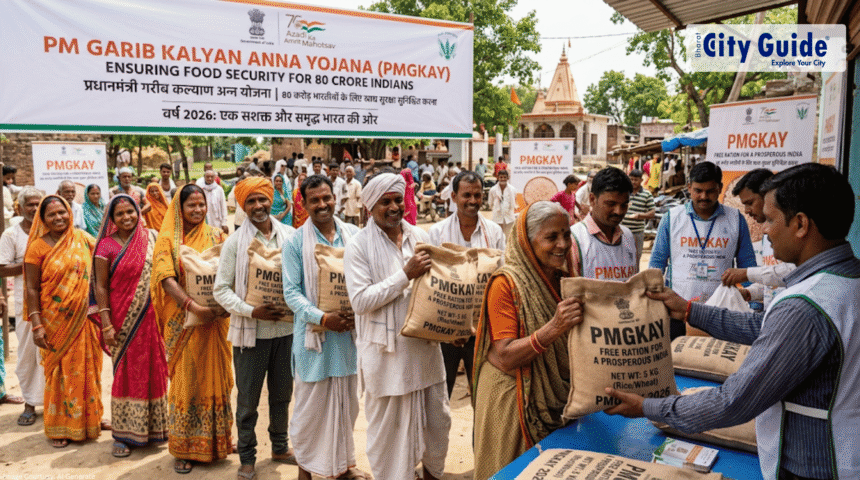
Food security forms the foundation of survival for millions in India. With 6.5% food inflation in 2025, many households faced financial stress, threatening nutrition for children and vulnerable groups. The PM Garib Kalyan Anna Yojana (PMGKAY), relaunched in 2022 and extended through 2029, ensures that 80 crore Indians continue to receive essential food grains without financial strain.
This programme, integrated with Aadhaar-based digitization, provides 5 kg of wheat or rice per person and 1 kg dal per family every month through the Public Distribution System (PDS), shielding families from market fluctuations and improving nutritional outcomes.
Policy Overview
Coverage and Outlay
- Beneficiaries: 81.35 crore NFSA cardholders (≈ two-thirds of India’s population)
- Monthly Ration: 5 kg wheat/rice per person + 1 kg dal per family
- Total Cost Since 2020: ₹11.8 lakh crore
- FPS Centers: 5.4 lakh fair price shops
- Digitization: Aadhaar-POS integration, 100% by 2025
- Latest Extension: Valid till 2029
Integration with Digital Systems
- Aadhaar ensures leak-proof delivery
- Portability across states allows migrant workers to access grains anywhere
- Real-time tracking prevents duplication and reduces ghost beneficiaries
Key Objectives and Provisions
Objectives
- Achieve zero hunger in alignment with SDG 2
- Ensure nutrition during crises like inflation, floods, or pandemics
- Reduce fiscal leakages via DBT (Direct Benefit Transfer) savings—₹2.7 lakh crore freed
- Enable One Nation One Ration Card portability
Provisions
- Active Cards: 80 crore NFSA cards
- Fortified Rice: Targeted 100% coverage by December 2025
- Flexi-Rations: Allows states to provide alternative cereals/legumes
- Priority Access: Women and youth via DBT-linked distribution
Policy in Simple Terms:
Free monthly grains at your nearest ration shop, scanned via Aadhaar—covering your family’s basic nutritional needs without lines or cash payments.
Who Is Affected and How
Rural Poor and BPL Families
- 80% beneficiaries belong to SC/ST/OBC households
- Ensures access for daily wage laborers, migrant families, and women-headed households
Migrant Workers
- Portability feature allows usage across states (≈ 4 crore transactions/month)
- Ensures no disruption during seasonal migration
Farmers
- MSP procurement of 105 million tonnes of wheat/paddy stabilizes farm incomes
- Indirectly supports rural agricultural economy
Urban Households
- Urban laborers save 20-30% of food expenditure, redirecting money to health, education, and emergencies
Expected Benefits
Short-Term
- Hunger alleviation: 20 crore people protected during COVID-19 and crisis periods
- DBT Savings: ₹2.7 lakh crore saved through digitized delivery
- Fortification: Reduces micronutrient deficiencies, improving health outcomes
Long-Term
- Stunting Reduction: 5% decrease expected due to fortified rice
- Economic Multiplier: ₹1 invested generates 1.5x benefits in local economies
- Nutritional Security: Ensures food access even during inflation or supply shocks
| Benefit | Impact |
| Coverage | 81 crore people |
| Savings | ₹2 lakh crore via DBT |
| Fortification | 100% by 2025 |
| Economic Multiplier | 1.5x local economic boost |
Concerns, Challenges, or Criticisms
- Quality & Storage: Pre-digitization pilferage was 15%
- Monocropping: Wheat/rice focus discourages millets and dietary diversity
- Fiscal Strain: Program consumes ~2% of GDP
- Exclusion Errors: 2-3 crore “ghost” beneficiaries purged
- Dependency Risk: Over-reliance on free grains without farm reforms
Policy Responses:
- Digitization of PDS to reduce leakages
- Introduction of millets and fortified foods in Budget 2026
- Future integration with Universal Basic Income (UBI) pilots for targeted support
Real-Life Implications
- Rajkot Daily Wager: Feeds a family of 4 without market hikes; saves money for children’s tuition/coaching
- Wellness Coaches & Nutritionists: Clients maintain consistent nutrition, improving adherence to health routines by 25%
- Urban Migrant Workers: Stability in food access during relocation reduces financial stress and improves productivity
What This Means for Common Citizens
- Free grains free up ₹500–800 per month for essentials like healthcare, education, and household needs
- Ensures consistent nutrition, especially for children and elderly
- Provides financial predictability amid rising food prices
- Access and portability via One Nation One Ration Card
Action Points for Citizens:
- Verify your NFSA card at nfsa.gov.in
- Ensure Aadhaar-POS link for leak-proof delivery
- Use portability feature during inter-state travel
- Report grievances via PDS helpline 1967
Future Outlook
Budget 2026 Initiatives
- Millet Integration: Encourage dietary diversity and climate-resilient crops
- Nano-Urea Pilot: Enhance agricultural productivity alongside PDS grains
- UBI Pilots by 2030: Explore cash-based support integrated with food security
- Climate-Resilient PDS: Infrastructure upgrades for storage and delivery in vulnerable regions
Long-Term Vision
- PMGKAY continues as a critical safety net until 2030, complementing nutrition, health, and agricultural policies
- Digitization and AI-assisted tracking to ensure efficiency and leak-proof distribution
Conclusion: What Citizens Should Know
PM Garib Kalyan Anna Yojana safeguards the nutrition and well-being of 80 crore Indians. It reduces hunger, frees household budgets, and stabilizes consumption even amid inflationary pressures. Citizens should actively:
- Use their NFSA cards monthly
- Activate portability for travel
- Report issues via the PDS helpline 1967
This ensures the scheme’s full impact, while contributing to India’s broader goal of zero hunger and nutritional security.
Key Takeaways
- Monthly Ration: 5 kg grains per person + 1 kg dal per family
- Coverage: 81 crore NFSA beneficiaries till 2029
- Digitized PDS: Aadhaar-POS ensures leak-proof delivery
- Benefits: Nutritional security, DBT savings, economic multiplier
- Challenges: Storage/quality, monocrop dependence, fiscal burden
- Future (2026+): Millets integration, nano-urea, UBI pilots, climate-resilient PDS
FAQs
Q1: What is PMGKAY?
A: PM Garib Kalyan Anna Yojana is a free food grains scheme providing wheat/rice and dal to 81 crore beneficiaries via PDS, ensuring nutrition and food security.
Q2: Who can benefit from PMGKAY?
A: BPL families, rural poor, urban laborers, SC/ST/OBC households, and migrant workers.
Q3: How much grain is distributed per person/family?
A: 5 kg wheat or rice per person and 1 kg dal per family per month.
Q4: How is leak-proof delivery ensured?
A: Through Aadhaar-linked POS devices and full digitization of ration cards.
Q5: Can migrants access grains in other states?
A: Yes, via the One Nation One Ration Card portability system.
Q6: What changes are planned for 2026?
A: Inclusion of millets, nano-urea pilots, climate-resilient storage, and UBI-linked nutrition support.
Q7: How can citizens track or complain about PMGKAY?
A: Use NFSA portal nfsa.gov.in and PDS helpline 1967.