Introduction
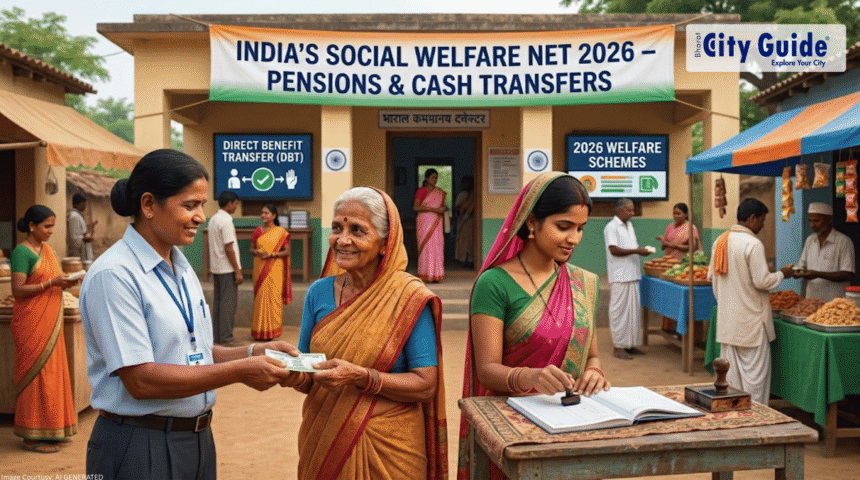
India’s social welfare net quietly sustains the lives of crores of families. From pensions for the elderly to cash transfers for widows and persons with disabilities, these schemes stabilize household budgets, especially for those living on the edge of poverty or seasonal income shocks.
- Introduction
- Policy Overview
- Key Components
- Policy in Simple Terms
- Who Is Affected and How
- Expected Benefits
- DBT and Modernization
- Concerns, Challenges, and Criticisms
- Real-Life Implications
- What This Means for Common Citizens
- Future Outlook (2026 and Beyond)
- Conclusion: What Citizens Should Know
- Key Takeaways
- FAQ
In 2026, the social welfare ecosystem has grown increasingly digitized, with Direct Benefit Transfer (DBT) reaching most beneficiaries, though challenges in coverage, targeting, and amounts remain. This article explores the structure, benefits, challenges, and practical impact of India’s social pensions and cash transfers.
Policy Overview
India delivers social welfare mainly through:
- Central Sector Schemes: Fully funded by the Union government
- Centrally Sponsored Schemes (CSS): Co-funded with states and implemented locally
Key pillars include:
- National Social Assistance Programme (NSAP) – central pensions
- Atal Pension Yojana (APY) – contributory pensions for informal workers
- Direct Benefit Transfer (DBT) – digital cash transfers to bank accounts
These schemes aim to prevent destitution, provide minimum income security, and support vulnerable groups unable to fully participate in the labor market.
Key Components
National Social Assistance Programme (NSAP)
| Scheme | Beneficiary | Age / Eligibility | Benefit (2026) |
| IGNOAPS | Elderly BPL | 60+, higher for 80+ | ₹500–₹1,000/month (state top-ups possible) |
| IGNWPS | Widows BPL | 40–59 | ₹300–₹750/month |
| IGNDPS | Severe disabilities BPL | 18–59 | ₹500–₹1,000/month |
Purpose: Ensure minimum social security for the elderly, widows, and persons with disabilities in low-income households.
Atal Pension Yojana (APY)
- Voluntary contributory pension scheme for informal sector workers
- Fixed monthly pension after 60 years (₹1,000–₹5,000 depending on contributions)
- Encourages long-term savings and retirement security
Other Welfare Transfers
- MGNREGA wages
- PMAY (housing) installments
- State social pensions
- All increasingly routed via DBT, reducing leakages and improving timeliness
Policy in Simple Terms
These social welfare schemes act like a basic safety cushion.
- Small but regular pensions or transfers ensure elderly, widows, or disabled citizens have income
- Reduces dependence on informal moneylenders or relatives
- Stabilizes household budgets, enabling predictable monthly spending on food, medicines, and utilities
Who Is Affected and How
Primary Beneficiaries
- Elderly poor, especially those without family support
- Widows and single women in low-income households
- Persons with disabilities unable to work full-time
- Rural poor relying on seasonal work and government support
Administrative Role
- Gram Panchayats and urban municipal bodies identify beneficiaries
- Aadhaar-linked DBT accounts enable direct transfers
Daily Impact
- Steady pensions for food, healthcare, and utilities
- Predictable household cash flow
- Increased household resilience in times of crop failure, inflation, or economic shocks
Expected Benefits
Short-Term
- Reduces immediate destitution
- Ensures basic food and medicine access
- Provides predictable cash flow for low-income households
Long-Term
- Reduces extreme poverty and inequality
- Improves nutrition and health outcomes for older and vulnerable citizens
- Stabilizes local economies, as pensions and transfers are mostly spent on essentials
- Supports formal DBT ecosystem, reducing leakage and improving transparency
DBT and Modernization
Direct Benefit Transfer (DBT) reforms:
- DBT 2.0 / 3.0 focuses on online eligibility checks
- National Social Registry consolidates welfare eligibility, inspired by Karnataka’s Kutumba and Rajasthan’s Jan Aadhaar
- Reduces the need for paper-based verification and middlemen
- Enhances timeliness and transparency
Concerns, Challenges, and Criticisms
- Low Benefit Amounts: Central pensions often insufficient to cover basic living costs
- Targeting and Exclusion Errors: Some deserving beneficiaries left out due to documentation gaps
- Digital and Banking Barriers: Elderly and disabled citizens may struggle with bank accounts and Aadhaar linking
- Fragmentation: Hundreds of overlapping schemes make it hard for citizens to know eligibility
Real-Life Implications
- Village Widow in Gujarat: Receives small central pension, state top-up, subsidized grains, and rural housing benefit—ensuring basic survival
- Rajkot Citizen / Wellness Coach: Elderly parent relies on APY and NSAP pensions; domestic worker family’s resilience improves through predictable DBT and ration benefits
These examples show the layered impact of social welfare beyond the official numbers, stabilizing lives and local economies.
What This Means for Common Citizens
- Elderly, widowed, or disabled check eligibility with Gram Panchayat, municipal office, or National Schemes Portal
- Younger workers should join APY early for predictable retirement income
- Citizens can update bank account or Aadhaar details to avoid delays
- Awareness reduces the risk of falling through cracks in the system
Future Outlook (2026 and Beyond)
- National Social Registry: Consolidated eligibility data for all welfare schemes
- DBT 3.0: Mostly online onboarding, verification, and grievance redressal
- Rationalization: Overlapping schemes simplified for predictability and better targeting
- Pension and Welfare Expansion: Possible increase in benefit amounts in response to climate risks and economic shocks
- Tech-enabled Welfare: AI-assisted targeting, automated bank validation, and online grievance mechanisms
Conclusion: What Citizens Should Know
India’s social welfare system is a layered, safety net that is not generous, but crucial for vulnerable populations.
Action Points for Citizens:
- Know which pensions and welfare schemes exist
- Check and update eligibility in DBT-linked accounts
- Apply for APY or other contributory pensions early
- Ensure bank accounts, Aadhaar linkage, and contact details are current
- Monitor government portals or local offices for updates, top-ups, and grievance redressal
Even modest pensions can prevent destitution, reduce dependency, and stabilize household budgets. Understanding and using these schemes effectively ensures no vulnerable citizen is left behind.
Key Takeaways
- India operates dozens of social welfare schemes, with NSAP pensions and DBT as core pillars
- IGNOAPS, IGNWPS, IGNDPS, and APY provide small but steady income to the elderly, widows, and disabled
- DBT has improved transparency, but digital barriers remain
- Targeting errors, low benefit amounts, and fragmentation are key challenges
- Future reforms aim for unified social registry, simplified delivery, and tech-enabled onboarding
FAQ
Q1: What is NSAP?
A: The National Social Assistance Programme provides central pensions to the elderly, widows, and persons with severe disabilities in low-income households.
Q2: Who is eligible for IGNOAPS?
A: Elderly citizens aged 60+ from BPL households; higher amounts for 80+.
Q3: What is Atal Pension Yojana?
A: APY is a voluntary contributory pension scheme for informal workers, guaranteeing ₹1,000–₹5,000 monthly after 60.
Q4: How do DBT transfers work?
A: Cash is directly transferred to Aadhaar-linked bank accounts, reducing leakage and improving speed.
Q5: What challenges exist for social pensions?
A: Low benefit amounts, targeting errors, digital barriers, and fragmented schemes.
Q6: How can citizens check eligibility?
A: Visit local Gram Panchayats, municipal offices, or the National Schemes Portal to verify and update information.
Q7: What future reforms are planned?
A: Unified social registry, DBT 3.0 for online onboarding, rationalization of overlapping schemes, and potential pension top-ups.
Q8: How do these schemes affect daily life?
A: Provide basic income for food, medicine, and utilities, stabilize local economies, and reduce dependence on informal loans.