Introduction
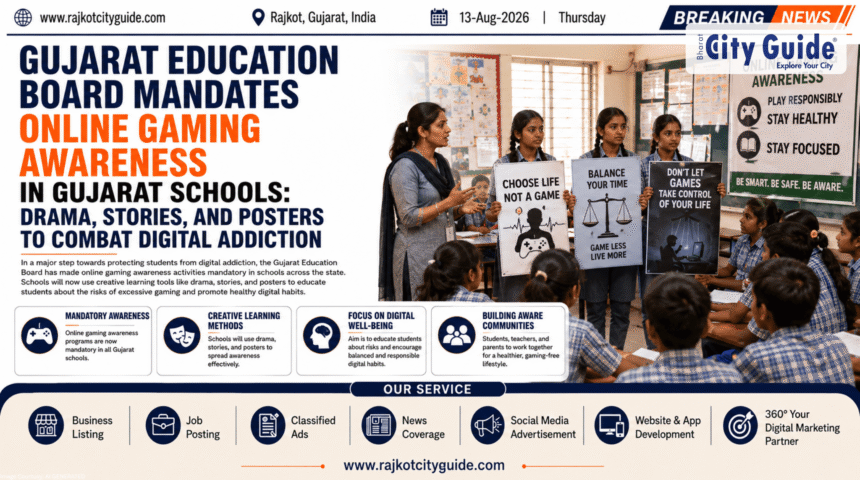
In an era dominated by smartphones, high-speed mobile internet, and immersive virtual environments, digital addiction among young children has emerged as a major public health and educational challenge. Taking decisive action against this growing crisis, the Gujarat Secondary and Higher Secondary Education Board (GSHSEB), along with the State Education Department, has issued a comprehensive directive to primary, secondary, and higher secondary schools across the state. The order mandates the immediate implementation of creative campaigns focused on raising online gaming awareness in Gujarat schools.
- Introduction
- What is Online Gaming Awareness in Gujarat Schools?
- Why This News is Important
- Background Information
- Key Highlights
- Detailed Explanation of the Event
- Benefits, Features, and Importance
- How It Impacts People
- Expert Insights and Industry Perspective
- Challenges and Limitations
- Future Outlook
- Frequently Asked Questions (FAQs)
- Conclusion
Rather than relying strictly on top-down bans or dry lectures, the education board’s fresh directive encourages schools to adopt engaging, empathetic, and interactive pedagogical methods. Schools are instructed to organize captivating storytelling sessions, student-led street plays and short dramas, poster-making competitions, and open classroom discussions. These creative channels aim to help students recognize the hidden dangers of compulsive mobile gaming—ranging from severe academic decline and behavioral changes to financial fraud and psychological distress.
This proactive step by the Gujarat state government underscores a critical realization: banning devices or games alone cannot solve the problem. Real change requires empowering students with digital literacy, critical thinking, and self-regulation skills. By embedding digital wellness directly into the academic routine, Gujarat is taking a leading role in safeguarding the mental, physical, and emotional health of its youth in an increasingly digitized world.
What is Online Gaming Awareness in Gujarat Schools?
The initiative for online gaming awareness in Gujarat schools is a structured, state-wide educational framework designed to inform, educate, and protect school-aged children from the harmful side effects of excessive and compulsive online gaming. Spearheaded by the state education board, this initiative transitions digital safety from an abstract parental worry into an active, school-based learning curriculum.
At its core, this awareness drive focuses on helping children understand how modern video games are engineered to be addictive. Online games often employ complex psychological reward loops, dark design patterns, microtransactions, and social pressure mechanics that trap young minds into continuous play. Through age-appropriate activities, the initiative highlights the consequences of gaming overuse, such as sleep deprivation, reduced attention spans, eye strain, aggressive behavior, social isolation, and exposure to cyberbullies or online financial scams.
Rather than framing all technology as inherently bad, the program promotes a balanced philosophy known as digital hygiene. It teaches students how to distinguish between healthy, recreational screen time and destructive addiction. By utilizing creative media—such as theatrical skits, visual arts, peer storytelling, and guided group discussions—the campaign makes the concept of digital safety accessible, relatable, and memorable for students across all age groups.
Why This News is Important
The timing of this directive from the Gujarat Education Board is particularly significant given the rapid expansion of digital infrastructure across India. With affordable smartphones and cheap mobile data plans now ubiquitous in urban, semi-urban, and rural households, children are gaining access to interactive personal devices at increasingly younger ages.
This development matters for several pressing reasons:
- Rising Addiction Rates: Over the past few years, child psychologists, pediatricians, and educators across Gujarat have reported a sharp increase in cases of severe gaming addiction among teenagers and pre-teens.
- Impact on Academic Performance: Excessive gaming directly correlates with missed homework, poor classroom concentration, falling grades, and increased school absenteeism.
- Financial Vulnerability: Numerous incidents have surfaced across Gujarat where children, unaware of the financial consequences, used their parents’ bank accounts, credit cards, or UPI IDs to purchase in-game virtual currencies, skins, and loot boxes, causing severe monetary losses for families.
- Mental Health and Behavioral Issues: Gaming addiction is frequently linked to increased irritability, sudden outbursts of anger, anxiety, depression, and physical health problems like obesity and posture issues.
- A Shift to Preventive Education: By mandating proactive awareness in schools, the government is moving away from purely reactive measures toward preventive education, addressing the root cause before children fall into severe addiction traps.
Background Information
The challenge of regulating online gaming among minors in India has been building over the last decade. The rapid evolution of mobile battle royale games, multiplayer online battle arenas (MOBAs), real-money gaming apps, and casual reward-based games created a massive influx of young players. The COVID-19 pandemic accelerated this trend, as remote learning required millions of students to possess personal smartphones or laptops, blurring the boundary between educational utility and entertainment.
In previous years, authorities frequently attempted to address the issue through temporary measures, such as issuing advisories against specific viral games or encouraging parental locks. However, experience proved that technical restrictions and standalone bans are rarely completely effective. Tech-savvy youngsters quickly found ways to bypass age filters or access games on alternative platforms.
Recognizing these limitations, educational bodies and child rights commissions—including the Gujarat State Commission for Protection of Child Rights (GSCPCR)—advocated for a sustainable, educational approach embedded within the school system. The latest directive from the education board builds upon these recommendations. It establishes an institutional mechanism that equips teachers, parents, and students with the knowledge and tools needed to foster healthy digital habits collectively.
Key Highlights
The official directive issued by the Gujarat Education Board contains several key instructions and innovative highlights:
- Creative Learning Modalities: Directs schools to utilize theatrical plays, short dramas (skits), puppet shows, and interactive storytelling instead of conventional lectures.
- Visual Awareness Campaigns: Mandates the creation and display of colorful, informative posters and charts across school premises, corridors, notice boards, and computer labs.
- Interactive Workshops and Seminars: Encourages schools to organize guidance sessions featuring child psychologists, cybercrime specialists, and police officials to talk directly with students.
- Peer-Led Discussions: Facilitates student-led debates and panel discussions where senior students share personal experiences and strategies for overcoming screen addiction with younger peers.
- Parental Engagement: Advises schools to host dedicated counseling sessions during Parent-Teacher Meetings (PTMs) to guide parents on digital monitoring, setting screen-time boundaries, and recognizing warning signs of addiction at home.
- Comprehensive Coverage: Applies broadly across state board schools, covering primary, secondary, and higher secondary institutions across all districts of Gujarat.
Detailed Explanation of the Event
The recent circular released by the education department instructs district education officers (DEOs) and primary education officers (DPEOs) to ensure strict implementation of awareness programs across public and private schools. The central objective of this event is to demystify online gaming addiction and build an open environment where students can talk freely about their digital struggles without fear of immediate punishment.
Under the board’s plan, school teachers and cultural coordinators are tasked with designing engaging extracurricular activities centered around digital wellness. For instance, students will participate in writing and performing short plays that depict real-life scenarios: a student losing focus on sports and studies due to late-night gaming, a family dealing with unexpected financial debt due to unauthorized in-game purchases, or a young player overcoming gaming distraction through healthy outdoor hobbies.
In addition to theatrical performances, schools will conduct poster-making and slogan-writing competitions. Winning entries will be displayed prominently around school campuses to serve as constant, visually appealing reminders. Teachers will also allocate dedicated time during morning assemblies and value education classes to discuss the concept of “Digital Detox”—encouraging students to voluntarily take breaks from screens and reconnect with physical sports, reading, and creative arts.
Furthermore, the board’s program emphasizes the role of educators as sympathetic mentors rather than strict enforcers. Teachers are being advised to watch for early behavioral red flags, such as chronic fatigue in class, sudden drops in academic performance, social withdrawal, or persistent sleepiness, and offer timely counseling or parental guidance.
Benefits, Features, and Importance
Implementing online gaming awareness in Gujarat schools through creative and participatory methods yields a wide array of long-term benefits for students, families, and the broader educational ecosystem.
| Feature / Aspect | Traditional Approach | Gujarat Board’s Creative Initiative |
| Primary Method | Strict bans, scolding, confiscation of devices | Storytelling, theatrical plays, poster art, open dialogues |
| Student Engagement | Low; leads to secrecy and rebellion | High; fosters empathy, self-awareness, and peer learning |
| Focus Area | Restricting device usage forcibly | Building digital literacy and internal self-regulation |
| Role of Parents & Teachers | Enforcers and disciplinarians | Supportive mentors, counselors, and role models |
| Long-Term Outcome | Temporary compliance | Sustainable, lifelong healthy digital habits |
1. Fostering Internal Self-Regulation
When children are simply told “do not play games,” their natural curiosity often drives them to play in secret. By contrast, showing them through plays and stories how games manipulate their brains through artificial dopamine hits empowers them to make conscious choices. They learn to self-regulate their screen time out of personal understanding rather than external fear.
2. Emotional and Psychological Protection
Compulsive gaming often serves as an unhealthy coping mechanism for stress, loneliness, or academic anxiety. By creating an empathetic environment in schools, students realize they are not alone. They gain safe avenues to express their emotional struggles and learn healthy coping strategies like physical sports, art, and real-world social interactions.
3. Prevention of Financial and Cyber Crimes
In-game purchases, fake gaming tournaments, malware downloads, and predatory online forums pose serious threats to minors. Teaching students about digital safety, phishing traps, and the true financial value of money protects families from sudden financial shocks and keeps young users safe from online predators.
4. Restoration of Physical Health and Academic Focus
Reducing excessive screen time directly improves sleep quality, reduces eye strain, and encourages physical exercise. As students regain proper rest and mental clarity, their classroom attention spans, memory retention, and overall academic performance naturally improve.
How It Impacts People
This state-wide initiative creates a positive ripple effect across various segments of society:
Students
Students are the primary beneficiaries. Instead of feeling judged or penalized, they are given creative platforms to explore a modern dilemma. Participating in skits and poster creation makes learning fun and memorable. Crucially, it helps them reclaim their time for outdoor sports, hobbies, friendship, and academic growth.
Parents
Parents frequently express feeling overwhelmed by their children’s smartphone habits, often resulting in daily household arguments. The school-driven campaign bridges the gap between home and school. It equips parents with practical strategies—such as establishing tech-free zones at home, setting healthy boundaries, and co-viewing media—transforming conflict into constructive cooperation.
Educators and School Staff
Teachers often struggle to manage distracted, sleep-deprived students in the classroom. This initiative provides educators with structured guidelines and creative resources to address behavioral issues at the root level, creating a more attentive, energetic, and emotionally stable classroom environment.
Society and Public Health
At a macro level, reducing digital addiction among youth lowers the burden on adolescent mental health clinics and pediatric counseling centers. It cultivates a generation of digitally resilient citizens who know how to utilize technology as a powerful tool for learning and communication without falling victim to its addictive pitfalls.
Expert Insights and Industry Perspective
Child psychologists, educational experts, and cyber-wellness professionals have overwhelmingly welcomed the Gujarat Education Board’s creative approach.
Psychiatrists specializing in adolescent behavior emphasize that the brain’s prefrontal cortex—responsible for impulse control, decision-making, and long-term planning—is not fully developed during childhood and adolescence. As a result, young people are naturally more vulnerable to the instant gratification loops engineered into modern gaming software. Experts point out that traditional scolding often backfires, pushing youngsters deeper into virtual worlds where they feel understood and validated.
Educational experts also highlight the effectiveness of peer-to-peer learning and drama in education. When students see their own classmates perform a story about the real-life consequences of gaming addiction, the message resonates far more deeply than an abstract lecture from an adult. Experts strongly recommend that this initiative remain a continuous, year-round conversation integrated into school life rather than a one-time event.
Challenges and Limitations
Despite its thoughtful design, the state-wide implementation of online gaming awareness in Gujarat schools faces several practical hurdles that administrators must address:
- Inconsistent Execution Across Schools: While large urban private schools may easily organize elaborate plays, workshops, and high-quality posters, resource-constrained rural or small government schools might struggle with execution without dedicated funding and materials.
- Teacher Workload and Training: Teachers are already tasked with heavy academic, administrative, and examination duties. Expecting them to design creative street plays and counseling modules without prior training in digital wellness could lead to superficial execution.
- Overcoming Peer Pressure Outside School: Even if a student understands the dangers of gaming at school, strong peer pressure from neighborhood friends or online gaming communities can easily pull them back into addictive habits once they return home.
- Rapidly Evolving Digital Threats: The gaming industry evolves at a breakneck pace, constantly introducing new monetization tactics, platforms, and viral trends. Awareness materials must be updated regularly to stay relevant to what children are actually playing.
Future Outlook
The decision to introduce online gaming awareness in Gujarat schools marks the beginning of a larger, long-term shift toward comprehensive digital literacy in Indian education.
In the coming years, we can expect this program to evolve in several key directions:
- Standardized Digital Wellness Curriculum: The state board may eventually publish standardized modules, storybooks, and multimedia toolkits on digital hygiene to assist teachers across all districts.
- Integration of Cyber Security Modules: As online gaming increasingly intersects with real-money gaming, cryptocurrency, and digital scams, future awareness campaigns will likely incorporate broader cybersecurity and financial literacy training for senior students.
- Parent-Teacher Digital Committees: Schools may establish dedicated digital wellness committees comprising teachers, parents, and student representatives to monitor trends, address individual addiction cases, and organize regular digital detox events.
- Replication by Other States: If Gujarat’s creative, drama-and-art-based model proves successful in curbing youth screen addiction, education boards in other Indian states are likely to adopt similar interactive models in their own school systems.
Frequently Asked Questions (FAQs)
1. What is the latest Gujarat Education Board order regarding online gaming?
The Gujarat Secondary and Higher Secondary Education Board (GSHSEB) has directed all schools in the state to organize creative awareness campaigns—including storytelling, short plays, poster-making, and workshops—to educate students about the dangers of online gaming addiction.
2. Why is online gaming awareness in Gujarat schools being conducted through drama and posters?
Traditional lectures and strict bans are often ineffective against digital addiction. Interactive activities like skits, storytelling, and poster design engage students creatively, helping them understand the psychological and practical consequences of gaming addiction in a relatable, memorable way.
3. What are the major risks of online gaming addiction among school children?
Key risks include falling academic grades, severe sleep deprivation, eye strain, aggressive or irritable behavior, social withdrawal, exposure to cyberbullying, and accidental financial loss due to unauthorized in-game purchases.
4. How can parents support the school’s online gaming awareness drive at home?
Parents can support the initiative by setting reasonable screen-time limits, creating device-free zones (such as dining tables and bedrooms at night), encouraging physical sports and outdoor hobbies, and engaging in open, non-judgmental conversations with their children about their online activities.
5. Does this directive ban mobile phones or computers in Gujarat schools?
No, the directive does not focus on banning technology. Instead, it focuses on promoting healthy digital habits and self-regulation, teaching students how to use technology constructively while avoiding addictive gaming traps.
6. Are rural schools in Gujarat also covered under this initiative?
Yes, the order issued by the state education department applies to all primary, secondary, and higher secondary schools across both urban and rural districts in Gujarat.
7. How can teachers identify if a student is struggling with gaming addiction?
Warning signs include persistent sleepiness or fatigue in class, a sudden and noticeable decline in academic performance, incomplete homework, irritability, difficulty concentrating during lessons, and isolation from classmates during breaks.
8. Will cybercrime experts or counselors be involved in these school campaigns?
Yes, schools are encouraged to invite child psychologists, cybercell police officers, and educational counselors to conduct interactive sessions and offer expert advice to both students and parents.
Conclusion
The decision to embed online gaming awareness in Gujarat schools through creative storytelling, drama, and visual arts represents a progressive, compassionate, and highly practical response to one of the modern era’s toughest parenting and educational challenges. By choosing empathy and creative engagement over rigid bans, the Gujarat Education Board is equipping young minds with the self-awareness and digital resilience needed to navigate a hyper-connected world safely.
Protecting children from the subtle traps of digital addiction requires an active, united partnership between educators, parents, policymakers, and students themselves. As schools across Gujarat roll out these vibrant skits, posters, and open dialogues, they are doing much more than teaching kids to put down their phones—they are helping a new generation reclaim their time, protect their mental well-being, and build a healthier, more balanced future.