Introduction
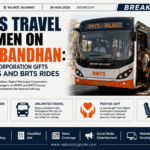
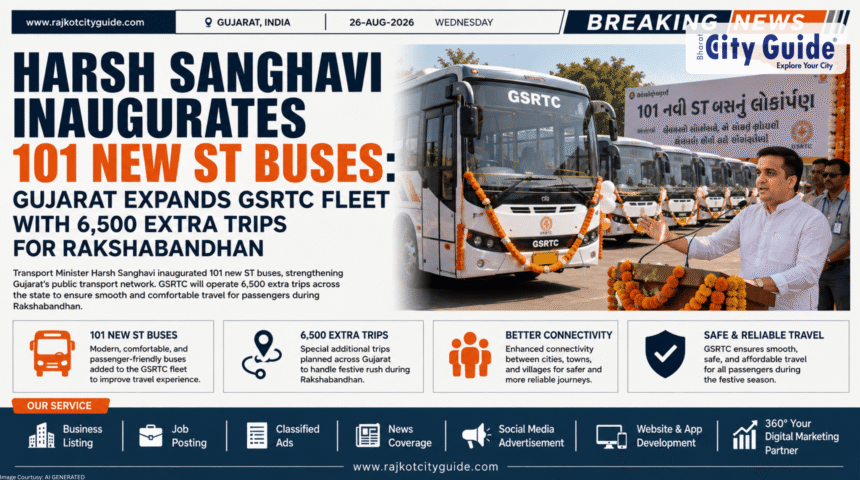
Rakshabandhan is one of India’s most cherished cultural celebrations, bringing millions of families together across Gujarat to celebrate the sacred bond between brothers and sisters. As sisters travel across districts to tie traditional rakhis, public transportation networks experience their heaviest annual passenger volume. To ensure smooth, safe, and efficient intercity transit during this festive surge, the Government of Gujarat has announced a major public transport expansion. In a landmark event held in Gandhinagar, Deputy Chief Minister Harsh Sanghavi Inaugurates 101 New ST Buses for the Gujarat State Road Transport Corporation (GSRTC).
- Introduction
- What is Harsh Sanghavi Inaugurates 101 New ST Buses?
- Why This News is Important
- Background Information
- Key Highlights
- Detailed Explanation of the Event
- Benefits, Features, and Importance
- How It Impacts People
- Expert Insights and Industry Perspective
- Challenges and Limitations
- Future Outlook
- Frequently Asked Questions (FAQs)
- Conclusion
The formal flag-off event serves a dual administrative purpose: modernizing Gujarat’s state transport fleet with state-of-the-art vehicles while deploying immediate logistical support for holiday commuters. Alongside inducting 101 modern buses—comprising Super Express, Midi, and Sleeper Coach units—GSRTC announced a comprehensive festive operations plan consisting of 6,500 extra bus trips connecting major cities, industrial hubs, rural districts, and prominent pilgrimage destinations across the state.
This festive transport initiative addresses critical high-demand corridors linking key metropolitan regions such as Ahmedabad, Surat, Vadodara, and Rajkot with regional hubs like Palanpur, Godhra, Nadiad, Junagadh, Porbandar, and Valsad. By combining fleet modernization with targeted route frequency enhancements, state transport authorities aim to provide seamless mobility for women, family groups, and daily commuters throughout the peak holiday period.
                  ┌──────────────────────────────────────────────┐
                  │    GSRTC RAKSHABANDHAN EXPANSION FRAMEWORK   │
                  │       Statewide Public Transit Fleet Rollout  │
                  └──────────────────────┬───────────────────────┘
                                         │
        ┌────────────────────────────────┼────────────────────────────────┐
        ▼                                ▼                                ▼
┌────────────────────────┐      ┌────────────────────────┐      ┌────────────────────────┐
│  INDUCTED FLEET TYPES  │      │  FESTIVE OPERATION     │      │   COMMUNITY & TRAVEL   │
│ • 71 Super Express     │      │ • 6,500 Extra Trips    │      │ • Women-Centric Travel │
│ • 20 Midi Buses        │──────► • Aug 26 to Aug 30     │──────► • Major City Corridors │
│ • 10 Sleeper Coaches   │      │ • Advanced E-Booking   │      │ • Pilgrimage Routes    │
└────────────────────────┘      └────────────────────────┘      └────────────────────────┘
What is Harsh Sanghavi Inaugurates 101 New ST Buses?
The event where Harsh Sanghavi Inaugurates 101 New ST Buses represents a major state-level public transit expansion executed by the Gujarat State Road Transport Corporation (GSRTC). The ceremony was led by Deputy Chief Minister Harsh Sanghavi in Gandhinagar, accompanied by senior government officials, including Forest and Environment Minister Arjun Modhwadia, along with GSRTC administrative leadership.
Key operational aspects of this rollout include:
- Fleet Diversification: The 101 newly inducted buses consist of 71 Super Express buses for high-frequency intercity routes, 20 Midi buses for narrow rural and feeder routes, and 10 modern Sleeper Coaches for long-distance overnight travel.
- Immediate Festival Deployment: All 101 newly flagged-off vehicles were instantly integrated into active service routes to handle the heavy passenger rush leading up to Rakshabandhan.
- 6,500 Extra Festive Trips: Running from August 26 through August 30, GSRTC scheduled 6,500 special additional trips over and above its daily standard operating schedule.
- Gesture of Appreciation: During the inauguration, female GSRTC bus conductors tied rakhis to Deputy Chief Minister Harsh Sanghavi, recognizing the 24/7 dedication of state transport personnel who work tirelessly through public holidays.
Why This News is Important
Public transit management during high-density cultural festivals is essential for state infrastructure and public safety. The inauguration of new buses and the execution of 6,500 special trips hold immense administrative significance:
- Preventing Intercity Commuter Bottlenecks: Rakshabandhan creates one of the highest single-day travel surges in Western India. Expanding fleet capacity prevents chaos at major bus terminals in Ahmedabad, Surat, and Rajkot.
- Prioritizing Safe Transit for Women: Millions of women travel independently across districts during Rakshabandhan. Deploying reliable, well-maintained state transport buses ensures secure, affordable, and comfortable journeys.
- Reducing Private Vehicle Gridlock: Adding high-capacity passenger buses keeps private car and two-wheeler traffic off major state highways, reducing accident risks and traffic jams.
- Long-Term Fleet Replacement: Beyond immediate holiday benefits, replacing aged rolling stock with modern, fuel-efficient buses improves everyday public transit quality across Gujarat.
Background Information
The Gujarat State Road Transport Corporation (GSRTC) operates as one of India’s largest and most efficient state-owned passenger transport undertakings. Connecting remote villages to major urban hubs, GSRTC maintains a vast fleet that handles millions of passenger kilometers daily.
                [ ANNUAL FESTIVE DEMAND & FLEET EVOLUTION ]
                                     │
  ┌──────────────────────────────────┴──────────────────────────────────┐
  ▼                                                                     ▼
[Rakshabandhan 2025 Performance]                   [Rakshabandhan 2026 Expansion]
 • 6,402 Special Extra Trips                        • 6,500 Scheduled Extra Trips
 • 3.33 Lakh Passengers Transported                 • 101 Brand New Fleet Additions
 • High Operational Revenue Benchmark               • Enhanced Online E-Booking Capacity
During Rakshabandhan in 2025, Gujarat State Road Transport Corporation (GSRTC) operated 6,402 additional trips, safely transporting over 3.33 lakh passengers across regional routes. Recognizing that travel demand increases every year alongside population growth and expanded economic activity, state authorities planned a larger deployment for 2026. Under the leadership of Deputy Chief Minister Harsh Sanghavi, GSRTC integrated new vehicle procurement directly with festive travel planning, ensuring newly built buses enter active service precisely when passenger demand peaks.
Key Highlights
- 101 New Buses Flagged Off: Deputy Chief Minister Harsh Sanghavi officially launched 101 brand-new GSRTC buses from Gandhinagar.
- Structured Fleet Mix: Includes 71 Super Express buses, 20 Midi buses, and 10 AC/Non-AC Sleeper Coaches.
- 6,500 Special Trips: Scheduled between August 26 and August 30 to manage heavy festive travel volume across Gujarat.
- Key Urban & Rural Corridors: Special focus on high-demand routes connecting Ahmedabad, Surat, Vadodara, Rajkot, Godhra, Palanpur, Nadiad, and Junagadh.
- Pilgrimage Connectivity: Extra bus services routed toward major spiritual centers including Ambaji, Pavagadh, Somnath, and Mata no Madh.
- Digital Booking Support: Enhanced advance reservation facilities enabled via the official GSRTC web portal and mobile app.
- Recognition of Transport Staff: Event honored front-line drivers, conductors, and depot workers who remain on duty during public holidays.
Detailed Explanation of the Event
The flag-off ceremony in Gandhinagar marks a coordinated administrative initiative combining fleet procurement with seasonal logistics management.
                    [ GSRTC FLEET INTEGRATION & OPERATIONS ]
                                       │
  New Vehicle Procurement ──► Gandhinagar Flag-Off by Harsh Sanghavi
                                            │
  6,500 Extra Trips Deployed ◄── Immediate Depot Allocation to High-Demand Routes ──────┘
1. Fleet Composition and Technical Capabilities
The induction of 101 buses addresses distinct travel needs across the state:
- Super Express Buses (71 Units): Designed for medium-to-long distance intercity transit between major district headquarters. Equipped with ergonomic seating, improved suspension, and modern safety features, these buses form the backbone of state transport.
- Midi Buses (20 Units): Featuring a shorter wheel-base, these compact buses are deployed on interior rural routes, hilly terrains, and narrower roadways where standard 12-meter buses face navigation challenges.
- Sleeper Coaches (10 Units): Built for long-distance overnight routes, offering comfortable sleeping berths for passengers traveling across state borders or between distant industrial belts like Surat, Saurashtra, and North Gujarat.
2. Strategic Route Mapping for 6,500 Extra Trips
To prevent passenger congestion between August 26 and August 30, GSRTC mapped high-density origin-destination pairs based on historical booking data:
- Industrial-to-Rural Corridors: Extra trips connect textile and industrial hubs like Surat and Ahmedabad to rural residential regions in Panchmahal, Dahod, Mahisagar, and Saurashtra, enabling migrant workers to visit home.
- Pilgrimage Destinations: Dedicated bus blocks are allocated for popular spiritual centers, including Pavagadh, Ambaji, Somnath, and Junagadh, which experience heavy festive footfall.
3. Staff Recognition and Operations
Highlighting the dedication of public transit employees, Deputy Chief Minister Harsh Sanghavi noted that while citizens celebrate festivals at home, thousands of GSRTC drivers, conductors, mechanics, and station managers stay on duty 24/7. Female conductors tied traditional rakhis to the Deputy Chief Minister during the launch, symbolizing the department’s commitment to safe travel for women.
Benefits, Features, and Importance
The following table outlines the operational specifications and public benefits of the new fleet expansion:
| Parameter / Feature | Standard GSRTC Routine Operations | Rakshabandhan Special Deployment | Direct Public Benefit |
| Active Fleet Size | Regular daily scheduled fleet | +101 Newly inducted buses | Higher seat availability & newer vehicles. |
| Additional Daily Trips | Standard fixed timetable | 6,500 Extra trips (Aug 26–30) | Reduced waiting times at depots. |
| Vehicle Types Added | Mix of aging & active stock | 71 Express, 20 Midi, 10 Sleeper | Tailored transport for diverse routes. |
| Booking Access | On-spot & limited online | Expanded E-booking portals | Guaranteed seats via advance booking. |
| Focus Corridors | Standard route coverage | Targeted urban/rural/pilgrimage | Direct coverage for high-demand areas. |
How It Impacts People
+-----------------------------------------------------------------------+
|                   COMMUNITY & ECONOMIC IMPACT ANALYSIS                 |
+-----------------------------------+-----------------------------------+
|               WOMEN COMMUTERS     |         INDUSTRIAL WORKERS        |
|  - Safe, comfortable journeys     |  - Direct transport to home towns |
|  - Reliable intercity access      |  - Affordable holiday travel rates|
|  - Guaranteed seat reservations   |  - On-time return trip schedules  |
+-----------------------------------+-----------------------------------+
|               GSRTC FIELD WORKERS |         STATE HIGHWAY SYSTEM      |
|  - Recognition of 24/7 service    |  - Reduced private car gridlock   |
|  - Upgraded modern driving fleet  |  - Lower highway accident risks   |
|  - Improved working conditions    |  - Systematic depot traffic flow  |
+-----------------------------------+-----------------------------------+
For Women and Festive Travelers
Women traveling independently or with young children benefit directly from the fleet expansion. Modern Super Express and Sleeper buses offer safer, cleaner, and more comfortable journeys, while 6,500 extra trips mean far fewer crowded terminal platforms.
For Industrial Workers and Students
Textile workers in Surat, factory employees in GIDC zones, and college students in educational hubs like Vadodara and Ahmedabad often struggle to secure transport during major holidays. The deployment of extra long-distance trips allows budget-conscious commuters to travel home affordably without relying on high-priced private bus operators.
For Public Transit System Reliability
Adding 101 brand-new buses lowers average fleet age, reduces mid-route breakdown risks, and enhances fuel efficiency across GSRTC operations. Modern vehicles improve passenger satisfaction and build long-term public trust in state-run transport systems.
Expert Insights and Industry Perspective
Transportation planners and public policy analysts praise integrated fleet planning that aligns new vehicle rollouts with seasonal demand spikes.
                  [ PUBLIC TRANSIT MODERNIZATION CYCLE ]
                                     │
  ┌──────────────────────────────────┴──────────────────────────────────┐
  ▼                                                                     ▼
[Fleet Modernization & Expansion]                  [System Efficiency & Safety]
 • Induction of specialized bus types               • Lower breakdown rates on highways
 • Real-time GPS & digital reservations             • Safe, regulated intercity transit
 • Higher operational safety standards              • Elevated public transit adoption
Transit experts note that deploying a varied fleet—combining Midi, Express, and Sleeper coaches—allows transport corporations to optimize fuel consumption and passenger capacity based on specific route geography. Furthermore, expanding online ticket inventory prevents ticket black-marketing and overcharging by private operators during major festival windows.
Challenges and Limitations
Executing a large-scale transport expansion during peak holiday periods involves operational challenges:
- Highway Congestion: Despite dedicated bus schedules, heavy private vehicular traffic on major highways like the Ahmedabad-Vadodara Expressway and National Highway 48 can cause route delays.
- Driver and Crew Fatigue: Operating 6,500 additional trips requires strict shift management to keep bus drivers and conductors alert and well-rested.
- Last-Minute Terminal Crowds: Unscheduled, walk-in passengers at major hubs like Geeta Mandir in Ahmedabad or Central Bus Terminal in Surat can cause temporary crowding during peak hours.
Future Outlook
The launch of these 101 buses marks part of Gujarat’s broader administrative push to modernize public road transport infrastructure. Over the coming years, GSRTC plans to continue phasing out older diesel buses while introducing eco-friendly Electric Buses (e-Buses) and BS-VI compliant vehicles across major urban-rural corridors.
Additionally, integrated digital ticketing, real-time GPS tracking via mobile apps, and upgraded passenger amenities at rural bus stands will continue to enhance the public commuting experience across the state.
Frequently Asked Questions (FAQs)
1. What was announced during the Gandhinagar bus flag-off event?
Deputy Chief Minister Harsh Sanghavi flagged off 101 new GSRTC buses and announced 6,500 special extra trips across Gujarat for Rakshabandhan.
2. What types of buses are included in the new 101-bus fleet?
The new fleet includes 71 Super Express buses, 20 Midi buses for rural and narrow routes, and 10 modern Sleeper Coaches.
3. When are the 6,500 extra GSRTC bus trips operating?
The special additional trips run from August 26 through August 30 across key intercity and regional routes in Gujarat.
4. Which major routes are covered by these extra bus trips?
Extra trips connect major cities including Ahmedabad, Surat, Vadodara, Rajkot, Palanpur, Godhra, and Nadiad, as well as pilgrimage destinations like Ambaji, Pavagadh, and Somnath.
5. How can passengers book tickets for these special festive buses?
Passengers can book advance tickets online through the official GSRTC portal and mobile application, or directly at ST bus depot booking counters across Gujarat.
6. How many passengers used GSRTC extra festive services during Rakshabandhan last year?
In 2025, GSRTC operated 6,402 extra trips and transported approximately 3.33 lakh passengers during the Rakshabandhan festival.
7. Why were Midi buses included in the newly launched fleet?
Midi buses have a shorter wheel-base, making them ideal for navigating narrow rural roads, hilly terrains, and interior village routes safely.
Conclusion
The event where Harsh Sanghavi Inaugurates 101 New ST Buses demonstrates the Gujarat Government’s active commitment to improving public transportation. By combining fleet modernization with 6,500 extra festive trips, GSRTC ensures that millions of citizens, particularly women traveling for Rakshabandhan, enjoy safe, efficient, and comfortable intercity travel. This initiative reflects strong administrative planning, supporting both immediate holiday mobility needs and long-term public transit modernization across Gujarat.