Introduction
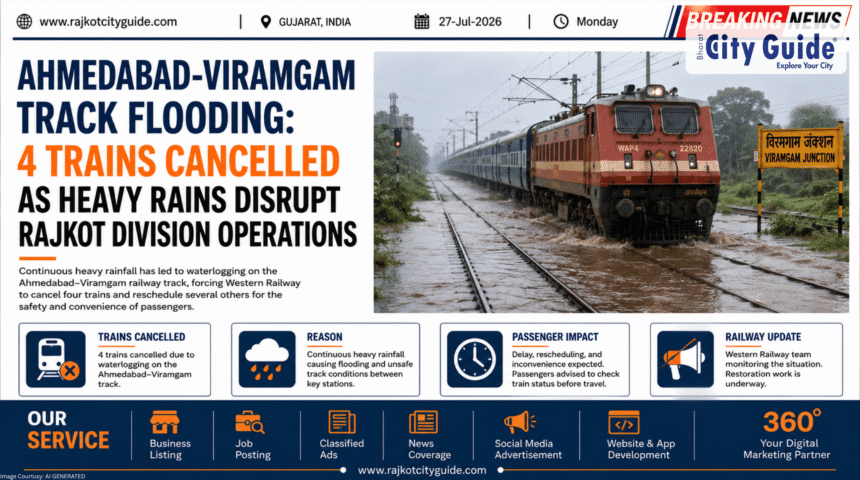
Monsoon seasons across India bring much-needed relief from scorching summer heat, filling vital reservoirs and feeding agricultural lands. However, they also expose persistent infrastructure vulnerabilities, particularly within the country’s massive transportation systems. A clear example of this occurred recently when severe monsoon downpours triggered widespread Ahmedabad-Viramgam track flooding, forcing Western Railway authorities to suspend multiple operations.
- Introduction
- What is the Ahmedabad-Viramgam Track Flooding Crisis?
- Why This News Matters
- Background Information on the Western Railway Network
- Key Highlights of the Disruption
- Detailed Explanation of the Event
- Technical Challenges of Waterlogged Tracks
- How It Impacts People
- Expert Insights on Railway Infrastructure Management
- Challenges and Current Limitations
- Future Outlook and Mitigation Strategies
- Frequently Asked Questions (FAQs)
- Conclusion
The immediate result of this localized environmental disruption was the sudden cancellation of at least four major regional trains. Because this specific section serves as a vital arterial corridor connecting central Gujarat with the Saurashtra region, the impact rippled rapidly across the entire Rajkot Division. Commuters, local business travelers, and cross-state passengers found themselves facing unexpected delays, multi-hour stranded periods, and rushed cancellations.
This developing situation emphasizes the ongoing struggle between maintaining reliable public transit and managing unpredictable weather extremes. When tracks submerge under several inches of water, the safety protocols of Indian Railways strictly prohibit high-speed operations to avoid catastrophic derailments. This comprehensive deep dive covers the technical nuances of the incident, the exact trains impacted, the underlying structural challenges, and what passengers must do to navigate this logistical hurdle smoothly.
What is the Ahmedabad-Viramgam Track Flooding Crisis?
The Ahmedabad-Viramgam track flooding refers to a critical environmental and operational emergency on the railway segment linking the major transit hubs of Ahmedabad and Viramgam. Due to localized, intense cloudbursts and poor surface drainage in low-lying structural sections, stormwater rapidly accumulated over the ballast, sleepers, and steel rails. When water rises past safety thresholds, it hides structural defects, compromises track stability, and threatens sensitive signaling systems.
For the Rajkot Division, this specific corridor functions as an indispensable gateway. The vast majority of passenger coaches and freight trains moving from Saurashtra toward northern, eastern, or southern India rely on passing through the Viramgam junction smoothly. When water rendering this segment unusable builds up, the entire western network experiences a bottleneck, forcing scheduling adjustments across multiple railway districts.
Why This News Matters
This disruption goes beyond standard monsoon inconveniences, carrying broader implications for regional logistics and safety protocols:
- Impact on Strategic Industrial Corridors: The Western Railway network handles immense volumes of freight daily, including coal, industrial chemicals, fertilizers, and agricultural goods from ports like Kandla and Mundra. Halting or delaying traffic here creates ripples across national supply chains.
- Passenger Safety Priority: Operating trains on submerged tracks risks washing away the stone ballast underneath, which can cause structural rail warping. The immediate cancellation of these services highlights the division’s strict commitment to avoiding accidents.
- Highlighting Urban-Rural Drainage Realities: The flooding shows that railway infrastructure resilience depends heavily on the drainage capabilities of the municipal and rural lands surrounding the tracks.
Background Information on the Western Railway Network
The Rajkot Division operates under the Western Railway (WR) zone, one of the busiest networks within Indian Railways. This division manages hundreds of kilometers of track running through the economic hubs of Saurashtra, handling commuter lines alongside high-priority long-distance express trains.
   [ Saurashtra Region / Rajkot Division ]
                     │
                     ▼
       [ Viramgam Junction bottleneck ]  <=== (Critical Flooding Zone)
                     │
                     ▼
       [ Ahmedabad / Rest of India ]
Historically, the route between Ahmedabad and Viramgam has faced vulnerabilities during high-intensity monsoons. The local geography features flat terrains with clay-heavy soil structures that naturally retain water rather than allowing rapid absorption. Over the years, Indian Railways has raised track beds and added modern electronic interlocking systems. However, when nearby drainage canals overflow from exceptional rainfall, the excess water flows directly onto the low-lying railway property, creating an immediate operational hazard.
Key Highlights of the Disruption
- Core Cause: Intense, persistent rainfall resulting in severe waterlogging over the active rail lines.
- Primary Disruption Zone: The crucial railway section running between Ahmedabad and Viramgam stations.
- Immediate Service Cancellations: Official cancellation of 4 high-demand regional trains to ensure passenger safety.
- Widespread Secondary Delays: Multiple long-distance trains rerouted, short-terminated, or held at various platforms, disrupting the Rajkot Division schedule.
- Emergency Response Mobilization: Western Railway engineering teams deployed to clear debris, monitor water levels, and restore safe operations.
Detailed Explanation of the Event
The operational halt began when field monitoring teams and trackmen noticed water levels quickly rising above safe limits on the Ahmedabad-Viramgam line. Following safety guidelines, they alerted divisional controllers, who immediately halted traffic on the affected line to prevent accidents.
With the line blocked by water, the Rajkot Division announced the cancellation of four key trains that serve thousands of daily commuters. These regional services keep economic travel affordable between Saurashtra’s industrial towns and Ahmedabad’s commercial core.
Beyond these cancellations, several long-distance express trains coming from Mumbai, Delhi, and parts of northern India were caught in the delay. Trains were safely held at nearby stations equipped with basic amenities, while railway officials worked to provide updates and manage alternative routes where possible.
Technical Challenges of Waterlogged Tracks
+-----------------------------------------------------------------------------+
|                     HOW TRACK FLOODING IMPAIRS TRACKS                       |
+-----------------------------------------------------------------------------+
|  1. SIGNAL SHORT CIRCUITS                                                   |
|     Water bridges insulated joints, triggering false red signals.           |
+-----------------------------------------------------------------------------+
|  2. BALLAST EROSION                                                         |
|     Rushing water shifts foundational stones, destabilizing the rails.       |
+-----------------------------------------------------------------------------+
|  3. SUBGRADE SOFTENING                                                       |
|     Saturated soil loses its load-bearing capacity under heavy trains.       |
+-----------------------------------------------------------------------------+
Signaling System Short Circuits
Modern train tracking relies on track circuits. An electric current runs through the rails, and when a train’s steel wheels cross, they complete a circuit that updates the signal status. Floodwater can easily short-circuit these insulated joints, causing signals to default to red for safety, which completely halts automated traffic management.
Ballast Washouts and Ground Softening
The crushed stones underneath railway tracks, known as ballast, provide essential structural support and distribute the immense weight of passing trains. Rushing floodwater can shift these stones out of place. Without solid ballast support, the heavy weight of a locomotive can bend the steel rails out of alignment, creating severe derailment hazards.
How It Impacts People
Daily Commuters and Office Workers
The abrupt cancellation of regional trains leaves daily commuters in a tough spot. Many workers rely on these early morning and evening routes to travel between Viramgam, Sanand, and Ahmedabad. With trains out of service, thousands are forced onto flooded highways, turning to local buses or private vehicles that face long traffic jams and higher costs.
Long-Distance Travelers
For family travelers and senior citizens moving across states, track flooding brings significant stress. Being delayed at intermediate stations means missing connection trains, losing hotel reservations, and dealing with crowded platforms while waiting for service to resume.
Impact on Trade and Local Goods Movement
Small businesses and agricultural traders use regional train guards’ vans to ship perishable goods, fresh produce, and local parcels daily. These unexpected cancellations break the supply chain, causing product spoilage and immediate financial losses for small-scale merchants.
Expert Insights on Railway Infrastructure Management
Infrastructure experts point out that dealing with monsoon flooding requires shifting from reactive maintenance to smarter engineering. While clearing water after it accumulates is necessary, long-term solutions require building larger, reinforced culverts and dedicated drainage channels parallel to the rail lines.
Civil engineers emphasize that as climate patterns shift toward shorter, more intense bursts of rain, historical weather data is no longer enough to design safe drainage. Railway divisions need to coordinate closely with local municipal bodies to ensure nearby road construction or agricultural runoff doesn’t inadvertently channel overflow directly onto the tracks.
Challenges and Current Limitations
Resolving track waterlogging involves several real-world challenges:
- Difficult Local Topography: Flat landscapes make it hard to direct water away from track beds naturally without using heavy-duty pumping stations.
- Encroachments and Debris: Plastic waste and unauthorized structures often block nearby drainage ditches, causing stormwater to back up onto railway property.
- Continuous Traffic Pressures: Finding adequate maintenance windows to elevate tracks or expand culverts is tough on high-traffic lines without causing massive scheduling conflicts.
Future Outlook and Mitigation Strategies
To address recurring waterlogging on the Ahmedabad-Viramgam line, Western Railway is looking into several long-term upgrades. These plans include installing automated, high-capacity water pumps at known low spots and utilizing drone surveillance to check drainage paths before monsoon season begins.
Additionally, ongoing track duplication and upgrading projects offer opportunities to raise the overall height of the track bed. By combining elevated tracks with modern waterproofing materials and reinforced concrete retaining walls, the division aims to build a resilient corridor that can withstand heavy seasonal rains without requiring full service shutdowns.
Frequently Asked Questions (FAQs)
What caused the cancellation of trains in the Rajkot Division?
Train services were cancelled due to severe waterlogging on the Ahmedabad-Viramgam track, which submerged the rails and made safe train operations temporarily impossible.
Which specific trains have been cancelled due to the track flooding?
Four regional trains running between Ahmedabad, Viramgam, and connected Saurashtra points were cancelled. Passengers should verify specific train numbers via the official National Train Enquiry System (NTES) or Western Railway helplines.
How does track flooding impact long-distance trains?
Long-distance trains are typically held safely at major stations behind the flooded zone, diverted via alternative routes, or short-terminated before reaching the affected area.
Can I get a full refund for a train cancelled due to track flooding?
Yes. When Indian Railways cancels a train due to track waterlogging or natural disruptions, passengers who booked online receive an automatic full refund. Those with counter tickets can claim their refund by submitting a Ticket Deposit Receipt (TDR) within the specified timeframe.
How long does it usually take to restore traffic after track flooding?
Restoration depends on rainfall intensity and water recedence. Once water levels drop below the rails, engineering teams must check track stability and signaling circuits before safely resuming train services.
Where can I check real-time updates for Rajkot Division trains?
Passengers can track real-time updates using the official NTES application, checking the Western Railway Twitter/X handle (@WesternRly), or calling the helpline numbers set up at major stations.
Conclusion
The recent Ahmedabad-Viramgam track flooding serves as a clear reminder of the challenges weather extremes present to vital transportation networks. While the cancellation of four key trains caused immediate inconvenience across the Rajkot Division, it was a necessary step to ensure passenger safety and prevent major infrastructure damage.
Managing these disruptions effectively requires a balance of quick operational responses and long-term engineering upgrades. By investing in modern drainage, clearing local waterways, and raising vulnerable track beds, Western Railway can build a more resilient system, ensuring that regional travel remains safe and dependable even during the heavy monsoon season.