Introduction
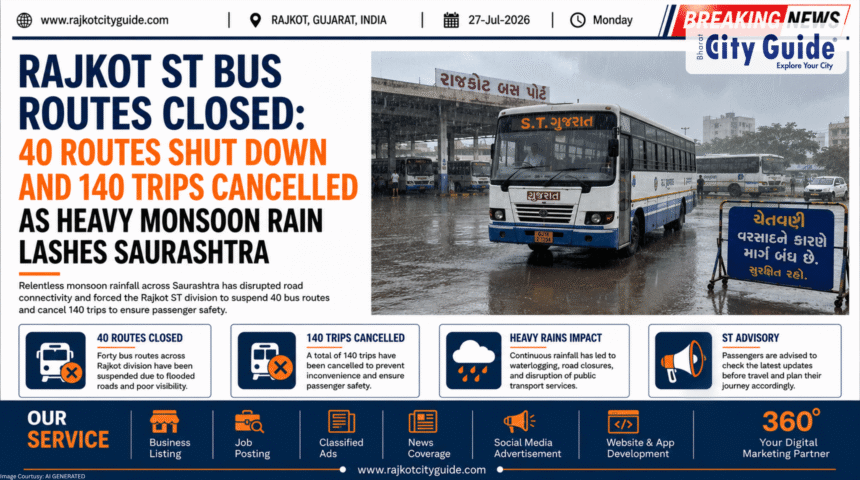
Monsoon rainfall acts as both a blessing and a systemic challenge for the state of Gujarat. While it fills critical agricultural reservoirs, intense downpours often create massive bottlenecks for public transport networks. Recently, severe weather systems triggered widespread flooding, leading to a critical situation where 40 Rajkot ST bus routes closed. The subsequent operational suspension resulted in the immediate cancellation of 140 planned trips, heavily striking the transit links connecting Rajkot, Morbi, and Surendranagar.
For two consecutive days, thousands of regional commuters, rural workers, and families faced extreme travel difficulties. The state’s public transport lifeline—managed by the Gujarat State Road Transport Corporation (GSRTC)—had to implement these shutdowns as low-lying state highways, causeways, and rural village roads quickly submerged. When heavy runoff flows over arterial roads, proceeding with heavy commercial vehicles poses immediate safety risks.
This disruption highlights the ongoing vulnerability of regional logistics when faced with heavy, concentrated rainfall. As major state corridors turn into impassable waterways, regional bus divisions are forced to choose between maintaining regular schedules or protecting lives. This extensive article provides a detailed look into the GSRTC cancellations, the specific regions affected, the infrastructure challenges involved, and how local authorities are handling this environmental emergency.
What Does “Rajkot ST Bus Routes Closed” Mean?
When terms like Rajkot ST bus routes closed emerge in state transportation alerts, it describes a formal emergency declaration issued by regional traffic managers. In this instance, persistent rain led to severe waterlogging, river overflows, and structural road washouts on key highway points. When low-clearance rural bridges (locally called causeways) go underwater, standard State Transport (ST) buses are strictly grounded.
The closure impacts more than just local city paths; it cuts off vital links between major commercial hubs like Rajkot, the industrial ceramic center of Morbi, and the agricultural trading zones of Surendranagar. When these routes close down, it means entire bus schedules—covering express, local, and rural sub-division lines—are halted until safety teams inspect the roads and clear them for travel.
Why This News is Important
The grounding of regional bus fleets carries major social and economic impacts for the Saurashtra region:
- Disruption of the Rural Lifeline: Unlike metropolitan areas with private cabs and metro lines, rural Gujarat depends almost entirely on ST buses for affordable everyday transit.
- Economic Friction for Industrial Hubs: The Rajkot-Morbi industrial corridor requires a steady flow of labor, technicians, and supervisors daily. Halting bus networks directly slows down operational shifts at local manufacturing plants.
- Testing Climate Resilience: The two-day transport suspension emphasizes the urgent need for climate-resilient road designs, better bridge elevations, and modernized drainage along regional highways.
Background Information
The Gujarat State Road Transport Corporation (GSRTC) is a massive public transit network, operating a large fleet of buses that link remote villages to prominent urban centers. The Rajkot Division serves as a core administrative hub for this network, coordinating regional routes across the Saurashtra peninsula.
   [ Rajkot Divisional Depot ]
          │
          ├──► [ Morbi Industrial Route ]       ===> (Impassable due to waterlogging)
          │
          └──► [ Surendranagar Rural Line ]     ===> (Submerged bridges & causeways)
During peak monsoon periods, the Saurashtra region frequently faces sudden, intense cloudbursts. The local topography features numerous small, seasonal rivers and low-set causeways built decades ago. When nearby dams release excess water or local channels overflow, these roads submerge rapidly. While newer national highways feature higher elevations, the state roads and rural routes connecting smaller towns remain highly vulnerable to sudden flood waters.
Key Highlights
- Extensive Fleet Disruption: Official shutdown of 40 active GSRTC routes across the division.
- Massive Trip Cancellations: Total cancellation of 140 scheduled daily trips, stranding passengers.
- Geographic Focus: The heaviest travel impacts hit the Rajkot, Morbi, and Surendranagar routes.
- Prolonged Travel Delays: Commuters faced severe transit issues for a second straight day.
- Safety First Strategy: Operations were suspended due to water washing over low bridges and highways.
Detailed Explanation of the Event
The decision to close routes followed a series of field reports sent by regional bus drivers and depot managers. As rainfall intensified across Saurashtra, key road links between Rajkot, Morbi, and Surendranagar began showing high water levels. Several seasonal causeways were quickly overwhelmed by fast-moving currents, making it dangerous for heavy buses to cross.
To prevent structural accidents, GSRTC officials acted quickly, closing 40 routes and cancelling 140 trips. Major bus stations in Rajkot and Morbi saw long lines of passengers waiting for updates, with many forced to find alternative travel or cancel their plans altogether.
+-----------------------------------------------------------------------------+
|                SUMMARY OF REGIONAL ST BUS CANCELLATIONS                     |
+-----------------------------------------------------------------------------+
|  METRIC                     | IMPACT DETAILS                                |
+-----------------------------+-----------------------------------------------+
|  Total Closed Routes        | 40 Routes across Saurashtra                 |
|  Total Cancelled Trips      | 140 Scheduled Runs                          |
|  Primary Divisions Hit      | Rajkot, Morbi, Surendranagar       |
|  Main Cause                 | Waterlogged causeways, submerged highways     |
|  Duration of Impact         | 2 Consecutive Days of Disruption              |
+-----------------------------+-----------------------------------------------+
How It Impacts People
Daily Workers and Industrial Laborers
The ceramic factories in Morbi and the engineering workshops in Rajkot rely heavily on workers traveling from nearby villages. With the bus routes closed, many workers could not reach their shifts, resulting in lost daily wages and reduced production outputs for local businesses.
Students and Academic Commuters
Many rural students depend on affordable ST buses to reach colleges and universities in Rajkot and Surendranagar. The unexpected service closures left students stranded at rural bus stands, forcing them to miss important laboratory sessions and mid-term exams.
Medical Patients and Elderly Travelers
For rural residents, ST buses provide an essential connection to advanced healthcare facilities located in larger cities. The two-day transit halt disrupted planned doctor appointments, routine medical checkups, and access to pharmacies, leaving vulnerable individuals dependent on costly private vehicles.
Challenges and Infrastructure Limitations
Managing public transport during severe weather highlights several key systemic challenges:
- Low-Level Bridge Hazards: Many rural roads rely on low-lying causeways that submerge even during moderate rainfall, cutting off village access.
- Communication Gaps: Relaying real-time road condition updates from remote routes to central planning depots remains a difficult task.
- Financial Impact on Public Transit: Mass trip cancellations cause substantial revenue losses for the state transport corporation while increasing maintenance costs for the fleet.
Future Outlook
To mitigate recurring monsoon closures, transportation authorities are looking into more dynamic scheduling and digital warning systems. Future strategies include integrating GPS tracking on buses with regional flood-monitoring software, allowing depots to reroute buses before they encounter flooded roads.
Additionally, ongoing state initiatives aimed at replacing low causeways with elevated, all-weather bridges will help reduce these seasonal disruptions. As these infrastructure upgrades roll out, the GSRTC network will be better positioned to maintain regular service, protecting the travel needs of millions across Gujarat.
Frequently Asked Questions (FAQs)
Why were the Rajkot ST bus routes closed recently?
Routes were closed due to heavy monsoon rains that flooded highways, roads, and low-lying causeways, making travel unsafe for large passenger buses.
How many trips were cancelled due to this rainfall?
A total of 140 scheduled trips were cancelled across the affected sub-divisions, heavily impacting regular passenger travel.
Which districts in Saurashtra faced the worst travel disruptions?
The travel disruptions hit hardest across the Rajkot, Morbi, and Surendranagar districts.
Can passengers get a refund for pre-booked GSRTC tickets?
Yes. If a scheduled bus trip is officially cancelled by GSRTC due to weather or road blocks, passengers who booked online receive a full refund directly to their accounts.
How can I verify if a specific bus route has reopened?
Passengers can track route updates on the official GSRTC website, check via the GSRTC mobile app, or call local district depot helplines.
What alternative travel options exist when ST buses are suspended?
When bus services are halted, commuters must rely on regional trains or use private vehicles via alternative, elevated national highways, though these options often cost more.
Conclusion
The recent closure of 40 Rajkot ST bus routes highlights the vulnerability of regional transport infrastructure during intense monsoon seasons. While the suspension of 140 trips caused widespread inconvenience, grounding the fleet was a necessary safety measure to protect passengers from flooded roads and hazardous crossings.
Addressing these recurring travel challenges requires a steady focus on updating infrastructure, elevating low bridges, and improving real-time commuter alerts. By building more resilient roads and better communication systems, Gujarat can ensure its public transport network remains safe, dependable, and ready to withstand severe weather events.