Introduction
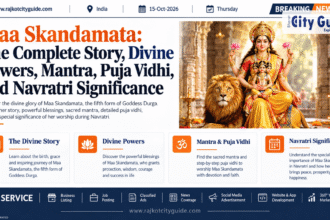
Maa Kushmanda is the fourth form of Goddess Durga worshipped during the nine sacred days of Navratri. She is revered as the divine mother associated with the creation of the universe, cosmic energy, light, vitality, and prosperity. According to Hindu devotional tradition, when darkness prevailed throughout the universe, Maa Kushmanda created cosmic existence through her gentle smile. Her divine radiance brought light, energy, and life into the universe, earning her a special place among the nine forms of Navdurga.
- Introduction
- Who Is Maa Kushmanda?
- The Meaning of the Name Maa Kushmanda
- The Real Story of Maa Kushmanda
- The Divine Appearance of Maa Kushmanda
- Spiritual Significance of Maa Kushmanda
- Why Is Maa Kushmanda Worshipped on the Fourth Day of Navratri?
- Maa Kushmanda Puja Vidhi: Step-by-Step Worship Method
- Maa Kushmanda Mantra and Its Meaning
- Favourite Offerings to Maa Kushmanda
- The Colour Associated with Maa Kushmanda
- Benefits and Blessings of Worshipping Maa Kushmanda
- Maa Kushmanda and the Symbolism of the Sun
- Lessons from the Life and Story of Maa Kushmanda
- Difference Between Maa Chandraghanta and Maa Kushmanda
- Frequently Asked Questions About Maa Kushmanda
- Conclusion
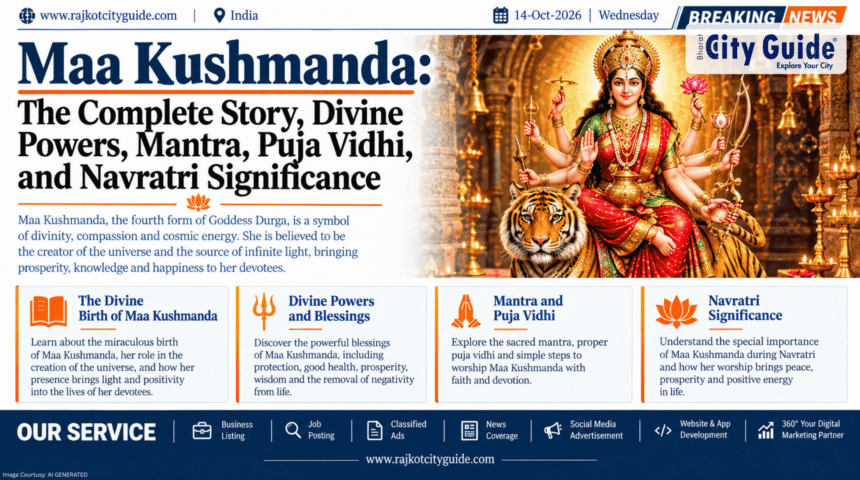
The name Maa Kushmanda carries a profound spiritual meaning. It is traditionally associated with the concept of the cosmic egg, representing the universe and the origin of creation. She is commonly depicted with eight arms, holding divine weapons and sacred objects, and riding a lion. Her radiant appearance symbolizes the limitless power of the Divine Feminine and the energy that sustains all existence.
Devotees worship Maa Kushmanda on the fourth day of Navratri to seek happiness, health, strength, prosperity, wisdom, and spiritual growth. Her worship reminds people that even a small expression of positivity can bring hope into difficult circumstances. Her traditional story also teaches that creation, transformation, and renewal begin with divine energy. Understanding the story of Maa Kushmanda, her divine appearance, sacred mantra, puja vidhi, offerings, and spiritual significance helps devotees appreciate the deeper meaning of Navratri and the power of the Divine Mother.
Who Is Maa Kushmanda?
Maa Kushmanda is the fourth manifestation of Navdurga, the nine celebrated forms of Goddess Durga worshipped during Navratri. She is associated with the creation of the universe and the cosmic energy that sustains life. In Hindu devotional traditions, she is regarded as an expression of Adishakti, the primordial divine power from which creation emerges.
According to popular religious belief, before the universe came into existence, there was darkness and no visible manifestation of creation. Maa Kushmanda illuminated this darkness through her divine smile and brought the universe into existence. This account symbolizes the emergence of light, energy, and life from the primordial state of existence.
Maa Kushmanda is also associated with vitality, nourishment, radiance, and abundance. Her divine energy is believed to sustain the cosmic order and support the continuation of life. Her traditional connection with the Sun further emphasizes her radiant power and the importance of light and warmth in sustaining existence.
Unlike the peaceful ascetic appearance of Maa Brahmacharini, Maa Kushmanda is usually portrayed as a majestic goddess with eight arms and a powerful lion as her mount. Her appearance communicates both creative energy and the strength required to preserve the cosmic balance.
For devotees, Maa Kushmanda represents hope, positivity, inner strength, and the ability to begin again. Her worship encourages people to cultivate optimism, appreciate the gifts of life, and use their abilities for constructive purposes.
The Meaning of the Name Maa Kushmanda
The name Maa Kushmanda is traditionally interpreted through the Sanskrit elements Ku, Ushma, and Anda. These elements are commonly explained as relating to little, warmth or energy, and a cosmic egg, respectively.
This interpretation connects the goddess with the concept of the universe emerging from a cosmic source of energy. The cosmic egg represents the universe as a complete form of creation, while warmth symbolizes the energy associated with the emergence and continuation of life.
Maa Kushmanda is therefore celebrated as a divine source of creative energy. Her traditional story presents creation not as an ordinary physical event but as an expression of the boundless power of the Divine Mother.
Her name also carries a spiritual lesson. Just as warmth and light can transform a dark environment, positivity and understanding can transform a person’s outlook. Devotees are encouraged to develop hope, patience, and confidence even when life becomes difficult.
The name Maa Kushmanda consequently represents far more than a title. It expresses her connection with cosmic creation, divine radiance, and the energy that supports existence.
The Real Story of Maa Kushmanda
The story of Maa Kushmanda comes from Hindu religious and devotional traditions surrounding the creation of the universe and the power of Goddess Durga. Different scriptures and regional traditions describe divine creation in different ways. The account of Maa Kushmanda creating the universe through her smile is a widely shared Navdurga tradition rather than a single universally identical narrative.
Before the Creation of the Universe
According to popular Hindu devotional accounts, before the universe was manifested, darkness extended throughout existence. There were no familiar celestial bodies, no visible worlds, and no established cosmic order as people understand them.
In this primordial state, the Divine Mother existed as the source of creative potential. Maa Kushmanda represents this primordial divine energy, which is associated with the beginning of cosmic existence.
Her story describes how creation emerged through the power of her divine smile. The smile symbolizes effortless creative power, joy, and the awakening of existence from darkness.
This idea is deeply symbolic. Darkness represents the unmanifest state, while light represents awareness, life, and the emergence of an ordered universe. Maa Kushmanda’s role as the creator therefore expresses the belief that all existence ultimately depends on divine energy.
Her story encourages devotees to understand creation as a sacred process and to recognize the importance of light, energy, and balance in the world.
Maa Kushmanda Creates the Universe Through Her Divine Smile
The central story of Maa Kushmanda states that she created the universe through her gentle smile. Her smile generated the cosmic energy from which the universe emerged, bringing light and movement into what had previously been darkness.
This extraordinary act is the reason she is traditionally associated with the cosmic egg and regarded as a manifestation of the primordial creative power.
Unlike stories that focus primarily on battles between gods and demons, the story of Maa Kushmanda emphasizes the beginning of existence. Her power is expressed through creation rather than destruction.
Her smile symbolizes the idea that divine creation can arise from joy, harmony, and limitless energy. It also reflects the nurturing nature of the Divine Mother, who brings existence into being and sustains it through her power.
The story should be understood as a religious and symbolic account rather than a scientific explanation of the universe’s physical origins. Its purpose is to communicate the sacred significance of creation and the role of divine energy in Hindu belief.
The Creation of Light and Cosmic Energy
After creating the universe in the traditional account, Maa Kushmanda is associated with the emergence of light and the energy that sustains creation. Her divine radiance symbolizes the awakening of cosmic activity and the establishment of the conditions necessary for life.
The Sun holds a particularly important place in her symbolism. Hindu devotional traditions describe Maa Kushmanda as residing within the solar realm or being closely connected with the Sun’s immense radiance. This association represents her ability to endure and embody extraordinary cosmic energy.
Light has profound spiritual significance in Hindu traditions. It represents knowledge, awareness, clarity, and the removal of ignorance. The Sun, meanwhile, is essential to life and is revered in many forms of Hindu worship.
Maa Kushmanda’s connection with solar energy therefore unites spiritual and natural symbolism. She represents the divine power that illuminates existence and the vitality that supports the universe.
For devotees, this aspect of her story is a reminder to welcome knowledge, maintain hope, and use their own energy in positive and meaningful ways.
Maa Kushmanda as the Mother of Cosmic Creation
Maa Kushmanda’s role as a creator goddess makes her one of the most distinctive forms of Navdurga. Her story highlights the creative dimension of divine power, showing that the Divine Mother is associated not only with protection and destruction of evil but also with the beginning and continuation of existence.
Her creative energy is understood as the foundation of cosmic order. Through her symbolism, devotees recognize that life, nature, and the universe are interconnected expressions of a greater divine reality.
As a mother figure, Maa Kushmanda also represents nourishment and care. Creation is not simply the act of bringing something into existence; it also involves sustaining it and providing the conditions for growth.
This interpretation connects her divine role with the everyday experiences of birth, learning, renewal, and personal transformation. Every meaningful beginning requires energy, patience, and care.
The story of Maa Kushmanda therefore encourages devotees to respect life, protect nature, and use their creative abilities responsibly.
The Divine Appearance of Maa Kushmanda
Maa Kushmanda is traditionally depicted as a radiant goddess with eight arms. Because of this distinctive appearance, she is also known as Ashtabhuja Devi, meaning the eight-armed goddess.
She is commonly shown riding a lion, which symbolizes courage, strength, and the ability to overcome obstacles. Her radiant complexion and majestic presence reflect her association with cosmic light and creative energy.
The objects in her hands vary somewhat across devotional images and artistic traditions. Common representations include a kamandalu, bow, arrow, lotus, discus, mace, rosary, and a pot associated with divine nourishment or nectar. The exact arrangement can differ between depictions.
Each object carries symbolic meaning. The bow and arrow represent readiness and focused action. The discus symbolizes divine power and the preservation of order. The mace represents strength, while the lotus symbolizes purity and spiritual growth. The rosary represents prayer and devotion, and the kamandalu reflects spiritual discipline.
Her eight arms communicate the many dimensions of divine energy. She is portrayed as capable of creating, protecting, nourishing, and sustaining existence.
Her lion mount adds another layer of meaning. It represents courage and control over powerful instincts, showing that strength should be directed toward a higher purpose.
Together, these features make Maa Kushmanda a symbol of radiant power, abundance, and the creative energy of the Divine Mother.
Spiritual Significance of Maa Kushmanda
Maa Kushmanda represents several spiritual qualities that devotees seek to cultivate in their lives.
Creation and New Beginnings
Her story symbolizes the emergence of existence from darkness. Devotees can interpret this as a reminder that new beginnings are possible even after difficult experiences.
Light and Knowledge
Her association with cosmic radiance represents the removal of ignorance and the growth of understanding. Her symbolism encourages people to seek knowledge and make decisions with clarity.
Positivity and Joy
Her divine smile is a central feature of her story. It represents the power of positivity, hope, and a constructive outlook in the face of challenges.
Vitality and Energy
Maa Kushmanda is associated with the energy that sustains creation. Devotees look to her as a symbol of vitality, enthusiasm, and the strength to carry out their responsibilities.
Nourishment and Abundance
As a creator and sustaining mother, she represents nourishment and the conditions necessary for growth. Her worship encourages gratitude for food, nature, family, and the resources that support life.
Courage and Strength
Her lion mount and eight-armed form express strength and readiness. She inspires devotees to overcome obstacles through determination, wisdom, and faith.
Why Is Maa Kushmanda Worshipped on the Fourth Day of Navratri?
Navratri is a Hindu festival dedicated to the worship of Goddess Durga and her nine traditional forms. Maa Kushmanda is worshipped on the fourth day, following Maa Shailputri, Maa Brahmacharini, and Maa Chandraghanta.
The sequence of Navdurga symbolizes different dimensions of spiritual development. Maa Shailputri represents the foundation of the spiritual journey, Maa Brahmacharini represents discipline and devotion, and Maa Chandraghanta represents courage and protection. Maa Kushmanda then represents creative energy, radiance, and the power that sustains existence.
On the fourth day, devotees perform puja, recite the goddess’s mantra, offer flowers and food, and participate in aarti according to their family traditions.
The day encourages reflection on the importance of positivity, gratitude, and renewal. Devotees may use this occasion to begin constructive habits, strengthen their spiritual practice, or focus on personal growth.
Maa Kushmanda’s worship also reminds people to appreciate the natural world and the energy that sustains life. Her association with the Sun makes her an important symbol of warmth, light, and vitality.
Maa Kushmanda Puja Vidhi: Step-by-Step Worship Method
Devotees can worship Maa Kushmanda at home through a simple and respectful puja. The following steps describe a general devotional practice; specific customs may vary by family and region.
Step 1: Clean the Puja Area
Begin by cleaning the worship area. Take a bath, wear clean clothes, and place a picture or idol of Maa Kushmanda in a clean and peaceful location.
Step 2: Prepare the Puja Materials
Arrange flowers, fresh water, fruits, a diya, incense, and traditional sweets. You may also prepare a plate for prasad and keep a bell for aarti if it is part of your customary worship.
Step 3: Light the Diya
Light a lamp before the goddess and offer a prayer. The light represents knowledge, hope, and the removal of darkness from the mind.
Step 4: Offer Flowers and Water
Offer flowers and water to Maa Kushmanda with devotion. Red, yellow, or other suitable flowers may be used according to personal and regional traditions.
Step 5: Offer Bhog
Prepare a traditional food offering such as fruit, halwa, malpua, or another sweet commonly used in your family tradition. Offer it respectfully and distribute it as prasad after the puja.
Step 6: Recite the Mantra
Chant the Maa Kushmanda mantra with a calm mind. Devotees may repeat the mantra 11, 21, or 108 times according to their preference and customary practice.
Step 7: Read Her Story
Read the traditional story of Maa Kushmanda or recite devotional verses associated with her. Reflect on the values of creation, positivity, gratitude, and spiritual strength.
Step 8: Perform Aarti
Conclude the puja with aarti and a prayer for health, wisdom, peace, and spiritual progress. Distribute prasad respectfully among family members.
The purpose of worship is to express devotion and cultivate the qualities represented by the goddess. Simple, sincere worship is meaningful even without elaborate arrangements.
Maa Kushmanda Mantra and Its Meaning
The commonly recited mantra of Maa Kushmanda is:
ॐ देवी कूष्माण्डायै नमः॥
Transliteration: Om Devi Kushmandayai Namah.
Meaning: Salutations to Goddess Kushmanda, the divine embodiment of creative energy, radiance, vitality, and cosmic power.
Devotees chant this mantra during Navratri puja, meditation, and daily prayer. It helps focus attention on the goddess and the spiritual qualities she represents.
Another devotional verse associated with Maa Kushmanda is:
वन्दे वाञ्छितकामार्थे चन्द्रार्धकृतशेखराम्। सिंहरूढा अष्टभुजा कूष्माण्डा यशस्विनीम्॥
Meaning: I bow to the glorious Goddess Kushmanda, who fulfils worthy aspirations, wears the crescent moon as an ornament, rides a lion, and possesses eight arms.
This verse describes the goddess’s traditional appearance and expresses reverence for her divine power.
Mantra recitation is traditionally performed with sincerity, respect, and concentration. Devotees may follow the number of repetitions prescribed by their family tradition or personal spiritual practice.
Favourite Offerings to Maa Kushmanda
Devotees offer simple and traditional foods to Maa Kushmanda during Navratri. Fruits, sweets, water, and flowers are common offerings in household worship.
Malpua, halwa, and other traditional sweets are associated with her worship in popular devotional customs. Some traditions also mention curd, petha, or other preparations. Offerings vary according to regional practices and family customs.
Pumpkin is sometimes associated with the goddess because the name Kushmanda is popularly connected with the Sanskrit term for a pumpkin or gourd. However, interpretations of the name and specific offerings are not identical across all traditions.
The central principle is to offer food with devotion and gratitude. Elaborate or expensive offerings are not necessary.
After the puja, food may be distributed as prasad among family members and others, according to the household’s custom. Offerings should be prepared hygienically and handled respectfully.
The Colour Associated with Maa Kushmanda
The colour associated with Maa Kushmanda varies across Navratri calendars and regional traditions. Some calendars assign royal blue to the fourth day in 2026, while other devotional practices may use different colours.
Rather than treating a particular colour as a universal religious requirement, devotees can follow their local calendar or family tradition.
The symbolic qualities associated with Maa Kushmanda include light, warmth, energy, creativity, and positivity. Her radiant form reminds devotees to develop a hopeful outlook and use their energy constructively.
Her worship also encourages people to appreciate sunlight, nature, and the conditions that make life possible. These themes connect the goddess’s divine symbolism with gratitude for the world around us.
Benefits and Blessings of Worshipping Maa Kushmanda
According to Hindu devotional belief, worshipping Maa Kushmanda is associated with health, vitality, prosperity, positivity, and spiritual strength.
Devotees pray to her for the strength to overcome difficulties and maintain hope during challenging times. Her creative symbolism also inspires people to begin new projects, develop their talents, and work toward meaningful goals.
Students may draw inspiration from her association with knowledge and energy. Families may seek blessings for harmony and abundance. Spiritual seekers may reflect on her radiant form as a reminder to develop inner clarity and gratitude.
Her worship is also associated with courage and determination through the symbolism of her lion mount and eight arms.
These benefits are understood as matters of religious faith and spiritual inspiration rather than guaranteed material or medical outcomes. Worship can complement practical effort, responsible decisions, and a balanced approach to life.
The enduring value of Maa Kushmanda’s example lies in the encouragement to remain hopeful, creative, grateful, and committed to constructive action.
Maa Kushmanda and the Symbolism of the Sun
The Sun plays an important role in the traditional symbolism of Maa Kushmanda. Hindu devotional accounts associate her with the solar realm and the extraordinary radiance that sustains cosmic existence.
The Sun provides light and warmth and is essential to life on Earth. In spiritual symbolism, sunlight is also associated with knowledge, awareness, vitality, and the removal of darkness.
Maa Kushmanda’s connection with the Sun expresses the idea that divine energy illuminates the universe and sustains its activity. Her radiant form represents the abundance of creative power that flows through existence.
This symbolism encourages devotees to value the natural world and recognize the importance of energy, light, and balance. It also serves as a metaphor for personal growth: just as sunlight helps living things grow, knowledge and positive habits help people develop their abilities.
The goddess’s association with solar energy therefore connects cosmic creation with the everyday importance of vitality, clarity, and renewal.
Lessons from the Life and Story of Maa Kushmanda
The story of Maa Kushmanda offers several meaningful lessons for everyday life.
First, her divine smile represents positivity. A hopeful attitude cannot remove every obstacle, but it can help people approach difficulties with greater confidence and creativity.
Second, her role as creator highlights the importance of new beginnings. People can learn from past experiences and take constructive steps toward a better future.
Third, her radiant form symbolizes knowledge and clarity. Thoughtful decisions, continuous learning, and self-awareness can help individuals navigate difficult situations.
Fourth, her connection with nourishment reminds devotees to appreciate the resources that sustain life. Gratitude for food, family, nature, and community can strengthen a person’s sense of responsibility.
Fifth, her eight arms represent the many abilities needed to meet life’s responsibilities. With patience, preparation, and determination, people can use their talents to support others and contribute positively to society.
Finally, her association with cosmic creation teaches respect for life and the interconnectedness of existence. Her example encourages people to protect nature, cultivate compassion, and use their creative abilities wisely.
These lessons make Maa Kushmanda’s message meaningful beyond the nine days of Navratri.
Difference Between Maa Chandraghanta and Maa Kushmanda
Maa Chandraghanta and Maa Kushmanda are the third and fourth forms of Navdurga, respectively, but their traditional symbolism differs.
Maa Chandraghanta represents courage, protection, and the power to confront evil. She is commonly depicted with ten arms, divine weapons, and a lion or tiger as her mount.
Maa Kushmanda represents cosmic creation, radiance, vitality, and the energy that sustains the universe. She is generally depicted with eight arms and a lion as her mount.
Their stories highlight different aspects of the Divine Feminine. Maa Chandraghanta emphasizes protection and fearlessness, while Maa Kushmanda emphasizes creation and renewal.
Together, they teach devotees that life requires both the courage to face challenges and the creativity to build something positive.
Frequently Asked Questions About Maa Kushmanda
1. Who Is Maa Kushmanda?
Maa Kushmanda is the fourth form of Goddess Durga worshipped during Navratri. According to popular Hindu devotional tradition, she created the universe through her divine smile and represents cosmic energy, radiance, vitality, and creative power.
2. What Is the Mantra of Maa Kushmanda?
The commonly recited mantra is “ॐ देवी कूष्माण्डायै नमः॥” (Om Devi Kushmandayai Namah). Devotees chant it to express devotion and seek inspiration for positivity, strength, and spiritual growth.
3. What Should Be Offered to Maa Kushmanda?
Devotees commonly offer fruits, flowers, water, and traditional sweets. Malpua and halwa are associated with her worship in popular devotional customs, although offerings can vary by region and family tradition.
Conclusion
Maa Kushmanda is a powerful and inspiring form of Goddess Durga, traditionally revered as the divine mother associated with the creation of the universe. Worshipped on the fourth day of Navratri, she symbolizes cosmic energy, light, vitality, positivity, and the power of new beginnings. Her traditional story describes how the universe emerged through her gentle smile, transforming primordial darkness into radiant existence. Her eight-armed form, lion mount, sacred objects, and connection with the Sun express her extraordinary creative power and the energy that sustains life. Through her mantra, puja vidhi, and devotional offerings, devotees honour her divine presence and reflect on the importance of gratitude, hope, courage, and spiritual awareness. Her teachings encourage people to overcome negativity, appreciate nature, develop their talents, and use their abilities for constructive purposes. Maa Kushmanda’s message extends beyond religious rituals, reminding everyone that positivity and determination can help create meaningful change. During Navratri and throughout the year, her divine example inspires devotees to welcome new beginnings, nurture their inner strength, and live with greater purpose, compassion, and gratitude.