Introduction
Maa Skandamata is one of the most revered forms of Goddess Durga and is worshipped as the fifth manifestation of Navdurga during the sacred festival of Navratri. She represents motherhood, compassion, courage, wisdom, and divine protection. Devotees worship Maa Skandamata to seek the blessings of a loving mother who protects her children, guides them through difficulties, and inspires them to follow the path of righteousness. Her name is closely associated with Lord Skanda, also known as Kartikeya, the divine son of Lord Shiva and Goddess Parvati. The word “Skandamata” means “Mother of Skanda,” highlighting her role as the divine mother of the warrior deity who leads the celestial army in Hindu tradition.
- Introduction
- Who Is Maa Skandamata?
- The Meaning Behind the Name Maa Skandamata
- The Story of Maa Skandamata: The Birth of Lord Skanda and the Defeat of Tarakasura
- The Divine Appearance of Maa Skandamata
- Why Is Maa Skandamata Worshipped on the Fifth Day of Navratri?
- Spiritual Significance of Maa Skandamata
- Maa Skandamata Puja Vidhi: How to Worship the Goddess at Home
- Maa Skandamata Mantra and Its Meaning
- Maa Skandamata’s Favourite Offerings and Bhog
- Which Colour Is Associated with Maa Skandamata?
- Blessings Devotees Seek from Maa Skandamata
- The Connection Between Maa Skandamata and Lord Kartikeya
- The Spiritual Lessons of Maa Skandamata for Everyday Life
- Frequently Asked Questions About Maa Skandamata
- Conclusion
Maa Skandamata is traditionally worshipped on the fifth day of Sharadiya Navratri. Her image commonly depicts her seated on a lotus, holding her son Skanda in her lap, with four arms and a peaceful, motherly expression. She is also known as Padmasana Devi because of her association with the lotus. Her form beautifully combines the tenderness of motherhood with the immense strength of the Divine Mother. Understanding Maa Skandamata’s story, symbolism, worship practices, and spiritual significance helps devotees appreciate why she holds such an important place in Hindu religious tradition.
Who Is Maa Skandamata?
Maa Skandamata is the fifth form of Navdurga, the nine manifestations of Goddess Durga worshipped during Navratri. She is identified with Goddess Parvati in her role as the mother of Lord Skanda, or Kartikeya. In Hindu mythology, Skanda is associated with courage, leadership, discipline, and the destruction of evil forces. As his mother, Maa Skandamata represents the divine power that nurtures and strengthens those who stand for truth and righteousness.
Her identity is not limited to motherhood alone. She is also a powerful manifestation of Shakti, the universal feminine energy believed to sustain creation and protect the cosmic order. Her peaceful appearance communicates kindness, but her divine nature represents strength capable of overcoming darkness and ignorance.
For devotees, Maa Skandamata symbolises the balance between affection and discipline, tenderness and courage, and spiritual wisdom and practical responsibility. She reminds people that genuine love is not weakness. It is a powerful force that gives others the confidence to face challenges and fulfil their responsibilities.
The Meaning Behind the Name Maa Skandamata
The name Maa Skandamata is formed from two Sanskrit words: “Skanda” and “Mata.” Skanda refers to Lord Kartikeya, while Mata means mother. Together, the name means “Mother of Skanda.”
Lord Skanda is also known by names such as Kartikeya, Murugan, and Subrahmanya in different Hindu traditions. He is widely worshipped as a deity associated with valour, wisdom, and victory over negative forces. Maa Skandamata’s name therefore reflects her maternal relationship with a deity who embodies divine courage and the protection of righteousness.
She is also associated with the lotus, a symbol of purity, spiritual growth, and detachment. The lotus grows in muddy water while remaining remarkably clean, making it a powerful representation of the ability to live in the world without being overwhelmed by negativity. Through this symbolism, Maa Skandamata encourages devotees to remain compassionate, truthful, and spiritually grounded even when life becomes difficult.
Her name also reminds worshippers that divine motherhood extends beyond the relationship between a parent and child. It represents the nurturing energy that supports spiritual progress, protects the vulnerable, and encourages individuals to develop their inner strength.
The Story of Maa Skandamata: The Birth of Lord Skanda and the Defeat of Tarakasura
The traditional story of Maa Skandamata is connected with the birth of Lord Skanda, also known as Kartikeya, and his role in defeating the powerful demon Tarakasura. This story appears in Hindu mythological traditions, although details may differ between texts and regional retellings.
According to the popular account, Tarakasura performed intense penance to obtain a boon from Lord Brahma. As a result of his devotion, he received a powerful blessing that made him extremely difficult to defeat. In the commonly told version, Tarakasura believed that only a son of Lord Shiva could kill him. Since Shiva was deeply devoted to meditation and lived as an ascetic, the demon assumed that Shiva would never marry or have a son. Confident in his apparent protection, Tarakasura began troubling the gods and creating suffering throughout the worlds.
Unable to overcome him, the gods approached Lord Brahma and sought a way to restore peace. They understood that the birth of Shiva’s son was essential to defeating the demon. Their hopes turned toward Goddess Parvati, who was devoted to Lord Shiva and represented the divine power needed to bring about this union.
Goddess Parvati undertook deep devotion and spiritual discipline. Through her unwavering dedication, she eventually married Lord Shiva. Their divine union led to the birth of Lord Skanda, who would become the commander of the celestial army. In the traditional narrative, Skanda grew into a powerful warrior and led the divine forces against Tarakasura. He ultimately defeated the demon and restored balance.
This story explains why Maa Skandamata is revered not only as a loving mother but also as the mother of a divine protector. Her motherhood is associated with courage, determination, and the protection of the world from destructive forces. The story also conveys that arrogance and the misuse of power cannot permanently overcome righteousness.
The deeper spiritual message of Maa Skandamata’s story is that nurturing and strength can exist together. A mother’s love can give rise to courage, discipline, and the determination to face injustice. Devotees remember her as the divine mother who supports the forces of goodness and helps restore harmony when evil threatens the world.
The Divine Appearance of Maa Skandamata
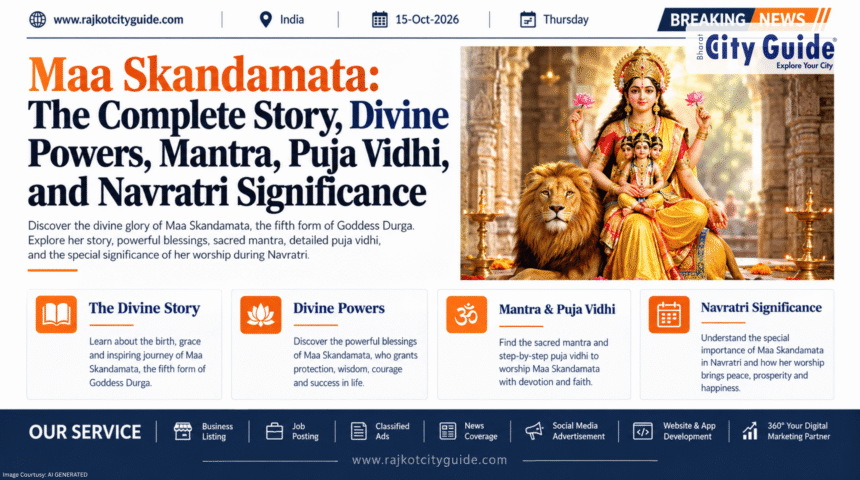
The traditional image of Maa Skandamata is rich in religious symbolism. She is generally depicted with four arms, seated on a lotus or riding a lion, while holding her young son Lord Skanda in her lap. Her calm expression represents maternal affection, peace, and divine protection.
Each element of her appearance carries a spiritual meaning.
Four arms: Her four arms represent divine power and the ability to protect, guide, bless, and support devotees. They communicate that the Divine Mother is capable of responding to different needs while maintaining compassion.
Lord Skanda in her lap: The child seated in her lap represents motherhood, affection, care, and the nurturing of divine courage. It also connects her directly to Lord Kartikeya, the warrior deity who defeats Tarakasura in the traditional story.
Lotus flowers: Maa Skandamata is often shown holding lotus flowers in two of her hands. The lotus represents purity, spiritual awakening, and the ability to remain peaceful despite the difficulties of worldly life.
Blessing gesture: In many depictions, one hand is raised in a gesture of blessing. It symbolises reassurance, protection, and the hope that devotees will find strength and guidance through their faith.
Lion: The lion associated with Maa Skandamata represents bravery, authority, and the power to confront negative forces. Some images show her seated directly on a lotus, while others depict her riding a lion.
Peaceful face: Her gentle expression represents kindness and unconditional maternal love. Although she is connected with a mighty warrior, her own appearance reminds devotees that divine strength can be calm, compassionate, and protective.
Together, these features portray Maa Skandamata as a mother who offers affection while embodying the power needed to defend righteousness.
Why Is Maa Skandamata Worshipped on the Fifth Day of Navratri?
Navratri is a sacred Hindu festival dedicated to the worship of the nine forms of Goddess Durga, collectively known as Navdurga. Each day honours a particular manifestation of the Goddess and highlights different spiritual qualities.
Maa Skandamata is traditionally worshipped on the fifth day. After the forms of Shailputri, Brahmacharini, Chandraghanta, and Kushmanda, devotees turn their attention to the divine motherhood and protective strength represented by Skandamata.
The fifth day is an opportunity to reflect on compassion, family responsibilities, courage, and spiritual wisdom. Devotees pray for peace in their homes, the well-being of children, strength during difficult circumstances, and the wisdom to make responsible decisions.
Her worship also reminds people that spiritual growth requires more than personal ambition. It involves caring for others, fulfilling responsibilities, showing patience, and using strength for a good purpose. For parents, her image can be a reminder to nurture children with love while helping them develop confidence, discipline, and kindness.
The exact calendar date of the fifth day changes each year because Navratri follows the Hindu lunar calendar. Devotees can consult a local panchang for the correct tithi and any customary timings followed in their region.
Spiritual Significance of Maa Skandamata
Maa Skandamata represents several important values in Hindu spiritual thought. Her worship is closely associated with maternal care, purity, wisdom, protection, and the development of inner strength.
Motherhood and compassion: Maa Skandamata symbolises the love of a mother who cares for her child without expecting anything in return. Her image encourages people to treat their families and communities with patience and kindness.
Courage and protection: Through her connection with Lord Skanda, she represents the strength required to stand against injustice. Her worship encourages devotees to face challenges with determination rather than surrendering to fear.
Wisdom and guidance: A mother helps a child learn, grow, and understand the world. Maa Skandamata symbolically represents this guidance, encouraging devotees to make thoughtful decisions and follow ethical principles.
Purity and spiritual growth: The lotus associated with the Goddess is a reminder to maintain integrity even when surrounded by negativity. Her symbolism encourages people to develop inner peace and avoid being controlled by anger, jealousy, or pride.
Family harmony: Devotees often seek her blessings for the well-being of their children and peace within the household. Her maternal form reminds families to practise mutual respect, care, and understanding.
These meanings make Maa Skandamata relevant not only during Navratri but also in everyday life. Her teachings can be reflected through compassionate actions, responsible choices, and the courage to protect what is right.
Maa Skandamata Puja Vidhi: How to Worship the Goddess at Home
Devotees can worship Maa Skandamata at home through a simple, respectful puja. Ritual details vary according to family customs, regional traditions, and the guidance followed by individual households. The following steps describe a common approach.
1. Clean the puja area: Begin by cleaning the place of worship. Place an image or idol of Maa Skandamata on a clean platform.
2. Take a bath and wear clean clothes: Devotees traditionally begin the day with personal cleanliness and a calm mind. Yellow clothing is commonly associated with this day in many contemporary Navratri traditions, though customs may vary.
3. Light a diya: Light an oil or ghee lamp and incense if these are part of your household practice. Offer a prayer for peace, wisdom, and the well-being of the family.
4. Offer flowers: Present fresh flowers, particularly lotus or yellow flowers where available. If these are unavailable, ordinary clean flowers offered with devotion are suitable.
5. Offer kumkum and akshat: Apply kumkum and offer unbroken rice according to the customary puja practice. Avoid treating any particular item as compulsory if it is unavailable.
6. Offer fruit and bhog: Bananas and other fruits are common offerings associated with Maa Skandamata. You may also offer a traditional sweet prepared at home.
7. Chant the mantra: Recite the Goddess’s mantra slowly and with concentration. Some devotees chant it 11, 21, or 108 times, according to their practice and available time.
8. Read a prayer or sacred text: Devotees may recite a Navdurga stotra, Durga Chalisa, or relevant passages from a sacred text used in their tradition.
9. Perform aarti: Conclude the worship with aarti and a prayer expressing gratitude to the Goddess.
10. Distribute prasad: Share the offered food with family members or others. The act of sharing reflects generosity and the nurturing spirit associated with the Goddess.
The purpose of puja is not merely to complete a list of rituals. It is also to develop devotion, gratitude, discipline, and a compassionate attitude. A simple prayer offered sincerely can be meaningful even when elaborate arrangements are not possible.
Maa Skandamata Mantra and Its Meaning
Mantra chanting is an important part of Maa Skandamata worship. Devotees repeat her name and traditional prayers to focus their minds, express devotion, and seek spiritual guidance.
The commonly recited mantra is:
ॐ देवी स्कन्दमातायै नमः॥
Transliteration: Om Devi Skandamatayai Namah.
Meaning: I bow to Goddess Skandamata, the divine mother of Lord Skanda.
This mantra is a simple expression of reverence. By chanting it with attention and sincerity, devotees remember the qualities of maternal love, courage, wisdom, and protection represented by the Goddess.
Another mantra used in some traditions is:
ॐ ऐं ह्रीं क्लीं स्कन्दमात्रे नमः॥
Transliteration: Om Aim Hreem Kleem Skandamatre Namah.
This is a traditional devotional mantra associated with Maa Skandamata. Its syllables are regarded as sacred sounds within certain Hindu mantra traditions. Devotees may chant it according to their customary practice.
A prayerful verse associated with her worship is:
**सिंहासनगता नित्यं पद्माञ्चित करद्वया। शुभदास्तु सदा देवी स्कन्दमाता यशस्विनी॥**
Meaning: May the glorious Goddess Skandamata, who is seated on her divine throne and whose hands are adorned with lotuses, always grant auspiciousness.
Devotees may recite a mantra 11, 21, or 108 times, depending on their personal practice. There is no need to rush through the words. Calm, attentive chanting is a way to focus the mind and connect with the spiritual meaning of the Goddess.
Maa Skandamata’s Favourite Offerings and Bhog
Offering bhog is a customary way of expressing devotion and gratitude during Hindu worship. Bananas and other fruits are commonly offered to Maa Skandamata, while sweets may also be included according to family and regional traditions.
Common offerings include:
- Bananas: A frequently mentioned fruit offering associated with Maa Skandamata.
- Other fresh fruits: Seasonal fruits can be offered as a simple expression of devotion.
- Homemade sweets: Traditional sweets may be prepared and offered according to household customs.
- Fresh flowers: Lotus flowers are closely associated with her iconography, but other fresh flowers can also be offered.
- Water: Clean water is commonly included in worship rituals.
Food offerings should be prepared and presented respectfully. Families observing a fast may choose suitable ingredients and prepare food according to their own religious customs. After the puja, the bhog is generally distributed as prasad.
Devotees should remember that the spirit of an offering is more important than its expense. A modest offering made with sincerity can express the same devotion as an elaborate arrangement. Bananas and fruit are among the customary offerings mentioned in the Dharmartha Navdurga guide.
Which Colour Is Associated with Maa Skandamata?
Yellow is commonly associated with Maa Skandamata in many Navratri colour traditions. The colour is often interpreted as representing brightness, optimism, knowledge, and auspiciousness. Devotees may wear yellow clothes or use yellow flowers and decorations during worship.
However, Navratri colour associations can vary according to the calendar followed, regional customs, and the particular year. Yellow should therefore be understood as a common traditional association rather than a universal requirement for every household.
Wearing a particular colour is optional. Devotees can worship Maa Skandamata in any clean clothing while maintaining a respectful and prayerful attitude. The central purpose of the day is to remember her virtues and bring compassion, courage, and wisdom into daily life.
Blessings Devotees Seek from Maa Skandamata
Maa Skandamata is worshipped by devotees seeking several forms of spiritual and family well-being. These are matters of religious belief and devotion rather than guaranteed outcomes.
Blessings for children: As the mother of Lord Skanda, she is associated with the protection and well-being of children. Some devotees pray to her for the happiness of their children and for guidance in parenting.
Peace and harmony at home: Her loving form inspires families to develop patience, mutual respect, and understanding. Devotees may pray for peaceful relationships and a supportive household.
Courage during difficult times: Her connection with Lord Skanda, the divine warrior, represents the courage needed to confront challenges. Worship can serve as a reminder to respond to adversity with determination and integrity.
Wisdom and good judgment: Maa Skandamata’s maternal symbolism encourages thoughtful decisions and responsible conduct. Devotees may pray for clarity while making important choices.
Spiritual development: The lotus associated with her form represents purity and spiritual growth. Her worship encourages devotees to practise self-discipline, kindness, and devotion.
These beliefs explain why Maa Skandamata holds a special place in Navratri worship. For many devotees, prayer provides an opportunity to reflect on their responsibilities, strengthen their faith, and approach daily life with renewed hope.
The Connection Between Maa Skandamata and Lord Kartikeya
One of the most distinctive aspects of Maa Skandamata is that she is depicted with her son, Lord Skanda, in her lap. This makes her image especially significant among the nine forms of Navdurga.
Lord Kartikeya is associated with bravery, leadership, discipline, and the defence of divine order. In many Hindu traditions, he is revered as the commander of the gods’ army. His victory over Tarakasura symbolises the restoration of balance and the triumph of righteousness over destructive power.
Maa Skandamata represents the nurturing force behind this divine courage. Her image suggests that strength develops through care, guidance, discipline, and a sense of responsibility. The relationship between mother and son therefore conveys more than affection; it also represents the transmission of values that help individuals use their abilities wisely.
This symbolism has a practical message for families. Children need affection as well as guidance, while adults need to combine confidence with compassion. Maa Skandamata’s form encourages people to support others without encouraging arrogance and to use their strength to protect rather than harm.
The Spiritual Lessons of Maa Skandamata for Everyday Life
The worship of Maa Skandamata offers several lessons that can be applied beyond religious rituals.
Practise compassion: Her maternal form reminds people to treat others with empathy. Listening patiently, helping those in need, and showing kindness are simple ways to reflect her qualities.
Be courageous in difficult situations: The story of Lord Skanda’s victory encourages devotees to stand against wrongdoing. Courage can mean speaking honestly, accepting responsibility, or protecting someone who is vulnerable.
Balance love with discipline: Maa Skandamata’s relationship with her son symbolises nurturing guidance. In everyday life, caring for others also involves helping them learn, grow, and make responsible choices.
Remain pure in your intentions: The lotus represents the ability to remain grounded and principled amid challenges. Her symbolism encourages people to avoid dishonesty, jealousy, and unnecessary conflict.
Use strength responsibly: Power is most meaningful when it serves a positive purpose. Maa Skandamata’s connection with a divine warrior teaches that strength should be directed toward protection, fairness, and the well-being of others.
Value family and community: Her maternal symbolism highlights the importance of supportive relationships. Respecting elders, caring for children, and helping neighbours can turn spiritual values into meaningful action.
These lessons make the story of Maa Skandamata relevant to people of different ages. Her worship can become an occasion not only for prayer but also for reflecting on personal behaviour and strengthening positive habits.
Frequently Asked Questions About Maa Skandamata
1. Who is Maa Skandamata?
Maa Skandamata is the fifth form of Goddess Durga among the nine forms of Navdurga. She is worshipped as the mother of Lord Skanda, also known as Kartikeya or Murugan. She represents motherhood, compassion, wisdom, courage, and divine protection.
2. What is the mantra of Maa Skandamata?
A commonly recited mantra is “Om Devi Skandamatayai Namah” (ॐ देवी स्कन्दमातायै नमः). Devotees chant it with devotion and concentration during Navratri worship, particularly on the fifth day.
3. What offerings are made to Maa Skandamata?
Bananas and other fruits are common offerings. Devotees may also offer fresh flowers, homemade sweets, and water according to their family traditions. After worship, the offered food is generally distributed as prasad.
Conclusion
Maa Skandamata is a deeply meaningful form of Goddess Durga who represents the union of maternal love, divine strength, wisdom, and protection. Worshipped as the fifth form of Navdurga on the fifth day of Navratri, she is recognised as the mother of Lord Skanda, the divine warrior who defeats Tarakasura in Hindu mythological tradition. Her story celebrates the importance of courage, devotion, and the restoration of righteousness, while her peaceful appearance reminds devotees that true strength can be expressed through compassion and care.
The symbolism of Maa Skandamata four arms, lotus flowers, lion, and child in her lap offers lessons about purity, responsibility, and the nurturing of courage. Devotees honour her through mantras, flowers, fruit offerings, aarti, and personal prayers, following the customs of their families and communities. Beyond these rituals, her message encourages people to protect those who need help, guide children with patience, make thoughtful decisions, and maintain integrity during difficult times.
For anyone exploring the story and significance of Maa Skandamata, her worship provides an opportunity to understand the spiritual value of motherhood and the responsibility that comes with strength. Her divine form reminds devotees that love can inspire bravery, wisdom can guide action, and devotion can encourage a more compassionate way of living. By remembering Maa Skandamata during Navratri and throughout the year, devotees seek spiritual guidance while striving to bring her values of care, courage, and righteousness into their everyday lives.