Introduction
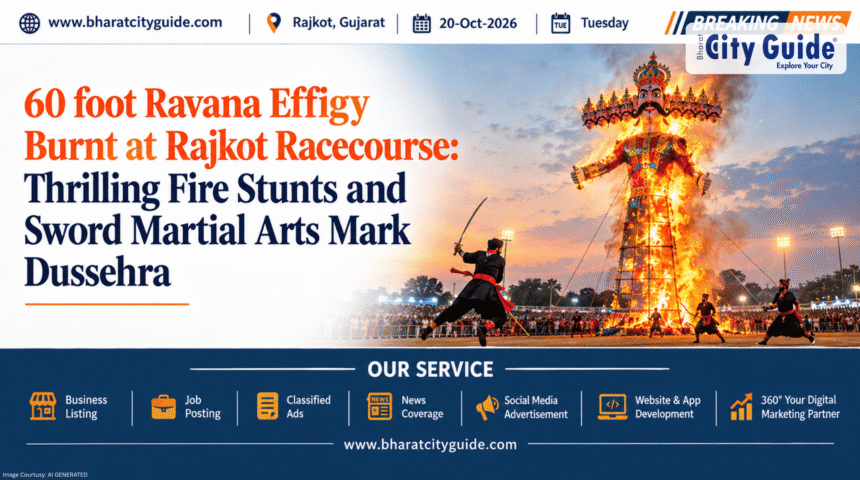
As Vijayadashami festivities reached their grand climax across Gujarat, the iconic Racecourse Ground in Rajkot became the epicenter of an extraordinary festive gathering centered around a towering 60 foot Ravana effigy. Organized to celebrate the eternal triumph of good over evil, the annual Ravan Dahan ceremony brought together tens of thousands of excited citizens, families, and young festival-goers. The massive effigy stood as a dramatic visual centerpiece against the evening sky, fully loaded with eco-friendly pyrotechnics designed to burst into a brilliant display of light and sound.
- Introduction
- What is 60 foot Ravana?
- Why This News is Important
- Background Information
- Key Highlights
- Detailed Explanation of the Event
- Benefits and Importance of the Event
- How It Impacts People
- Expert Insights and Cultural Perspective
- Challenges and Event Safety Management
- Frequently Asked Questions (FAQs)
- Conclusion
Beyond the main effigy burning, the event thrilled spectators with a series of high-energy live performances prior to the final ceremonial ignition. Local martial artists and stunt performers showcased thrilling sword-fighting techniques (Talwarbaaji) and daring fire acts (Agni Daav), leaving the crowd spellbound. The rhythmic clashing of steel blades, combined with fiery torches spinning through the night air, elevated the atmosphere into a thrilling celebration of traditional Indian martial heritage.
The annual gathering at Racecourse Ground highlights Rajkot’s vibrant community spirit and dedication to preserving cultural traditions. Organized with comprehensive safety measures overseen by civic authorities, emergency services, and local police teams, the burning of the gigantic 60 foot Ravana effigy offered an unforgettable experience for attendees of all ages, marking a memorable high point of the regional festival calendar.
What is 60 foot Ravana?
The 60 foot Ravana refers to the colossal effigy constructed annually at Rajkot’s Racecourse Ground to commemorate Ravan Dahan on the auspicious day of Vijayadashami (Dussehra). Symbolizing the demon king Ravana from the ancient Indian epic Ramayana, the towering structure represents negative human traits such as ego, arrogance, greed, and injustice.
Crafted by master artisans over several weeks using bamboo framing, jute ropes, colorful paper, and cloth, the 60-foot-tall structure houses specialized pyrotechnic circuitry. Each section of the effigy—from its multi-headed crown and outstretched arms to its central torso—is linked with timed firecrackers that ignite sequentially when the ceremonial fire arrow is launched.
The burning of this giant structure serves as a dramatic physical metaphor for the victory of Lord Rama over Ravana, reminding society that righteousness (Dharma) inevitably triumphs over unrighteousness (Adharma), no matter how formidable evil may appear.
Why This News is Important
The annual Ravan Dahan event featuring a colossal 60 foot Ravana holds immense cultural, social, and economic significance for Rajkot and the broader Saurashtra region. First, it brings the local community together in a shared public celebration. After nine nights of energetic Garba dancing during Navratri, the Vijayadashami gathering provides a grand finale where families assemble to witness time-honored traditions.
Second, the event serves as a platform to keep traditional martial arts and physical performance traditions alive. Featuring live sword-fighting demonstrations and fire stunts introduces younger generations to historical Indian combat skills, encouraging appreciation for physical fitness, discipline, and ancestral martial heritage.
Finally, managing a public event of this magnitude demonstrates municipal competence and public safety readiness. Coordinating thousands of spectators alongside controlled pyrotechnic displays requires seamless teamwork among civic administrators, fire departments, medical teams, and police forces, providing a model for safe public event execution.
Background Information
Vijayadashami, or Dussehra, is celebrated across India to mark two major mythological victories: Lord Rama’s victory over Ravana in Lanka and Goddess Durga’s destruction of the buffalo demon Mahishasura. In Northern and Western India, the tradition of staging Ramlila plays culminating in Ravan Dahan has been observed for centuries.
In Rajkot, the spacious Racecourse Ground has historically served as the premier venue for major civic gatherings, sports events, and festive celebrations. The annual Ravan Dahan at Racecourse Ground has grown steadily over the decades, evolving into one of Saurashtra’s largest public holiday events.
+-----------------------------------------------------------------------+
|                 RAJKOT RACECOURSE RAVAN DAHAN AT A GLANCE             |
+--------------------------+--------------------------------------------+
| Event Venue              | Racecourse Ground, Rajkot, Gujarat         |
| Primary Attraction       | 60 Foot Tall Ravana Effigy                 |
| Key Performances         | Sword-fighting (Talwarbaaji) & Fire Stunts |
| Symbolism                | Victory of Rama over Ravana (Dharma)       |
| Primary Audience         | Citizens, Families, Youth & Local Tourists |
| Safety Infrastructure    | Fire Tenders, Police Security & Barricades |
+--------------------------+--------------------------------------------+
To enhance visual thrill while minimizing environmental impact, recent editions have adopted eco-friendly, low-smoke pyrotechnics. Artisans focus heavily on structural stability and fire safety, ensuring that the giant effigy burns cleanly and predictably within a secure perimeter.
Key Highlights
- 60 Foot Effigy: A magnificent 60-foot-tall Ravana effigy constructed at Racecourse Ground using bamboo, paper, and eco-friendly fireworks.
- Live Martial Arts Display: High-energy sword-fighting (Talwarbaaji) performances by local martial artists showcasing agility and blade control.
- Thrilling Fire Stunts: Daring performers executed Agni Daav (fire spinning and flame tricks), captivating thousands of spectators.
- Massive Audience Footfall: Tens of thousands of residents from across Rajkot and surrounding districts gathered to watch the evening event.
- Sequential Firework Ignition: Multi-stage pyrotechnics engineered to burst sequentially across the effigy’s heads, arms, and central body.
- Comprehensive Safety Measures: Multi-layered police security, fire tenders on standby, and safety barricades ensured smooth crowd control.
Detailed Explanation of the Event
The atmosphere at Racecourse Ground turned electric as dusk fell on Vijayadashami evening. Thousands of spectators filled the venue, securing vantage points around the designated safety perimeter surrounding the giant 60 foot Ravana effigy.
Before the main ignition ceremony, the arena featured dynamic live performances. Skilled martial artists stepped into the spotlight to demonstrate traditional sword-fighting. The sharp ring of clashing steel and swift footwork kept audiences spellbound, demonstrating high levels of physical coordination and martial discipline.
+-----------------------------------------------------------------------+
|                    RAVAN DAHAN PROGRAMME SEQUENCE                     |
+--------------------------+--------------------------------------------+
| Phase                    | Event Activity & Visual Highlight          |
+--------------------------+--------------------------------------------+
| Phase 1: Crowd Assembly  | Arrival of thousands of families at venue  |
| Phase 2: Martial Arts    | Sword-fighting (Talwarbaaji) demonstration |
| Phase 3: Fire Stunts     | Daring Agni Daav flame-spinning acts       |
| Phase 4: Ceremonial Fire | Launching of the ceremonial fire arrow     |
| Phase 5: Effigy Burning  | Sequential pyrotechnic collapse of effigy  |
+--------------------------+--------------------------------------------+
Following the sword-fighting, stunt performers executed daring fire spinning acts (Agni Daav). Wielding flaming torches and spinning fire wheels, the performers created glowing arcs of light against the night sky, drawing applause from the crowd. Finally, as chants of “Jai Shree Ram” echoed across the ground, the ceremonial fire arrow was launched, triggering a dramatic chain reaction that consumed the 60-foot effigy in a brilliant burst of fireworks and fire.
Benefits and Importance of the Event
The grand execution of the Ravan Dahan celebration at Racecourse Ground delivers far-reaching social, cultural, and community benefits:
1. Preserving Cultural Heritage and Values
The dramatic visual spectacle instills timeless moral values in young children, reinforcing the message that truth, humility, and righteousness will always overcome arrogance and evil.
2. Supporting Traditional Martial Artists and Artisans
Providing a prominent public stage for sword fighters, stunt artists, and effigy-making craftsmen supports regional folk art traditions and preserves traditional skills.
3. Fostering Community Unity and Civic Joy
Bringing thousands of citizens from diverse socio-economic backgrounds together in a shared festive experience strengthens civic pride and social harmony.
4. Safe Public Entertainment Architecture
Hosting controlled pyrotechnic displays in an open, municipal setting discourages unsafe private firecracker usage, ensuring a safer holiday environment for the city.
How It Impacts People
This major public celebration creates a positive impact across various sections of the local population:
- For Families and Children: Offers a memorable holiday outing, providing rich cultural entertainment and visual thrills in a safe environment.
- For Young Martial Artists: Provides a high-profile platform to demonstrate their martial arts skills, encouraging physical fitness and discipline among youth.
- For Local Merchants and Vendors: Generates a surge in seasonal commercial activity for street food vendors, balloon sellers, and small toy merchants around Racecourse Ground.
- For Civic Authorities: Offers a valuable practical opportunity to test multi-agency crowd control, traffic routing, and emergency management protocols.
Expert Insights and Cultural Perspective
Cultural scholars and social researchers view public Ravan Dahan gatherings as vital touchstones of Indian community life. According to experts in regional folklore, public celebrations like the one at Racecourse Ground transform ancient epic narratives into accessible, shared real-world experiences that strengthen cultural memory across generations.
Safety engineers and event planners highlight the technical complexity of burning giant effigies. Ensuring that a 60-foot bamboo and paper structure collapses inward safely during a pyrotechnic display requires careful weight distribution, non-toxic firework selection, and strict wind speed monitoring.
Furthermore, community leaders note that combining martial arts performances with traditional effigy burning enriches the cultural program. Highlighting historical sword skills alongside spiritual rituals creates a well-rounded celebration that honors physical bravery and moral righteousness equally.
Challenges and Event Safety Management
Executing a high-risk event featuring open flames, pyrotechnics, and massive crowds involves managing several critical operational safety factors:
- Strict Perimeter Barricading: Maintaining wide, physical buffer zones between the burning 60-foot structure and the front lines of spectators to prevent accidental heat exposure.
- Deploying Emergency Fire Services: Stationing high-capacity fire tenders, water cannons, and trained firefighting personnel directly adjacent to the burning zone for immediate response.
- Managing Crowd Outflow and Traffic: Coordinating traffic police personnel to guide thousands of pedestrians and vehicles safely away from Racecourse Ground after the event.
- Eco-Friendly Pyrotechnic Standards: Utilizing low-smoke, non-toxic firecrackers to minimize air and noise pollution in compliance with environmental safety norms.
Frequently Asked Questions (FAQs)
How tall was the Ravana effigy burnt at Rajkot Racecourse Ground?
The Ravana effigy constructed for the Vijayadashami ceremony at Racecourse Ground stood 60 feet tall.
What special performances took place before the effigy burning?
The event featured thrilling live sword-fighting (Talwarbaaji) demonstrations and daring fire spinning stunts (Agni Daav) performed by local martial artists.
Where is the main Ravan Dahan event held in Rajkot?
The primary public Ravan Dahan event in Rajkot is held annually at the spacious Racecourse Ground in the heart of the city.
What is the symbolic meaning of burning the Ravana effigy on Dussehra?
Burning the effigy symbolizes the ultimate destruction of evil, ego, and injustice, celebrating the triumph of righteousness (Dharma) as demonstrated by Lord Rama’s victory.
Were safety measures in place during the 60 foot Ravana burning?
Yes, civic authorities enforced strict safety perimeters, deployed fire tenders, stationed medical first-aid teams, and assigned police personnel for crowd management.
Is the event open to the general public?
Yes, the Ravan Dahan celebration at Racecourse Ground is a free public event that attracts thousands of families and spectators from across Rajkot and Saurashtra.
What materials are used to construct the 60 foot Ravana effigy?
The effigy is crafted by skilled artisans using bamboo poles, jute ropes, eco-friendly paper, cloth, and integrated sequential pyrotechnic charges.
Conclusion
The grand burning of the 60 foot Ravana effigy at Rajkot’s Racecourse Ground delivered a fitting, high-energy climax to the Vijayadashami celebrations. By combining thrilling live sword-fighting, daring fire stunts, and a spectacular pyrotechnic display, the event created a memorable holiday experience for thousands of attending citizens.
This annual gathering continues to serve as a powerful cultural milestone, uniting the city in a shared celebration of moral righteousness, courage, and community spirit.
As the flames of the giant effigy faded into the night sky, the timeless message of Dussehra resonated clearly across Rajkot. The success of the Racecourse event reassures us that truth and righteousness will always prevail, inspiring hope, harmony, and togetherness across the community for years to come.