Introduction
Rapid urbanization across Rajkot, the industrial and commercial hub of Saurashtra, has led to a significant increase in vehicular traffic across its expanding peripheral residential and commercial corridors. Among the key developing areas within the Rajkot Municipal Corporation (RMC) limits, the Kothariya region in Ward Number 18 has witnessed a dramatic surge in population, small-scale industrial units, and commercial establishments over the past decade. However, infrastructure development along major arteries like Kothariya Main Road has frequently struggled to keep pace with the exploding traffic volume. Commuters, local residents, and visitors traveling toward the prominent Ranuja Temple have long endured severe traffic bottlenecks, narrow crossing points, and monsoon-related water accumulation near the local water stream crossing.
- Introduction
- What is Rajkot Kothariya Ranuja Temple Bridge?
- Why This News is Important
- Background Information
- Key Highlights
- Detailed Explanation of the Event
- Technical Specifications and Project Overview
- Benefits, Features, and Importance
- How It Impacts People
- Expert Insights and Industry Perspective
- Challenges and Limitations
- Future Outlook
- Frequently Asked Questions (FAQs)
- Conclusion
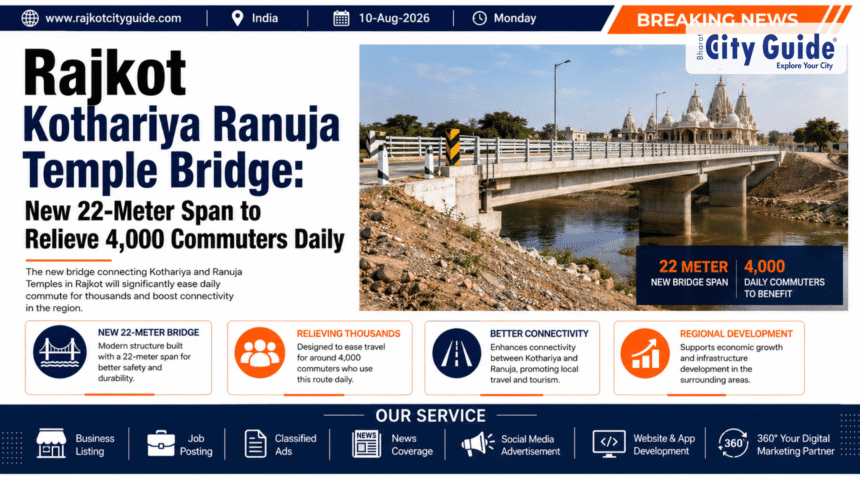
In a decisive move to permanently resolve these persistent connectivity bottlenecks, the Rajkot Municipal Corporation has initiated a major infrastructure project for the construction of a modern 22-meter wide bridge directly opposite the Ranuja Temple on Kothariya Main Road. This modern civil engineering undertaking, complete with dedicated pedestrian footpaths and robust storm-water drainage integration, is poised to bring immediate relief to more than 4,000 daily commuters who rely on this crucial corridor for their daily transit.
By upgrading this critical transit node, the civic body aims to streamline traffic flow, enhance pedestrian safety for temple devotees, and boost overall connectivity between Kothariya and central Rajkot. This comprehensive blog article provides an in-depth exploration of the Rajkot Kothariya Ranuja Temple Bridge project, examining its engineering design, local socio-economic importance, traffic dynamics, administrative execution plan, and long-term urban impact.
What is Rajkot Kothariya Ranuja Temple Bridge?
The Rajkot Kothariya Ranuja Temple Bridge is a major municipal civil infrastructure project undertaken by the Rajkot Municipal Corporation (RMC) in Ward Number 18 of Rajkot city. Located along the busy Kothariya Main Road directly in front of the revered Ranuja Temple, the project entails constructing a high-capacity 22-meter wide bridge over a natural water flow channel (locally referred to as a nala or natural drainage stream) that intersects the main road.
Historically, the crossing point opposite Ranuja Temple was serviced by a narrow culvert or causeway structure designed decades ago when Kothariya was a peripheral semi-urban locality. As the area transformed into an integral residential and industrial hub within RMC’s East Zone, the legacy crossing proved entirely inadequate. During peak hours, the narrow roadway forced two-way traffic into single-lane bottlenecks, resulting in frequent traffic congestion, vehicle stalling, and safety hazards for pedestrians heading to the temple.
The newly sanctioned bridge project redesigns the entire crossing into a spacious 22-meter wide structure. Key structural features of the new bridge include:
- Expanded Carriage Width: Designed to comfortably accommodate multi-lane vehicular movement in both directions, eliminating bottleneck congestion on Kothariya Main Road.
- Dedicated Pedestrian Footpaths: Built-in elevated footpaths on both sides of the bridge, ensuring safe passage for thousands of temple pilgrims, schoolchildren, and local residents walking along the busy thoroughfare.
- Elevated Deck Level: Engineered above historical high-flood levels to ensure uninterrupted transit even during intense monsoon downpours that previously submerged the low-lying causeway.
- Modern Load-Bearing Capacity: Constructed in compliance with Indian Road Congress (IRC) structural standards to withstand heavy commercial vehicles, transit buses, and daily commuter traffic.
Why This News is Important
The announcement and tender execution for the Rajkot Kothariya Ranuja Temple Bridge carries immense significance for the urban infrastructure landscape of Rajkot for several compelling reasons:
- Direct Impact on Daily Commuters: Over 4,000 vehicle owners and public transport passengers pass through this specific junction daily. Eliminating the existing bottleneck directly translates to saved travel time, reduced fuel consumption, and lower commuter stress.
- Enhanced Safety for Religious Pilgrims: The Ranuja Temple is a major spiritual center attracting thousands of devotees, particularly on festival days, weekends, and religious occasions. Dedicated footpaths and wide road margins will prevent hazardous interactions between pedestrians and fast-moving vehicles.
- Monsoon Resilience and Flood Prevention: During Gujarat’s monsoon season, overflowing natural streams regularly cause waterlogging across low-lying road crossings. Raising the bridge deck ensures continuous year-round connectivity without seasonal flood disruptions.
- Integration of Merged Urban Zones: Kothariya was merged into the Rajkot Municipal Corporation limits to ensure structured civic planning. Building high-capacity bridges and roads in merged areas demonstrates RMC’s commitment to delivering equal infrastructural standards across both core and peripheral city wards.
Background Information
To fully appreciate the urgency and scope of this bridge project, it is essential to understand the growth trajectory of the Kothariya area and Ward Number 18 within Rajkot’s broader urban expansion.
Kothariya’s Urban Transformation
For years, Kothariya operated as an independent village fringe on the southern periphery of Rajkot, characterized by agricultural fields, small foundries, and informal housing. Following Rajkot’s rapid industrial expansion—driven by auto-component manufacturing, diesel engine industries, and engineering workshops—Kothariya evolved into a densely populated residential zone housing thousands of industrial workers, small business owners, and middle-class families.
Recognizing the necessity for planned governance, the state government formally merged Kothariya into the Rajkot Municipal Corporation. While basic services like street lighting, water supply, and garbage collection were systematically introduced, major road networks required substantial structural upgrades to handle the transition from rural traffic volumes to heavy urban commuting.
The Problem at Ranuja Temple Crossing
Kothariya Main Road serves as a primary arterial feeder connecting internal residential societies and industrial clusters to major highways like the Rajkot-Gondal National Highway and the 150 Feet Ring Road network. The point directly opposite Ranuja Temple represented a severe infrastructural weak spot:
- Physical Bottleneck: The existing culvert was significantly narrower than the connecting approaches of Kothariya Main Road, forcing converging traffic to squeeze together abruptly.
- Pedestrian Hazards: Devotees visiting Ranuja Temple lacked designated walking spaces, forcing them to walk on the active vehicular carriage way.
- Monsoon Overflow: Every monsoon, water flowing through the natural catchment channel would submerge the low-lying culvert, cutting off direct access for hours and causing heavy traffic diversions across neighboring narrow residential lanes.
In response to repeated representations from local ward councilors, residents, and commuter welfare groups, the RMC East Zone engineering wing conducted traffic volume surveys and hydrological assessments, leading directly to the approval and design of the 22-meter bridge project.
Key Highlights
Here are the essential highlights of the Rajkot Kothariya Ranuja Temple Bridge project:
- Project Location: Directly opposite Ranuja Temple on Kothariya Main Road, Ward No. 18, East Zone, Rajkot Municipal Corporation.
- Bridge Dimensions: A modern 22-meter wide structural span engineered to accommodate expanded multi-lane traffic flow.
- Pedestrian Safety Features: Inclusion of dedicated, elevated footpaths on both sides of the bridge for safe pedestrian movement.
- Primary Beneficiaries: More than 4,000 daily vehicular commuters, along with thousands of local residents and temple pilgrims.
- Executing Authority: Rajkot Municipal Corporation (RMC) Engineering Department.
- Key Objectives: Eradicate daily traffic jams, ensure monsoon flood resilience, provide safe pedestrian access to Ranuja Temple, and modernize infrastructure in Ward 18.
Detailed Explanation of the Event
The decision by the Rajkot Municipal Corporation to build the new bridge opposite Ranuja Temple marks the transition from conceptual planning to active execution. Following comprehensive field surveys, soil testing, and hydrological profiling of the stream bed, civic engineers finalized a design capable of delivering long-term durability and structural safety.
+-----------------------------------------------------------------+
|               22-METER BRIDGE CROSS-SECTION DESIGN              |
+-----------------------------------------------------------------+
| Elevated  |  Multi-Lane Vehicle   |  Multi-Lane Vehicle  | Elevated |
| Footpath  |    Carriageway (Direction 1)   |   Carriageway (Direction 2)  | Footpath |
| (1.5-2m)  |            (8.5-9.5m)          |           (8.5-9.5m)         | (1.5-2m) |
+-----------+--------------------------------------------------+----------+
|                 HIGH-CAPACITY REINFORCED CONCRETE DECK          |
+-----------------------------------------------------------------+
|                     NATURAL STREAM / CULVERT CHANNEL            |
+-----------------------------------------------------------------+
Engineering and Architectural Features
The design parameters of the bridge prioritize both functionality and urban aesthetics:
- Reinforced Concrete Superstructure: Constructed using high-grade concrete and corrosion-resistant steel reinforcement to endure heavy vehicular axle loads and exposure to flowing runoff water.
- Hydraulic clearance: The clearance beneath the bridge deck is elevated significantly above historic peak flood levels recorded during heavy Saurashtra rainfall events, preventing debris accumulation and water backflow.
- Integrated Footpaths and Parapet Walls: Safe, well-lit pedestrian pathways bordered by high protective parapets will separate foot traffic completely from motorized vehicles.
- Smooth Approach Roads: The project includes re-grading and asphalt resurfacing of the approach sections on either side of the bridge, ensuring seamless transitions without sudden bumps or sharp elevation changes.
- Utility Ducts: Provisioning for underground utility channels (water pipelines, drainage lines, electrical and telecom cables) within the bridge structure to eliminate the need for future road cutting.
Technical Specifications and Project Overview
To provide a structured view of the project parameters, the following table summarizes the primary engineering and operational specifications for the new bridge:
| Parameter | Project Detail / Specification |
| Project Name | Kothariya Ranuja Temple Bridge Construction |
| Location | Kothariya Main Road, Ward No. 18, Rajkot |
| Civic Zone | East Zone, Rajkot Municipal Corporation (RMC) |
| Bridge Width | 22 Meters (inclusive of carriageways & footpaths) |
| Key Architectural Feature | Integrated elevated footpaths on both sides |
| Daily Traffic Impact | 4,000+ motor vehicles (two-wheelers, auto-rickshaws, cars, commercial mini-trucks) |
| Primary Safety Focus | Separation of pedestrian temple visitors from fast-moving vehicular traffic |
| Hydraulic Objective | Uninterrupted monsoon water discharge and flood prevention |
Benefits, Features, and Importance
The implementation of the Rajkot Kothariya Ranuja Temple Bridge brings multi-dimensional benefits across urban management, road safety, and community welfare.
1. Traffic Deceleration and Congestion Relief
By expanding the crossing width to 22 meters, the bridge effectively eliminates the narrow bottleneck on Kothariya Main Road. Traffic will flow continuously without forcing vehicles to halt or yield turn-by-turn at the stream crossing, significantly reducing commute times during morning and evening rush hours.
2. Pedestrian and Pilgrim Safety
Ranuja Temple is a major spiritual landmark in the Kothariya neighborhood. On festive days, thousands of devotees, including children and senior citizens, navigate this route on foot. Dedicated, elevated footpaths ensure that pedestrians can cross the stream safely without being exposed to vehicular traffic risks.
3. Economic Productivity and Fuel Savings
Traffic idling at narrow bottlenecks consumes thousands of liters of fuel collectively over time. Smooth transit through Ward 18 saves fuel costs for daily commuters and small commercial transport operators who transport goods between Kothariya’s industrial workshops and central markets.
4. Climate Resilience and Monsoon Readiness
By elevating the bridge structure above the surrounding terrain and widening the water passage beneath, the project mitigates the risk of localized urban flooding. Emergency services, ambulances, and public transit will remain fully operational even during severe monsoon downpours.
How It Impacts People
The completion of this municipal bridge project directly influences various segments of Rajkot’s population in distinct and positive ways:
For Local Commuters and Vehicle Owners
- Reduced Daily Commute Times: Commuters traveling between Kothariya, Aji GIDC, Atika industrial area, and central Rajkot will experience smoother, faster journeys.
- Lower Maintenance Costs: Eradicating uneven approach roads and flooded causeways reduces wear and tear on two-wheelers and passenger vehicles.
For Temple Devotees and Pedestrians
- Safe Pilgrimage Access: Devotees visiting Ranuja Temple can walk safely along wide, elevated footpaths without fear of traffic hazards.
- Improved Accessibility for Senior Citizens: Modern, level footpaths with protective railings make access much easier for elderly residents and physically challenged individuals.
For Local Business Owners and Shopkeepers
- Increased Footfall: Improved road infrastructure and clean, accessible surroundings naturally boost commercial activity for markets, eateries, and stores near Ranuja Temple.
- Uninterrupted Freight Movement: Small business owners rely on light commercial vehicles to transport raw materials and finished engineering goods. Reliable bridge infrastructure prevents supply chain delays.
Expert Insights and Industry Perspective
Urban planning experts and civil engineering consultants frequently highlight the importance of targeted infrastructure upgrades in rapidly expanding Tier-II cities like Rajkot.
Fixing “Micro-Bottlenecks” for Macro Mobility
Urban transport analysts point out that overall city mobility is often constrained not by major highways, but by small “micro-bottlenecks”—such as narrow culverts, unplanned intersections, or missing bridges on feeder roads. Addressing the Ranuja Temple crossing resolves a localized bottleneck that previously degraded the performance of the entire Kothariya Main Road network.
Pedestrian-Centric Infrastructure Design
Modern municipal engineering guidelines emphasize integrating pedestrian welfare into road designs from the outset. Civil engineers praise RMC’s decision to include dedicated footpaths in the 22-meter bridge design, aligning local infrastructure with national urban transit standards that prioritize non-motorized transport safety alongside vehicular speed.
Challenges and Limitations
Executing major civil engineering projects in densely populated urban wards like Ward 18 presents operational challenges that require careful management by civic authorities:
- Traffic Management During Construction: Diverting 4,000+ daily vehicles onto alternate narrow residential streets while construction is underway requires rigorous traffic police coordination and clear directional signage to prevent local gridlock.
- Utility Relocation: Shifting existing underground water pipelines, drainage connections, and electrical cables without disrupting daily utility services to surrounding households demands precise inter-departmental cooperation.
- Monsoon Construction Constraints: Conducting deep foundation work or concrete casting during active rainy periods poses hydraulic challenges in the stream bed, necessitating careful seasonal scheduling.
Future Outlook
The construction of the Rajkot Kothariya Ranuja Temple Bridge represents part of a broader, ongoing transformation of Rajkot’s municipal infrastructure. Over the coming months and years, several positive developments are expected:
- Timely Project Execution: Following final contractor selection and work order issuance, construction will proceed under the supervision of RMC East Zone engineers to ensure completion within scheduled timelines.
- Upgrading Feeder Networks: RMC is expected to follow up the bridge construction with complementary road widening, street lighting installation, and drainage improvements along connecting stretches of Kothariya Main Road.
- Increased Property Values and Development: Modern infrastructure upgrades invariably enhance the liveability and commercial value of adjacent real estate in Ward 18, attracting further private investment in housing and retail services.
Frequently Asked Questions (FAQs)
Q1: What is the main objective of the Rajkot Kothariya Ranuja Temple Bridge project?
A: The primary objective is to construct a modern 22-meter wide bridge opposite Ranuja Temple in Ward 18 to eliminate severe traffic bottlenecks, enhance pedestrian safety with dedicated footpaths, and prevent monsoon waterlogging on Kothariya Main Road.
Q2: How many daily commuters will benefit from this new bridge?
A: More than 4,000 daily vehicle drivers, along with public transit passengers, local residents, and thousands of temple devotees, will benefit directly from smooth, uninterrupted travel.
Q3: What are the main structural features of the new bridge?
A: Key features include a 22-meter total width designed for multi-lane vehicular movement, dedicated elevated footpaths on both sides, enhanced load-bearing capacity, and elevated clearance above flood levels.
Q4: Which municipal zone and ward does this project fall under?
A: The project is located in Ward Number 18 within the East Zone administration of the Rajkot Municipal Corporation (RMC).
Q5: How will the bridge improve pedestrian safety near Ranuja Temple?
A: By incorporating elevated footpaths separated from the main vehicular carriageways, the bridge ensures that temple visitors and local walkers can cross the stream without walking in active traffic lanes.
Q6: Will the new bridge resolve monsoon waterlogging issues?
A: Yes. The bridge deck is engineered above high-flood levels with an expanded water passage underneath, ensuring that flowing stream water during heavy monsoon rains does not submerge the road or halt traffic.
Q7: Who is responsible for constructing and overseeing the bridge?
A: The Rajkot Municipal Corporation (RMC) Engineering Department is responsible for issuing tenders, managing construction quality, and supervising project completion.
Conclusion
The construction of the Rajkot Kothariya Ranuja Temple Bridge marks a major step forward in upgrading urban infrastructure within Ward 18 of Rajkot. By replacing an outdated, narrow stream crossing with a spacious, 22-meter wide bridge featuring dedicated pedestrian footpaths, the Rajkot Municipal Corporation is directly resolving a chronic traffic bottleneck that has long impacted local residents and temple visitors.
This well-planned engineering intervention will deliver immediate daily benefits to over 4,000 commuters through reduced transit delays, improved fuel efficiency, enhanced road safety, and complete resilience against monsoon flooding. As Rajkot continues its trajectory as one of Gujarat’s fastest-growing industrial and urban centers, targeted infrastructure investments like the Rajkot Kothariya Ranuja Temple Bridge demonstrate how thoughtful municipal planning can directly improve citizen quality of life, strengthen local connectivity, and foster sustainable urban growth.