Introduction
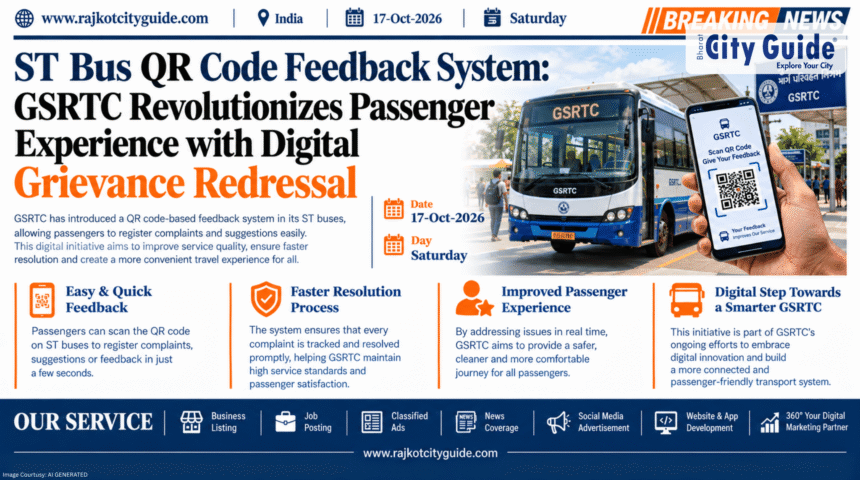
In a significant stride toward modernizing public road transport and enhancing commuter satisfaction across Gujarat, the Gujarat State Road Transport Corporation (GSRTC) has implemented a cutting-edge ST Bus QR Code Feedback System. By affixing unique, scannable QR code stickers directly behind passenger seats across its extensive fleet of state transport buses, the corporation has empowered daily travelers to register real-time complaints, service feedback, and operational suggestions directly from their smartphones during their journeys.
- Introduction
- What is ST Bus QR Code Feedback System?
- Why This News is Important
- Background Information
- Key Highlights
- Detailed Explanation of the System Architecture
- Benefits and Importance of the Digital Initiative
- How It Impacts People
- Expert Insights and Public Transit Perspective
- Challenges and Future Operational Steps
- Frequently Asked Questions (FAQs)
- Conclusion
This digital governance initiative has already yielded remarkable results across the state, including major divisions like Rajkot, Ahmedabad, Vadodara, and Surat. Within just seven months of its full-scale deployment, the system has successfully logged and resolved over 34,000 passenger complaints and feedback tickets. From reporting broken seat handles and unhygienic bus interiors to flagging staff behavior or bus timing delays, the digital portal bridges the gap between daily commuters and administrative decision-makers.
The success of the ST Bus QR Code Feedback System marks a major shift toward responsive, technology-driven public utility management in Gujarat. By replacing cumbersome manual complaint registers and inaccessible helpline numbers with an instant digital scan, GSRTC is setting a national benchmark for transparency and quality assurance in state-run public transit systems.
What is ST Bus QR Code Feedback System?
The ST Bus QR Code Feedback System is a digital passenger grievance redressal and feedback framework launched by the Gujarat State Road Transport Corporation (GSRTC). Designed for maximum accessibility, scannable QR code decals are strategically placed on the backrests of passenger seats, near entrance doors, and adjacent to window panels inside express, Gurjarnagri, sleeper, and luxury ST buses.
When a passenger scans the QR code using any standard smartphone camera or QR reader application, they are instantly redirected to a secure, user-friendly digital feedback portal. The portal automatically detects the specific bus registration number, depot origin, and route details linked to that unique QR sticker, eliminating the need for passengers to manually input vehicle credentials.
Passengers can quickly select grievance categories—such as bus cleanliness, mechanical issues, seat condition, driver/conductor conduct, ticket printing errors, or punctuality—upload supporting photographs, and submit their remarks. The feedback ticket is then routed directly to the designated Depot Manager and Divisional Traffic Officer for immediate corrective action.
Why This News is Important
The impressive resolution of 34,000 complaints within seven months through the digital feedback mechanism carries immense importance for public transport infrastructure and passenger safety across Gujarat. First, state transport buses serve as the primary lifeline for millions of daily passengers, including rural commuters, college students, industrial workers, and senior citizens. Providing an instant, frictionless channel to voice concerns ensures that public transport remains safe, dignified, and comfortable.
Second, the system introduces real-time administrative accountability. In traditional public transit setups, minor maintenance issues like loose window catches, torn seat upholstery, or malfunctioning fans often went unnoticed for months until scheduled depot servicing. With passengers submitting live feedback, depot maintenance teams receive instant alerts, enabling them to rectify physical defects as soon as the bus returns to its home depot.
Finally, this initiative aligns with national Digital India objectives, proving how simple, cost-effective digital tools like QR codes can transform public service delivery. Demonstrating that 34,000 grievances were actively tracked, processed, and resolved builds strong public trust in state-run transport services.
Background Information
Gujarat State Road Transport Corporation (GSRTC) operates one of India’s largest and most efficient state transport fleets, running thousands of daily bus trips connecting remote villages, taluka headquarters, and major urban centers across Gujarat. While the corporation has continuously upgraded its fleet with modern BS-VI buses, electric buses, and AC Volvo coaches, maintaining consistent service quality across thousands of active vehicles presents an ongoing operational challenge.
Previously, passengers seeking to log complaints had to rely on physical suggestion boxes located at major bus stations, dial toll-free helpline numbers, or submit written letters to depot managers. These traditional methods were often time-consuming, leading to low passenger engagement and delayed administrative responses.
+-----------------------------------------------------------------------+
|            ST BUS QR CODE FEEDBACK SYSTEM AT A GLANCE                 |
+--------------------------+--------------------------------------------+
| Operating Organization   | Gujarat State Road Transport Corp (GSRTC)   |
| Key Innovation           | QR Codes affixed behind passenger seats    |
| Operational Milestone    | 34,000+ Complaints Resolved in 7 Months     |
| Target Fleet             | Express, Gurjarnagri, Sleeper & AC Buses   |
| Primary Feature          | Auto-detection of bus details via QR scan  |
| Resolution Workflow      | Direct routing to Depot & Divisional Managers|
+--------------------------+--------------------------------------------+
Recognizing that almost every commuter carries a smartphone, GSRTC conceptualized an in-bus digital feedback mechanism. By linking individual bus registration numbers directly to central cloud servers via QR codes, the corporation created a transparent monitoring system that allows top officials to track complaint resolution speeds across all 16 administrative divisions in real time.
Key Highlights
- Instant In-Seat Access: QR codes placed conveniently behind passenger seats allow commuters to scan and submit feedback without leaving their seats.
- 34,000+ Issues Resolved: Over 34,000 passenger complaints and suggestions successfully processed and resolved within the first 7 months of operation.
- Automated Bus Identification: Scanning auto-populates the bus number, route, and depot details, making form submission fast and accurate.
- Photo Upload Capability: Passengers can attach real-time photos of damaged seats, dirty floors, or broken fixtures to validate their grievances.
- Direct Administrative Routing: Tickets are sent instantly to the responsible Depot Manager, Traffic Inspector, and Divisional Mechanical Engineer.
- Multi-Category Feedback: Covers bus maintenance, hygiene, staff behavior, driving safety, ticketing, and route punctuality.
Detailed Explanation of the System Architecture
The operational workflow of the ST Bus QR Code Feedback System is built on a streamlined, cloud-hosted digital infrastructure designed to ensure rapid response times. The process begins when a commuter notices an issue during their journey and scans the seat-back QR code.
The system opens an intuitive mobile interface available in both Gujarati and English. Because the QR code is uniquely mapped to that specific vehicle, the interface automatically logs the vehicle’s registration number (e.g., GJ-18-Z-XXXX), route name, and assigned home depot. The passenger simply selects the relevant complaint category from a drop-down menu, adds a brief description, uploads a photo if necessary, and submits their contact details.
+-----------------------------------------------------------------------+
|                   DIGITAL GRIEVANCE RESOLUTION WORKFLOW               |
+--------------------------+--------------------------------------------+
| Stage                    | Operational Action                         |
+--------------------------+--------------------------------------------+
| Stage 1: In-Bus Scan     | Passenger scans QR code on seat backrest   |
| Stage 2: Portal Entry    | Auto-login of bus details & issue selection|
| Stage 3: Server Routing  | System auto-routes ticket to home depot    |
| Stage 4: Maintenance     | Depot workshop team executes repair work   |
| Stage 5: Verification    | Ticket closure notice sent to passenger    |
+--------------------------+--------------------------------------------+
Once submitted, the central server assigns a unique tracking reference number to the ticket and dispatches an instant notification to the home depot’s digital dashboard. Depot maintenance personnel inspect the vehicle upon its return, execute required repairs or disciplinary reviews, and update the ticket status on the portal, sending an automated SMS resolution confirmation back to the passenger.
Benefits and Importance of the Digital Initiative
The implementation of the QR code feedback ecosystem delivers widespread benefits to commuters, transport workers, and state administration:
1. Rapid Depot-Level Maintenance Operations
Direct digital ticketing allows workshop engineers to prepare replacement parts—such as new seat cushions, window glass, or lighting fixtures—before the bus arrives at the depot, dramatically shortening repair downtime.
2. Enhanced Passenger Comfort and Safety
Encouraging passengers to report unsafe driving practices, overspeeding, or improper conductor behavior fosters a safer traveling environment for women, elderly citizens, and children.
3. Data-Driven Fleet Quality Audits
Aggregating thousands of feedback tickets allows GSRTC headquarters to identify underlying trends, such as specific bus models experiencing frequent mechanical flaws or depots lagging in cleanliness standards.
4. Eco-Friendly Paperless Governance
Replacing paper complaint forms and physical logs with a fully digital system eliminates paper waste, streamlining administrative record-keeping across all divisions.
How It Impacts People
This digital feedback innovation directly elevates the daily travel experience for diverse commuter groups across Gujarat:
- For Daily Commuters and Students: Ensures cleaner buses, functioning fans and lights, intact seats, and punctual bus schedules on daily academic and workplace routes.
- For Female Travelers: Provides a discreet, immediate channel to report safety concerns, overcrowding, or inappropriate behavior directly to transport authorities.
- For GSRTC Depot Managers: Equips field officers with actionable, real-time data to monitor staff performance and maintain high vehicle quality standards.
- For Rural Passengers: Empowers citizens in remote village routes to ensure that state transport buses operating in regional areas receive the same maintenance attention as urban express routes.
Expert Insights and Public Transit Perspective
Transportation experts and civic governance analysts have praised GSRTC’s digital feedback initiative as a benchmark in public sector service delivery. According to urban mobility experts, passenger satisfaction in public transit depends not only on introducing new vehicles but also on maintaining existing fleet quality. Implementing localized, QR-based feedback loops creates a culture of continuous operational improvement.
Software architects highlight the clever design of auto-mapping vehicle details via unique QR stickers. Eliminating the need for users to type long registration numbers removes entry barriers, resulting in high passenger adoption rates and accurate data collection.
Furthermore, public administration observers note that resolving 34,000 complaints within seven months demonstrates strong back-end commitment. The true success of any grievance system lies in prompt administrative action, and GSRTC’s rapid resolution rates set an inspiring example for other state transport undertakings across India.
Challenges and Future Operational Steps
To ensure the long-term sustainability and effectiveness of the feedback system, GSRTC is addressing several operational considerations:
- Preventing QR Code Vandalism: Replacing damaged or peeled QR stickers promptly during routine depot washing and servicing schedules.
- Improving Connectivity in Remote Areas: Optimizing the feedback portal to allow offline form filling in low-network rural pockets, automatically transmitting data once cellular connectivity is restored.
- Maintaining Rapid Resolution Timelines: Ensuring that high-volume depots receive adequate maintenance staffing and spare parts inventory to prevent ticket backlogs.
- Staff Training and Sensitization: Conducting regular workshops for bus drivers and conductors to view passenger feedback as a tool for service improvement rather than punitive action.
Frequently Asked Questions (FAQs)
What is the ST Bus QR Code Feedback System?
It is a digital initiative by GSRTC where scannable QR code stickers are installed behind bus seats, allowing passengers to submit real-time complaints and suggestions using their smartphones.
How many complaints have been resolved using this system?
Over 34,000 passenger complaints and feedback tickets were successfully resolved within seven months of launching the system.
How do passengers use the QR code feedback system?
Passengers scan the QR code behind their seat using a smartphone camera, select their complaint category on the opened web portal, optionally attach a photo, and submit the form.
Do passengers need to type in the bus registration number manually?
No, each QR code sticker is uniquely mapped to that specific bus, automatically logging the bus registration number, route, and depot details upon scanning.
What types of issues can be reported through the QR code portal?
Passengers can report issues related to bus cleanliness, damaged seats, broken windows, malfunctioning lights or fans, driver/conductor behavior, ticket issues, and bus delays.
Who handles the complaints once submitted?
Tickets are automatically routed to the digital dashboard of the concerned Depot Manager, Traffic Inspector, and Divisional Mechanical Engineer for prompt corrective action.
Is the feedback portal available in regional languages?
Yes, the digital feedback portal is designed for ease of use and offers interface options in both Gujarati and English.
Conclusion
The deployment of the ST Bus QR Code Feedback System marks a landmark achievement in modernizing public transit governance across Gujarat. By converting every passenger seat into an active quality inspection point, GSRTC has successfully empowered citizens to play a direct role in improving state transport standards.
Resolving over 34,000 passenger grievances in just seven months demonstrates the immense power of combining simple digital tools with responsive administrative workflows.
As GSRTC continues to upgrade its fleet and expand digital initiatives across all 16 divisions, the QR-based feedback system stands out as a shining example of citizen-centric public service. This technological intervention ensures that every ST bus journey across Gujarat becomes safer, cleaner, and more comfortable for millions of daily commuters.