Introduction
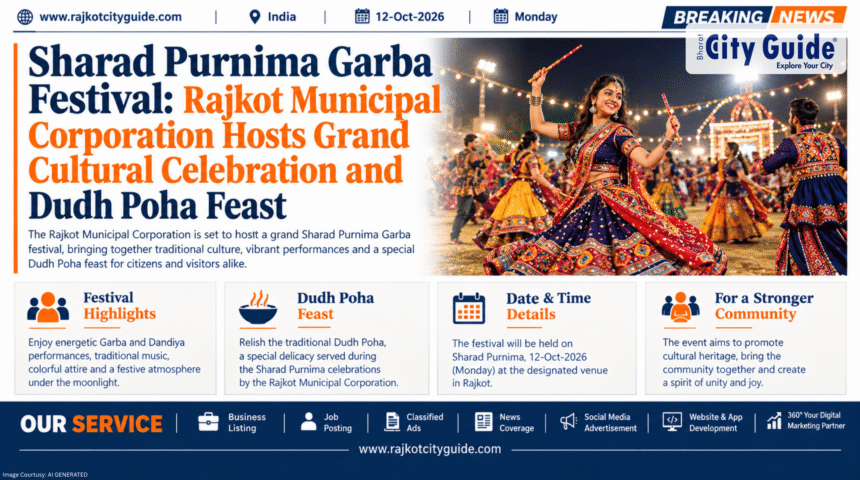
The spirit of autumn devotion and traditional music reaches its zenith as the Rajkot Municipal Corporation (RMC) prepares to host a spectacular Sharad Purnima Garba Festival at the central Racecourse grounds. Celebrated on the luminous full moon night following Navratri, Sharad Purnima holds immense cultural, spiritual, and artistic significance across Gujarat. The civic administration has curated a grand cultural evening designed to bring thousands of citizens together under the glowing moonlight to celebrate traditional folk dance, devotional music, and community heritage.
- Introduction
- What is Sharad Purnima Garba Festival?
- Why This News is Important
- Background Information
- Key Highlights
- Detailed Explanation of the Event
- Benefits and Importance of the Event
- How It Impacts People
- Expert Insights and Cultural Perspective
- Challenges and Event Management Considerations
- Frequently Asked Questions (FAQs)
- Conclusion
This year’s event stands out for its high-caliber cultural lineup, featuring renowned performing troupes including Rajkot’s acclaimed Kankan Group and Amreli’s legendary Jesingpara Ras Mandal. Known across Saurashtra for their authentic footwork, intricate sword maneuvers, and traditional Raas-Garba formations, these traditional troupes promise an unforgettable night of rhythmic folk music. The event bridges urban civic life with age-old folk traditions, offering a joyous grand finale to Gujarat’s autumn festival season.
Beyond the captivating dance performances, the municipal corporation has organized a massive community feast (‘Jyafat’) serving sweetened milk and flattened rice—the cherished traditional ‘Dudh Poha’—to over 4,000 citizens. Soaking flattened rice in sweetened milk under the direct rays of the Sharad Purnima moon is believed in Ayurvedic and cultural traditions to impart health benefits and positive energy. This grand public event reflects Rajkot’s vibrant community spirit and dedication to preserving Gujarati culture.
What is Sharad Purnima Garba Festival?
The Sharad Purnima Garba Festival is a traditional cultural celebration organized on the full moon night of the Hindu lunar month of Ashwin (Kojagari Purnima). In Gujarati tradition, while the nine nights of Navratri mark the primary Garba season, Sharad Purnima serves as the grand culmination of the autumn dance festivities. Mythologically associated with Raas Leela—the divine dance of Lord Krishna with the Gopis in Vrindavan under the full moon—the festival combines spiritual devotion with artistic celebration.
When organized by municipal bodies like the Rajkot Municipal Corporation, the festival transforms into a massive public carnival. It features open-air stages, professional sound systems, traditional live folk orchestras, and designated dance circles for citizens of all age groups.
A central element of the Sharad Purnima celebration is the preparation and distribution of ‘Dudh Poha’ (sweetened milk mixed with flattened rice). According to ancient Indian belief, the full moon on Sharad Purnima comes closest to the Earth, showering nectar-like rays (‘Amrit Barsat’) that nourish both mind and body. Consuming Dudh Poha exposed to this moonlight is considered a sacred and health-boosting ritual.
Why This News is Important
The announcement of the civic Sharad Purnima celebration carries immense social, cultural, and community importance for Rajkot and the surrounding Saurashtra region. First, organizing a free, large-scale public event ensures that cultural celebrations remain accessible to every citizen, regardless of socio-economic background. It provides a dignified platform where families, senior citizens, and youth can gather safely to celebrate folk heritage.
Second, inviting celebrated regional folk troupes like Amreli’s Jesingpara Ras Mandal and Rajkot’s Kankan Group preserves and promotes authentic Gujarati folk art forms. In an era dominated by commercialized, high-volume DJ Garbas, highlighting traditional Raas, Gof Gunthan, and authentic folk music helps pass genuine artistic traditions down to younger generations.
Finally, preparing a community feast for over 4,000 attendees showcases impressive civic coordination and community hospitality. It strengthens social unity across municipal wards, transforming a traditional festival into a memorable civic bonding experience.
Background Information
Rajkot has a rich tradition of celebrating Sharad Purnima with great fanfare. The iconic Racecourse Ring Road and surrounding grounds have historically served as the city’s open-air living room for public gatherings, sports tournaments, and cultural fairs. The Rajkot Municipal Corporation (RMC) routinely organizes public events during major festivals to foster community harmony and provide wholesome recreation.
Historically, Sharad Purnima marks the transition from the monsoon season to the pleasant autumn-winter climate. Across Saurashtra, rural and urban communities gather in open courtyards to play Garba under the bright moonlight, enjoying cool sweetened milk infused with cardamom, saffron, and nuts.
+-----------------------------------------------------------------------+
|             SHARAD PURNIMA FESTIVAL PROGRAM AT A GLANCE               |
+--------------------------+--------------------------------------------+
| Feature / Parameter      | Official Event Details                     |
+--------------------------+--------------------------------------------+
| Organizer                | Rajkot Municipal Corporation (RMC)         |
| Main Venue               | Racecourse Ground, Rajkot                  |
| Primary Dance Troupes    | Kankan Group (Rajkot) & Jesingpara (Amreli)|
| Featured Art Forms       | Traditional Prachin Raas, Garba & Sword Dance|
| Community Feast          | Dudh Poha for 4,000+ Citizens              |
| Core Theme               | Raas Leela, Cultural Heritage & Health     |
+--------------------------+--------------------------------------------+
Building on this tradition, RMC’s Cultural and Youth Welfare Committees designed this year’s festival on a larger scale. By combining professional stage management with massive food logistics, the municipal administration ensures that thousands of residents can experience the magic of Sharad Purnima together in a safe, vibrant environment.
Key Highlights
- Grand Civic Celebration: Organized at the central Racecourse Ground by the Rajkot Municipal Corporation.
- Master Folk Performances: Featuring breathtaking performances by Rajkot’s Kankan Group and Amreli’s famous Jesingpara Ras Mandal.
- Authentic Raas-Garba Formations: Showcase of traditional Prachin Raas, intricate stick dances, and high-energy folk choreography.
- Massive Dudh Poha Feast: Distribution of freshly prepared, moonlight-infused sweetened milk and flattened rice to over 4,000 attendees.
- Free Public Access: Open to all citizens, families, and visitors across Rajkot without ticket fees.
- Comprehensive Civic Security: Equipped with CCTV monitoring, medical first-aid booths, drinking water stations, and dedicated parking management.
Detailed Explanation of the Event
The event layout at the Racecourse venue is designed to accommodate thousands of spectators and dancers comfortably. A sprawling central stage equipped with traditional visual backdrops, acoustic sound systems, and warm ambient lighting forms the focal point of the venue. Large circular dancing zones radiate out from the stage, allowing both professional troupes and enthusiastic citizen groups to perform simultaneously.
The cultural program kicks off in the evening with devotional prayers to Goddess Amba and Lord Krishna. The artists of Rajkot’s Kankan Group take the stage first, presenting traditional Garba compositions accompanied by live folk instruments like the dhol, tabla, shehnai, and harmonium. Their fluid movements, authentic costumes, and synchronized steps capture the timeless elegance of Gujarati folk heritage.
+-----------------------------------------------------------------------+
|                  FESTIVAL PERFORMANCE & LOGISTICS FLOW                |
+--------------------------+--------------------------------------------+
| Program Segment          | Activity Highlights                        |
+--------------------------+--------------------------------------------+
| Opening Ceremony         | Traditional Lamp Lighting & Devotional Vandana|
| Phase 1: Kankan Group    | Authentic Prachin Garba & Synchronized Dance|
| Phase 2: Jesingpara Mandal| High-Energy Folk Raas & Sword Display     |
| Citizen Garba Session    | Open Circle Dancing under Full Moonlight   |
| Community Feast          | Distribution of Moonlight-Infused Dudh Poha|
+--------------------------+--------------------------------------------+
Following the Garba session, the stage transitions to the high-energy performance by Amreli’s Jesingpara Ras Mandal. Renowned for their athletic prowess, the male dancers deliver a spellbinding display of traditional Saurashtra Raas, complete with rapid stick work, acrobatic spins, and dramatic choreography. As midnight approaches under the glowing full moon, municipal volunteer teams begin serving warm, sweetened Dudh Poha from hygienic distribution counters to over 4,000 delighted attendees.
Benefits and Importance of the Event
The hosting of the Sharad Purnima Garba Festival brings multiple cultural, social, and health benefits to the community:
1. Preserving Traditional Folk Culture
Highlighting master troupes like Kankan Group and Jesingpara Ras Mandal helps preserve authentic Gujarati folk dance styles that are often overshadowed by commercial pop-garbas, ensuring cultural continuity for younger generations.
2. Ayurvedic Health Benefits of Dudh Poha
According to traditional Ayurveda, consuming flattened rice soaked in milk under the Sharad Purnima moonlight helps balance body heat (Pitta dosha) accumulated during the summer and monsoon months, boosting immunity and digestion.
3. Fostering Community Unity and Inclusivity
By offering free admission and a shared community meal, the event breaks down social and economic barriers, bringing citizens from all municipal wards together in a joyful, egalitarian celebration.
4. Supporting Local Artists and Craftsmen
Public cultural festivals provide crucial employment and visibility for traditional musicians, folk dancers, costume designers, sound technicians, and catering crews across the Saurashtra region.
How It Impacts People
This grand festival creates a heartwarming impact across diverse sections of society:
- For Families and Citizens: Offers a safe, uplifting, and free evening of cultural entertainment where grandparents, parents, and children can celebrate together under the autumn sky.
- For Youth and Students: Serves as a living lesson in authentic Gujarati folk arts, inspiring young people to learn traditional dance steps and appreciate regional music.
- For Traditional Folk Performers: Provides a prestigious public platform to showcase their dedication to folk art before thousands of appreciative spectators.
- For the Local Economy: Generates seasonal economic activity for event managers, caterers, decorators, transport operators, and surrounding small vendors in the Racecourse area.
Expert Insights and Cultural Perspective
Folk art scholars and cultural commentators consistently praise municipal initiatives that celebrate traditional festivals in public spaces. According to Gujarati folk historians, Sharad Purnima represents the ultimate artistic expression of grace, devotion, and community joy. Staging traditional Raas and Garba under the full moon preserves the romantic and spiritual soul of the festival.
Health and Ayurveda experts also validate the long-standing tradition of consuming Dudh Poha on this night. Saffron and cardamom-infused milk combined with easy-to-digest rice flakes provides cooling nourishment that helps the human body adjust smoothly to the seasonal temperature shift between autumn and winter.
Furthermore, public event managers highlight the operational expertise of the Rajkot Municipal Corporation. Successfully managing crowd flows, stage production, and hygienic food distribution for 4,000+ people demonstrates mature urban governance and community-centric planning.
Challenges and Event Management Considerations
Executing a public festival of this magnitude involves managing several key operational factors:
- Crowd Control and Safety: Managing thousands of enthusiastic attendees surrounding the main stage and food distribution counters requires dedicated police personnel, private security, and volunteer stewards.
- Food Safety and Hygiene Standards: Preparing, storing, and serving sweetened milk dishes for over 4,000 people demands rigid food hygiene controls to prevent spoilage or contamination.
- Traffic Management Around Racecourse: Managing heavy vehicle parking along the busy Racecourse Ring Road requires clear traffic diversions and designated parking zones to prevent road bottlenecks.
- Weather and Open-Air Logistics: Protecting electronic sound equipment and seating arrangements against late-night dew or unexpected coastal winds typical of full moon nights.
Frequently Asked Questions (FAQs)
What is the main highlight of the Sharad Purnima Garba Festival in Rajkot?
The festival features live traditional Garba and Raas performances by Rajkot’s Kankan Group and Amreli’s Jesingpara Ras Mandal, along with a free Dudh Poha feast for over 4,000 citizens.
Who is organizing this grand cultural event?
The event is organized and hosted by the Rajkot Municipal Corporation (RMC) as part of its annual civic cultural initiatives.
Where is the event taking place in Rajkot?
The celebration is hosted at the central Racecourse Ground, one of Rajkot’s premier public gathering venues.
Why is Dudh Poha consumed on Sharad Purnima?
According to cultural and Ayurvedic traditions, consuming sweetened milk and flattened rice exposed to the Sharad Purnima full moonlight helps cool body heat, boosts immunity, and brings health benefits.
Is entry to the Sharad Purnima Garba Festival free for the public?
Yes, the municipal corporation opens the event to all citizens, families, and visitors completely free of charge.
What style of dance will be performed by the featured troupes?
The troupes will perform authentic Prachin (traditional) Garba, high-energy Saurashtra Raas, stick dances, and sword formations set to live folk music.
What safety measures are implemented at the venue?
RMC deploys CCTV surveillance, medical first-aid booths, sanitation facilities, drinking water counters, and dedicated traffic control teams to ensure passenger and spectator safety.
Conclusion
The Sharad Purnima Garba Festival organized by the Rajkot Municipal Corporation stands out as a magnificent celebration of Gujarati folk culture, spiritual devotion, and community harmony. By transforming the central Racecourse Ground into a vibrant stage under the glowing autumn full moon, the city administration continues to keep traditional arts alive and accessible for all citizens.
The mesmerizing performances by the Kankan Group and Jesingpara Ras Mandal, paired with the timeless tradition of sharing moonlight-infused Dudh Poha among 4,000 attendees, highlight the true essence of Gujarat’s festive spirit. It brings people together in a shared experience of joy, health, and artistic expression.
As thousands of residents gather to dance, celebrate, and feast under the bright night sky, this grand event will leave lasting memories across the city. The successful execution of the festival reaffirms Rajkot’s status as a proud cultural capital of Saurashtra, dedicated to preserving heritage while fostering strong community bonds.