Introduction
The annual Janmashtami Lok Mela at the historic Race Course Ground in Rajkot, Gujarat, stands as one of Western India’s largest, most vibrant, and commercially significant cultural gatherings. Drawing over a million visitors across five celebratory days, this mega event represents a confluence of tradition, entertainment, family outings, and local trade. However, as preparations for the upcoming fair reach full swing under the supervision of the Rajkot District Collectorate and the Lok Mela Implementation Committee, an extraordinary shift in vendor sentiment has come to light. The recent updates on Rajkot Lok Mela Stall Allocation indicate a dramatic change in consumer and commercial dynamics: traditional toy stalls are witnessing a noticeable decline in applicant enthusiasm, whereas amusement rides and food courts have emerged as the absolute top choices for commercial vendors.
- Introduction
- What is Rajkot Lok Mela Stall Allocation?
- Why This News is Important
- Background Information
- Key Highlights
- Detailed Explanation of the Event
- Benefits, Features, and Importance of the Allocation System
- How It Impacts People
- Expert Insights and Industry Perspective
- Challenges and Limitations
- Future Outlook
- Frequently Asked Questions (FAQs)
- Conclusion
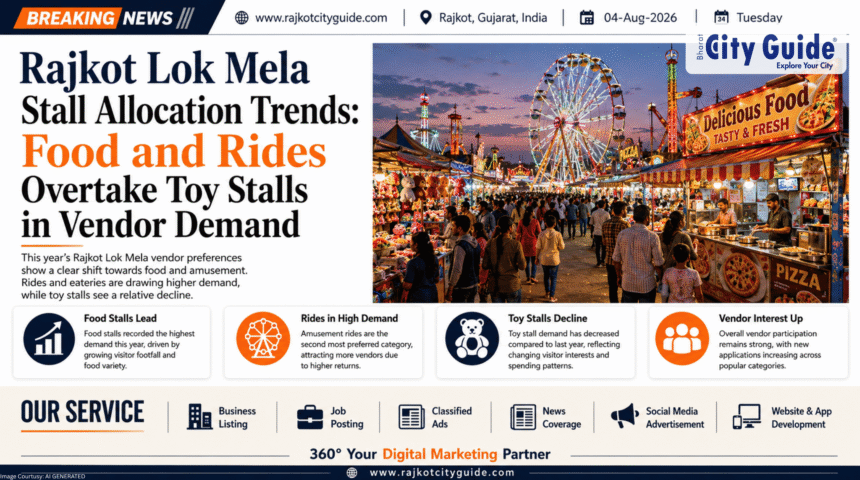
Historically, toy stalls formed the visual and commercial backbone of rural and urban fairs across Saurashtra. Bright plastic whistles, wooden pull-along carts, colorful balloons, and trinkets once dominated the landscape of the Race Course Mela. Yet, the latest administrative figures regarding application forms submitted for various categories reveal that vendor interest in toy stalls has waned significantly. In stark contrast, space allocations for small and medium rides—locally referred to as chakaradi—along with food court plots have triggered fierce competition, drawing hundreds of applications for a limited number of slots.
This dramatic realignment in vendor preferences reflects broader socio-economic shifts across India. Factors such as the boom in e-commerce, changing childhood entertainment preferences dominated by smartphones and digital screens, and evolving consumer spending patterns toward “experience-over-possession” have reshaped the economics of traditional folk fairs. In this comprehensive article, we dive deep into the recent details surrounding the Rajkot Lok Mela Stall Allocation, examine the underlying causes of this commercial shift, evaluate its socio-economic impact on local traders and visitors, and explore what the future holds for Western India’s iconic cultural festival.
What is Rajkot Lok Mela Stall Allocation?
The Rajkot Lok Mela Stall Allocation is the official administrative process conducted annually by the Rajkot District Collectorate and the Lok Mela Implementation Committee to distribute commercial plots and vendor stalls within the Race Course Mela ground. The entire fairground is divided into distinct, standardized categories based on the nature of business activity. These categories range from toy stalls and general handicraft shops to food courts, ice cream parlors, mechanical giant wheels, and small or medium amusement rides (chakaradi).
To ensure complete fairness, transparency, and public trust, the administration distributes standardized application forms to prospective vendors weeks prior to Janmashtami. Once applications are collected, the allotment of plots is executed through two primary transparent mechanisms:
- Draw of Lots (Lottery System): Designed specifically for small-scale vendors, small amusement rides, and basic toy stalls to guarantee affordable entry points without competitive price inflation.
- Open Public Auction: Utilized for high-value commercial zones, large food court areas, branded ice cream stalls, and heavy mechanical rides, allowing the district administration to generate substantial revenue earmarked for local development projects.
The allocation framework not only determines the physical layout of the fair, ensuring safety passages and emergency access routes, but also governs the economic viability of hundreds of small entrepreneurs, seasonal workers, and local business families who rely on the five days of Janmashtami for their annual livelihoods.
Why This News is Important
The latest administrative reports on the Rajkot Lok Mela Stall Allocation carry immense significance for urban planners, market analysts, local businesses, and festival enthusiasts alike. For decades, traditional toy sellers were among the first to exhaust available application forms, banking on heavy impulse buying from parents attending the fair with young children. The visible disinterest in toy stalls signals a fundamental pivot in how festival-goers spend their discretionary income at public events.
Furthermore, this news highlights the rising prominence of the “experience economy.” Visitors to the Lok Mela are increasingly prioritizing experiential engagement—such as enjoying thrill rides and exploring diverse culinary street food—over purchasing physical merchandise that can be easily bought online or at neighborhood retail stores year-round. Understanding this shift is essential for festival organizers, city administrators, and commercial vendors as they re-imagine space utilization, safety protocols, revenue models, and vendor support strategies for future editions of the fair.
Background Information
The Rajkot Janmashtami Lok Mela has a storied legacy deeply rooted in the cultural heritage of Saurashtra. Held annually at the central Race Course Ground, the fair commemorates the birth of Lord Krishna and serves as a major socio-cultural event where rural villagers and urban residents converge in vast numbers. Over the years, the fair has evolved from a traditional village-style gathering into a massive urban carnival generating crores of rupees in business turnover.
Administratively, the fair is managed by the Rajkot District Collectorate in coordination with municipal authorities, police departments, fire safety services, and health officials. Revenue generated from plot auctions and stall allocations does not merely cover operational expenses; surplus funds are directed toward district development initiatives, public parks, historic site restoration, and community infrastructure (such as Ishwariya Park, Evening Post, and Ghela Somnath temple developments).
In recent years, safety regulations have been tightened significantly, especially regarding mechanical rides, electrical installations, and food hygiene standards. As a consequence, operational costs for vendors have adjusted, making plot selection a high-stakes financial decision. Vendors must carefully weigh application fees, setup costs, and projected customer footfall before choosing whether to apply for a toy stall, a food plot, or an amusement ride zone.
Key Highlights
- Dwindling Interest in Toy Stalls: Vendors have shown a marked decrease in enthusiasm for category B toy stalls (100 allocated stalls), leading to lower application numbers compared to historic averages.
- Overwhelming Demand for Rides (Chakaradi): Small amusement ride plots (chakaradi) received an overwhelming response, with over 206 applications submitted for just 24 available plots in category K.
- Food Plots Remain High-Value Targets: Food court and eatery stalls saw intense competition, reflecting strong consumer willingness to spend on street food, snacks, and traditional delicacies during the fair.
- Transparent Allocation Mechanisms: Plots and stalls are being allotted strictly via systematic lot draws and open public auctions under the governance of the Lok Mela Committee.
- Economic Transition: The trend underscores a clear structural transition from merchandise shopping toward food consumption and recreational entertainment.
- Robust Administrative Oversight: Stringent safety standards, fitness certificates for rides, structural inspections, and food safety checks remain mandatory for all successful applicants.
Detailed Explanation of the Event
The application process for the upcoming Rajkot Janmashtami Lok Mela witnessed brisk administrative activity at designated bank counters and Collectorate offices. As application forms were distributed and collected across various commercial categories, administrative tallies revealed a stark contrast in vendor demand.
Out of the total forms collected for hundreds of available stalls and plots, the most striking dynamic observed was the disparity between traditional retail stalls and recreational zones. Category B, dedicated to 100 toy stalls, experienced sluggish uptake. Historically, these stalls would witness fierce rivalry among local toy manufacturers, plastic craft traders, and regional artisans. This year, however, applicants expressed hesitation, citing squeezed profit margins and reduced consumer buying interest for plastic and novelty toys at traditional fairs.
Conversely, the category K small ride plots—comprising 24 designated spaces for children’s merry-go-rounds, mini-swings, and small rotary rides—saw an avalanche of 206 applicant forms. This massive oversubscription means that the Lok Mela Committee will conduct a highly competitive public lottery draw to determine the winning vendors. Similarly, medium ride plots (category J) and food court spaces (category C) recorded enthusiastic participation from established food operators, caterers, and amusement park rides managers.
The administration noted that the surge in demand for food and ride plots guarantees strong revenue generation for the Lok Mela Committee through competitive auctions and lottery fees, ensuring that overall festival funding remains robust despite the shift away from retail toy stalls.
Benefits, Features, and Importance of the Allocation System
The structured process governing Rajkot Lok Mela Stall Allocation offers multiple administrative, social, and economic benefits:
1. Transparency and Public Trust
By conducting allotments through public lottery draws and open bidding, the district administration eliminates favoritism and ensures equal opportunity for small-scale vendors as well as established commercial enterprises.
2. Civic Development Funding
Surplus funds accumulated from plot auctions directly feed into public welfare and civic development projects across Rajkot district, turning festival commerce into permanent public infrastructure.
3. Balanced Fairground Layout
Categorized allocation ensures that the fairground is logically organized. Separating heavy mechanical rides from delicate food zones and retail walkways prevents overcrowding, streamlines visitor footfall, and facilitates emergency evacuation corridors.
4. Support for Small Micro-Enterprises
Reserved lottery categories with standardized, nominal fees ensure that grassroots vendors, small food artisans, and traditional ride operators are not priced out by large corporate bidders.
How It Impacts People
The shifting dynamics revealed by the Rajkot Lok Mela Stall Allocation have distinct implications across various segments of society:
Local Merchants and Small Toy Sellers
Traditional toy merchants face growing pressure to adapt. With consumer demand shifting toward online shopping platforms and branded retail outlets, toy sellers operating at temporary fairs are struggling with higher transport, inventory, and stall costs relative to expected sales.
Food Operators and Amusement Ride Entrepreneurs
Entrepreneurs operating food stalls and amusement rides stand to benefit greatly from high consumer footfall and strong spending propensity. However, intense competition during plot allotment drives up operational investments, requiring operators to maintain high throughput and flawless safety standards to ensure profitability.
Visiting Families and Citizens
For the general public, the fair is evolving into an immersive entertainment and culinary hub. Visitors can expect an enriched variety of food offerings and a wide selection of rides, though parents seeking traditional hand-crafted toys may find fewer specialized stalls than in past decades.
Expert Insights and Industry Perspective
Retail analysts and industry observers view the trends in Rajkot Lok Mela Stall Allocation as a clear mirror of evolving consumer lifestyle habits in urban and semi-urban India. Modern parents frequently buy toys, educational kits, and electronic gadgets throughout the year via e-commerce platforms and quick-commerce delivery services. As a result, the novelty of buying inexpensive plastic toys at an annual fair has diminished significantly.
On the other hand, experiential entertainment—such as riding giant Ferris wheels, bumper cars, and modern mechanical swings—cannot be replicated online. Similarly, social food consumption, where families gather to enjoy fresh street food, regional delicacies, and cold desserts in a festival atmosphere, remains an irreplaceable social experience. Market experts note that event management committees across India must respond to these behavioral shifts by reallocating spatial design, expanding dining zones, and enhancing safety infrastructure for mechanical rides.
Challenges and Limitations
While the strong interest in rides and food courts bodes well for fair attendance, it introduces several administrative and operational challenges:
- Crowd Management in High-Density Zones: Concentrating visitor demand around food courts and ride zones increases the risk of localized crowding, requiring sophisticated crowd control measures and wider walkways.
- Rigorous Ride Safety and Fitness Audits: With 200+ applicants competing for ride plots, ensuring that every mechanical structure undergoes strict engineering evaluations, load testing, and electrical safety audits is paramount to preventing accidents.
- Hygiene and Waste Management: A larger footprint of food stalls generates substantial organic and plastic waste. Maintaining food hygiene standards, preventing contamination, and ensuring efficient real-time sanitation present continuous challenges for municipal health inspectors.
- Rehabilitation of Traditional Artisans: The decline in toy stall applications highlights a broader threat to traditional toy craftsmen who lack digital sales channels and rely heavily on seasonal folk fairs for survival.
Future Outlook
Looking ahead, the Rajkot Lok Mela Stall Allocation process is likely to undergo further modernization and structural adaptation. Industry experts predict that future editions of the Janmashtami fair will incorporate digitized allotment systems, online form submissions, and real-time electronic bidding for premium plots.
In terms of spatial layout, the Lok Mela Committee may reconsider the ratio of allocated stalls, reducing underutilized retail toy zones and reallocating square footage toward expanded food courts, cultural performance stages, and interactive entertainment arenas. For traditional toy vendors, survival will likely depend on product diversification—transitioning from generic plastic novelties toward eco-friendly wooden toys, handicraft souvenirs, and interactive festival items that appeal to modern families seeking authentic cultural keepsakes.
Frequently Asked Questions (FAQs)
1. What is the primary trend in the latest Rajkot Lok Mela Stall Allocation?
The primary trend is a significant decline in vendor applications for traditional toy stalls, coupled with an overwhelming demand for small and medium amusement ride plots (chakaradi) and food court stalls.
2. Where is the Rajkot Janmashtami Lok Mela organized?
The Lok Mela is organized annually at the historic Race Course Ground in Rajkot, Gujarat, under the supervision of the Rajkot District Collectorate and the Lok Mela Committee.
3. How are plots and stalls allotted to vendors during the Lok Mela?
Stalls and plots are allotted through two transparent methods: a lottery draw (draw of lots) for small vendors, small rides, and basic stalls, and an open public auction for high-value food courts, ice cream zones, and major mechanical rides.
4. Why has vendor interest in toy stalls decreased in recent years?
Vendor interest has declined due to shifting consumer habits, including the prevalence of e-commerce for buying toys year-round, children’s preference for digital entertainment, and shrinking profit margins for traditional plastic novelty items at temporary fairs.
5. How many applications were received for small ride plots (chakaradi)?
Over 206 applications were submitted for just 24 available small ride plots, highlighting intense commercial competition among ride operators.
6. How is the revenue generated from stall allocations utilized?
Revenues gathered from plot auctions and allotment fees are utilized by the district administration to fund local civic infrastructure, public parks, historic site preservation, and community development projects across Rajkot.
7. What safety measures are enforced for rides and food stalls at the fair?
All mechanical rides undergo mandatory structural stability tests, electrical safety checks, and fitness certification by certified engineers. Food stalls are subject to strict hygiene inspections and food quality checks by municipal health authorities.
8. When does the Rajkot Janmashtami Lok Mela take place?
The Lok Mela takes place annually during the Janmashtami festival period, typically spanning five action-packed days in late August or early September.
Conclusion
The shifting patterns observed in the Rajkot Lok Mela Stall Allocation mark an extraordinary turning point in the storied history of Saurashtra’s premier folk festival. The growing disillusionment with traditional toy stalls, contrasted against the record-breaking demand for amusement ride plots and food court spaces, clearly demonstrates how changing consumer preferences are reshaping cultural commerce. As visitors prioritize shared experiences, culinary exploration, and memorable rides over physical retail purchases, the festival continues to adapt while maintaining its core spirit of joy and community celebration. Through transparent allotment processes, rigorous safety standards, and forward-looking space management, the Rajkot District Administration ensures that the Janmashtami Lok Mela remains an enduring beacon of Gujarat’s vibrant cultural heritage.