How Much Water Do You Really Need in Indian Climates? (2026 Practical Guide)
“Drink 8 glasses of water.”
“Clear urine means perfect hydration.”
“More water = better skin, weight loss, detox.”
- How Much Water Do You Really Need in Indian Climates? (2026 Practical Guide)
- 1) Start Your Day with Water
- 2) Pair Water with Routine Habits
- 3) Carry a Bottle — But Don’t Force It
- 4) Sip, Don’t Chug
- Plain Water
- Buttermilk (Chaas)
- Coconut Water
- 1) How much water should I drink daily in India?
- 2) Is 4–5 litres daily good?
- 3) Does chai count as hydration?
- 4) Is coconut water better than water?
- 5) Can drinking more water clear skin?
- 6) Is it bad to drink water during meals?
Hydration advice is everywhere — and often confusing.
For busy Indian professionals juggling work, travel, heat, AC offices, and irregular meals, knowing how to hydrate properly (without overdoing it) is more useful than generic rules.
This guide cuts through myths and gives realistic, science-backed hydration advice for 2026 lifestyles.
No hype. No extreme water challenges. Just practical clarity.
Why Hydration Matters More Than You Think
Water isn’t just for thirst.
It supports:
✅ Body temperature control
✅ Digestion and nutrient absorption
✅ Brain function and focus
✅ Blood circulation
✅ Joint lubrication
✅ Kidney function
✅ Energy levels
Even mild dehydration can affect:
❌ Mood
❌ Alertness
❌ Physical performance
❌ Headache frequency
Hydration is a daily foundation habit.
The Big Myth: “Everyone Needs 3–4 Litres Daily”
You’ve likely heard this.
But hydration needs are not fixed.
They depend on:
✔ Body size
✔ Climate
✔ Activity level
✔ Sweat loss
✔ Diet
✔ Health conditions
✔ Pregnancy/lactation
A petite office worker in Bengaluru AC doesn’t need the same water as a construction worker in Chennai heat.
One-size-fits-all rules don’t work.
A More Realistic Hydration Rule
For most adults:
👉 30–35 ml water per kg body weight per day
is a reasonable baseline.
Example:
60 kg person
≈ 1.8–2.1 litres/day
Then adjust for:
- Heat
- Exercise
- Travel
- Illness
This includes fluids from food and beverages.
Remember: Food Also Hydrates You
Many people forget this.
Foods rich in water:
✔ Fruits (watermelon, orange, papaya)
✔ Vegetables (cucumber, tomato, lauki)
✔ Curd
✔ Soups
✔ Buttermilk
These contribute meaningfully to hydration.
So total fluid intake ≠ only plain water.
Understanding Thirst (Your Built-in Hydration App)
Thirst is not a bad signal.
For healthy adults, thirst usually appears before serious dehydration.
It’s okay to drink when thirsty rather than forcing water constantly.
Problems arise when people:
❌ Ignore thirst for hours
❌ Overdrink without thirst
❌ Replace meals with only liquids
Balance matters.
Signs You May Be Under-Hydrated
Common signs:
✔ Dark yellow urine
✔ Dry mouth
✔ Fatigue
✔ Headache
✔ Dizziness
✔ Constipation
✔ Muscle cramps
In Indian heat, these can show quickly.
Signs of Over-Hydration (Yes, It’s Real)
More water isn’t always better.
Over-hydration (water intoxication) can dilute electrolytes.
Possible signs:
✔ Constant clear urine
✔ Bloating
✔ Nausea
✔ Headache
✔ Swelling in hands/feet
✔ Frequent urination disrupting work/sleep
Extreme cases are rare but possible.
Drinking far beyond thirst for “detox” isn’t helpful.
The Urine Color Myth (Partly True)
Light straw color = generally hydrated
Dark yellow = likely dehydrated
But:
❌ Crystal-clear urine all day may mean over-drinking
❌ Vitamins can change urine color
❌ Morning urine is naturally darker
Use urine color as a guide — not an obsession.
Hydration in Indian Climates (2026 Reality)
India has:
☀ Hot summers
💧Humid coastal zones
🏜 Dry northern heat
🏔 Cooler hill climates
Urban heat + pollution + AC environments can dry you out.
People often drink less water in AC offices because they don’t feel sweaty.
But you still lose fluids through breathing and skin.
Smart Hydration for Busy Professionals
Simple strategies:
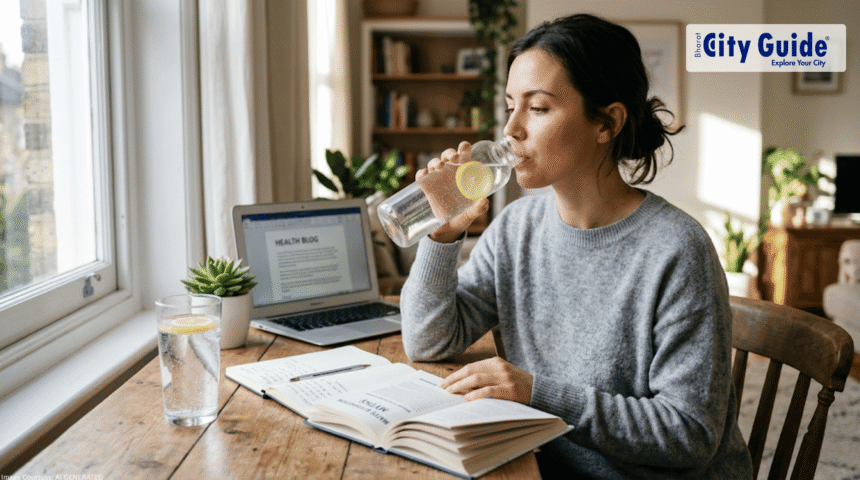
1) Start Your Day with Water
1–2 glasses after waking helps rehydrate after sleep.
No need for lemon, honey, or detox claims unless you enjoy them.
2) Pair Water with Routine Habits
Drink:
✔ After bathroom breaks
✔ Before meals
✔ After meetings
✔ During commute breaks
Habit stacking works better than reminders.
3) Carry a Bottle — But Don’t Force It
A 750 ml–1 litre bottle is practical.
Refill 2–3 times based on need.
Avoid competitive “finish 4 bottles” thinking.
4) Sip, Don’t Chug
Slow sipping improves absorption and comfort.
Chugging large amounts can cause bloating.
Water vs Buttermilk vs Coconut Water
Let’s compare realistically.
Plain Water
Best default choice.
✔ Zero calories
✔ Easily available
✔ Essential daily
Still your primary hydration source.
Buttermilk (Chaas)
Excellent Indian hydration drink.
Benefits:
✔ Contains electrolytes
✔ Supports digestion
✔ Cooling in hot weather
✔ Light protein source
✔ Low calorie
Great for:
✔ Lunch hydration
✔ Summer afternoons
✔ Post-spicy meals
A traditional wisdom backed by modern understanding.
Coconut Water
Nature’s electrolyte drink.
Benefits:
✔ Potassium-rich
✔ Good after sweating
✔ Refreshing in heat
✔ Mildly hydrating
But:
❌ Not superior to water for daily hydration
❌ Contains natural sugars
❌ Can be costly daily
Good occasionally, not mandatory.
Tea, Coffee & Hydration
Common myth:
“Tea and coffee dehydrate you.”
Reality:
Moderate tea/coffee still contribute to fluid intake.
Yes, caffeine has mild diuretic effects, but regular drinkers adapt.
So your chai counts toward hydration.
But:
❌ Don’t replace water fully with caffeinated drinks
❌ Too much caffeine can affect sleep/anxiety
Balance is key.
What About Detox Waters?
Cucumber water
Jeera water
Herbal infusions
They’re fine if they help you drink more.
But:
❌ Not magical detoxifiers
❌ Liver and kidneys already detox your body
Enjoy for taste, not miracle claims.
Hydration and Skin Glow
Drinking water helps skin function.
But it won’t:
❌ Erase wrinkles
❌ Cure acne
❌ Replace skincare
Hydration supports skin — it’s not a beauty cure.
Hydration and Weight Loss
Water can help weight management by:
✔ Supporting metabolism
✔ Reducing mistaking thirst for hunger
✔ Helping portion control
But water alone doesn’t cause fat loss.
Diet and lifestyle still matter.
Special Situations Requiring More Hydration
You need extra fluids if:
✔ Exercising
✔ Traveling in heat
✔ Fever/diarrhea
✔ Pregnancy/breastfeeding
✔ High-protein diets
✔ High-salt meals
Electrolytes may help in heavy sweat loss.
Hydration for Office Workers
Tips:
✔ Keep water visible on desk
✔ Drink between tasks
✔ Have chaas with lunch
✔ Limit sugary drinks
✔ Avoid long no-water stretches
AC rooms can mask thirst.
Hydration for Outdoor Workers
More important due to sweat loss.
Include:
✔ Water
✔ Buttermilk
✔ ORS if sweating heavily
✔ Coconut water occasionally
Regular small drinks are better than rare large ones.
Simple Hydration Check-in
Ask yourself daily:
👉 Am I thirsty often?
👉 Is my urine very dark?
👉 Do I feel fatigued?
👉 Am I getting headaches?
If yes, increase fluids slightly.
No need for extremes.
Cultural Wisdom Already Present
Indian traditions include:
✔ Nimbu pani
✔ Chaas
✔ Jal jeera
✔ Aam panna
✔ Soups and rasam
These naturally supported hydration long before apps and trackers.
Modern science largely agrees with many of these practices.
A Balanced 2026 Perspective
Hydration is not a competition.
Not a detox.
Not a beauty hack.
It’s a daily maintenance habit.
Drink enough — not excessive.
Listen to your body.
Adjust for climate and activity.
Consistency beats obsession.
Conclusion
Proper hydration improves:
✅ Energy
✅ Digestion
✅ Focus
✅ Temperature control
✅ Overall well-being
But more is not always better.
For most Indians in 2026:
👉 2–3 litres total fluids/day (from all sources) suits many
👉 Adjust for body size and climate
👉 Include traditional drinks like chaas
👉 Use thirst as a guide
👉 Avoid both neglect and overdoing it
Hydration should feel natural, not forced.
FAQs
1) How much water should I drink daily in India?
Typically 2–3 litres total fluids, adjusted for weight, climate, and activity.
2) Is 4–5 litres daily good?
Only if you truly need it (heavy sweating, heat, exercise). Otherwise unnecessary.
3) Does chai count as hydration?
Yes, moderate tea contributes to fluids.
4) Is coconut water better than water?
Not better — just an occasional electrolyte drink.
5) Can drinking more water clear skin?
It helps overall health but isn’t a miracle for skin.
6) Is it bad to drink water during meals?
No. Moderate sips are fine and normal.