Introduction
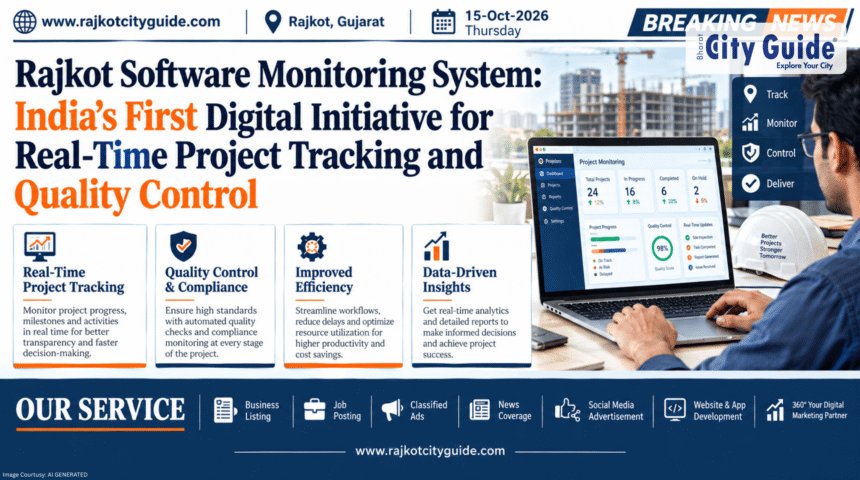
In a historic leap forward for digital urban governance and administrative transparency, the Rajkot Municipal Corporation (RMC) has officially launched the Rajkot Software Monitoring System. Positioned as the first-of-its-kind municipal tracking technology in India, this advanced digital platform allows civic leaders, executive engineers, and administrative heads to monitor municipal infrastructure projects at their fingertips. The system provides real-time access to daily project progress reports, material quality testing certifications, contractor compliance logs, and field staff attendance records across all municipal wards.
- Introduction
- What is Rajkot Software Monitoring System?
- Why This News is Important
- Background Information
- Key Highlights
- Detailed Explanation of the System Architecture
- Benefits and Importance of the Digital Platform
- How It Impacts People
- Expert Insights and Industry Perspective
- Challenges and Implementation Factors
- Frequently Asked Questions (FAQs)
- Conclusion
For years, urban local bodies across the nation have struggled with project overruns, delayed infrastructure handovers, unverified construction material quality, and manual field reporting bottlenecks. By implementing this revolutionary software ecosystem, Rajkot is setting a nationwide precedent in smart governance. The administrative dashboard converts complex on-site civil data into instant, actionable insights, bringing bird’s-eye oversight (“Baaj Najhar”) to every municipal rupee spent on public development.
This digital transformation marks a critical milestone as Rajkot accelerates its smart city infrastructure roadmap. From road resurfacing, bridge construction, and underground drainage networks to water pipeline laying and park developments, every active municipal site will now be digitally mapped and monitored. By eliminating manual paperwork and physical reporting lags, the Rajkot Software Monitoring System promises to elevate public work quality, enforce strict accountability, and safeguard taxpayer funds across the city.
What is Rajkot Software Monitoring System?
The Rajkot Software Monitoring System is a comprehensive, cloud-based digital enterprise solution engineered by the Rajkot Municipal Corporation to digitize the end-to-end lifecycle of civic infrastructure projects. Designed for seamless mobile and desktop accessibility, the system serves as a centralized management dashboard for municipal administrators, project engineers, contractors, and field inspectors.
At its technical core, the platform integrates geotagged image verification, biometric and GPS-enabled field attendance tracking, automated material testing logbooks, and real-time project milestone timeline charts. When contractors or site engineers execute daily civil tasks, they upload real-time progress photographs, material batch receipts, and laboratory quality test results directly onto the digital portal.
Additionally, the software utilizes automated alert algorithms to flag project delays, unapproved material variations, or workforce absenteeism instantly. Instead of relying on weekly or monthly physical inspections, senior municipal authorities—including the Municipal Commissioner, Mayor, and Chief Engineers—can inspect site progress from their smartphones or office dashboards anywhere, anytime.
Why This News is Important
The introduction of India’s first dedicated municipal software monitoring framework holds enormous significance for urban administration, civil engineering standards, and public trust. First, it establishes complete operational transparency in public infrastructure execution. Historically, civic projects faced delays due to slow manual progress reporting and delayed quality inspections. Digitizing these workflows ensures that delays are identified and corrected in real time.
Second, the system enforces rigid quality control over construction materials such as cement, bitumen, structural steel, and concrete aggregates. Requiring contractors to upload laboratory test certificates and geotagged material delivery receipts prior to processing financial bills prevents the use of substandard materials in public roads, bridges, and civic buildings.
Finally, this innovation reinforces Rajkot’s reputation as a pioneer in smart city technology across India. Demonstrating that a municipal corporation can successfully build and operate a digital project tracking ecosystem serves as a national benchmark for other urban local bodies, encouraging digital governance adoption across Gujarat and the entire country.
Background Information
Over the past decade, Rajkot has experienced rapid urbanization, expanding its geographical boundaries, population density, and municipal budget allocations. To meet the growing needs of its citizens, the Rajkot Municipal Corporation handles hundreds of active civil infrastructure tenders annually, spanning road networks, water distribution infrastructure, sewage treatment facilities, housing complexes, and public parks.
However, managing multiple concurrent projects across 18 administrative wards presented significant administrative challenges. Traditional monitoring methods relied heavily on physical site visits by ward engineers, paper-based measurement books (MBs), and delayed progress reports. This conventional approach occasionally led to missed deadlines, lack of standardized quality checks, and difficulty tracking contractor workforce presence on ground sites.
+-----------------------------------------------------------------------+
|             RAJKOT SOFTWARE MONITORING SYSTEM OVERVIEW                |
+--------------------------+--------------------------------------------+
| Pioneer Status           | India's First Municipal Software System    |
| Managing Authority       | Rajkot Municipal Corporation (RMC)         |
| Primary Objectives       | Progress Tracking, Quality & Attendance    |
| Operational Access       | Mobile App & Central Web Dashboard         |
| Core Functional Modules  | Geotagged Progress, Material Quality Audit,|
|                          | Biometric/GPS Attendance, Digital MB Logs  |
| Primary Beneficiaries    | Citizens, Civic Administrators, Engineers  |
+--------------------------+--------------------------------------------+
Recognizing the need for a modern solution, the Rajkot Municipal Corporation (RMC) leadership commissioned the development of a custom software platform capable of streamlining project supervision. By digitizing field inspections and integrating real-time data entry, the municipality established an end-to-end monitoring ecosystem designed to maintain high infrastructure standards.
Key Highlights
- India’s First Municipal System: Rajkot Municipal Corporation becomes the first civic body in India to deploy a comprehensive software monitoring system for all civil works.
- Fingertip Progress Tracking: Daily project progress reports, milestone timelines, and site status updates accessible instantly via mobile and web dashboards.
- Strict Material Quality Audits: Mandatory digital submission of laboratory test reports and batch certifications for cement, steel, asphalt, and concrete.
- Bird’s-Eye Attendance Surveillance: GPS-tagged and digital attendance tracking for site engineers, municipal inspectors, and contractor workforces.
- Geotagged Photo Evidence: Site engineers must upload real-time, location-stamped photographs at every construction phase before advancing to the next stage.
- Automated Exception Alerts: Instant automated notifications sent to senior officials when projects breach completion deadlines or quality thresholds.
Detailed Explanation of the System Architecture
The Rajkot Software Monitoring System operates through an integrated, multi-tiered digital architecture that connects field personnel directly with executive decision-makers. The system is built around four primary functional modules: Project Progress Management, Material Quality Assurance, Workforce Attendance Tracking, and Financial Bill Verification.
When a new municipal project is awarded, the software auto-generates a digital project master profile containing approved engineering blueprints, budget allocations, contractor details, and milestone completion deadlines. As physical construction begins, assigned site engineers must log into the mobile application daily, capturing geotagged, time-stamped photographs of active construction work—such as excavation depth, rebar placement, or asphalt layering.
+-----------------------------------------------------------------------+
|                    DIGITAL WORKFLOW & MONITORING STAGES               |
+--------------------------+--------------------------------------------+
| System Workflow Phase    | Operational Action & Data Capture          |
+--------------------------+--------------------------------------------+
| Stage 1: Tender Mapping  | Digital profile creation & milestone setup |
| Stage 2: Daily Execution | Geotagged photo uploads & progress logging |
| Stage 3: Quality Check   | Lab test certificate & material log entry  |
| Stage 4: Attendance Log  | GPS/Biometric check-in for site personnel  |
| Stage 5: Bill Approval   | System verification before payment release |
+--------------------------+--------------------------------------------+
Simultaneously, the Material Quality Assurance module mandates that every material batch brought to the site undergoes standardized laboratory testing. Results for concrete strength, asphalt density, and steel tensile strength must be uploaded to the portal. The software cross-references these results against Indian Standard (IS) codes; if a test report fails to meet required parameters, the system automatically flags the entry and locks subsequent billing workflows, ensuring total quality compliance.
Benefits and Importance of the Digital Platform
The deployment of this pioneering software system delivers wide-ranging benefits for city administration, contractors, and residents:
1. Total Administrative Transparency and Accountability
By replacing paper registers with immutable digital logs, the system eliminates data tampering, backdated entries, and unverified progress claims, establishing complete operational transparency.
2. Elimination of Project Delays and Cost Overruns
Real-time tracking allows senior engineers to identify operational bottlenecks—such as utility shifting delays or material shortages—early, enabling rapid intervention to keep projects on schedule.
3. Superior Infrastructure Quality and Public Safety
Enforcing strict material testing protocols ensures that roads, drainage systems, and public buildings are constructed to last, reducing premature pavement damage and structural defects.
4. Efficient Fiscal Management and Automated Billing
Digital verification speeds up legitimate contractor bill payments while ensuring that public funds are disbursed only for fully inspected, quality-approved, and verified work.
How It Impacts People
This innovative municipal software directly enhances the daily lives of citizens and stakeholders across Rajkot:
- For Local Citizens and Taxpayers: Ensures that tax money is spent efficiently, delivering long-lasting roads, reliable water pipelines, and high-quality public amenities without unnecessary construction delays.
- For Municipal Engineers and Inspectors: Streamlines field reporting, reduces physical paperwork, and provides clear digital evidence of site inspections and project approvals.
- For Civil Contractors and Developers: Creates a fair, transparent working environment with clear performance metrics and faster bill processing for compliant, high-quality work.
- For Future Urban Planners: Generates valuable historical data on project timelines, material performance, and vendor reliability, informing smarter urban development strategies.
Expert Insights and Industry Perspective
Civil governance experts and software architects have praised the Rajkot Municipal Corporation for pioneering digital project surveillance in India’s municipal sector. According to urban infrastructure analysts, traditional public works management suffered from an “information gap” between physical job sites and executive decision-makers. Bridging this gap through geotagged mobile technology dramatically reduces administrative friction and enhances project delivery speed.
Construction quality auditors emphasize that integrating material test verification directly into financial billing workflows is a masterstroke. When contractors know that financial disbursements are digitally linked to verified laboratory test reports, compliance with safety and structural standards increases significantly.
Furthermore, digital governance experts note that Rajkot’s initiative aligns perfectly with the national Digital India vision. By demonstrating how software solutions can transform municipal management, Rajkot is creating a scalable blueprint that urban local bodies across India can replicate to modernize public works administration.
Challenges and Implementation Factors
While the software system offers transformative capabilities, maintaining long-term operational success involves addressing key technical and human factors:
- Field Staff Training and Adoption: Ensuring that all junior engineers, site supervisors, and contractor teams are thoroughly trained to navigate the digital mobile interface accurately.
- Data Security and Server Reliability: Maintaining high-level cybersecurity protocols, encrypted data storage, and cloud server uptime to prevent data loss or system downtime.
- Verification of Uploaded Field Data: Conducting periodic random physical audits to verify that uploaded photographs and material test certificates accurately reflect actual site conditions.
- Connectivity in Remote/Peripheral Wards: Optimizing the mobile application to store field data offline in areas with weak cellular coverage, automatically syncing once network connectivity is restored.
Frequently Asked Questions (FAQs)
What is the Rajkot Software Monitoring System?
It is India’s first digital municipal software system deployed by the Rajkot Municipal Corporation to track real-time project progress, construction material quality, and employee attendance for all civic infrastructure works.
How does the system track daily project progress?
Site engineers use a dedicated mobile application to upload daily progress logs, milestone updates, and geotagged, time-stamped photographs directly from active construction sites.
How does the software ensure construction material quality?
Contractors must upload certified laboratory test reports for materials like cement, steel, and asphalt. The system cross-references results against safety standards before approving work phases or contractor payments.
How is workforce attendance monitored under this system?
The software utilizes GPS-tagged and digital attendance verification to track the site presence of municipal inspectors, field engineers, and contractor workforces in real time.
Why is this software initiative considered a first in India?
It is the first time a municipal corporation in India has integrated real-time progress reporting, material quality testing, workforce attendance, and automated billing verification into a single unified software platform.
How will this digital system benefit citizens of Rajkot?
Citizens will benefit from higher-quality roads and public buildings, faster completion of civic projects, reduced traffic disruptions, and greater transparency in the utilization of municipal tax funds.
Can senior authorities access the system remotely?
Yes, senior leaders—including the Municipal Commissioner, Mayor, and Chief Engineers—can view real-time project dashboards, progress charts, and site alerts from their smartphones or computers anytime, anywhere.
Conclusion
The deployment of the Rajkot Software Monitoring System represents a groundbreaking achievement in Indian municipal governance, digital technology, and urban civil engineering. By bringing real-time project tracking, material quality verification, and workforce attendance monitoring directly to administrators’ fingertips, the Rajkot Municipal Corporation is redefining how public infrastructure is built and managed.
This innovative digital ecosystem addresses long-standing urban governance challenges, replacing manual delays and paper logs with complete administrative transparency and automated quality control.
As Rajkot continues its rapid growth as a modern industrial and commercial hub in Gujarat, this pioneering technology ensures that civic development moves forward with speed, precision, and uncompromised quality. The successful execution of this system provides an inspiring model for smart cities across India, proving that digital innovation is the key to building resilient, transparent, and world-class urban infrastructure.