Introduction
Urban governance forms the backbone of infrastructure development, public welfare, and civil administration in fast-growing industrial centers. As the premier urban local body of Saurashtra, the Rajkot Municipal Corporation plays a vital role in planning, executing, and maintaining city infrastructure. From providing clean drinking water and affordable housing under government welfare schemes to managing traffic corridors and municipal markets, local administrative decisions directly shape the everyday quality of life for millions of residents across Rajkot.
- Introduction
- Why This News is Important
- What is Rajkot Municipal Corporation?
- Background Information
- Key Highlights
- Detailed Explanation of the Event
- Importance and Features of Proposed Municipal Policies
- How It Impacts Different Audiences
- Expert Insights and Urban Governance Perspective
- Challenges and Implementation Considerations
- Future Outlook
- Frequently Asked Questions (FAQs)
- Conclusion
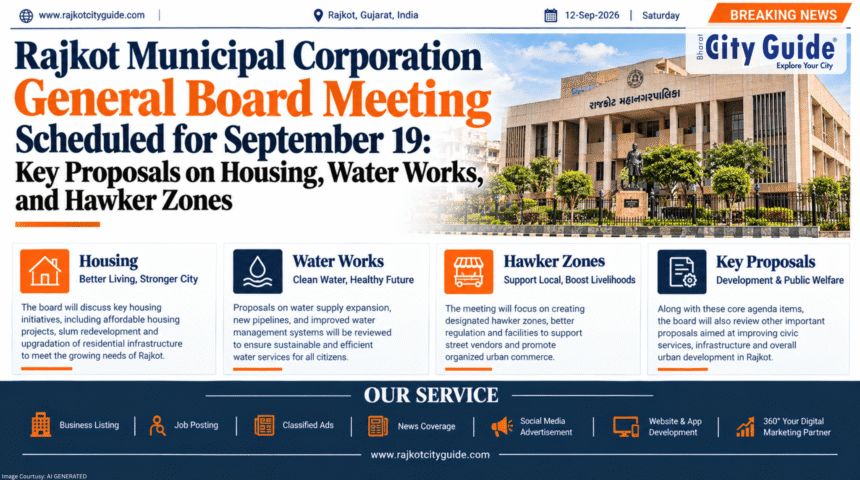
A major administrative development has been announced as the Rajkot Municipal Corporation schedules its upcoming General Board meeting for September 19. This meeting is set to deliberate on critical urban infrastructure projects, civic welfare policies, and regulatory frameworks aimed at modernizing the city’s public spaces. Key items on the official agenda include resolving pressing issues related to public housing allotment, water supply enhancement works, town planning (TP) scheme implementations, and establishing designated hawker-free zones alongside regulated spaces for fair rides and amusement operators.
This upcoming session of the General Board carries significant weight for residents, business owners, street vendors, and urban planners alike. As Rajkot continues its rapid expansion along the 150 Feet Ring Road and outer Smart City greenfield zones, policy decisions finalized by elected representatives and municipal officials during this meeting will set the trajectory for urban management in the coming years.
Why This News is Important
The announcement of the September 19 General Board meeting is crucial for several strategic and civic reasons:
1. Directly Impacting Resident Living Standards
Deliberations surrounding water works and public housing impact thousands of families awaiting housing allotments, pipeline upgrades, or improved water pressure in developing residential sectors.
2. Balancing Urban Mobility and Informal Vending
The proposal to create hawker-free roads directly tackles chronic traffic bottlenecks on major commercial avenues. At the same time, allocating alternative space for vendors and amusement ride operators ensures livelihood protection under statutory urban vending guidelines.
3. Systematic Execution of Town Planning (TP) Schemes
Town Planning schemes serve as the blueprint for Rajkot’s physical growth. Board approvals on pending TP scheme proposals pave the way for land acquisition needed for public parks, school plots, parking spaces, and wide road networks.
What is Rajkot Municipal Corporation?
The Rajkot Municipal Corporation (RMC) is the civic body responsible for the administration and civic infrastructure of Rajkot city. Established under the Gujarat Provincial Municipal Corporations (GPMC) Act, 1949, RMC manages an urban expanse divided across multiple municipal administrative zones—East Zone, West Zone, and Central Zone—comprising dozens of electoral wards.
+--------------------------------------------------------------------------+
|                 RAJKOT MUNICIPAL CORPORATION GOVERNANCE STRUCTURE         |
+--------------------------------------------------------------------------+
                                     |
    +--------------------------------+--------------------------------+
    |                                |                                |
    v                                v                                v
[ ELECTED WING ]            [ ADMINISTRATIVE WING ]      [ CIVIC SERVICES ]
- Mayor & Deputy Mayor       - Municipal Commissioner     - Water Works & Sewage
- Standing Committee Chair   - Deputy Commissioners       - Town Planning (TP)
- Ward Councillors           - Departmental Engineers     - Housing & Social Welfare
Core Functions and Responsibilities
- Water Supply & Drainage Management: Managing pipeline networks, pumping stations, and bulk water supply from major reservoirs like Aji, Nyari, and Bhadar dams to ensure daily residential supply.
- Town Planning & Road Infrastructure: Formulating Town Planning (TP) schemes, constructing major ring roads, flyovers, and maintaining public thoroughfares across the city.
- Affordable Housing Initiatives: Implementing welfare schemes such as Pradhan Mantri Awas Yojana (PMAY) and EWS housing draws to provide affordable shelter to low- and middle-income families.
- Public Health & Waste Management: Overseeing daily door-to-door solid waste collection, operating processing plants, maintaining city sanitation, and managing public health centers.
- Urban Estate & Hawker Regulation: Designated vending zones, hawker management, amusement rides oversight, and managing municipal commercial spaces.
Background Information
Rajkot’s urban footprint has grown dramatically over the past decade. The expansion of commercial districts, combined with the rapid development of the Smart City area near Raiya and the outer Ring Road corridors, has placed increased demands on municipal infrastructure.
Historically, street hawking and temporary amusement fairs (mela rides) have operated in high-footfall areas like Race Course Ring Road, Dharmendra Road, Yagnik Road, and Gundavadi. While these activities reflect the vibrant local market culture of Saurashtra, unorganized encroachment frequently leads to severe traffic congestion, parking shortages, and pedestrian hazards during peak hours.
[ Unorganized Urban Growth & Traffic Bottlenecks ]
                        |
                        v
[ Demand for Systematic Vending Zones & Infrastructure Upgrades ]
                        |
                        v
[ RMC General Board Agenda Formulation (September 19) ]
                        |
                        v
[ Targeted Execution: Hawker-Free Roads, Water Works & Housing Draws ]
To resolve these recurring challenges, the Rajkot Municipal Corporation has been working on a dual strategy: designating clear “Hawker-Free Zones” on primary arterial roads while simultaneously creating structured, equipped “Hawker Vending Zones” and reserved spots for seasonal amusement operators. The September 19 meeting represents a crucial step in formalizing these policies into actionable municipal directives.
Key Highlights
- Official Meeting Date: The General Board session of the Rajkot Municipal Corporation is officially scheduled for September 19.
- Hawker-Free Road Designation: Proposals to declare critical high-traffic road stretches as strict hawker-free zones to streamline vehicular movement.
- Dedicated Allocation for Ride Operators: Alternative space allocation and regulatory approvals for fair and amusement ride operators (Rides Dharako).
- Housing Project Decisions: Resolution of pending administrative, allotment, and infrastructural queries regarding public housing complexes.
- Water Works Upgrades: Detailed discussion on water pipeline extensions, pumping station maintenance, and distribution network enhancements.
- Town Planning (TP) Approvals: Review of land deduction, road widening proposals, and public amenity reservations within various Town Planning schemes.
Detailed Explanation of the Event
The General Board meeting scheduled for September 19 will bring together the Mayor, Deputy Mayor, Standing Committee Chairman, Municipal Commissioner, and ward councillors from all municipal zones. The board will take up a diverse agenda designed to address long-pending civic requirements.
+--------------------------------------------------------------------------+
|                  SEPTEMBER 19 GENERAL BOARD AGENDA BREAKDOWN             |
+--------------------------------------------------------------------------+
| Agenda Sector       | Key Proposed Policy Action / Discussion            |
+---------------------+----------------------------------------------------+
| Hawker Zones        | Declaring major thoroughfares as Hawker-Free Roads |
| Ride Operators      | Allocating organized spaces for fair ride vendors  |
| Water Works         | Upgrading distribution lines & pumping efficiency  |
| Town Planning (TP)  | Clearance for road widening & public land plots   |
| Public Housing      | Addressing infrastructure & allotment procedures   |
+---------------------+----------------------------------------------------+
A major focus of the meeting will be urban space management. The board will evaluate proposals to designate specific high-density commercial corridors as hawker-free zones. To balance this regulation with social welfare, the corporation will deliberate on providing dedicated vending plots where small vendors can operate legally without disrupting traffic flow. Similarly, temporary ride operators who frequently set up joyrides during festive seasons will receive designated, safety-inspected municipal locations.
In addition to urban space regulation, the board will address infrastructure works. Water supply engineering teams will present updates on pipeline network integration for newly merged urban peripheral areas. Furthermore, Town Planning proposals will be reviewed to clear administrative hurdles for road widening, storm-water drainage installation, and allocating plots for municipal health centers and educational facilities.
Importance and Features of Proposed Municipal Policies
The proposals set for discussion during the September 19 session outline a clear vision for sustainable urban management:
1. Traffic De-congestion and Pedestrian Safety
Clear demarcation of hawker-free roads reduces unauthorized street encroachments, ensuring smooth vehicle flow and safe walking space for pedestrians on congested market streets.
2. Equitable Space Management for Informal Economy Workers
By providing designated alternative sites for hawkers and ride owners, the municipal corporation upholds urban livelihoods while maintaining public order, aligning with street vending regulation acts.
3. Accelerated Infrastructure Delivery
Resolving administrative hold-ups in water supply and town planning schemes allows engineering teams to execute road widening projects, lay water mains, and hand over public housing units to beneficiaries without unnecessary delays.
How It Impacts Different Audiences
| Stakeholder Group | Direct Impact & Event Relevance |
| City Residents & Commuters | Expect smoother traffic flow on major roads and more reliable water supply across residential wards. |
| Street Vendors & Hawkers | Transition from insecure street vending to organized, designated municipal vending zones. |
| Housing Beneficiaries | Accelerated processing of housing scheme approvals, maintenance solutions, and utility connections. |
| Commercial Business Owners | Reduced store-front congestion, cleaner market corridors, and improved customer access. |
Expert Insights and Urban Governance Perspective
Urban planning experts and civic analysts note that municipal board meetings of this nature serve as important checkpoints for balanced city development.
“A growing urban center cannot rely solely on enforcement to keep streets clear. Combining hawker-free road designations with dedicated vending zones demonstrates mature urban governance. It preserves vehicular mobility while protecting the livelihoods of micro-entrepreneurs.”
Civic experts also highlight that proactive Town Planning (TP) scheme resolutions are critical for preventing unplanned sprawl, ensuring that newly developed peripheral areas along Ring Road receive adequate water, drainage, and road networks from the start.
Challenges and Implementation Considerations
While the proposals on the September 19 agenda offer clear benefits, the municipal body faces several operational challenges during ground implementation:
- Fair Encroachment Enforcement: Ensuring strict compliance with hawker-free zones requires continuous field monitoring by municipal eviction squads and traffic police.
- Vendor Relocation Resistance: Moving established street hawkers to alternative vending zones often meets resistance if footfall at the new locations is initially lower.
- Equitable Water Distribution: Balancing water pressure across older central city wards and rapidly growing peripheral areas requires ongoing capital investment and monitoring.
Future Outlook
Following the conclusions of the September 19 General Board meeting, several operational milestones are expected across Rajkot:
- Formal Notification of Hawker Zones: The civic body will issue formal notifications marking designated hawker-free stretches and opening organized vending hubs.
- Execution of Water Works Contracts: Sanctioned budgetary approvals will allow immediate tenders and execution of water pipeline and drainage projects.
- Speedy Implementation of TP Schemes: Town Planning decisions will enable surveyors to begin road marking, public plot acquisitions, and infrastructure development across outer urban sectors.
Frequently Asked Questions (FAQs)
1. When is the Rajkot Municipal Corporation General Board meeting scheduled?
The General Board meeting of the Rajkot Municipal Corporation is officially scheduled to take place on September 19.
2. What are the main topics on the meeting agenda?
Key agenda items include hawker-free road declarations, site allocations for fair ride operators, water works network improvements, public housing issues, and Town Planning (TP) scheme approvals.
3. How will hawker-free roads benefit citizens in Rajkot?
Designating high-traffic thoroughfares as hawker-free roads helps eliminate traffic bottlenecks, reduces street congestion, improves vehicular speed, and ensures safer walkways for pedestrians.
4. What steps is RMC taking for street hawkers and ride operators?
Rather than simple removal, the corporation plans to allocate structured alternative locations where hawkers and temporary amusement ride operators can conduct business legally.
5. What is the role of the General Board in Rajkot Municipal Corporation?
The General Board, comprising elected ward councillors, the Mayor, and administrative heads, serves as the supreme decision-making body for municipal policies, budget approvals, and civic infrastructure projects in Rajkot.
6. How does Town Planning (TP) scheme approval help city development?
TP scheme approvals allow the municipal body to systematically reserve land for wide roads, public parks, schools, water supply units, and drainage infrastructure before private construction occurs.
7. Where can citizens access official updates regarding RMC board decisions?
Residents can track official notifications, meeting minutes, and civic project announcements on the official portal of the Rajkot Municipal Corporation.
Conclusion
The upcoming September 19 General Board meeting of the Rajkot Municipal Corporation marks an important step toward structured civic progress in Rajkot. By addressing fundamental urban priorities—ranging from water works upgrades and housing solutions to street vendor regulation and town planning—the corporation continues to demonstrate its commitment to sustainable urban development.
As the civic body works to balance rapid economic growth with public convenience, the decisions finalized during this board session will play a key role in making Rajkot’s streets safer, its infrastructure more resilient, and its public services more accessible for all citizens.