Introduction
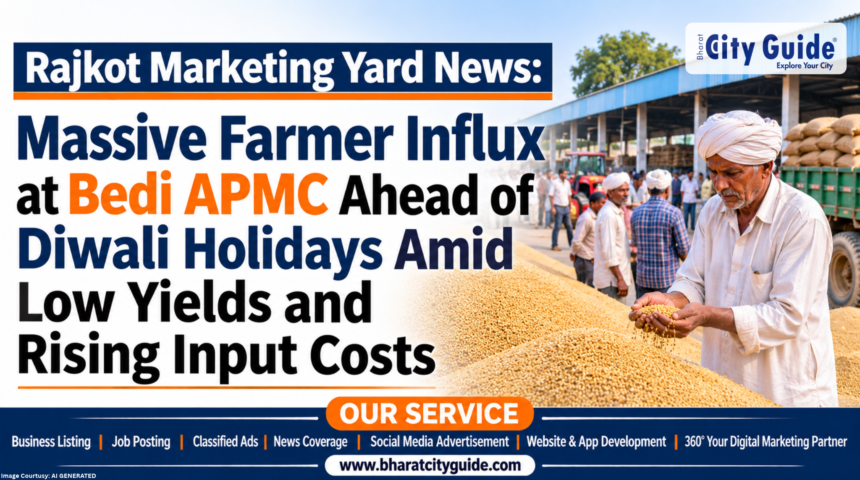
In a compelling development shaping Saurashtra’s agricultural economy, the latest Rajkot Marketing Yard News highlights an intense rush of farmers arriving at the Bedi Agricultural Produce Market Committee (APMC) premises. With the annual Diwali holiday closures fast approaching, agricultural producers from across Rajkot, Morbi, Jamnagar, and surrounding rural districts are rushing to offload their Kharif harvests—primarily groundnut, soybean, sesame, and cotton. Long queues of loaded tractors, trucks, and mini-commercial vehicles stretching far beyond the main entrance gates have become a common sight as growers scramble to liquidate their produce before trading yards suspend operations for the festive break.
- Introduction
- What is Rajkot Marketing Yard News?
- Why This News is Important
- Background Information
- Key Highlights
- Detailed Breakdown of the Agricultural Situation
- Benefits and Importance of a Robust APMC System
- How It Impacts Farmers, Consumers, and Regional Business
- Expert Insights and Agricultural Sector Perspective
- Essential Guidelines for Farmers Bringing Produce to Market
- Frequently Asked Questions (FAQs)
- Conclusion
However, behind this massive volume of market arrivals lies a stark economic reality facing the agrarian community. Farmers arriving at the Bedi market yard express growing concern over squeezing profit margins. Despite investing heavily in high-cost chemical fertilizers, specialized pesticides, diesel, and labor during the sowing and cultivation seasons, many growers report significantly lower groundnut yields per bigha. Erratic monsoon rainfall distribution, unseasonal atmospheric shifts, and pest pressures have combined to reduce final crop outputs, leaving farmers with reduced physical volumes to bring to the mandis.
Compounding these yield deficits is an urgent demand for immediate household liquidity. The week leading up to Deepavali requires substantial cash outlays for domestic festival shopping, clearing agricultural labor debts, servicing micro-finance seasonal loans, and preparing initial capital for upcoming Rabi (winter) crop sowing. Consequently, agricultural producers have little choice but to bring their entire harvested stock to market yards simultaneously. The comprehensive report below breaks down the arrival statistics, price dynamics, input cost pressures, and administrative measures unfolding at Rajkot’s primary commodity exchange.
What is Rajkot Marketing Yard News?
Rajkot Marketing Yard News refers to the official market updates, arrival volumes, auction price trends, and policy notices issued by the Rajkot Agricultural Produce Market Committee (APMC), situated along the Bedi bypass in Rajkot. As one of Western India’s largest primary agricultural trading yards, Bedi APMC serves as the central economic engine for thousands of farmers, commission agents (adtiyas), traders, oil millers, and exporters across Saurashtra.
+-----------------------------------------------------------------------+
|             RAJKOT BEDI MARKETING YARD AT A GLANCE                    |
+--------------------------+--------------------------------------------+
| Market Entity            | Rajkot APMC (Bedi Yard), Gujarat           |
| Featured Kharif Crop     | Groundnut (Mungfali / Singdana)            |
| Key Operational Event    | Pre-Diwali Crop Liquidation & Mass Arrival |
| Core Farmer Challenges   | High Input Costs vs. Low Per-Bigha Yields  |
| Primary Cash Driver      | Festive Household Expenses & Debt Clearance|
| Downstream Impact        | Edible Oil Milling, APMC Logistics & Trade |
+--------------------------+--------------------------------------------+
Key features defining the current operational status at the yard include:
- Pre-Holiday Trading Surge: High-volume daily arrivals of groundnut and cash crops ahead of scheduled municipal and market yard Diwali vacations.
- Open Public Auctions: Open outcry and digital bidding systems where traders and oil millers bid for varying quality grades of groundnut.
- Input Cost Disparity: Widening gap between rising prices of agricultural inputs (fertilizers, pesticides, diesel) and real realization rates per 20 kg (man).
- Traffic & Yard Logistics Management: Administrative controls deployed by APMC security to manage hundreds of arriving farm vehicles and prevent highway bottlenecks.
Why This News is Important
The heavy pre-festive rush recorded at Bedi Agricultural Produce Market Committee (APMC) holds immense economic significance for Gujarat’s rural ecosystem and retail markets. First, groundnut production in Saurashtra forms the foundational backbone of India’s indigenous edible oil sector. Groundnut oil (Singtel) prices across retail markets are directly tied to raw seed availability and auction prices established inside Rajkot and Gondal market yards. When farmers report yield drops, oil millers and commodity traders re-evaluate regional supply projections.
Second, the financial health of the rural farming community directly governs urban festive commerce. When farmers sell their produce at APMCs, the immediate cash inflows flow straight into retail markets—boosting sales of textiles, electronics, automobiles, gold jewelry, and festive home decor across Rajkot city.
Finally, the situation underscores systemic agricultural challenges. Documenting the reality of high input costs—such as inflated prices for DAP, Urea, complex fertilizers, and crop protection chemicals—versus lower crop recovery provides vital data for policymakers, agricultural scientists, and state farming boards working to stabilize agrarian incomes.
Background Information
Saurashtra is globally recognized as a premier groundnut-producing belt, with Rajkot, Junagadh, Amreli, Jamnagar, and Devbhumi Dwarka leading regional cultivation. Every year during the post-monsoon harvesting window (October to November), farmers harvest their Kharif groundnut crop, dry the pods, and transport them to local APMC mandis.
+-----------------------------------------------------------------------+
|             KHARIF CROPPING & MARKETING CYCLE IN SAURASHTRA           |
+--------------------------+--------------------------------------------+
| Season Stage             | Operational Activity & Financial Driver    |
+--------------------------+--------------------------------------------+
| June - July (Sowing)     | High upfront spending on seeds, DAP & fuel |
| Aug - Sept (Cultivation) | Pesticide spraying, weeding & irrigation   |
| Oct - Nov (Harvesting)   | Pod pulling, drying & threshing operations |
| Pre-Diwali (Marketing)   | Mass arrival at APMC for immediate cash    |
+--------------------------+--------------------------------------------+
Historically, the weeks immediately preceding Diwali trigger the highest market yard footfalls of the entire year. Farmers aim to sell their crop before market yards close for their traditional 5 to 7-day festival break. However, in recent years, unpredictable rainfall patterns—characterized by heavy early monsoon spells followed by prolonged dry spells or late unseasonal showers—have impacted pod formation, leading to reduced per-acre yields even when plant foliage appears healthy.
Key Highlights
- Massive Yard Congestion: Hundreds of farm vehicles line up outside Bedi Marketing Yard in Rajkot ahead of annual Diwali closures.
- Pre-Diwali Cash Requirement: Farmers rush to sell produce to fund household festival shopping, repay labor debts, and buy winter seeds.
- Yield Deficit Concerns: Farmers report lower groundnut output per bigha due to erratic monsoon distribution and pest attacks.
- Elevated Input Costs: Rising prices of fertilizers, pesticides, seeds, and tractor fuel significantly cut into net farm profits.
- Active Bidding in Auctions: Traders and oil millers participate actively in daily open auctions to secure high-quality groundnut lots.
- APMC Operational Push: Yard management deploys extra staff to streamline vehicle entry, weighing scales, and auction operations.
Detailed Breakdown of the Agricultural Situation
The current dynamics unfolding at Bedi APMC reveal several interconnected economic and agricultural factors affecting regional growers:
1. High Input Expenditure vs. Reduced Output
Farmers arriving at the Bedi yard emphasize that cultivating groundnut has become increasingly capital-intensive. Preparing land, purchasing certified seeds, applying essential fertilizers like DAP and Urea, spraying high-end pesticides to control root rot and sucking pests, and paying daily labor wages require high out-of-pocket investment per bigha. However, when crop pods were threshed this season, many growers found lower pod weight and higher empty pod ratios (Pops), resulting in reduced total output per acre.
+-----------------------------------------------------------------------+
|                 FARMER BALANCE SHEET FACTOR ANALYSIS                  |
+--------------------------+--------------------------------------------+
| Financial Component      | Operational Trend & Economic Impact        |
+--------------------------+--------------------------------------------+
| Fertilizer & Chemicals   | Substantially higher market prices         |
| Diesel & Machinery Rent  | Elevated land prep & threshing costs       |
| Per-Bigha Crop Yield     | Reduced pod weight & lower physical volume |
| Realized Market Price    | Subject to daily APMC auction fluctuations |
| Net Household Margin     | Compressed by cost-yield disparity         |
+--------------------------+--------------------------------------------+
2. The Urgent Need for Pre-Festive Liquidity
The timing of the harvest makes immediate sales necessary. Farmers face immediate cash commitments prior to Diwali, including purchasing clothes and sweets for their families, paying off local agricultural input dealers who extended credit during sowing, and securing capital for sowing upcoming winter crops like wheat, cumin (Jeeru), and mustard. Waiting for potential post-Diwali price improvements is not a viable option for small and marginal farmers who require cash immediately.
Benefits and Importance of a Robust APMC System
Despite current market pressures, the APMC framework at Rajkot’s Bedi yard provides vital structural benefits for the regional farming community:
1. Transparent Open Auction Mechanisms
Bedi APMC offers an open bidding platform where multiple traders and oil millers compete for farm produce, ensuring fair price discovery based on moisture content and seed quality.
2. Guaranteed Payment Processing
Operating within an authorized market yard ensures that farmers receive secure, regulated payments for their sold produce, protecting them from informal trader defaults.
3. Centralized Infrastructure and Weighing Transparency
The yard provides standardized electronic weighing bridges, spacious unloading platforms, and covered storage sheds, preventing crop spoilage during unexpected weather shifts.
4. Direct Supply Chain Linkage for Edible Oil Industry
Connecting growers directly with Saurashtra’s extensive groundnut oil crushing mills ensures efficient raw material supply, stabilizing domestic edible oil markets.
How It Impacts Farmers, Consumers, and Regional Business
The situation at Rajkot Marketing Yard ripples across multiple sectors of Gujarat’s economy:
- For Farming Families: Directly dictates their festive spending capacity and determines available capital for winter crop sowing.
- For Edible Oil Millers & Traders: Secures vital raw groundnut inventory to maintain crushing operations and meet high festive groundnut oil demand.
- For Urban Retail Traders in Rajkot: High APMC payouts result in immediate consumer spending across textile markets, electronic stores, and automobile dealerships.
- For Agricultural Input Dealers: Facilitates seasonal debt recovery as farmers clear outstanding credit lines for seeds and fertilizers upon receiving crop payments.
Expert Insights and Agricultural Sector Perspective
Agricultural economists and agronomy experts note that the situation at Bedi APMC reflects broader structural challenges facing Western India’s rainfed farming systems. According to agricultural specialists, rising input costs combined with climate-induced yield variations highlight the urgent need for sustainable farming practices, balanced soil nutrition, and improved crop insurance coverage.
Trade analysts observe that groundnut prices inside APMC yards fluctuate based on moisture content, oil percentage, and shell quality. While high-grade groundnut lots command premium prices, lots affected by late rains or pest damage face price discounts, widening the financial gap between different farmers.
Furthermore, farmer welfare advocates emphasize that state support mechanisms—including timely Minimum Support Price (MSP) procurements and subsidized farm inputs—are critical to protecting grower margins against rising production costs.
Essential Guidelines for Farmers Bringing Produce to Market
To ensure a smooth, profitable selling experience at Bedi Marketing Yard during peak arrival days, farmers are advised to follow these practical steps:
- Ensure Proper Crop Drying: Thoroughly dry groundnut pods to reduce moisture levels below 8% to 10% before transport, as lower moisture content commands higher auction prices.
- Clean and Grade Produce: Remove soil clods, debris, and damaged pods from crop lots prior to bagging to improve visual appeal and attract higher trader bids.
- Verify Official Yard Operating Hours: Confirm APMC gate opening times and holiday closure schedules before loading farm vehicles to avoid standing in long outside queues.
- Retain Official Weighment and Auction Receipts: Keep all official APMC weighment slips and gate passes safe until full payment is credited to your bank account.
Frequently Asked Questions (FAQs)
What is causing the heavy rush at Rajkot’s Bedi Marketing Yard?
Farmers are rushing to sell their harvested Kharif crops (mainly groundnut) before market yards close for the annual Diwali holiday break and to secure immediate cash for festival expenses.
Why are farmers concerned about their groundnut crop this season?
Farmers report reduced per-bigha crop yields due to erratic rainfall distribution and pest issues, combined with high expenses for fertilizers, pesticides, diesel, and labor.
How does the Bedi APMC determine groundnut prices?
Prices are determined through open public auctions where registered traders and oil millers bid for crop lots based on quality parameters like moisture content, pod size, and oil percentage.
Why do farmers need immediate cash before Diwali?
Farmers require immediate cash to fund domestic Diwali shopping, clear agricultural input credit debts, pay seasonal farm labor, and purchase seeds and fertilizers for upcoming winter crop sowing.
What is the role of Bedi APMC in Gujarat’s agriculture?
Rajkot’s Bedi APMC is one of Saurashtra’s largest agricultural market yards, acting as a primary trading hub for groundnut, cotton, sesame, and grains, connecting growers directly with industrial buyers.
How do groundnut arrivals at Rajkot impact edible oil prices?
Heavy arrivals provide raw material for local crushing mills. Supply volumes and auction rates directly influence wholesale and retail prices of groundnut oil (Singtel) across Gujarat.
What precautions should farmers take before bringing groundnut to the yard?
Farmers should properly dry pods to reduce moisture, clean debris from crop lots, and verify APMC operating schedules to avoid long queue delays.
Conclusion
The current operational surge detailed in Rajkot Marketing Yard News highlights the resilience and hard work of Saurashtra’s agrarian community. As hundreds of farmers gather at Bedi APMC to sell their groundnut harvest ahead of Diwali, their efforts drive the region’s agricultural economy and supply vital raw materials to the edible oil sector.
While high input costs and reduced crop yields present ongoing economic challenges, the immediate cash generated from market sales provides crucial support for rural families.
As market yards prepare for their annual festive break, the high trading volume at Bedi APMC serves as a reminder of the deep connection between rural agricultural harvests and urban festive commerce. Supporting farmers through transparent APMC operations, fair pricing, and sustainable input management remains essential to securing the future of agriculture across Gujarat.