Introduction
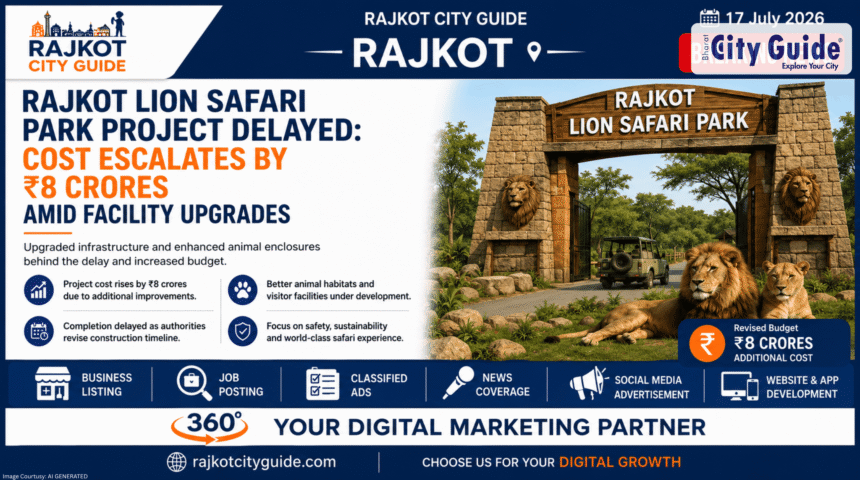
Saurashtra’s nature lovers and wildlife enthusiasts will have to wait longer to experience a forest-style safari close to home. The highly anticipated Rajkot Lion Safari Park Project Delayed announcement has cast a temporary shadow over the city’s tourism calendar. Originally envisioned as a crowning jewel of the Rajkot Municipal Corporation’s (RMC) public recreation and conservation efforts, this ambitious venture is undergoing major design enhancements. While the additions promise a much more immersive experience for visitors, they have also introduced structural challenges, namely a substantial budget increase of ₹8 crores and a formal request from the executing agency for a 6-month extension.
- Introduction
- What is the Rajkot Lion Safari Park Project Delayed Controversy?
- Why This News is Important
- Background Information
- Key Highlights of the Delayed Project
- Detailed Explanation of the Delay and Cost Overruns
- Benefits and Features of the Upgraded Safari Park
- How It Impacts the Community
- Expert Insights and Industry Perspective
- Challenges and Limitations
- Future Outlook
- Frequently Asked Questions (FAQs)
- Conclusion
The project, rising adjacent to the famous Pradyuman Zoological Park, aims to bring a slice of the Gir forest experience directly to Rajkot. Instead of observing Asiatic lions behind high-fenced enclosures, visitors will board secured, specialized safari vehicles to watch the majestic predators roam freely in a sprawling, semi-natural savannah habitat. This transition from a traditional zoo setup to an open-safari format requires massive infrastructural installations, specialized fencing, and strict safety guidelines.
However, building a safe sanctuary of this scale within municipal limits is no simple task. As construction progressed, the administrative bodies realized that the initial plans needed modifications to meet international safety standards and improve visitor comfort. These upgrades—ranging from better security gates to enhanced animal housing and tourist amenities—have directly impacted both the financial blueprint and the physical timeline. For the citizens of “Rangeelu Rajkot,” the dream of seeing lions in a safari setting is still on the horizon, but patience is required.
What is the Rajkot Lion Safari Park Project Delayed Controversy?
To understand the phrase Rajkot Lion Safari Park Project Delayed, it is essential to look at the scale of the infrastructure being built. The Rajkot Lion Safari Park is designed as an extension of the popular Pradyuman Zoological Park, covering a massive tract of land on the outskirts of the city near Lalpari Lake. The core concept of the project is to create a naturalistic, open-air environment where Asiatic lions can live in a semi-wild state, while tourists tour the landscape in specialized safari buses.
The delay refers specifically to the execution timeline of this project. The designated construction agency was expected to hand over the fully operational safari park within its original deadline. However, owing to several mandatory design changes suggested by municipal engineers, veterinary experts, and the Central Zoo Authority (CZA), the scope of work expanded significantly.
To accommodate these upgrades, the executing agency formally requested an additional six months to complete the remaining civil works, animal holding areas, and safety corridors. This delay is accompanied by an ₹8 crore budget escalation, taking the financial commitment of the municipal corporation well beyond its initial estimates.
Why This News is Important
This development is highly significant for multiple reasons, spanning urban planning, regional tourism, municipal finance, and wildlife management:
- Regional Tourism Economics: Rajkot is the commercial and educational capital of Saurashtra. Currently, tourists wishing to see Asiatic lions must travel to Sasan Gir or Devaliya Safari Park in Junagadh. Bringing a safari park to Rajkot would create a massive tourism hub, attracting thousands of weekend travelers and boosting local businesses, hotels, and transport services.
- Financial Accountability: A budget hike of ₹8 crores in a municipal “dream project” draws significant public and political attention. Taxpayers and municipal councilors closely monitor how these funds are allocated and whether the cost escalation is justified by the added features.
- Wildlife and Human Safety: Asiatic lions are powerful apex predators. Implementing top-tier safety standards is non-negotiable. Designing secure entry-exit gates, bulletproof visitor transport routes, and reinforced containment fencing must take precedence over meeting a hurried completion date.
Background Information
The city of Rajkot has long taken pride in its environmental and recreational spaces. The Pradyuman Zoological Park, spread over 137 acres along the banks of Lake Lal Pari and Randarda Lake, is already recognized as one of India’s most well-maintained medium-category zoos. Managed directly by the Rajkot Municipal Corporation, the zoo is home to a rich variety of flora and fauna, including rare birds, tigers, leopards, and over 35,000 trees.
Over the years, the zoo has drawn millions of local and international visitors. Recognizing the immense popularity of the Asiatic lions housed there, the RMC conceived the idea of an independent, dedicated Lion Safari Park. The goal was to leverage the open land adjacent to the zoo to build a specialized facility modeled after the famous jungle safaris of Gir.
Securing permissions for such a project is a lengthy process. The municipal body had to work closely with forest departments and present rigorous safety, veterinary care, and land-use plans to the Central Zoo Authority. After receiving the necessary clearances, tenders were floated, and the contract was awarded to an engineering agency. However, constructing a wild-style safari within city limits comes with unique challenges, leading directly to the current delay and budget adjustment.
Key Highlights of the Delayed Project
- Time Extension: The executing agency has officially requested a further 6-month extension to complete all civil and safety structures.
- Cost Escalation: Due to the inclusion of advanced public facilities and safety systems, the project cost has increased by ₹8 crores.
- Prime Attraction: Once complete, the safari park will feature majestic Asiatic lions roaming in a naturalistic, open-canopy environment.
- Enhanced Safety Measures: The design changes include reinforced double-gate entry systems, security watchtowers, and advanced visitor corridors.
- Veterinary Additions: The budget increase covers upgraded veterinary rescue rooms, animal holding cages, and feeding areas.
Detailed Explanation of the Delay and Cost Overruns
The delay of the Rajkot Lion Safari Park is not merely a case of slow construction; rather, it is the result of deliberate design modifications aimed at improving the park’s overall quality and safety. During routine progress reviews, both municipal officials and wildlife experts pointed out areas where the infrastructure could be upgraded to provide a world-class experience.
1. Advanced Security and Fencing Upgrades
The primary driver of the ₹8 crore cost escalation is the redesign of the security perimeter. Unlike traditional zoos where animals are separated from visitors by deep concrete moats and high iron grates, an open safari requires heavy-duty chain-link fencing around the entire outer boundary. This fencing must be deep-rooted and high enough to prevent any escape or intrusion. The updated plans called for stronger, rust-resistant materials and deeper foundations to withstand intense weather and potential physical impact from the animals.
2. Double-Gate Entry-Exit Systems
To allow safari buses to enter the lion zone without any risk of the animals escaping into the visitor holding areas, a sophisticated double-gate airlock system was introduced. This system ensures that the outer gate only opens once the inner gate is completely locked, and vice versa. Installing these automated, heavy-duty mechanical gates added both time and financial requirements to the project.
3. Upgraded Animal Welfare Facilities
The revised budget also prioritizes animal well-being. This includes building modern holding cages where lions can be securely housed during medical emergencies, bad weather, or routine maintenance. Additionally, specialized veterinary treatment rooms, feeding chambers, and water-retention bodies designed to mimic natural forest streams have been integrated into the layout.
4. Improved Tourist Infrastructure
To cater to the large crowds expected upon opening, the planners decided to expand the visitor terminal. The expanded plans include larger booking counters, highly secured waiting bays, clean drinking water installations, and upgraded restroom facilities. These additions aim to ensure a comfortable experience for families, school tours, and senior citizens.
Benefits and Features of the Upgraded Safari Park
While the Rajkot Lion Safari Park Project Delayed news means a longer wait, the final product will be vastly superior to the initial proposal. The upgraded design brings several key benefits:
| Feature Upgraded | Previous Standard | New Upgraded Standard | Direct Benefit |
| Outer Perimeter Fencing | Standard Galvanized Mesh | Deep-Foundation Heavy Duty Steel | Maximum safety against animal escape |
| Animal Control Gates | Manual Single Gate | Automated Double-Airlock System | Zero chance of lions entering visitor zones |
| On-Site Medical Care | Basic First-Aid Room | Full-Fledged Veterinary Rescue Ward | Instant medical support for the big cats |
| Visitor Waiting Area | Outdoor Seating | Covered, Multi-Amenity Waiting Terminal | Comfort during peak summer/monsoon months |
How It Impacts the Community
1. Impact on Local Citizens and Families
For the residents of Rajkot, the postponement is a test of patience. Many families visit Pradyuman Park regularly and were looking forward to the safari opening as a key recreational option. While the delay is disappointing in the short term, citizens will ultimately benefit from a much safer, more comfortable, and highly educational wildlife facility.
2. Impact on Students and Educational Institutions
Local schools and colleges frequently organize educational field trips to the Rajkot Zoo to teach students about biology, wildlife conservation, and environmental science. The completed Lion Safari Park will serve as a massive live classroom, offering students a rare opportunity to observe natural predatory behavior and conservation management practices firsthand.
3. Impact on Local Tourism and Businesses
The hospitality sector, including local restaurants, street food vendors, hotels, and auto-rickshaw drivers, will have to wait another six months to tap into the tourism boost that the safari park will bring. However, the upgraded facilities are expected to attract visitors from across Gujarat, ensuring robust, long-term business opportunities once the gates officially open.
Expert Insights and Industry Perspective
Urban infrastructure and wildlife management experts emphasize that delays in projects involving large carnivores are quite common and often necessary. Designing a habitat for the Asiatic lion—a species protected under Schedule I of the Wildlife Protection Act—requires absolute compliance with national and international guidelines.
According to wildlife conservationists, rushing the completion of a safari park without perfecting the double-gate systems or veterinary backup structures can lead to major safety risks. Experts suggest that a six-month delay is a reasonable price to pay for ensuring the absolute safety of both the visiting public and the animals. Furthermore, creating a highly authentic, naturalistic habitat helps reduce stress levels in captive animals, which leads to better health outcomes and more natural behaviors for visitors to observe.
Challenges and Limitations
The project faces several key challenges moving forward:
- Sustaining the New Timeline: The executing agency has requested a six-month extension. The Rajkot Municipal Corporation must closely monitor the weekly progress of the civil works to ensure that this new deadline does not slide further, which could lead to additional cost overruns.
- Managing Public Expectations: With social media driving public discourse, keeping citizens informed about the reasons for the delay is essential to prevent rumors or public dissatisfaction regarding municipal spending.
- Monsoon Disruptions: Outdoor earthworks, fencing, and road laying are highly vulnerable to heavy monsoon rains. If the region experiences prolonged rainfall, it could further impact the construction schedule.
Future Outlook
The long-term future of the Rajkot Lion Safari Park remains highly promising. Once the civil works are completed under the revised timeline, the RMC will initiate the process of transporting selected lions to the safari zone. This will be done in close coordination with the Gujarat Forest Department, likely bringing in animals from the Sakkarbaug Zoo in Junagadh or directly from rescue centers in Gir.
The successful completion of this project will put Rajkot on the national wildlife tourism map, alongside cities like Bengaluru (Bannerghatta Safari) and Hyderabad (Nehru Zoological Park). It will pave the way for future expansions, possibly including safari experiences for other native species like the Indian Leopard or the Asiatic Black Bear, turning the entire Pradyuman Park zone into a premier wildlife conservation hub in western India.
Frequently Asked Questions (FAQs)
1. Why is the Rajkot Lion Safari Park Project Delayed?
The project has been delayed because the executing agency required additional time to implement major design upgrades, including advanced security gates, reinforced outer fencing, and enhanced visitor facilities.
2. How much has the budget of the project increased?
The total cost of the project has increased by ₹8 crores. This additional funding is being used to build superior safety structures, upgraded veterinary care wards, and better public amenities.
3. How long is the requested extension for the project?
The construction agency has formally requested an extension of 6 months to safely complete all the upgraded facilities and hand over the park to the municipal corporation.
4. Where is the new Lion Safari Park being built in Rajkot?
The safari park is being constructed on a large tract of open land adjacent to the existing Pradyuman Zoological Park, located near Lalpari Lake on the outskirts of Rajkot.
5. Will visitors be able to see the lions roaming freely?
Yes. Unlike a traditional zoo where lions are kept behind bars, the safari park will allow Asiatic lions to roam freely in a large, secured natural environment, while visitors watch from the safety of specialized safari vehicles.
6. Who is responsible for managing and funding this safari park?
The project is planned, funded, and managed by the Rajkot Municipal Corporation (RMC), in compliance with guidelines set by the Central Zoo Authority (CZA).
Conclusion
While the news that the Rajkot Lion Safari Park Project Delayed its opening might be a temporary disappointment for locals, the decision to prioritize safety and quality over speed is a step in the right direction. An additional investment of ₹8 crores and a six-month extension will ensure that the final facility is highly secure, animal-friendly, and capable of providing an exceptional experience for visitors. When the gates finally open, the park will stand as a landmark achievement in municipal urban planning, seamlessly blending wildlife conservation with world-class public recreation.