Introduction
Food safety is one of the most important public health concerns in modern society. Every day, thousands of families trust restaurants, sweet shops, dairy suppliers, street food vendors, and packaged food manufacturers to provide safe and healthy food. However, the growing issue of food adulteration has become a serious threat to public health across India.
- Introduction
- What is the Rajkot Food Adulteration Crackdown?
- Why Food Adulteration is a Serious Public Health Threat
- Why Rajkot Municipal Corporation Launched This Mega Drive
- Mayor Nehal Shukla’s Strong Message Against Food Adulteration
- Key Features of the Year-Long Mega Drive
- Areas Likely to Be Monitored During the Campaign
- How Food Adulteration Affects Public Health
- Benefits of the Rajkot Food Adulteration Crackdown
- How Citizens Can Support the Campaign
- Food Safety Tips for Consumers
- Challenges Authorities May Face
- What This Means for Food Businesses in Rajkot
- Future Impact on Rajkot’s Food Industry
- Frequently Asked Questions (FAQs)
- Conclusion
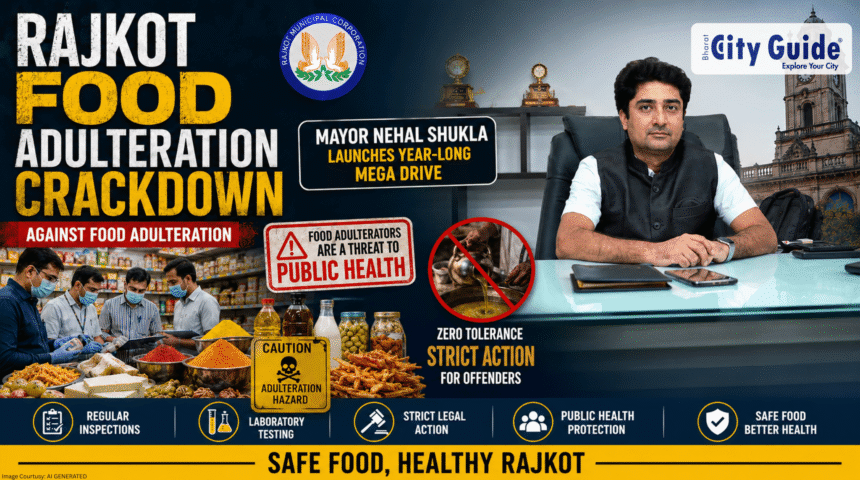
The Rajkot Food Adulteration Crackdown has emerged as a major initiative aimed at protecting citizens from harmful and substandard food products. Rajkot Mayor Nehal Shukla recently announced a strict year-long mega drive against food adulteration, sending a strong message to those involved in compromising food quality for profit.
During the announcement, the Mayor made strong remarks comparing food adulterators to terrorists because their actions silently endanger the lives of innocent citizens. The Rajkot Municipal Corporation (RMC) has now decided to launch an extensive inspection campaign to identify and penalize offenders.
This major initiative has gained significant attention across Gujarat and highlights the city’s commitment to ensuring safe and healthy food for every resident.
What is the Rajkot Food Adulteration Crackdown?
The Rajkot Food Adulteration Crackdown is a large-scale food safety enforcement campaign launched by the Rajkot Municipal Corporation under the leadership of Mayor Nehal Shukla.
The primary objective of this campaign is to:
- Prevent food adulteration
- Improve food quality standards
- Protect consumer health
- Strengthen food safety regulations
- Increase inspections across food establishments
- Take strict action against violators
The campaign is expected to continue for an entire year through coordinated efforts involving food inspectors, municipal authorities, health officials, and laboratory testing teams.
This initiative comes amid growing concerns regarding the sale of adulterated food products in markets, restaurants, sweet shops, dairy businesses, and street food outlets.
Why Food Adulteration is a Serious Public Health Threat
Food adulteration occurs when inferior, harmful, or unauthorized substances are mixed into food products to increase profits, alter appearance, or extend shelf life.
Common examples include:
- Mixing water in milk
- Artificial colors in sweets
- Chemical preservatives beyond permitted limits
- Low-quality oils in edible products
- Starch added to dairy products
- Synthetic milk production
- Non-food-grade ingredients in snacks
These practices can lead to serious health problems and compromise consumer trust.
The Rajkot Food Adulteration Crackdown aims to address these concerns before they become larger public health emergencies.
Why Rajkot Municipal Corporation Launched This Mega Drive
Several factors influenced the decision to initiate this extensive campaign.
Growing Consumer Complaints
Citizens have increasingly reported concerns regarding:
- Poor food quality
- Suspicious ingredients
- Unhygienic preparation methods
- Fake dairy products
- Contaminated packaged food
Health Risks
Adulterated food can cause:
- Food poisoning
- Digestive disorders
- Liver damage
- Kidney complications
- Allergic reactions
- Long-term chronic illnesses
Public Awareness
People today are more aware of food safety issues than ever before. Consumers demand transparency and accountability from food businesses.
Government Responsibility
The Rajkot Municipal Corporation believes ensuring food safety is a fundamental responsibility toward residents.
Mayor Nehal Shukla’s Strong Message Against Food Adulteration
One of the most discussed aspects of the Rajkot Food Adulteration Crackdown is Mayor Nehal Shukla’s strong stance against offenders.
According to reports, the Mayor compared food adulterators with terrorists because both knowingly put innocent lives at risk.
The statement reflects the seriousness with which city authorities are approaching this issue.
The Mayor emphasized that:
- Food safety cannot be compromised.
- Citizen health must be protected.
- Strict legal action will be taken.
- Repeat offenders will face severe penalties.
- Continuous monitoring will be implemented.
This strong message has received support from many citizens who believe tougher action is necessary to eliminate food adulteration practices.
Key Features of the Year-Long Mega Drive
The Rajkot Food Adulteration Crackdown is not a one-time operation. Instead, it has been designed as a comprehensive year-long enforcement campaign.
Regular Food Inspections
Authorities will conduct:
- Surprise inspections
- Scheduled inspections
- Market visits
- Food establishment audits
Sample Collection
Food samples will be collected from:
- Restaurants
- Hotels
- Street food vendors
- Sweet shops
- Dairy outlets
- Grocery stores
Laboratory Testing
Collected samples will undergo scientific testing to identify:
- Chemical contamination
- Artificial additives
- Unauthorized ingredients
- Quality violations
Enforcement Measures
Businesses found violating regulations may face:
- Financial penalties
- License suspension
- Legal proceedings
- Product confiscation
- Business closure in severe cases
Areas Likely to Be Monitored During the Campaign
The food department is expected to focus on several high-risk categories.
Dairy Products
- Milk
- Paneer
- Ghee
- Butter
- Yogurt
Sweets and Confectionery
- Mithai
- Chocolate products
- Bakery items
Street Food
- Fast food stalls
- Chaat vendors
- Juice centers
Packaged Foods
- Snacks
- Ready-to-eat items
- Beverages
Cooking Oils
- Edible oils
- Reused cooking oil
- Low-quality blended oils
These categories are often targeted because they have historically shown higher risks of adulteration.
How Food Adulteration Affects Public Health
The impact of food adulteration goes far beyond immediate illness.
Short-Term Health Effects
- Nausea
- Vomiting
- Diarrhea
- Stomach pain
- Headaches
- Food poisoning
Long-Term Health Effects
- Kidney disease
- Liver disorders
- Heart problems
- Neurological complications
- Cancer risks in extreme cases
Impact on Children
Children are particularly vulnerable because their bodies are still developing. Contaminated food can affect:
- Growth
- Immunity
- Brain development
- Nutritional health
The Rajkot Food Adulteration Crackdown seeks to reduce these risks by ensuring food quality standards are maintained.
Benefits of the Rajkot Food Adulteration Crackdown
The campaign offers several important advantages for citizens and businesses alike.
Improved Public Health
Safer food means fewer illnesses and healthier communities.
Greater Consumer Confidence
People can purchase food products with increased trust.
Better Business Standards
Honest businesses benefit when unfair competition from adulterators is eliminated.
Stronger Regulatory Compliance
Businesses become more aware of legal requirements and food safety standards.
Enhanced City Reputation
Rajkot can strengthen its image as a city committed to public health and safety.
How Citizens Can Support the Campaign
Public participation plays a crucial role in the success of the Rajkot Food Adulteration Crackdown.
Citizens can contribute by:
- Reporting suspicious food products
- Checking food quality before purchase
- Keeping bills and receipts
- Avoiding unlicensed vendors
- Following food safety advisories
- Filing complaints when necessary
Community awareness can significantly improve enforcement effectiveness.
Food Safety Tips for Consumers
Everyone can take simple precautions to reduce the risk of consuming adulterated food.
Purchase From Trusted Sources
Always buy food from:
- Reputable stores
- Licensed vendors
- Established brands
Check Packaging
Verify:
- Manufacturing date
- Expiry date
- FSSAI registration details
- Product seals
Observe Food Appearance
Be cautious if food:
- Has unusual color
- Smells strange
- Appears excessively shiny
- Shows signs of contamination
Store Food Properly
Improper storage can also affect food quality and safety.
Challenges Authorities May Face
While the initiative is promising, several challenges may arise.
Large Number of Establishments
Rajkot has thousands of food businesses requiring monitoring.
Hidden Adulteration Practices
Some violations may be difficult to detect without laboratory testing.
Resource Requirements
Continuous inspections require manpower, funding, and technical support.
Public Cooperation
Success depends on active participation from both businesses and consumers.
Despite these challenges, the year-long approach provides authorities with sufficient time to conduct thorough inspections.
What This Means for Food Businesses in Rajkot
Food businesses must prepare for increased scrutiny under the Rajkot Food Adulteration Crackdown.
Businesses should:
- Maintain hygiene standards
- Source quality ingredients
- Follow FSSAI regulations
- Keep proper records
- Cooperate with inspectors
- Train staff in food safety practices
Compliance not only avoids penalties but also builds customer trust.
Future Impact on Rajkot’s Food Industry
The campaign could create long-term improvements across the city’s food sector.
Potential outcomes include:
- Higher food quality standards
- Reduced adulteration cases
- Better consumer awareness
- Increased business accountability
- Stronger enforcement mechanisms
If implemented effectively, the initiative could serve as a model for other cities across Gujarat and India.
Frequently Asked Questions (FAQs)
What is the Rajkot Food Adulteration Crackdown?
It is a year-long food safety campaign launched by Rajkot Municipal Corporation to identify and eliminate food adulteration practices.
Why did Mayor Nehal Shukla announce this campaign?
The campaign was announced to protect public health and ensure safe food for residents.
How long will the mega drive continue?
The food safety drive is planned to continue for one year with regular inspections and monitoring.
Which businesses will be inspected?
Restaurants, sweet shops, dairy outlets, grocery stores, food manufacturers, and street food vendors may all be inspected.
What action can be taken against violators?
Authorities may impose fines, suspend licenses, confiscate products, or initiate legal proceedings.
How can citizens report food adulteration?
Residents can contact local municipal authorities or food safety departments if they suspect adulteration.
Will food samples be tested in laboratories?
Yes. Food samples collected during inspections are expected to undergo scientific laboratory analysis.
Conclusion
The Rajkot Food Adulteration Crackdown represents a significant step toward ensuring safer food and better public health standards across the city. By launching a year-long mega drive, Rajkot Municipal Corporation has demonstrated its commitment to protecting citizens from the dangers of adulterated food products.
Mayor Nehal Shukla’s strong message highlights the seriousness of the issue and signals that authorities are prepared to take strict action against offenders. Through inspections, laboratory testing, enforcement measures, and public participation, this initiative has the potential to create lasting improvements in food safety across Rajkot.
Consumers, businesses, and authorities all have a role to play in ensuring that the food reaching people’s plates is safe, healthy, and trustworthy. If implemented effectively, this campaign could become a benchmark for food safety enforcement not only in Gujarat but throughout India.