Introduction
The 1940s marked the final and most intense phase of India’s long struggle for independence from British colonial rule. Among the many movements that shaped this decisive decade, the Quit India Movement stands out as a defining moment of mass resistance, political urgency, and national unity.
- Introduction
- Key Message:
- 1. World War II Context
- 2. Failure of Constitutional Negotiations
- 3. Rising Nationalist Sentiment
- 4. Influence of Earlier Movements
- Key Leadership:
- Famous Slogan:
- Main Goals:
- Participants Included:
- 1. Strikes and Hartals
- 2. Public Demonstrations
- 3. Underground Activities
- 4. Sabotage of British Infrastructure
- 1. Mass Arrests
- 2. Repression
- 3. Censorship
- Strong Activity Seen In:
- 1. Leadership Vacuum
- 2. Repression by British Authorities
- 3. Lack of Central Organization
- 1. Strengthening of Independence Demand
- 2. Mass Political Awakening
- 3. International Attention
- 4. Weakening of British Control
- Key Reasons:
- Long-Term Impact:
- Key Lessons:
- 1. What was the Quit India Movement?
- 2. Who led the Quit India Movement?
- 3. What was the slogan of the movement?
- 4. Why was it started?
- 5. Was the movement successful?
- 6. What was the British response?
- 7. Why is it important in history?
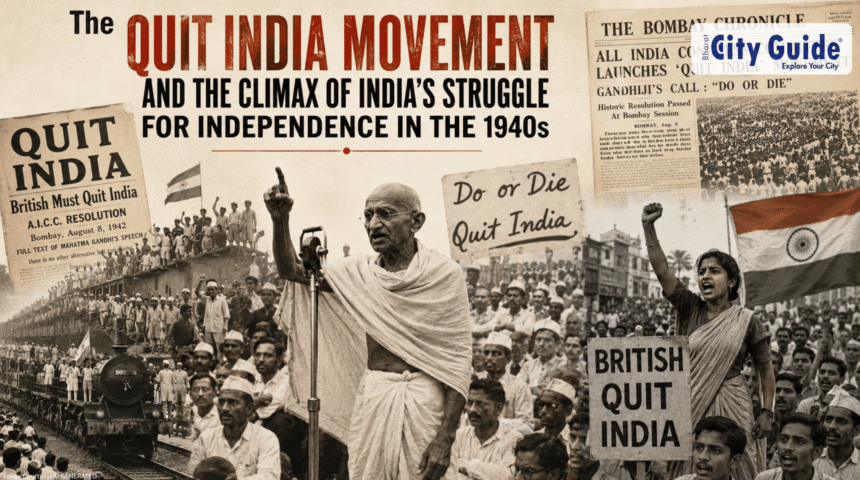
Launched during the turbulent backdrop of World War II, the Quit India Movement represented a powerful call for immediate independence. It was a moment when the Indian freedom struggle reached its emotional and political peak, bringing together millions of people across cities, towns, and villages in a collective demand: “Do or Die” for freedom.
Unlike earlier movements that combined negotiation and protest, the Quit India Movement was a direct and uncompromising demand for the end of British rule. It marked the climax of India’s independence struggle, setting the stage for the eventual transfer of power in 1947.
In this detailed article, we explore the causes, events, leadership, British response, mass participation, challenges, and legacy of the Quit India Movement.
What Was the Quit India Movement?
The Quit India Movement was a nationwide civil disobedience movement launched in 1942 demanding the immediate end of British rule in India.
Key Message:
Britain must leave India immediately and unconditionally.
Background of the Quit India Movement
1. World War II Context
During World War II:
- India was drawn into the war without consultation
- Economic strain increased
- Political dissatisfaction grew
2. Failure of Constitutional Negotiations
Previous political talks failed to deliver:
- Full self-governance
- Immediate independence
3. Rising Nationalist Sentiment
By the 1940s:
- Mass political awareness had increased
- Earlier movements had mobilized the population
- Demand for complete independence became stronger
4. Influence of Earlier Movements
Movements like the Non-Cooperation and Civil Disobedience movements laid the foundation.
Launch of the Quit India Movement
The movement was launched in August 1942 during the All India Congress Committee session in Bombay.
Key Leadership:
Mahatma Gandhi played the central role in launching the movement.
Famous Slogan:
“Do or Die”
This slogan symbolized total commitment to freedom.
Objectives of the Quit India Movement
Main Goals:
- Immediate withdrawal of British rule
- Establishment of full independence
- End of colonial control over administration
- Mobilization of mass resistance
Mass Participation in the Movement
The movement quickly spread across India.
Participants Included:
- Students
- Workers
- Farmers
- Women
- Middle-class citizens
Forms of Protest
1. Strikes and Hartals
Mass shutdowns of businesses and services.
2. Public Demonstrations
Large-scale protests in cities and towns.
3. Underground Activities
Secret networks continued resistance after arrests.
4. Sabotage of British Infrastructure
Communication and transport systems were disrupted.
British Response to the Movement
1. Mass Arrests
Major leaders were immediately detained.
2. Repression
Authorities used force to control protests.
3. Censorship
Media and communication channels were restricted.
Role of Leadership During Arrests
Despite arrests, the movement continued through decentralized leadership.
Women’s Participation
Women played a significant role by:
- Leading protests
- Supporting underground activities
- Spreading messages
Regional Spread of the Movement
Strong Activity Seen In:
- Maharashtra
- Uttar Pradesh
- Bihar
- Bengal
- Tamil Nadu
Challenges Faced by the Movement
1. Leadership Vacuum
Top leaders were imprisoned early.
2. Repression by British Authorities
Strong military response weakened coordination.
3. Lack of Central Organization
Movement became decentralized.
Impact of the Quit India Movement
1. Strengthening of Independence Demand
The call for freedom became irreversible.
2. Mass Political Awakening
Millions joined the struggle.
3. International Attention
India’s demand for independence gained global visibility.
4. Weakening of British Control
Administrative systems faced disruption.
Role of Underground Resistance
After arrests, underground networks:
- Spread information
- Organized protests
- Maintained momentum
Quit India Movement as the Climax of Freedom Struggle
The movement marked the peak of India’s independence struggle because:
Key Reasons:
- Nationwide participation
- Direct demand for independence
- Collapse of colonial authority legitimacy
- Irreversible political momentum
Path Toward Independence After 1942
After the movement:
- British realized the cost of continued rule
- Political negotiations resumed
- Conditions for independence began forming
Legacy of the Quit India Movement
Long-Term Impact:
- Inspired final phase of independence
- Strengthened national unity
- Cemented mass participation in politics
Why the Movement Still Matters
Key Lessons:
- Power of mass unity
- Importance of political determination
- Role of civil resistance
Frequently Asked Questions (FAQs)
1. What was the Quit India Movement?
It was a mass movement in 1942 demanding immediate independence from British rule.
2. Who led the Quit India Movement?
Mahatma Gandhi led the movement.
3. What was the slogan of the movement?
“Do or Die”
4. Why was it started?
To demand immediate British withdrawal from India.
5. Was the movement successful?
It did not immediately end British rule but accelerated independence.
6. What was the British response?
Mass arrests and suppression of protests.
7. Why is it important in history?
It marked the climax of India’s freedom struggle.
Conclusion
The Quit India Movement of 1942 stands as one of the most powerful and decisive chapters in India’s Struggle for Independence. It transformed the struggle from a gradual political negotiation into an uncompromising mass uprising demanding immediate freedom.
Despite severe repression and the arrest of major leaders, the movement ignited a nationwide spirit of resistance that could not be extinguished. It marked the final turning point in colonial India’s political history and set the stage for independence in 1947.
More than a political event, it remains a symbol of courage, unity, and determination in the face of oppression.