Introduction
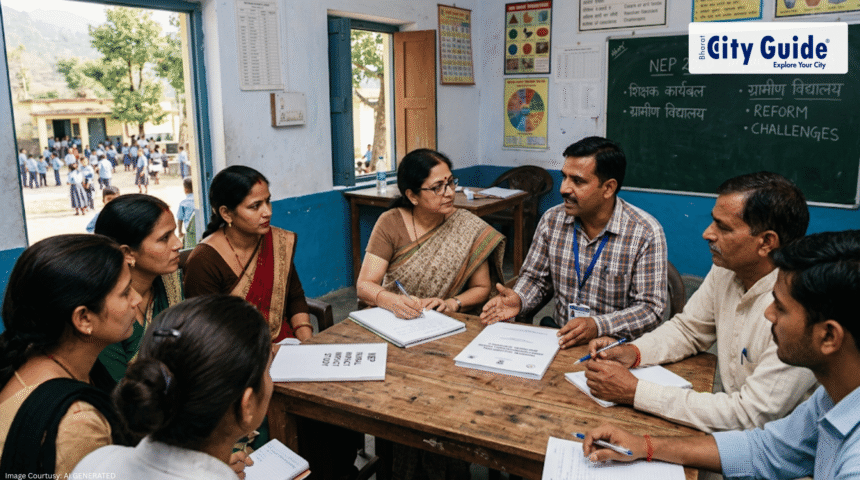
India’s education system is undergoing one of its biggest transformations in decades with the implementation of the National Education Policy (NEP) 2020. The Impact of India’s National Education Policy on Rural School Systems is especially significant because rural India represents the backbone of the country’s education landscape.
- Introduction
- What is India’s National Education Policy (NEP) 2020?
- Why Focus on Rural School Systems?
- Major Reforms Under NEP Affecting Rural Schools
- Impact on Rural School Systems
- 1. Improved Access to Education
- 2. Shift from Rote Learning to Skill-Based Education
- 3. Better Learning Outcomes (Early Evidence)
- 4. Persistent Infrastructure Gaps
- Impact on Teacher Workforce
- 1. Increased Demand for Skilled Teachers
- 2. Teacher Training Reforms
- 3. Administrative Burden on Teachers
- 4. Teacher Shortage Crisis
- 5. Digital Skill Gap Among Teachers
- Regional Variations in Impact
- Key Benefits of NEP for Rural Education
- Challenges and Limitations
- Long-Term Effects (Future Outlook)
- Role of Technology in Rural Education
- Policy Recommendations for Better Impact
- FAQs
- Conclusion
For decades, rural schools have struggled with poor infrastructure, teacher shortages, and low learning outcomes. NEP 2020 aims to address these gaps by introducing structural reforms, improving teacher training, and focusing on holistic education.
But the question remains: Is the policy truly transforming rural education, or are challenges slowing down its progress?
This article provides a detailed, research-backed analysis of how NEP 2020 is reshaping rural school systems and the teacher workforce across India.
What is India’s National Education Policy (NEP) 2020?
Simple Explanation
NEP 2020 is a comprehensive education reform policy introduced to modernize India’s education system. It replaces the older 1986 policy and focuses on:
- Holistic learning
- Skill-based education
- Flexibility in subjects
- Improved teacher training
Policy Vision
The policy aims to create:
- An inclusive and equitable education system
- A “knowledge society”
- Better learning outcomes for all students
Why Focus on Rural School Systems?
Key Challenges in Rural Education
- Lack of infrastructure (classrooms, electricity, internet)
- Shortage of trained teachers
- High dropout rates
- Limited access to quality learning resources
Despite policy intentions, rural areas still face structural disadvantages that impact implementation.
Major Reforms Under NEP Affecting Rural Schools
1. New 5+3+3+4 Education Structure
- Focus on early childhood education
- Inclusion of pre-primary schooling
- Better foundational learning
2. Foundational Literacy and Numeracy (FLN)
- Mission to ensure all children achieve basic reading and math skills
- Programs like NIPUN Bharat targeting primary education
Recent initiatives have shown measurable improvement in learning outcomes in districts like Nashik.
3. Multilingual Education
- Teaching in mother tongue till Grade 5
- Helps rural students understand concepts better
4. Digital Learning Push
- Online platforms (DIKSHA, e-learning tools)
- Hybrid learning models
However, rural connectivity issues limit effectiveness.
5. Infrastructure Development Goals
- Aim for 100% school enrollment by 2030
- Focus on safe and accessible schools
Impact on Rural School Systems
1. Improved Access to Education
Positive Changes
- Increased enrollment rates
- Focus on inclusive education
- Special attention to disadvantaged groups
NEP aims to ensure universal access to education across rural India.
2. Shift from Rote Learning to Skill-Based Education
Key Changes
- Experiential learning methods
- Critical thinking focus
- Vocational training integration
This is a major shift from traditional memorization-based systems.
3. Better Learning Outcomes (Early Evidence)
- Programs like NIPUN Bharat improving literacy
- Increased monitoring and accountability
However, results vary by state and region.
4. Persistent Infrastructure Gaps
Despite policy goals:
- Many rural schools still lack digital tools
- Limited internet access affects online learning
- Resource gaps slow implementation
Impact on Teacher Workforce
1. Increased Demand for Skilled Teachers
NEP emphasizes:
- Qualified and trained teachers
- Continuous professional development
However, shortages remain a major issue in rural areas.
2. Teacher Training Reforms
Key Initiatives
- 4-year integrated B.Ed. program
- Focus on practical teaching skills
But training is often too theoretical and disconnected from real classroom challenges.
3. Administrative Burden on Teachers
- Teachers handle non-teaching tasks
- Reduced time for lesson planning
Experts suggest reducing administrative workload to improve teaching quality.
4. Teacher Shortage Crisis
Recent reports highlight:
- Significant vacancies in government schools
- Overburdened existing teachers
For example, shortages in specific subjects and roles continue to affect quality.
5. Digital Skill Gap Among Teachers
Challenges include:
- Lack of digital training
- Limited access to devices
- Difficulty adapting to online teaching
This is a major barrier in rural areas.
Regional Variations in Impact
High-Performing States
- Maharashtra (NIPUN success)
- Karnataka, Tamil Nadu (better infrastructure)
Lagging Regions
- Bihar, Jharkhand, parts of Uttar Pradesh
- Issues with implementation and funding
Implementation varies widely across states due to governance differences.
Key Benefits of NEP for Rural Education
For Students
- Better foundational learning
- Skill development
- Increased access to education
For Teachers
- Professional development opportunities
- Improved teaching methodologies
For System
- Holistic education approach
- Long-term improvement potential
Challenges and Limitations
1. Implementation Gaps
- Policy vs ground reality mismatch
- Slow rollout in rural areas
2. Funding Constraints
- Limited budget allocation
- Infrastructure development delays
3. Urban-Rural Divide
- Better facilities in urban schools
- Rural students lag behind
This divide continues to affect educational equity.
Long-Term Effects (Future Outlook)
Positive Outlook
- Improved literacy rates
- Better skilled workforce
- Reduced dropout rates
Reality Check
Experts believe full impact may take 10–15 years to be visible.
Role of Technology in Rural Education
Opportunities
- Digital classrooms
- AI-based learning tools
- Remote teacher training
Challenges
- Internet connectivity issues
- Lack of devices
- Digital literacy gaps
Technology can be transformative but requires strong infrastructure.
Policy Recommendations for Better Impact
1. Strengthen Infrastructure
- Invest in schools and digital tools
- Improve connectivity in rural areas
2. Focus on Teacher Support
- Reduce administrative burden
- Provide practical training
3. Increase Funding
- Allocate more resources to rural education
4. Localized Implementation
- Adapt policies to regional needs
- Involve local communities
FAQs
1. What is the main goal of NEP 2020?
To create a holistic, flexible, and inclusive education system.
2. How does NEP impact rural schools?
It improves access, learning outcomes, and infrastructure—but challenges remain.
3. Has NEP improved teacher quality?
Training reforms are introduced, but practical implementation is still evolving.
4. What are the biggest challenges in rural education?
Infrastructure gaps, teacher shortages, and funding issues.
5. How long will NEP take to show results?
Around 10–15 years for full impact.
6. Does NEP reduce the urban-rural gap?
It aims to, but progress is uneven.
7. What role does technology play?
A major one, but limited by rural connectivity.
Conclusion
The Impact of India’s National Education Policy on Rural School Systems is both promising and complex. While NEP 2020 introduces transformative reforms—such as foundational learning, teacher training, and flexible education—it also faces significant implementation challenges.
Rural India stands at a critical crossroads. If the policy is executed effectively, it can bridge educational gaps, empower teachers, and create a more equitable system. However, without addressing infrastructure, funding, and workforce issues, the full potential of NEP may remain unrealized.
The future of India’s education system depends not just on policy design, but on execution at the grassroots level.