Introduction
Maa Chandraghanta is the third form of Goddess Durga worshipped during the nine sacred days of Navratri. She represents courage, divine strength, peace, fearlessness, and protection from negative forces. Her majestic appearance combines the calmness of a compassionate mother with the power of a warrior goddess who stands ready to protect righteousness and destroy evil. Devotees worship Maa Chandraghanta to seek courage, confidence, inner peace, and strength to face the challenges of life.
- Introduction
- Who Is Maa Chandraghanta?
- Meaning of the Name Maa Chandraghanta
- The Traditional Story of Maa Chandraghanta
- The Divine Appearance of Maa Chandraghanta
- Spiritual Significance of Maa Chandraghanta
- Why Is Maa Chandraghanta Worshipped on the Third Day of Navratri?
- Maa Chandraghanta Puja Vidhi: Step-by-Step Worship Method
- Maa Chandraghanta Mantra and Its Meaning
- Favourite Offerings to Maa Chandraghanta
- The Colour Associated with Maa Chandraghanta
- Benefits and Blessings of Worshipping Maa Chandraghanta
- Maa Chandraghanta and the Power of the Divine Feminine
- Lessons from the Life and Form of Maa Chandraghanta
- Difference Between Maa Brahmacharini and Maa Chandraghanta
- Frequently Asked Questions About Maa Chandraghanta
- Conclusion
The name Maa Chandraghanta comes from the crescent moon shaped like a bell that adorns her forehead. The Sanskrit words Chandra, meaning moon, and Ghanta, meaning bell, together describe this distinctive divine symbol. Her sacred form is traditionally depicted with ten hands, various divine weapons, and a lion or tiger as her mount. These features represent her readiness to confront evil while maintaining a peaceful and compassionate heart.
According to Hindu devotional traditions, Maa Chandraghanta is closely associated with Goddess Parvati and her transformation into a powerful warrior form. Popular legends connect her appearance with the divine marriage of Lord Shiva and Goddess Parvati, while other accounts emphasize the Goddess’s role in battling demonic forces. These narratives highlight the balance between gentleness and strength. Worshipping Maa Chandraghanta on the third day of Navratri reminds devotees that true courage means standing against injustice while remaining guided by wisdom, compassion, and righteousness.
Who Is Maa Chandraghanta?
Maa Chandraghanta is the third manifestation of Navdurga, the nine celebrated forms of Goddess Durga worshipped during Navratri. She is regarded as a powerful expression of Goddess Parvati’s divine energy, combining maternal compassion with extraordinary courage.
Unlike the gentle ascetic appearance associated with Maa Brahmacharini, Maa Chandraghanta is traditionally represented as a warrior goddess. Her appearance conveys readiness, alertness, and the determination to protect devotees and uphold dharma, the principle of righteousness.
Her divine personality contains two complementary qualities. On one side, she is a loving mother who offers comfort, reassurance, and spiritual guidance. On the other, she is a fearless protector who confronts harmful forces without hesitation.
In Hindu devotional belief, Maa Chandraghanta is worshipped for strength, courage, confidence, and peace of mind. Her image reminds devotees that spirituality is not only about meditation and prayer but also about developing the courage to act responsibly when faced with wrongdoing.
She teaches that power should be guided by compassion and that peaceful intentions can coexist with firm determination. This combination makes Maa Chandraghanta one of the most inspiring forms of Goddess Durga.
Meaning of the Name Maa Chandraghanta
The name Maa Chandraghanta has a distinctive symbolic meaning rooted in her divine appearance.
The word Chandra means moon, while Ghanta means bell. The goddess is named after the crescent moon shaped like a bell that rests on her forehead.
The moon is commonly associated with serenity, beauty, and calmness. The bell is associated with sacred sound, alertness, and the removal of spiritual distraction. Together, these symbols reflect the goddess’s ability to maintain inner peace while remaining prepared to confront challenges.
Her name also conveys a deeper spiritual message. The peaceful moon represents control over the mind and emotions, while the bell symbolizes awakening and readiness. Maa Chandraghanta inspires devotees to remain alert to injustice, resist harmful influences, and act with wisdom.
In traditional worship, bells are also used during puja and aarti. Their sound marks the beginning of sacred activities and helps devotees focus their attention on prayer. The bell-shaped crescent on the goddess’s forehead therefore connects her divine identity with the sacred symbolism of sound and spiritual awareness.
Maa Chandraghanta’s name is not merely a description of her appearance; it expresses her identity as a divine protector who combines peace, awareness, and strength.
The Traditional Story of Maa Chandraghanta
The story of Maa Chandraghanta is connected with the wider Hindu traditions surrounding Goddess Parvati, Lord Shiva, and the power of the Divine Feminine. Different devotional accounts emphasize different aspects of her origin and divine activities. The following narrative brings together the commonly shared themes of her marriage-related legend and warrior symbolism.
Goddess Sati and Her Rebirth as Parvati
According to Hindu mythology, Goddess Sati was the daughter of Prajapati Daksha and the first consort of Lord Shiva. Daksha disapproved of Shiva and did not respect the divine relationship between them.
When Daksha organized a great yajna without properly honouring Lord Shiva, Sati attended despite her husband’s concerns. There, she witnessed the disrespect directed toward Shiva. Unable to bear the humiliation, she gave up her mortal body through her yogic power, according to the traditional account.
Following this event, Sati was reborn as Parvati, the daughter of Himavan, the king of the mountains, and Queen Mena. From an early age, Parvati felt a deep spiritual connection with Lord Shiva and eventually dedicated herself to attaining him as her husband.
Her devotion led to intense penance and spiritual discipline, the qualities especially associated with Maa Brahmacharini, the second form of Navdurga.
After her penance, Lord Shiva accepted Parvati, and preparations for their divine marriage began. This union forms the background to one of the popular stories associated with Maa Chandraghanta.
The Divine Marriage of Lord Shiva and Goddess Parvati
In a widely told devotional legend, Lord Shiva arrived for his wedding with an unusual and intimidating procession. His companions included ascetics and beings whose unconventional appearance frightened members of Parvati’s family.
Shiva himself appeared in a fierce, ash-covered form, accompanied by his attendants. The sight was overwhelming for those expecting a traditional royal wedding procession.
Queen Mena, Parvati’s mother, was particularly frightened by the unusual appearance of the groom and his companions. Parvati understood the situation and manifested her majestic form as Maa Chandraghanta in the popular version of the story.
In this form, she appeared radiant, powerful, and divine, with a crescent moon shaped like a bell on her forehead. Her majestic appearance expressed her strength and spiritual authority.
The story is often understood as a moment in which Parvati demonstrated that she possessed the power to meet Shiva as his equal in divine energy. Her form also reassured her family and helped bring harmony to the occasion.
In some versions, Parvati requested that Shiva assume a more pleasing and traditional bridal appearance so that her family could welcome him without fear. Shiva agreed, and the wedding proceeded.
This legend illustrates the compassionate and protective side of Maa Chandraghanta. Her power is not portrayed as aggression for its own sake but as a force that restores confidence, reassures others, and brings harmony during a frightening situation.
Maa Chandraghanta as a Warrior Goddess
Maa Chandraghanta is also celebrated as a formidable warrior form of Goddess Durga. Her traditional imagery portrays her equipped with divine weapons and mounted on a lion or tiger, demonstrating her readiness to confront demonic forces.
Popular Navdurga traditions associate her with the destruction of evil and the protection of righteousness. Some devotional accounts connect her warrior symbolism with the broader stories of Goddess Durga’s battles against powerful demons who threatened the gods and disturbed cosmic order.
Her weapons represent the many forms of divine power needed to overcome different kinds of evil. Her mount symbolizes courage, strength, and control over powerful instincts.
Despite her fierce appearance, Maa Chandraghanta is generally depicted with a calm or benevolent expression. This contrast is central to her spiritual significance: she possesses immense strength but uses it to protect, not to intimidate the innocent.
Her warrior identity teaches devotees that fearlessness, discipline, and moral courage are essential when facing injustice. Her divine story encourages people to stand up for what is right while maintaining self-control and compassion.
The Divine Appearance of Maa Chandraghanta
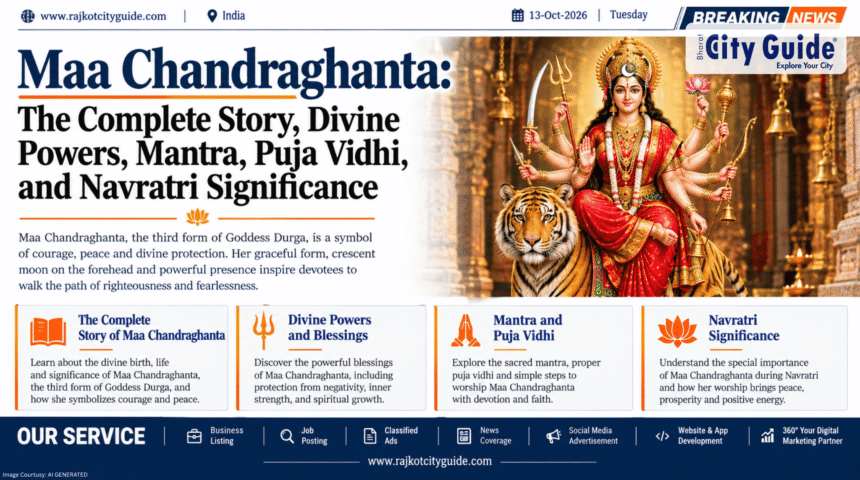
Maa Chandraghanta is generally depicted as a radiant goddess with a golden or luminous complexion, a crescent moon shaped like a bell on her forehead, and ten arms carrying different objects and weapons.
Her traditional form is rich in symbolism, and each feature represents a different aspect of divine strength and protection.
The Crescent Moon Shaped Like a Bell
The most distinctive feature of Maa Chandraghanta is the crescent moon on her forehead. Its bell-like shape gives her the name Chandraghanta.
The crescent moon represents serenity and divine beauty, while the bell is associated with sacred sound and spiritual awakening. Together, they symbolize the balance between peaceful awareness and the readiness to protect righteousness.
Her Ten Hands
Maa Chandraghanta is commonly depicted with ten hands, although artistic representations can vary. Her hands hold different divine weapons and sacred objects, while some display gestures associated with protection and blessings.
Her weapons commonly include a trident, sword, bow, arrow, mace, and other sacred implements. A lotus, rosary, or water pot may also appear in particular depictions.
These objects symbolize the goddess’s ability to confront different forms of evil and protect her devotees. The protective gesture represents reassurance, while the blessing gesture expresses grace and compassion.
Her Lion or Tiger Mount
Maa Chandraghanta is commonly shown riding a lion or tiger. Both animals symbolize courage, strength, and fearlessness.
Her control over this powerful mount represents mastery over fear, uncontrolled impulses, and destructive tendencies. She does not allow strength to become disorder; instead, she directs it toward a higher purpose.
Her Peaceful Yet Powerful Expression
Although Maa Chandraghanta carries weapons and is prepared for battle, her face is generally shown as calm and benevolent.
This feature teaches that courage does not require anger or cruelty. A person can remain peaceful while firmly defending justice and protecting others.
Her appearance brings together the qualities of a loving mother and a fearless warrior, making her an enduring symbol of balanced power.
Spiritual Significance of Maa Chandraghanta
Maa Chandraghanta represents several spiritual values that devotees can apply to their everyday lives.
Courage and Fearlessness
Her warrior form symbolizes the strength to confront difficult situations. Devotees look to her for inspiration when dealing with uncertainty, fear, or personal challenges.
Peace of Mind
Despite her fierce appearance, Maa Chandraghanta is associated with calmness and serenity. Her example encourages people to control their emotions and respond thoughtfully rather than impulsively.
Protection from Evil
In Hindu devotional belief, Maa Chandraghanta protects her devotees from harmful influences and negative forces. Her symbolism encourages people to remain alert to wrongdoing and seek the strength to make ethical decisions.
Balance Between Strength and Compassion
Her divine personality combines determination with kindness. She teaches that genuine strength is most valuable when used to protect others and uphold justice.
Confidence and Self-Belief
Her majestic appearance inspires devotees to believe in their ability to overcome challenges. Her example encourages courage supported by preparation, discipline, and faith.
The Victory of Dharma
Maa Chandraghanta represents the protection of righteousness. Her warrior symbolism reinforces the idea that evil and injustice must be confronted with courage and wisdom.
Why Is Maa Chandraghanta Worshipped on the Third Day of Navratri?
Navratri is a nine-day Hindu festival dedicated to Goddess Durga and the many expressions of the Divine Feminine. Each day is traditionally associated with one of the nine forms of Navdurga.
Maa Chandraghanta is worshipped on the third day, following Maa Shailputri on the first day and Maa Brahmacharini on the second day.
The progression of these forms carries a symbolic message. Maa Shailputri represents the foundation of the spiritual journey, and Maa Brahmacharini represents devotion and discipline. Maa Chandraghanta then represents the courage and strength needed to face obstacles and protect righteousness.
On the third day, devotees offer prayers, flowers, sweets, and other traditional offerings to the goddess. Many households perform aarti and recite her mantra as part of their daily Navratri worship.
The day also provides an opportunity to reflect on personal fears, develop confidence, and cultivate the courage to make responsible decisions.
In 2026, the third day of Sharadiya Navratri falls on 13 October according to the referenced Navratri calendar reports. The precise observance of religious dates can depend on the lunar calendar and local traditions.
Maa Chandraghanta Puja Vidhi: Step-by-Step Worship Method
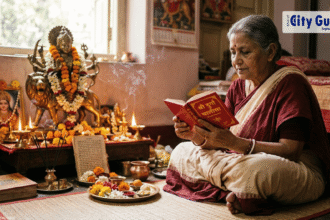
Devotees can worship Maa Chandraghanta at home with devotion and a clean, peaceful puja arrangement. Specific customs may differ among families and regions, so these steps should be understood as a general devotional practice.
Step 1: Clean the Puja Area
Begin by cleaning the worship area. Take a bath, wear clean clothes, and place a picture or idol of Maa Chandraghanta in a suitable location.
Step 2: Arrange the Puja Materials
Prepare flowers, fresh water, fruits, incense, a diya, and traditional sweets. You may also keep a bell for the aarti and a plate for the offerings.
Step 3: Light the Diya
Light a lamp before the goddess and sit quietly for a moment. Offer a prayer seeking wisdom, courage, peace, and the strength to follow the path of righteousness.
Step 4: Offer Flowers and Prasad
Offer flowers and water to Maa Chandraghanta. Devotees commonly prepare milk-based sweets or kheer as a traditional offering, although specific customs vary.
Step 5: Chant the Mantra
Recite the sacred mantra of Maa Chandraghanta with concentration and respect. You may repeat it 11, 21, or 108 times according to your personal practice.
Step 6: Read Her Story or Devotional Verses
Read the traditional story of Maa Chandraghanta or recite a devotional prayer. Reflect on the values of courage, compassion, and the protection of righteousness.
Step 7: Perform Aarti
Conclude the worship with aarti. Ring the bell if this is part of your tradition, offer your prayers, and distribute prasad respectfully.
The purpose of puja is to cultivate devotion and focus the mind on the qualities represented by the goddess. Elaborate materials are not necessary for sincere worship.
Maa Chandraghanta Mantra and Its Meaning
The commonly recited mantra of Maa Chandraghanta is:
ॐ देवी चन्द्रघण्टायै नमः॥
Transliteration: Om Devi Chandraghantayai Namah.
Meaning: Salutations to Goddess Chandraghanta, the divine embodiment of courage, protection, strength, and serenity.
Devotees chant this mantra during Navratri worship, meditation, and daily prayer. It serves as a reminder of the goddess’s divine qualities and encourages concentration and devotion.
Another traditional prayer associated with Maa Chandraghanta is:
पिण्डजप्रवरारूढा चण्डकोपास्त्रकैर्युता। प्रसादं तनुते मह्यं चन्द्रघण्टेति विश्रुता॥
This devotional verse describes the goddess as mounted on her powerful vehicle and equipped with weapons. It expresses reverence for Maa Chandraghanta and seeks her grace.
Mantra recitation is traditionally performed with a peaceful mind and sincere intention. Devotees may follow the number of repetitions customary in their family or religious tradition.
Favourite Offerings to Maa Chandraghanta
Devotees commonly offer simple and pure foods to Maa Chandraghanta during Navratri.
Milk and milk-based sweets, including kheer, are frequently associated with her worship in popular devotional customs. Fresh fruits, flowers, and water may also be offered.
Some devotees prepare sweets using ingredients permitted by their household’s Navratri fasting practices. Others follow regional traditions that prescribe particular offerings.
The use of red or yellow flowers is also common in some devotional practices. Red is often associated with strength and divine energy, while yellow can symbolize auspiciousness and devotion.
However, offerings are not identical across all communities. There is no need to purchase elaborate items to worship Maa Chandraghanta sincerely.
Devotees should prepare offerings hygienically and distribute prasad respectfully. The central principle of worship is devotion, gratitude, and a sincere heart.
The Colour Associated with Maa Chandraghanta
Red is commonly associated with Maa Chandraghanta in popular Navratri traditions. It represents energy, courage, strength, and the active power of the Divine Feminine.
The colour reflects the goddess’s warrior identity and her readiness to protect devotees and uphold righteousness. Some devotees wear red clothing on the third day of Navratri as an expression of reverence.
However, Navratri colour traditions can vary according to region, family customs, and annual calendars. Wearing red is a devotional choice rather than a universal requirement.
The deeper message of the colour is to develop the courage to face challenges, remain committed to truth, and use personal strength responsibly.
Benefits and Blessings of Worshipping Maa Chandraghanta
According to Hindu devotional belief, worshipping Maa Chandraghanta is associated with courage, confidence, peace of mind, and protection from harmful influences.
Devotees pray to her when facing fear, uncertainty, and difficult circumstances. Her warrior form inspires them to remain strong and determined without abandoning compassion.
Students and professionals may draw inspiration from her example when confronting demanding responsibilities. Families may look to her symbolism for harmony, reassurance, and spiritual strength.
Her worship is also associated with the development of self-confidence and emotional balance. The contrast between her peaceful face and powerful weapons reminds devotees that strength should be guided by wisdom.
These benefits are understood within the framework of religious faith and personal devotion, not as guaranteed material or medical outcomes.
The enduring value of worshipping Maa Chandraghanta lies in the opportunity to cultivate courage, practise kindness, and remain committed to righteous action.
Maa Chandraghanta and the Power of the Divine Feminine
Maa Chandraghanta represents the strength and protective energy of the Divine Feminine in Hindu religious thought.
Her form demonstrates that feminine divinity encompasses compassion, wisdom, courage, and the power to confront injustice. She is not limited to a single role; she is both a nurturing mother and a fearless protector.
Her warrior identity reflects the principle that protection and compassion can work together. When evil threatens peace and righteousness, divine power becomes an instrument of restoration.
For devotees, Maa Chandraghanta’s example can also represent the importance of respecting women’s strength, leadership, and ability to protect their families and communities.
Her worship during Navratri honours the many expressions of feminine energy and reminds people that courage and compassion are complementary qualities.
Lessons from the Life and Form of Maa Chandraghanta
The story and appearance of Maa Chandraghanta offer several valuable lessons for everyday life.
First, her example teaches courage. Difficult situations should be approached with preparation and determination rather than allowing fear to control every decision.
Second, she represents emotional balance. Her calm expression demonstrates that people can remain composed even when circumstances require firm action.
Third, her weapons symbolize readiness and responsibility. Strength becomes meaningful when it is used to protect others and oppose injustice.
Fourth, her association with the divine marriage story highlights the importance of understanding and harmony within families. Her intervention in the traditional narrative helps restore confidence during a frightening moment.
Fifth, Maa Chandraghanta teaches that compassion does not mean accepting wrongdoing. It is possible to remain kind while maintaining clear boundaries and standing up for what is right.
Finally, her divine form encourages spiritual awareness. The bell-shaped crescent moon reminds devotees to remain attentive to their thoughts, actions, and responsibilities.
These lessons make Maa Chandraghanta’s message relevant throughout the year, not only during Navratri.
Difference Between Maa Brahmacharini and Maa Chandraghanta
Maa Brahmacharini and Maa Chandraghanta are the second and third forms of Navdurga, respectively, but they represent different stages of the spiritual journey.
Maa Brahmacharini symbolizes devotion, penance, patience, and self-discipline. She is generally depicted in a simple standing posture with a japa mala and a kamandalu in her two hands.
Maa Chandraghanta represents courage, protection, strength, and readiness to confront evil. She is commonly depicted with ten hands, divine weapons, and a lion or tiger as her mount.
The difference between these forms highlights two complementary qualities. Maa Brahmacharini teaches devotees to develop inner discipline, while Maa Chandraghanta inspires them to use their strength and determination to overcome obstacles.
Together, their worship during Navratri reminds devotees that spiritual growth requires both self-control and courage.
Frequently Asked Questions About Maa Chandraghanta
1. Who Is Maa Chandraghanta?
Maa Chandraghanta is the third form of Goddess Durga worshipped during Navratri. She represents courage, strength, serenity, and protection from evil. Her name comes from the crescent moon shaped like a bell on her forehead.
2. What Is the Mantra of Maa Chandraghanta?
The commonly recited mantra is “ॐ देवी चन्द्रघण्टायै नमः॥” (Om Devi Chandraghantayai Namah). Devotees chant it to express devotion and seek inspiration for courage, peace, and spiritual strength.
3. What Should Be Offered to Maa Chandraghanta?
Milk, kheer, fruits, flowers, and water are commonly offered to Maa Chandraghanta in popular devotional traditions. Specific offerings may differ according to regional customs and family practices.
Conclusion
Maa Chandraghanta is one of the most powerful and inspiring forms of Goddess Durga, representing courage, serenity, protection, and the triumph of righteousness over evil. Worshipped on the third day of Navratri, she reminds devotees that genuine strength comes from balancing fearlessness with compassion and determination with inner peace. Her traditional story, associated with the divine marriage of Lord Shiva and Goddess Parvati, illustrates her majestic presence and her ability to restore confidence and harmony. Her warrior form, crescent moon shaped like a bell, ten hands, divine weapons, and lion or tiger mount all express different aspects of her protective power. Through her mantra, puja vidhi, and devotional offerings, worshippers honour her divine energy and reflect on the importance of courage and self-control. The teachings of Maa Chandraghanta extend beyond religious rituals, encouraging people to confront challenges responsibly, protect those who need help, and remain committed to truth and justice. During Navratri and throughout the year, her divine example inspires devotees to develop confidence, maintain emotional balance, and use their strength for the well-being of others.